REVIEW · SEOUL
Layover tour to Gyeongbokgung-Folk Museum-Bukchon-Insadong
Book on GetYourGuide →Operated by Paul Koo · Bookable on GetYourGuide
Six hours is the whole trick here. You’ll start at Incheon Airport (ICN), get guided context at Gyeongbokgung Palace, and end back at Seoul Station ready for your ride to the airport, so the layover feels like a real cultural visit instead of a scramble. What I like most is how Paul Koo ties the palace and streets to Confucianism in Joseon-era Korea, and how Bukchon puts old hanoks and the modern skyline in the same view. One drawback: it’s a fast half-day, and food is on your own, so you’ll want to plan quick snacks rather than expect a long sit-down meal.
This is priced as a private, all-in tour for a small group (listed as up to 1), and the value comes from the time saved: guide, transfers by train, and key admissions are handled for you. You’re not just sightseeing stops; you’re learning how to read Korean culture through buildings, rituals, and everyday life—then you get a proper photo-friendly sweep through Insadong and Bukchon.
In This Review
- Key things that make this layover tour work
- Price and logistics: what you’re really paying for
- Getting from Incheon to Seoul: AREX express vs normal train
- Gyeongbokgung Palace: read the palace like a Korean story
- National Folk Museum: the power of everyday Joseon life
- Bukchon Hanok Village: hanoks with a modern skyline behind them
- Jogyesa Temple near Insadong: a calm pause in the middle of the city
- Insadong street time: translate culture into everyday Seoul
- Train back to the airport: ending at Seoul Station, not ICN limbo
- Pacing and photo strategy for a 6-hour day
- Who this tour is for (and who should skip)
- Should you book this ICN layover tour?
- FAQ
- How long is the layover tour?
- Where does the tour start?
- Where does the tour end?
- Is it a private tour?
- What’s included in the price?
- Is food included?
- Is travel insurance included?
- Do you use the express train?
- How often does the express train run?
- Is there free cancellation?
- Is the tour guided in English?
Key things that make this layover tour work
- Paul Koo’s Joseon-era explanations help you understand why Gyeongbokgung was built the way it was
- AREX return timing is built into the experience, with express as the default and normal train as the backup
- Gyeongbokgung’s design details connect Korean identity to Confucian order
- National Folk Museum of Korea focuses on normal people’s life—from birth to old age and treatment
- Bukchon Hanok Village shows about 1,000 hanoks with modern Seoul in the same frame
- Jogyesa Temple + Insadong gives you a calm temple break right beside the lively street scene
Price and logistics: what you’re really paying for
At $254 per group (up to 1), the sticker price feels “tour-y.” But here’s where the math gets sensible: you’re paying for a private English guide plus transportation and major entry fees, not just walking time.
What’s included matters because layovers are unforgiving. You’re not left figuring out train routes, where to buy tickets, or how to time the return to ICN. The tour uses the rail connection from the airport area to Seoul (AREX), and it includes the palace admission for Gyeongbokgung. It also builds in the return flow so you end at Seoul Station to catch the train back to Incheon.
And yes, food isn’t included. That’s normal for this kind of schedule, but it changes how you should plan: bring water if you like, and be ready to grab something simple on your own during the Insadong window.
You can also read our reviews of more museum experiences in Seoul

Getting from Incheon to Seoul: AREX express vs normal train
This tour runs on rail timing, so understanding the options helps you relax.
You’ll transfer from Incheon Airport to Seoul Station by train with your guide. The plan is the express train (designated seats). Express runs very frequently—almost every hour—and in busy seasons it can sell out, so booking in advance is important.
If the express option isn’t workable because of timing, the tour can switch to the normal train, which takes about 1 hour. The difference between express and normal is roughly 20 minutes, and the decision point is practical: if waiting for the express would cost you more than that, you go by normal to keep the whole day on track.
This matters because your layover isn’t only about getting to the palace. It’s also about leaving Seoul with enough buffer to handle a station change and still make your airport train.
Gyeongbokgung Palace: read the palace like a Korean story
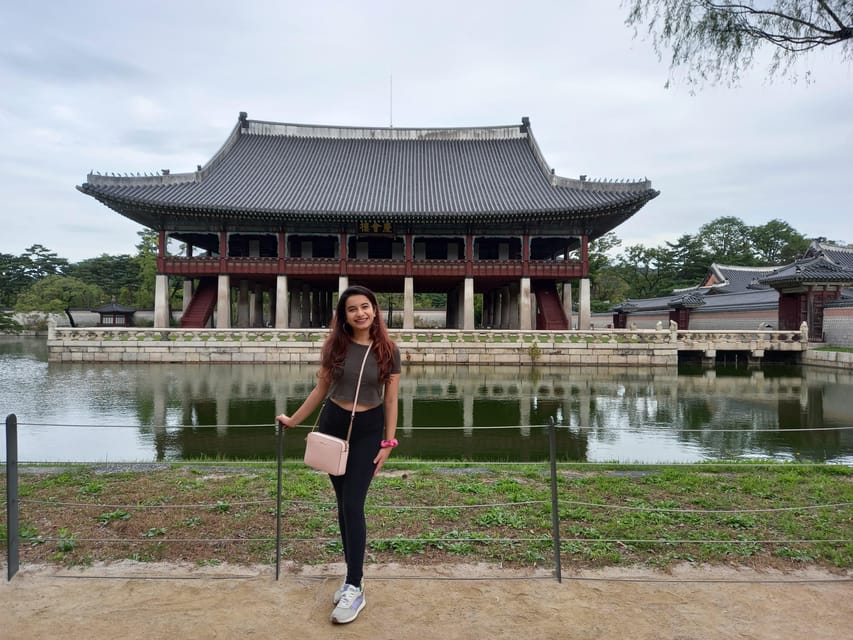
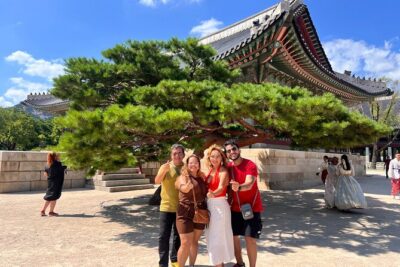
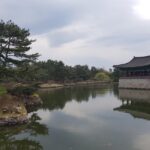
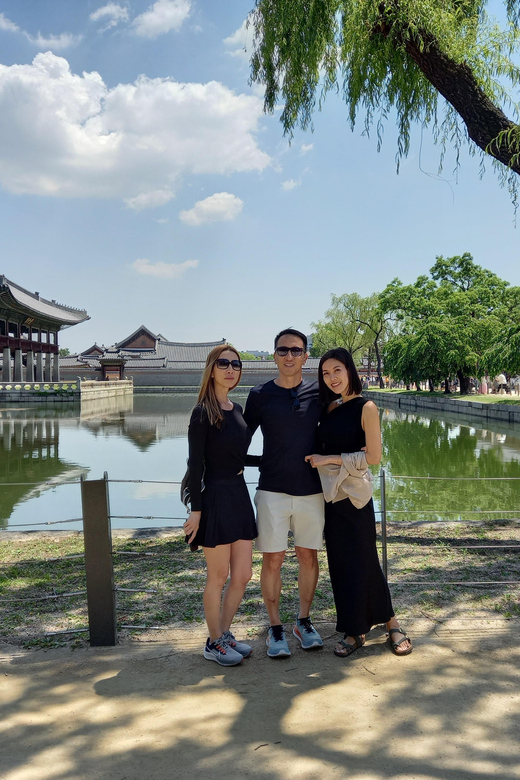
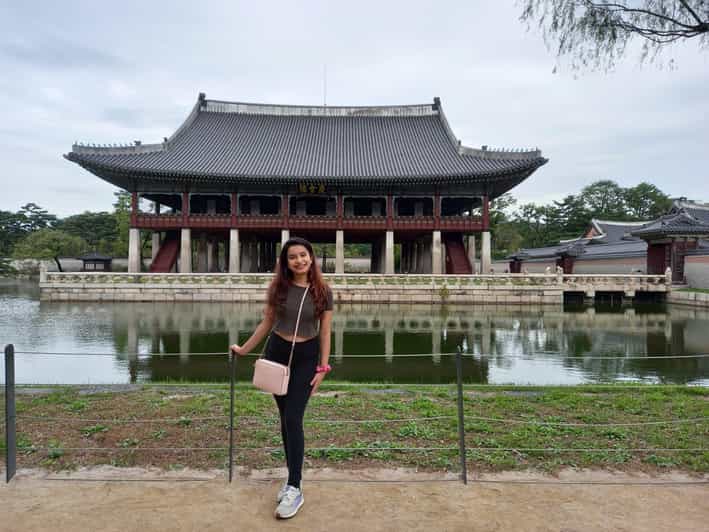
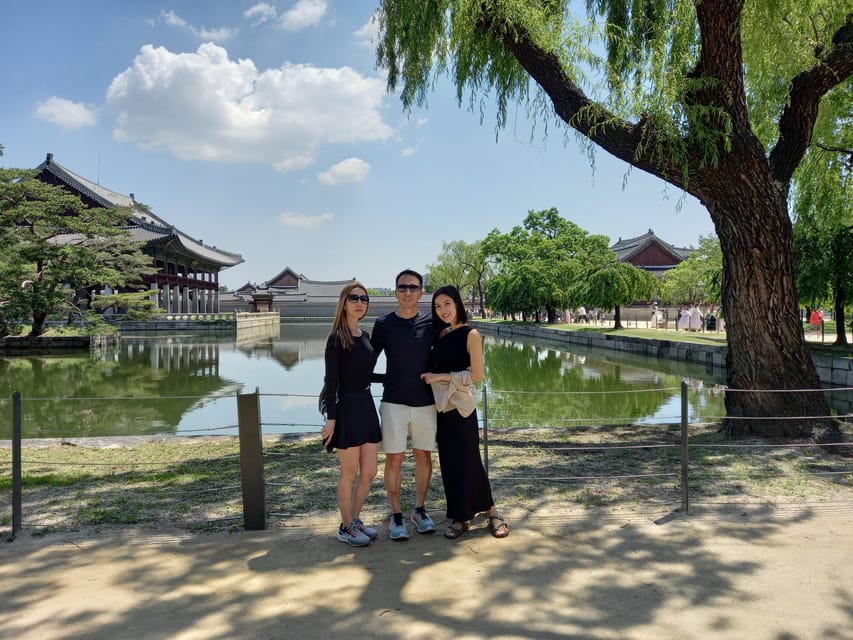
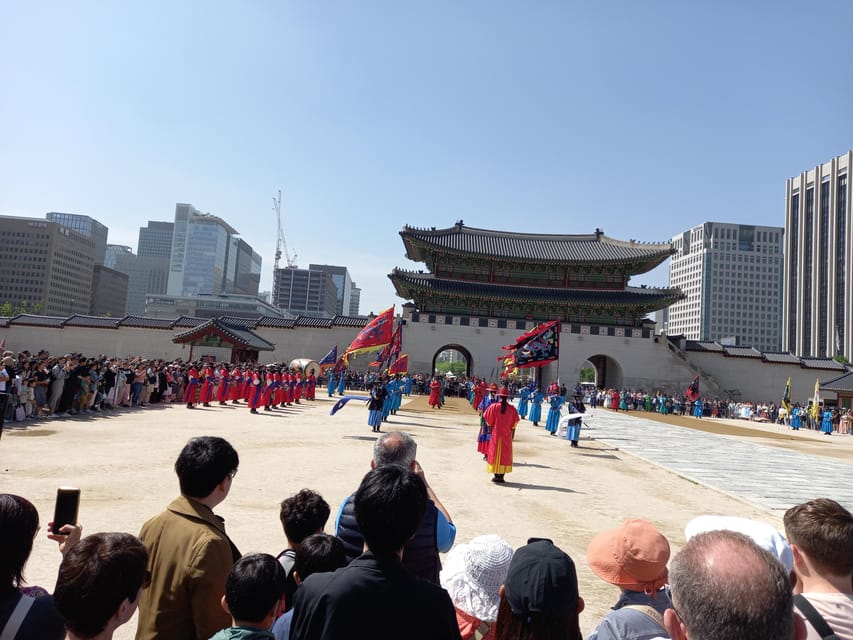
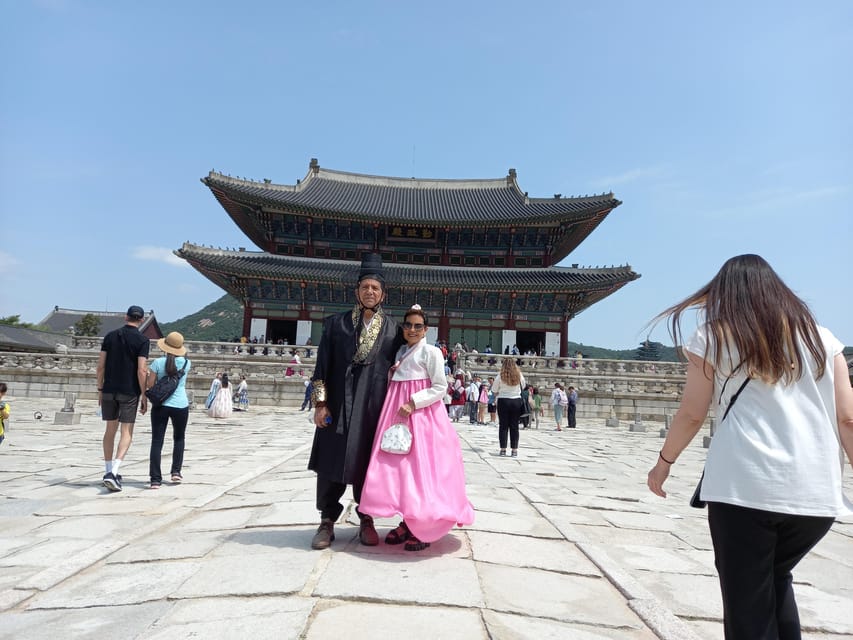
Gyeongbokgung Palace is the star, and your guide treats it like more than a pretty backdrop. The tour gives you about 2 hours at the palace with a guided walk, which is just enough time to learn the basic “how to look” skills without feeling stuck.
Here’s the big context you’ll hear: Gyeongbokgung is the first main palace of Joseon, built in 1395. It’s described as the largest palace associated with that era and notable for being built on flat land, which sets it apart from how many older palace grounds were laid out.
But the real value is the cultural lens. Your guide explains how Confucianism was the spirit of the Joseon Dynasty, and how that belief shaped what people built and how they organized space. You’ll get a sense that architecture isn’t just decoration—it’s a code. The style of the buildings and the order of the grounds reflect ideas about authority, duty, and social balance.
Why this is such a smart use of layover time: without that framing, you’ll see beauty and symmetry. With the framing, you start noticing the logic behind where things sit and how the palace works as a living symbol of Korean identity.
Quick practical note: palace photos are better when you slow down for a few seconds at key viewpoints. With a guide, you also have a better chance of finding the angles that look like classic Seoul postcards without wasting time walking the wrong way.
National Folk Museum: the power of everyday Joseon life
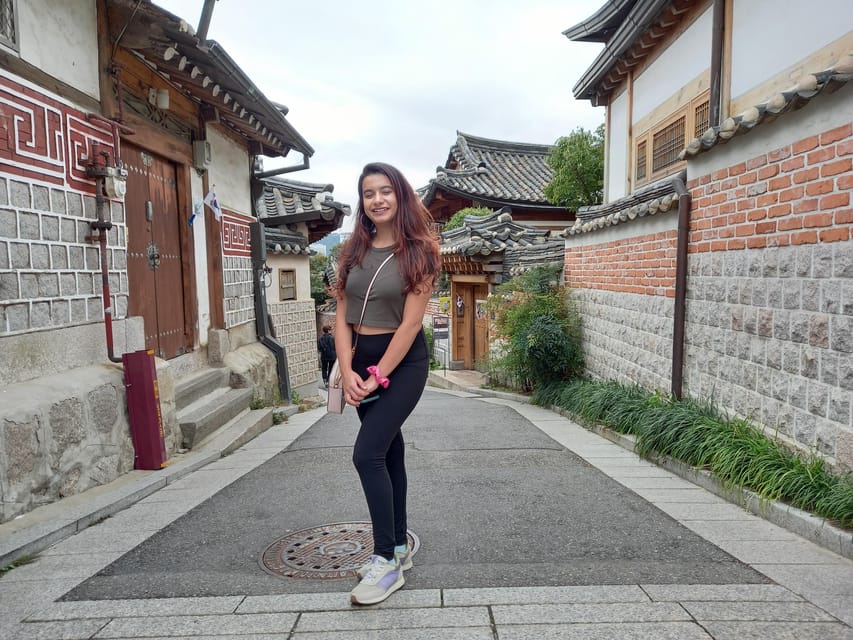
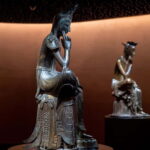
After the palace, you shift from royal power to ordinary people. The National Folk Museum of Korea is scheduled for about 30 minutes, which might sound short, but the museum’s theme is designed to land fast: it presents daily life across the stages of a Joseon life cycle.
You’ll see exhibitions that cover big transitions—birth, growth, marriage, aging, illness and treatment, and death—not just costumes or artifacts. The focus is on rituals and ceremonies that would have mattered to common people, including how seasonal life worked.
This is a great stop for a layover because it fills in the gap between “who ruled” and “how people lived.” Even if you only catch the highlights, you walk away with a stronger sense of continuity. You start to notice how values show up in both palace structures and the objects people used at home.
The possible drawback is simply time: 30 minutes means you’ll likely cover the main idea rather than read everything closely. If you’re the type who loves to linger with English labels, keep your expectations realistic and treat this as a cultural orientation stop that sets up your later street wandering.
Bukchon Hanok Village: hanoks with a modern skyline behind them
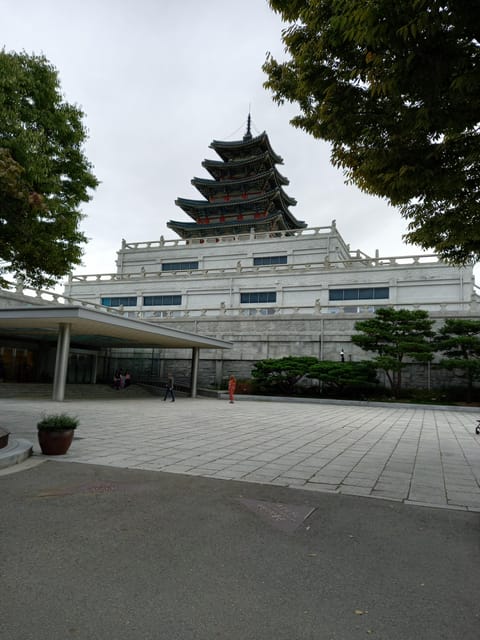
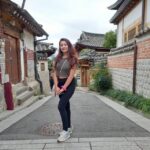
Next up is Bukchon Hanok Village, guided for about 40 minutes. This is the “old Seoul meets new Seoul” portion of the day, and you’ll feel that right away.
Bukchon is described as a traditional Korean village with around 1,000 hanoks. The point isn’t just the architecture—it’s the view. You get the contrast of preserved traditional neighborhoods with modern high-rises in the background, and even the N Seoul Tower area visible depending on where you’re standing.
What I like here is how the guide’s approach carries over. If Gyeongbokgung taught you to read culture through building logic, Bukchon lets you apply that same mindset to a neighborhood scale: windows, courtyards, and the way the village fits into the city grid.
You’ll likely get picture opportunities that feel like Seoul’s best trick: it can be both ancient and intensely current without trying to choose one identity.
Time tip: Bukchon is a place where small movements change your shot. If the group moves quickly, you can still get great photos by picking two to three “must-have angles” and letting the guide handle the navigation.

Jogyesa Temple near Insadong: a calm pause in the middle of the city
Even though the schedule spends more time on Gyeongbokgung and Bukchon, this tour includes a stop at Jogyesa Buddhist Temple. It’s described as small, but important: the headquarters of Korean Buddhism.
Jogyesa was built in 1926 in Insadong, and it’s also noted as being close to Gyeongbokgung. That location is why it fits the layover style: you can go from grand palace grounds into something quieter without losing the day.
Why this stop works: palaces can feel formal and heavy. A temple stop gives you a different rhythm—breathing room, spiritual architecture, and a chance to slow your brain for a few minutes. If you’re touring on limited time, those pauses make the whole day feel less like a checklist.
Again, the tour keeps things efficient, so don’t expect a long devotional experience here. Expect a guided look that helps you understand what Jogyesa represents and why it’s connected to the broader story of Korean Buddhism.
Insadong street time: translate culture into everyday Seoul
For about 1 hour, you’ll head to Insadong. This is where the tour shifts from guided interpretation to street atmosphere. You’ll walk the area with a purpose, using everything you learned earlier to notice details you might otherwise miss.
Insadong is also the area tied to Jogyesa, so the temple context blends naturally into the street scene. Think of it as a neighborhood where traditional culture shows up as a living practice, not just a museum exhibit.
Because the tour does not include food, you’ll want to use this hour strategically. If you want a snack or a drink, it’s the time to do it. If you’re shopping, keep it light: 1 hour is enough to browse, but not enough to do serious retail marathons.
If you like photos, ask your guide to show you the best picture angles. Paul Koo’s style includes directing guests to strong photo spots, and he’s also known for taking and sharing photos at the end of the trip—handy when your layover time is tight and you don’t want to miss the shot.
Train back to the airport: ending at Seoul Station, not ICN limbo
One of the most stressful parts of any layover tour is the return. This experience handles the exit.
After the Seoul street time and the final transit segment, you end at Seoul Station (specifically at the airport railroad area). Then you leave Seoul for Incheon Airport on the train departing for ICN.
Your guide stays in the “make sure you get on the right thing” lane: the tour includes getting you to Seoul Station so you can catch your airport train without last-minute confusion. The tour description also notes that a return train ticket is arranged for the ride back to Incheon on express when possible.
The practical takeaway: ending at a major station is a smart safety move during a layover. It gives you options if anything runs late, and it reduces the chance you’ll get stuck trying to coordinate airport transfers on your own.
Pacing and photo strategy for a 6-hour day
This is a 6-hour tour. That length is both the strength and the constraint.
Strength: you see several “levels” of culture—royal identity, everyday life, traditional neighborhood fabric, temple calm, and street Seoul—without needing a full day in the city.
Constraint: you can’t do everything slowly. You have guided time blocks of about 2 hours at the palace, 30 minutes at the folk museum, 40 minutes at Bukchon, 1 hour at Insadong, plus transit.
My advice for a smooth day:
- Wear shoes you can walk in for 2–3 segments without complaining.
- Don’t plan a sit-down meal. Plan snacks or quick bites.
- Let the guide set the pace for palace and Bukchon. Then use Insadong for freedom.
- If photos matter, request photo spots early so you get the best angles while light is right.
Who this tour is for (and who should skip)
This layover tour is a good fit if you:
- Want a high-impact, low-stress cultural day from Incheon
- Like history explained in plain language and tied to architecture
- Appreciate traditional Korea beyond the palace headline
- Need a guide who can help you move through Seoul efficiently
It may not be a great fit if you:
- Want a slow, self-guided day with lots of free time
- Plan to spend a long chunk shopping or eating
- Get frustrated when a schedule stays tight during a layover
If you’re new to Seoul, this kind of structure is extra valuable. If you’ve been to Korea before and want long, independent wandering, you might prefer a slower itinerary on your own time.
Should you book this ICN layover tour?
If you’re deciding whether this is worth it, ask yourself one question: do you want your layover to feel like a meaningful cultural visit?
For most people, the answer is yes—because transport, admission, and a guided cultural framework are built into the experience. Paul Koo’s focus on Confucianism in Joseon-era culture makes Gyeongbokgung more than a quick photo stop, and the pair of stops (Folk Museum + Bukchon) help you see both the official and the everyday sides of Korea.
Book it if your timing works and you’re okay with a tight schedule. Skip it if you need long breaks, food isn’t your interest, or you want full control over pacing.
FAQ
How long is the layover tour?
The tour lasts 6 hours total.
Where does the tour start?
The meeting point is Incheon Airport (ICN).
Where does the tour end?
The tour ends at Seoul Station (airport railroad) so you can take the train back to Incheon.
Is it a private tour?
Yes, it’s a private group with a live English guide.
What’s included in the price?
The price includes the 6-hour guide fee with guide information, transport between the airport and the sightseeing areas, AREX train transportation for getting to and from, and admission for Gyeongbokgung Palace.
Is food included?
No, food and beverages are not included.
Is travel insurance included?
No, insurance is not included.
Do you use the express train?
The plan is to use the express train when possible. If express would require too much waiting (over about 20 minutes), the tour may switch to the normal train.
How often does the express train run?
The express train moves almost every one hour, but in peak season it can be sold out, so tickets need to be secured in advance.
Is there free cancellation?
Yes. You can cancel up to 24 hours in advance for a full refund.
Is the tour guided in English?
Yes, the live tour guide speaks English.