REVIEW · SEOUL
Gyeongju UNESCO Sites Tour by KTX train; The Museum Without walls
Book on Viator →Operated by Tagytravelkorea · Bookable on Viator
One long day, but full of ancient Korea. You get KTX round-trip plus a private English guide and admissions across major Silla sites. The big trade-off: it’s an early start and the schedule includes several outdoor stops, so weather can affect the mood.
I like how this tour turns travel time into history time. You’re not just hopping between photo stops; you’re taken through burial mounds, royal-era landmarks, and standout Buddhist monuments that make Gyeongju feel like a living museum. Still, the price is steep at $470 per person, and it’s not meal-inclusive.
In This Review
- Key Highlights You’ll Notice Fast
- A KTX Day Trip That Feels Like a Real Itinerary
- Getting Oriented in Gyeongju: Cheonmachong Tomb
- Gyeongju National Museum: Where It Clicks
- Cheomseongdae Observatory: A Stone Star-Gazing Tower
- Donggung Palace and Wolji Pond: Royal Architecture Plus Water
- Bulguksa Temple: One of Korea’s Most Famous Buddhist Sites
- Seokguram Grotto: The View and the Sculpture
- Price and Logistics: Is $470 Good Value?
- Guide Quality and Timing: What Makes the Day Feel Smooth
- Outdoors, Rain, and Realistic Expectations
- Who This Tour Fits Best (And Who Might Prefer Another Plan)
- Should You Book This Gyeongju UNESCO Sites Tour?
- FAQ
- What’s the duration of the Gyeongju UNESCO Sites Tour from Seoul?
- What time does the tour start?
- Is pickup from Seoul included?
- Do I get a hotel drop-off in Seoul at the end?
- Are meals included in the price?
- What transport is included between Seoul and Gyeongju?
- What sites does the tour visit?
- Are admission fees included?
- Is this tour private?
Key Highlights You’ll Notice Fast
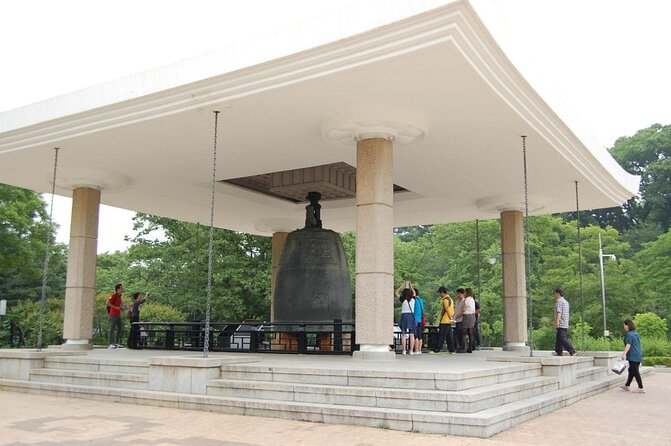
- KTX round-trip in economic class plus private vehicle transfers from Seoul for a low-stress day
- Cheonmachong Tomb for the real Silla burial-mound feel, including earthen mounds and tomb shapes
- Cheomseongdae Observatory: the oldest existing observatory in the Far East (built in 634)
- Wolji Pond and Donggung Palace for the royal-pond setting tied to the later unified kingdom period
- Bulguksa Temple and Seokguram: temple complex + grotto viewpoints with famous Buddhist sculpture
- English-speaking guides who add stories (names like Jay, Dylan, John, and Andrew show up in guide credits)
A KTX Day Trip That Feels Like a Real Itinerary
Gyeongju is one of those Korean places where “just a day trip” could easily turn into a blur. This tour tries to prevent that by structuring your day around meaningful sites, not random roadside stops.
The format is built for comfort. You get hotel pickup in Seoul areas, then private car transfer to the station. From there you take KTX for the fast hop to Gyeongju, and you come back the same way. Once you’re there, the stops are grouped so you spend less time guessing where to go and more time understanding what you’re looking at.
I also like that it’s a private tour. That usually means the pacing can match your group, and it avoids the “herding cats” feeling of big group bus tours. The tour is designed for an 8 to 9 hour day, starting at 7:00 am, so you’ll want to treat it like a full excursion, not a casual outing.
You can also read our reviews of more museum experiences in Seoul

Getting Oriented in Gyeongju: Cheonmachong Tomb
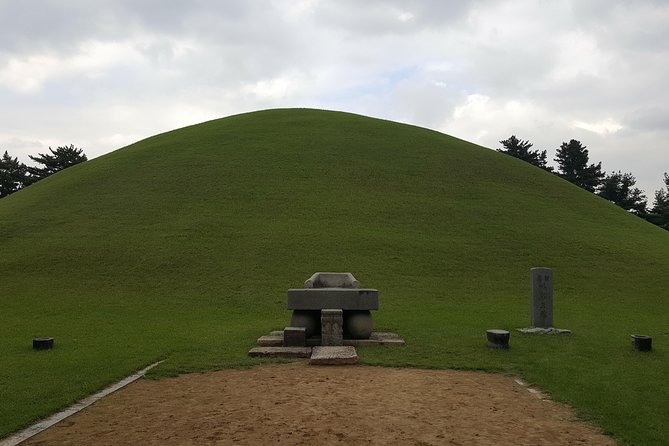
Your first major stop is Cheonmachong Tomb, one of the big names for Silla burial culture. The site includes more than 20 large and small tombs from the Silla period, which are presumed to be for kings and court officials. Most of the tombs are described as earthen and mound-shaped, and you’ll even hear about distinctive forms like a double gourd-shaped tomb.
This stop matters because it sets the tone. If you start at the burial mounds, everything else you see later makes more sense: the power structure, the royal identity, and why Gyeongju’s heritage is so tied to elite history.
Practical note: even though the time on site is about an hour, tomb areas often involve walking over uneven ground. Also, this is an outdoor-heavy start, so if it’s raining, you’ll feel it more here than inside a museum.
Admission is included for this stop, so you’re not standing around scanning phones for tickets.
Gyeongju National Museum: Where It Clicks
Next up is Gyeongju National Museum, and this is one of the smartest points in the schedule. A museum visit is a fast way to “load the context” before your later stops in the city.
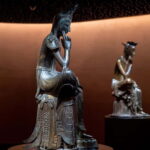
You’re given about an hour here, with admission listed as free. The museum is framed as a place where you can appreciate the ancient city’s importance in one sweep. In plain terms: instead of guessing at symbols and artifacts, you get guided help connecting what you’ll see later with what the objects meant.
What I like most is that museums can be draining if you’re left alone. On a tour like this, a good English-speaking guide can keep it moving while explaining the big ideas you’d otherwise miss. In the feedback tied to this tour, multiple guides (including Jay and John) were credited with adding story detail beyond the signage, which is exactly what you want during a museum hour.
Cheomseongdae Observatory: A Stone Star-Gazing Tower
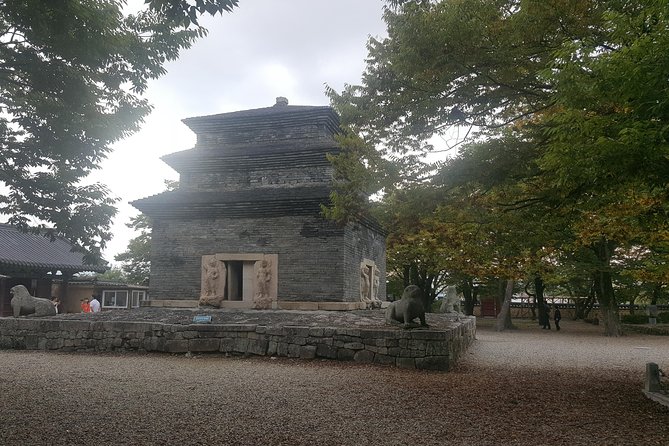
Then you go to Cheomseongdae Observatory, called the Star Gazing Tower. It’s built during the reign of Queen Seonduk in 634, and it’s described as the oldest existing observatory in the Far East.
You’ll also hear about its structure: 27 levels of stones. That’s the kind of concrete detail that makes this stop more than a quick photo moment. It also helps you picture how scientific observation was treated as part of state life, not just a hobby.
This stop is also about an hour, and admission is free, which makes it an easy win. If you like history that connects daily life to power, this one usually lands well.
One consideration: it’s not a huge site, so your guide’s explanations matter. If the language is hard to follow, you may lose some of the charm here because there’s only so much to physically see.
Donggung Palace and Wolji Pond: Royal Architecture Plus Water
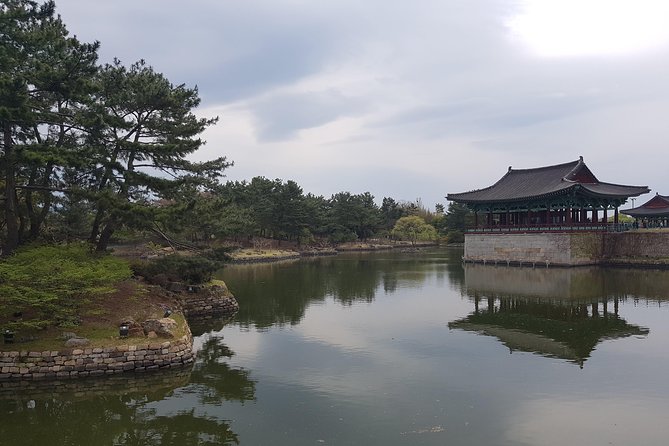
After the observatory, the itinerary turns toward daily royal life with Donggung Palace and Wolji Pond. You’re looking at the kind of place where ceremonies and status mattered, and where nature and design worked together.
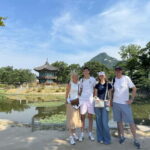
The key detail is the connection to the later period: Anapji Pond (also referred to as part of Wolji Pond) is described as built in 674 after the unification of the Korean Peninsula. The description also emphasizes that small mountains were created inside the palace walls, plus trees, flowers, and even rare birds and animals were brought in.
Whether you’re a history person or not, this kind of setting helps you understand why Gyeongju feels different from many other “old city” destinations. It’s not only tombs and temples. It’s also curated space, used by people who had the power to reshape nature.
Admission is included for this stop. Timing is about an hour, so you’ll likely get a good walk-and-look loop rather than a rushed sprint.


Bulguksa Temple: One of Korea’s Most Famous Buddhist Sites
By the time you reach Bulguksa Temple, the day’s theme shifts from royal Silla power to spiritual Silla art and architecture.
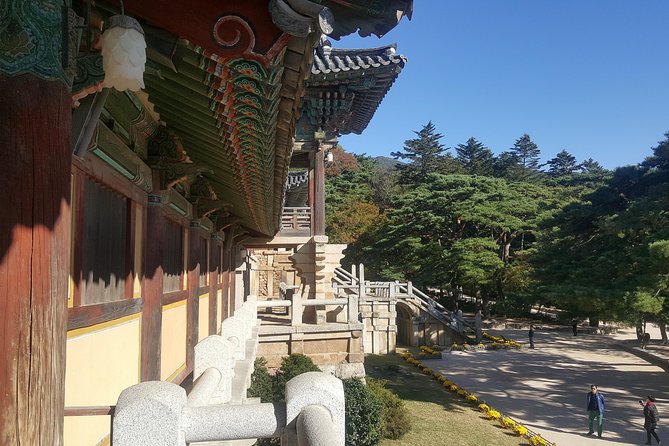
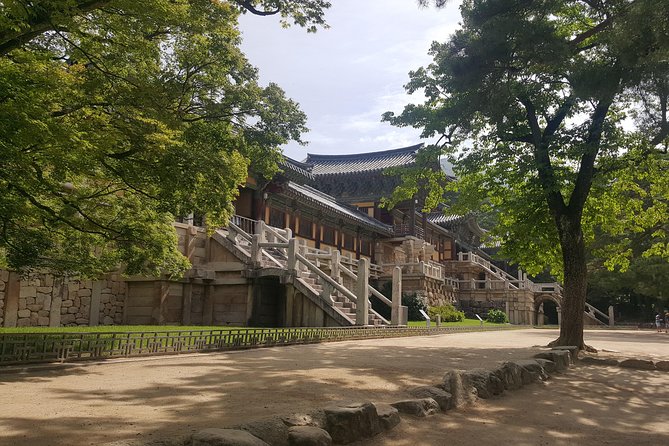
Bulguksa is described as the most famous Buddhist temple in Korea, and it’s home to important relics from the Silla period. The tour specifically mentions the stone pagodas, including Dabotap, plus other major Silla-era relics.
This is another “hour stop,” and for a complex like Bulguksa, an hour is enough to get your bearings and see the standout pieces, but not enough to become a temple scholar. That’s where having a guide helps most. You can focus on the main sights and the meaning behind them, instead of getting lost in the layout.
Admission is included here too. If you’ve ever shown up at a temple hoping to just wander without reading anything, this tour format is a better deal. You’ll likely understand what you’re seeing faster than you would alone.
Seokguram Grotto: The View and the Sculpture
Finally, the tour includes Seokguram Grotto, described as a hermitage part of the Bulguksa temple complex. It overlooks the East Sea and sits 750 meters above sea level.
That elevation detail matters. It’s not just a building tucked into a hillside. You’re meant to feel the height and the coastal outlook. Even if you’re not a “sculpture person,” this setting gives you a sense of why Buddhist art was built in a place that commands attention.
The grotto is included with admission, and you spend about an hour here. The information highlights that it holds some of the best Buddhist sculptures in the world, so if you care about visual history, this is usually the part that sticks.
Weather tip: because the surrounding approach and viewpoints are outdoor, rain or strong wind can change your comfort level. If skies are dull, the East Sea view might disappoint a bit. If skies cooperate, this stop can feel like the most memorable payoff of the entire day.
Price and Logistics: Is $470 Good Value?
At $470 per person, this isn’t a cheap add-on. You’re paying for several things at once: hotel pickup in Seoul areas, private transfers by car, KTX round-trip fare (economic class), an English-speaking guide, and admission tickets for every listed site. Meals are not included, and there’s no hotel drop-off service in Seoul.
So where does the value come from?
- You’re buying time and certainty. A day that starts at 7:00 am and runs 8–9 hours can go sideways fast if you’re coordinating trains, tickets, and intercity timing on your own.
- You’re buying guided context. The stops are historically dense (tombs, museum, observatory, temple complex, grotto). If you like explanations, this tour makes those hours count.
- You’re buying admissions plus transport. With multiple stops and included KTX, the per-person cost starts to make more sense than a piecemeal “book everything separately” plan.
Who gets the best deal? People booking with friends or family, since it’s a private tour and you’ll share the overall “private” experience cost. If you’re traveling solo and paying full freight, you’ll want to be sure you care about the sites enough to justify a long day and meal planning.
Guide Quality and Timing: What Makes the Day Feel Smooth
This tour lives or dies on how the handoffs work: pickup, station timing, and the explanation at each stop.
In the feedback tied to this tour, guide and support names show up like Andrew, Jay, John, and Dylan, with credit given for guiding people through the train process and adding stories. One experience description even mentioned someone taking the group onto the KTX seats, which matters when you’re traveling in a different system.
You should also be ready for a “long day” reality. Even with fast KTX travel, the schedule is tight and you’ll likely feel it by mid-afternoon. Pack water and plan to eat late morning or earlier afternoon, since meals are not included.
Language note: there’s at least one mention of English accents being a little hard to catch at times. English-speaking guides are included, but clarity can vary. If you’re sensitive to accents, don’t treat this as a museum audio tour. It’s still a live explanation, but you might have to focus a bit more.
Outdoors, Rain, and Realistic Expectations
This itinerary includes multiple outdoor elements: tomb mounds, temple approaches, and the grotto area. When weather cooperates, it’s great. When it pours, you’ll spend more time moving quickly instead of lingering.
That doesn’t mean you should skip the trip in bad weather. It does mean you should dress for it: rain layer, grippy shoes, and a small umbrella or light hood. If the sky is gray, you may just need to accept that the East Sea outlook could be less dramatic.
Also, since the day starts at 7:00 am, you’ll want to be rested. This is not the tour to schedule if you’re still recovering from jet lag.
Who This Tour Fits Best (And Who Might Prefer Another Plan)
This is a great fit if you want a structured hit of Silla-era sites without doing logistics math. It also works well if you like learning how places connect: royal power, burial culture, astronomy, palace space, and Buddhist art in one connected day.
I’d steer you toward this tour if:
- You care about Silla history and want guided context.
- You prefer transfers and tickets handled for you.
- You’d rather spend your energy sightseeing than figuring out train stations.
I’d consider passing if:
- You want a relaxed pace with lots of free time.
- You’re very picky about meal planning and don’t want to think ahead.
- You’re extremely sensitive to English accents and live explanations.
Should You Book This Gyeongju UNESCO Sites Tour?
If your goal is to see major Gyeongju heritage highlights in one day from Seoul, this tour is a strong choice. The included KTX, admissions, and guided route make it easy to feel “in the right place at the right time,” which is what you want for a first visit.
Book it if you’re excited by the mix of Cheonmachong Tomb, Cheomseongdae, royal pond-palace scenery, and then the temple-and-grotto pairing of Bulguksa and Seokguram. If you can handle an early start and some outdoor walking, you’ll likely come away feeling like Gyeongju is more than scenery.
Skip or look for an alternative if you want meals included, a shorter day, or mostly indoor sites. This itinerary is built for sights that reward patience and a bit of stamina.
FAQ
What’s the duration of the Gyeongju UNESCO Sites Tour from Seoul?
The tour runs about 8 to 9 hours.
What time does the tour start?
The start time is 7:00 am.
Is pickup from Seoul included?
Yes, hotel pickup is offered in Seoul areas.
Do I get a hotel drop-off in Seoul at the end?
No. Hotel drop-off service in Seoul is not included.
Are meals included in the price?
No. Meals are not included.
What transport is included between Seoul and Gyeongju?
Round-trip KTX train fare (economic class) is included, and you also get private vehicle transfers.
What sites does the tour visit?
The tour includes Cheonmachong Tomb, Gyeongju National Museum, Cheomseongdae Observatory, Donggung Palace and Wolji Pond, Bulguksa Temple, and Seokguram.
Are admission fees included?
Yes. Admission fees to the listed tourist sites are included.
Is this tour private?
Yes. It’s a private tour/activity with only your group participating.