REVIEW · SEOUL
Seoul: Korean Cooking at Seoul Cooking Club!
Book on GetYourGuide →Operated by Seoul Cooking Club · Bookable on GetYourGuide
Cooking in Seoul beats another line at another restaurant. This class is a hands-on Korean cooking lesson in the heart of Jongno, right by Jonggak Station, with English instruction and chefs who talk through where the flavors come from. I like that you cook and eat in the same 150 minutes, not just watch and snack.
My second big win is the food math: three-course meal energy plus about ten banchan tastings, then a Korean dessert and drinks. One possible drawback: the $109 price is not cheap, and even fans call it a bit pricey, so it’s best if you genuinely want to learn skills you’ll use at home, not just eat well for an hour.
In This Review
- Seoul Cooking Club at Jonggak: Key Reasons This Class Gets High Marks
- Cooking in Jongno With Your Apron On: What You’re Buying for $109
- Starters: Making Korean Jeon (Small Pancakes) Like a Local
- Main Courses You Collaborate On: Japchae, Bulgogi, and Bibimbap
- Japchae: the sauce-and-stir test
- Bulgogi: marinate-style flavor without the mystery
- Jeonju bibimbap: the bowl-building lesson
- Banchan Tastings: The Part That Teaches You Korean Flavor Balance
- Dessert and Drinks: Bing-su, Sikhye, and Korean Tea
- The Role of the Chef: Step-by-Step English Instruction That Feels Friendly
- Take-Home Recipes and Leftovers You’ll Actually Use
- Where Exactly Is It: Jonggak Station Exit 12 and the 7th Floor Kitchen
- Price vs. Value: When $109 Feels Like a Deal
- Who Should Book This Class, and Who Might Want Another Option
- Should You Book Seoul Cooking Club’s Korean Cooking Class?
- FAQ
- How long is the Seoul Cooking Club class?
- What is the price per person?
- Where do I meet, and what metro exit should I use?
- What dishes will I cook and eat?
- Is the class taught in English?
- What drinks and dessert are included?
- Is it suitable for kids, and what should I wear?
Seoul Cooking Club at Jonggak: Key Reasons This Class Gets High Marks
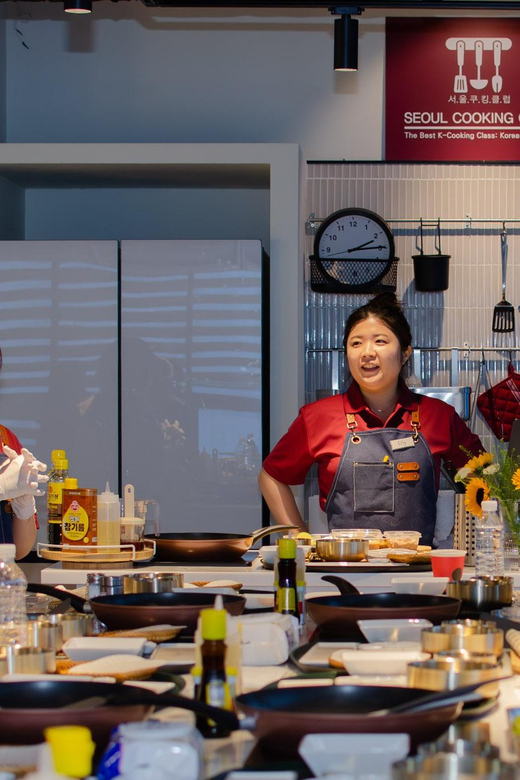
- Jeon variety you can actually repeat at home: you’ll make several Korean small pancakes, mixing meat, seafood, tofu and veggie options.
- A meal built around tastings, not just one plate: about ten side-dish tastes, including kimchi and seasoned vegetables.
- Recipe book and take-home stuff: many participants leave with a cookbook and containers so you can manage the amount you make.
- English teaching with chef stories: instructors guide you step by step and explain origins and techniques in English.
- Location is simple and central: Jonggak Station Exit 12, then up to the 7th floor near the Orange Good Game Zone facade.
- Diet tweaks can happen on request: there are reports of gluten-free/coeliac-friendly adjustments during the class.
Cooking in Jongno With Your Apron On: What You’re Buying for $109
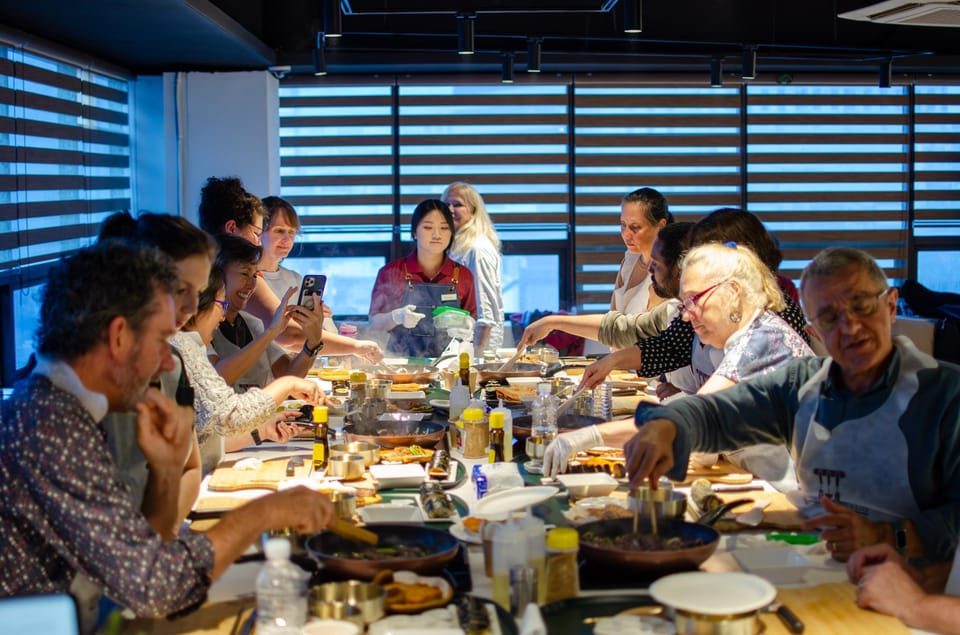
Seoul Cooking Club is a cooking class where the goal is not just to feed you. It’s to get your hands moving through classic Korean techniques, so you walk away with repeatable know-how.
At $109 per person for 150 minutes, you’re paying for a full structured experience: you get instruction in English, ingredients and tools set up for you, a three-course meal (starters, mains, dessert), plus multiple banchan tastings and traditional drinks. That’s why it lands well for food lovers who want both learning and a proper sit-down meal.
One thing to keep in mind: this is not a quick street-food stop. It’s a paced class format, and some prep may already be done so you can focus on cooking. That’s good for enjoyment, but if you’re hoping for a start-to-finish “from raw ingredient to finished dish” marathon, your expectation should be that you’ll work the key steps with guidance.
You can also read our reviews of more cooking classes in Seoul
Starters: Making Korean Jeon (Small Pancakes) Like a Local
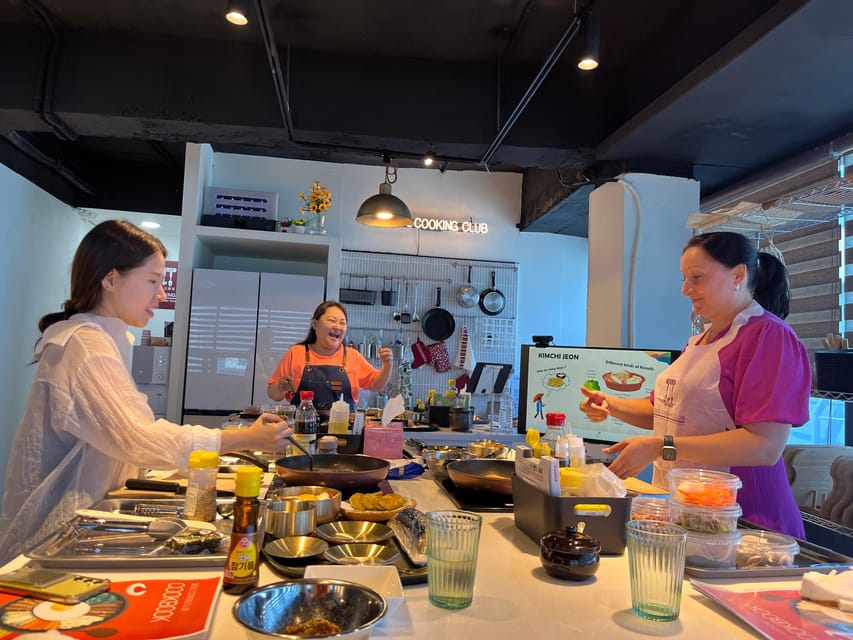
The class starts with jeon, Korea’s small pancakes—quick to cook, flexible in fillings, and a great way to understand Korean flavor balance. You’ll prepare 3–4 jeon types, choosing from options like:
- Donggrangttaeng (pan-fried battered meatballs)
- Pollack pancake
- Pajeon (seafood pancake)
- Beef pancake
- Tofu pancake
- Sesame leaf pancake
This is where you learn useful basics fast: batter consistency, pan heat, flipping timing, and how toppings and fillings change the final taste. Jeon is also one of those foods that feels very Korean without being complicated. You don’t need advanced knife skills to succeed; you need attention and follow-through.
A nice part for your day: since jeon are made in the class, you don’t have to mentally “figure out what to order later.” You’re already tasting what you’re learning.
Main Courses You Collaborate On: Japchae, Bulgogi, and Bibimbap
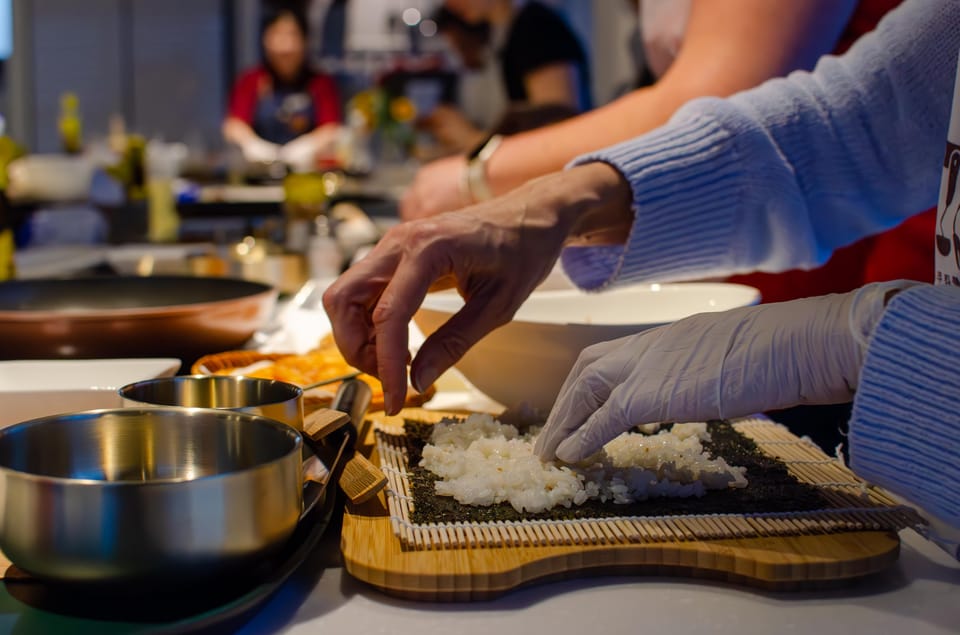
After starters, the cooking shifts into the classics that show up across Seoul menus.
You’ll work together to make:
- Japchae (stir-fried vegetables and glass noodles)
- Bulgogi (sliced beef with soy sauce seasoning)
- Jeonju bibimbap
- Plus banchan side dishes as part of the meal flow
Japchae: the sauce-and-stir test
Japchae is all about mixing: noodles, vegetables, and seasoning so it tastes cohesive, not like a salad that got bored. You’ll practice stir-frying and balancing flavors so it doesn’t end up either bland or overly salty.
Bulgogi: marinate-style flavor without the mystery
Bulgogi is the comfort food of Korean barbecue flavors—sweet-salty soy notes, plus the savory depth that makes it irresistible. In a class like this, the real value is learning how seasoning carries through cooking, so you don’t just memorize a recipe. You learn what the dish should taste like along the way.



Jeonju bibimbap: the bowl-building lesson
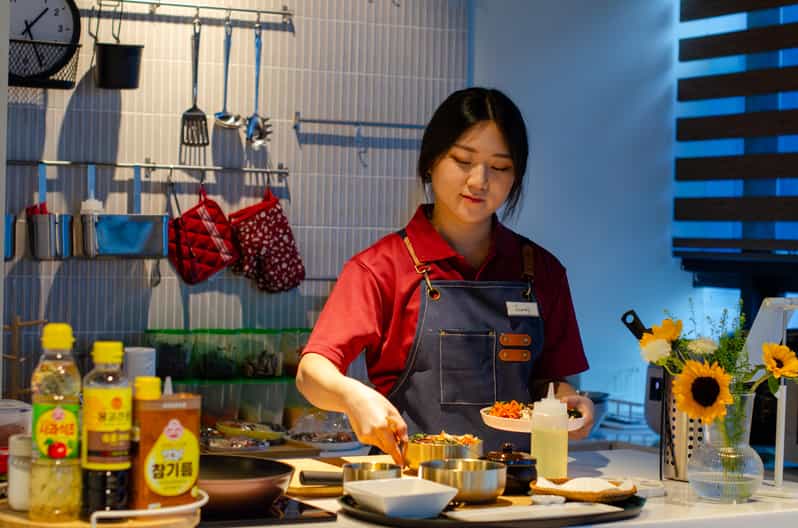
Bibimbap is where the class feels most like a meal you’d recognize in Korea. You’ll assemble a bibimbap style plate and work through the logic of the components—rice, toppings, and sauce. It’s a practical skill if you ever want to recreate Korean comfort food at home without guessing.
Banchan Tastings: The Part That Teaches You Korean Flavor Balance
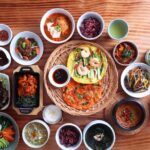
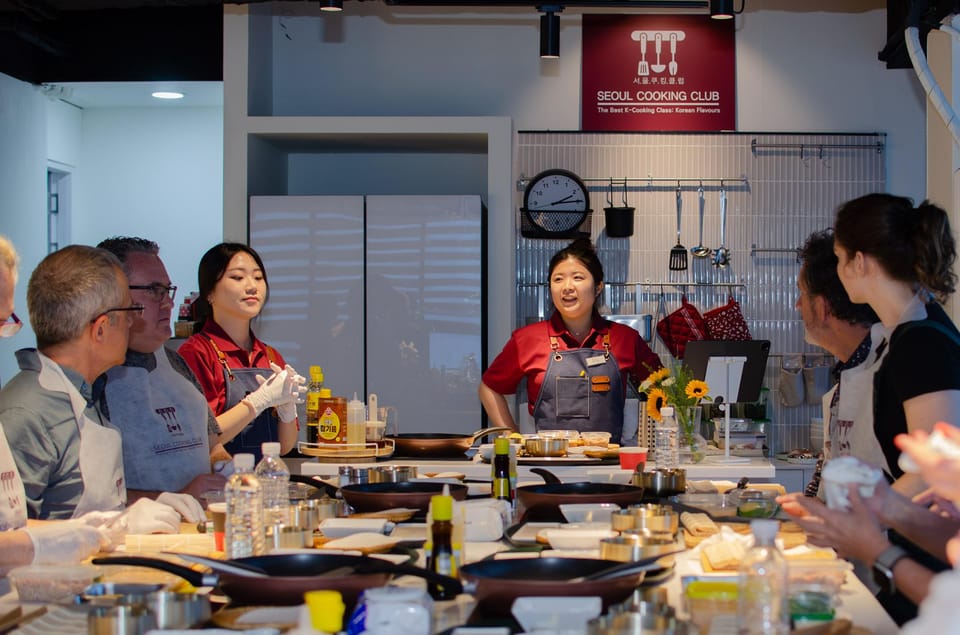
One of the best parts is the tasting spread. You’ll enjoy around ten tastings—more than you’d normally order as a tourist meal.
The side dish selection can include items such as:
- Kimchi
- Korean egg-roll
- Stir-fried anchovy
- Radish kimchi
- Seasoned soybean sprouts
- Seasoned spinach
- Spicy cucumber
Here’s the practical value: banchan train your palate for Korean meals. You start to notice patterns—fermented bite from kimchi, umami depth from anchovy-based sides, and the way seasoned greens add structure and freshness. You’ll taste how Koreans build a meal where every bite is different, but nothing feels random.
It also helps that many participants emphasize the pacing: you cook while you’re learning, then you eat what you made without feeling like you’re rushing to the finish line.
Dessert and Drinks: Bing-su, Sikhye, and Korean Tea
Korean dessert is not an afterthought here. The class includes dessert options that change daily, and Bing-su is mentioned as a popular choice.
You’ll also get drinks during the class, including:
- Water
- Sikhye (a sweet rice drink)
- Korean tea
This matters more than it sounds. When you’re cooking multiple dishes, you need breaks that feel like part of the experience, not a random thirst stop. Sikhye in particular is a gentle palate reset between savory tasks, and it fits the class rhythm.
The Role of the Chef: Step-by-Step English Instruction That Feels Friendly
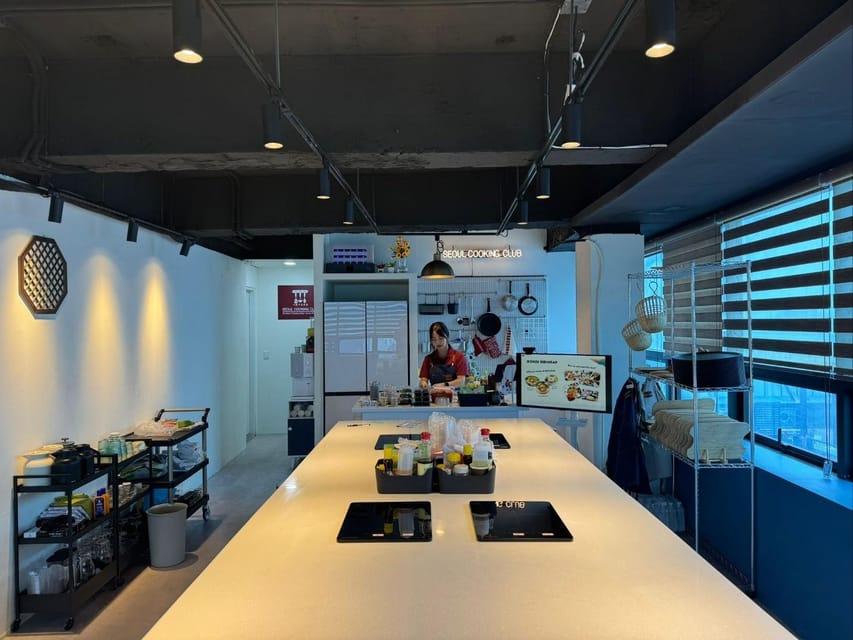
The teaching style is a big part of why this class scores a 5-star pattern across hundreds of bookings.
You’ll have instruction in English, and chefs walk you through steps. Recent participants specifically praise teachers like Sally, Olivia, Elly, and Grace for being patient and clear, and for answering questions without making you feel rushed.
One more detail I like: ingredients and station setup are handled so you can focus. Multiple participants mention that prep work is done ahead and cleanup is taken care of, which means you don’t spend the last 20 minutes stuck washing while your stomach is already in dessert mode.
Take-Home Recipes and Leftovers You’ll Actually Use
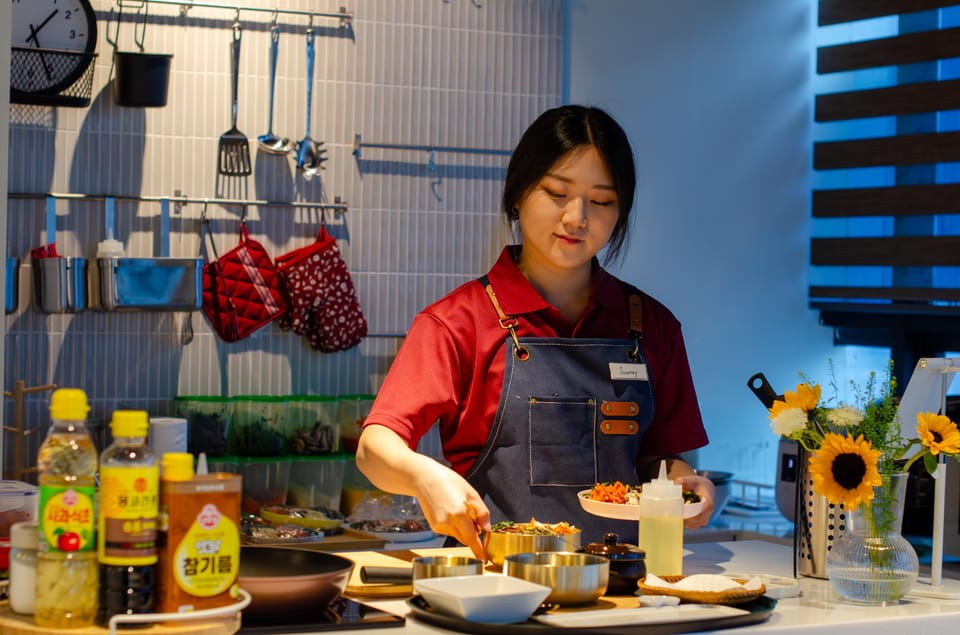
This is one of those classes that doesn’t end when the plates get cleared.
You’re told step-by-step during cooking, and you also receive a recipe book to take home. Many participants also mention takeaway containers and a bag to carry leftovers. That’s a smart system because you will likely make enough food to feel very satisfied, and you don’t want to watch it go to waste.
Also, some participants request dietary changes. There are reports of gluten-free and coeliac-friendly adjustments being handled when asked, with food still turning out well. If you have a dietary need, you’ll want to communicate it clearly when you book so the team can plan.
Where Exactly Is It: Jonggak Station Exit 12 and the 7th Floor Kitchen
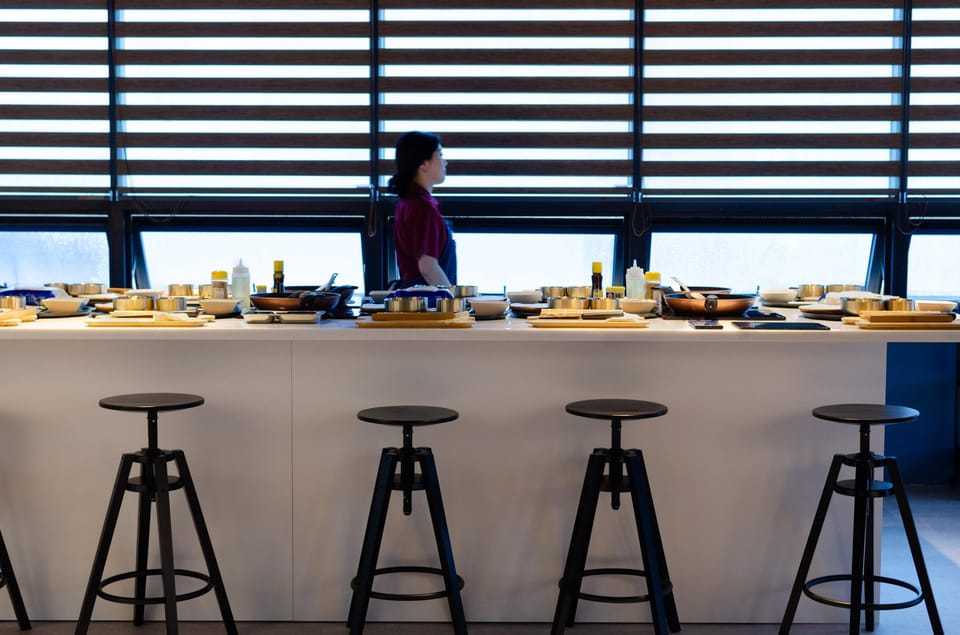
Location is one of the simplest parts.
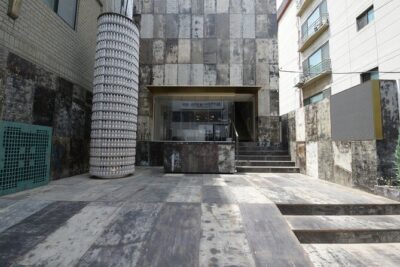
You meet at Seoul Cooking Club near Jonggak Station (Line 1), Exit 12. The directions are straightforward:
- Walk straight ahead
- Take an immediate first right around the corner of Pascucci
- The entrance is in the same building, next to the Good Game Zone (Orange facade)
- You’ll be on the 7th floor
- The venue is about 15 meters from the station exit
No hotel pickup or drop-off is included, so plan to arrive under your own steam and closed-toe shoes.
If you’re trying to squeeze this into a sightseeing day, you’ll be in a very workable area: Jongno puts you close to Insadong, Ikseondong, Gwangjang Market, Myeongdong, and major sights like Gyeongbokgung Palace within roughly a short walk range.
Price vs. Value: When $109 Feels Like a Deal
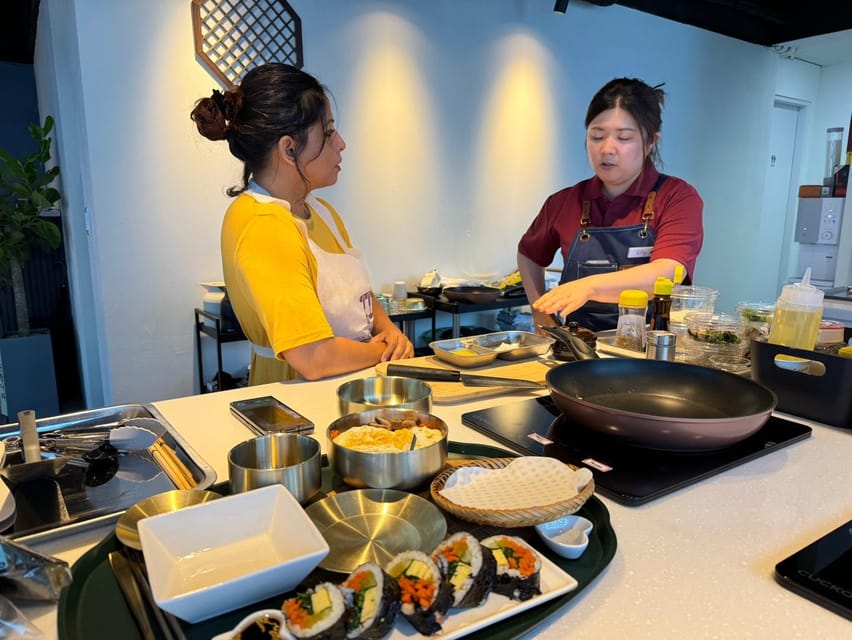
Is $109 high? For Seoul, it’s not bargain pricing. But when you break it down, it becomes easier to justify.
You’re getting:
- 150 minutes of guided cooking in English
- Multiple cooked dishes (jeon starters plus main courses)
- Jeonju bibimbap
- About ten banchan tastings
- Korean dessert and traditional drinks
- A recipe book to recreate at home
- (From participant reports) takeaway containers so you can save what you can’t finish
The class also tends to be set up so you spend your time cooking and eating, not hunting ingredients or managing tools. In other words, the experience is packaged, not improvised.
Some participants specifically say it’s a bit expensive but worth it. I agree with that logic: this is a great buy if you want more than a meal. It’s a better buy if you like learning methods, not just sampling flavors.
Who Should Book This Class, and Who Might Want Another Option
This fits best if you:
- Love Korean food and want to learn how dishes are built
- Want a structured 2.5-hour activity with a meal included
- Travel solo or as a couple and want an easy, social setting
- Prefer English instruction and clear step-by-step guidance
It’s not suitable for children under 16, so families with younger kids will need a different plan.
Also, come hungry and pace yourself. Several participants mention the amount you make can be substantial, which is good news if you want leftovers, but you should plan your schedule so you’re not immediately sprinting to something after class.
Should You Book Seoul Cooking Club’s Korean Cooking Class?
I’d book this if Korean food is a centerpiece of your Seoul trip and you want skills you can repeat. The mix of jeon, japchae, bulgogi, and bibimbap gives you a nice spread across textures and flavors, and the banchan tastings teach you how the meal works as a whole.
It’s also a solid choice if you want English instruction from chefs who explain origins and techniques, and you like the idea of leaving with a recipe book and carry-home food.
If you’re mainly chasing the cheapest way to eat Korean dishes, there are cheaper routes. But if you want a true cooking class experience in a central part of Seoul, with a full meal attached, this is one of the better ways to spend your time.
FAQ
How long is the Seoul Cooking Club class?
The class lasts 150 minutes.
What is the price per person?
It costs $109 per person.
Where do I meet, and what metro exit should I use?
Meet at Jonggak Station (Line 1), Exit 12. The venue is about 15 meters from the station exit, on the 7th floor. Walk straight ahead, take an immediate first right around Pascucci, and look for the entrance next to the Good Game Zone with an orange facade.
What dishes will I cook and eat?
You’ll make Korean jeon starters (you’ll prepare 3–4 jeon flavors), then cook mains including japchae, bulgogi, and Jeonju bibimbap. You’ll also taste a selection of banchan (side dishes) and enjoy dessert.
Is the class taught in English?
Yes. The instruction is in English.
What drinks and dessert are included?
You’ll get traditional drinks such as water, Sikhye, and Korean tea. Dessert options change daily, and Bing-su is mentioned as a favorite option.
Is it suitable for kids, and what should I wear?
It’s not suitable for children under 16. Wear closed-toe shoes.