REVIEW · SEOUL
Local Home Korean Cooking Class & Market Adventure in Seoul
Book on Viator →Operated by Hello K Cooking Class · Bookable on Viator
A market walk turns into a home-cooked meal. I love the guided trip through Mangwon Market, where you learn what ingredients actually mean in everyday Korean cooking, and the small group format that keeps you close to the host in the kitchen. One possible drawback: this is a food-first class, so if you want big Seoul sightseeing, plan something else alongside it.
In about 3 hours 30 minutes, you’ll browse for ingredients, taste street snacks, cook four dishes like bibimbap and dakgalbi, and finish with a traditional hanjeongsik dinner. The meal comes with over 10 side dishes, dessert, and a glass of makgeolli, plus a chef-host who’s often described as warm, funny, and fluent in English.
Key points at a glance
- Mangwon Station meet-up makes it easy to start without complicated logistics
- Market shopping + street food tasting teaches you what to buy, not just what to cook
- Hands-on cooking at a local home means you are doing the work, not watching from a distance
- Four Korean dishes you help make, including bibimbap and dakgalbi as clear examples
- Hanjeongsik dinner with 10+ side dishes turns the class into a full meal experience
- Small group size (max 10) gives you more attention and faster help while you cook
In This Review
- Mangwon Market: learning Seoul food before you even touch a cutting board
- The local home kitchen: hands-on, with more help than big-group classes
- What you’ll cook: four Korean dishes, including bibimbap and dakgalbi
- Hanjeongsik dinner: 10+ side dishes plus dessert and makgeolli
- Price and logistics: why $91 feels fair for what you get
- Who this tour fits best (and who should skip it)
- Tips to get the most out of your class
- Should you book this Korean cooking class in Seoul?
- FAQ
- Where is the meeting point for this Seoul cooking class?
- How long is the experience?
- What is included in the class?
- What dishes will I cook?
- Is it a small group?
- How much does it cost?
- What is the cancellation policy?
Mangwon Market: learning Seoul food before you even touch a cutting board
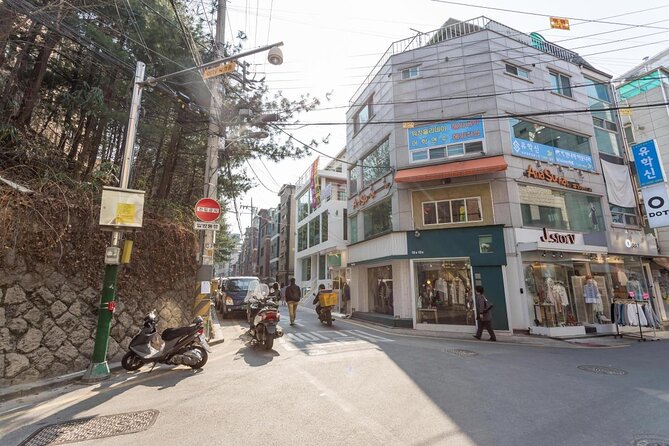
This tour starts in Mangwon, with a meet-up at the Mangwon Station entrance (address: 377-20 Mangwon-dong, Mapo-gu). From the jump, the focus is practical: you’re not just walking around, you’re learning what to look for and how vendors label ingredients you’ll use later.
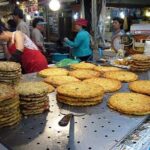
Mangwon Market is the kind of place that makes Korean cooking click fast. You get to see common herbs, spices, and cooking staples up close, and you learn how people actually choose produce and packaged items. The reviews also highlight small “this is why” lessons, like swaps and season-based choices that make dishes taste right instead of generic.
You’ll also snack while you go. The class includes street-food style tasting, and some hosts have been praised for adding extra treats like Korean donuts and a honeydew flavored popsicle during warmer weather. That matters because it turns the market from a blur of sights into a tasting checklist.
Why this is good value: the market visit is not filler. It’s the part that teaches you how to shop for Korean flavor later—at least the way Koreans think about it—so your cooking at home has a better chance of turning out.
The local home kitchen: hands-on, with more help than big-group classes
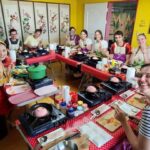
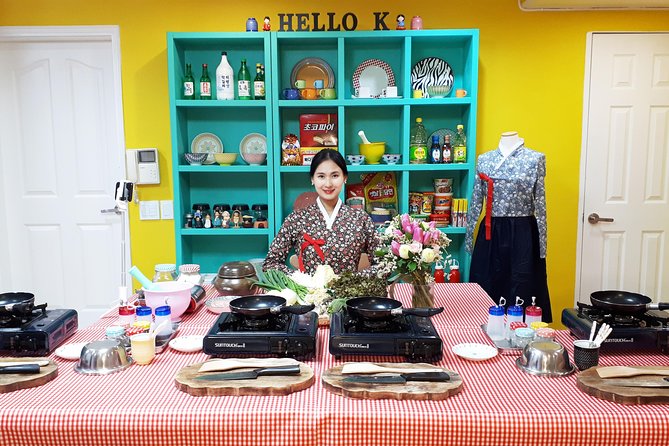
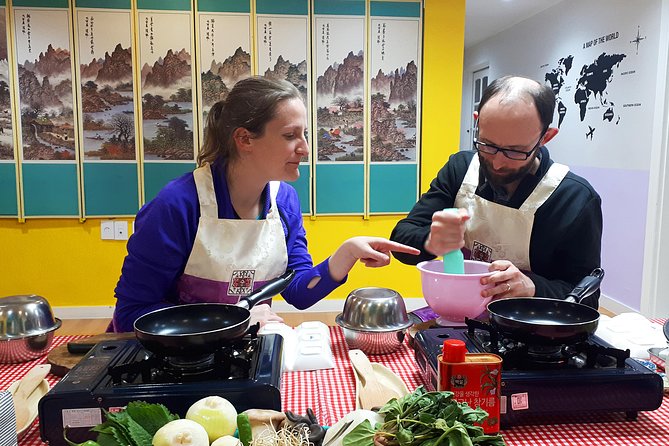
After the market, you go to the host’s home for the cooking class. The experience is structured as a real home-cooking lesson, not a studio performance. That difference changes everything: you can ask questions at the counter level, and the host can correct technique as you work.
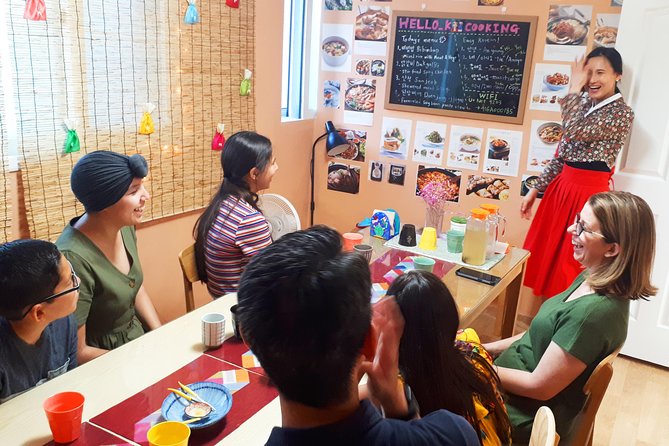
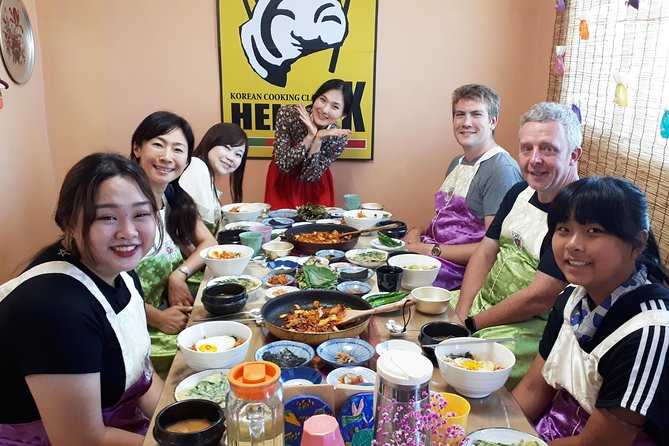
A key detail you’ll feel immediately is the small group size. The tour caps at 10 travelers, and the reviews repeatedly call out how that creates more one-on-one attention. In a small group, you spend less time waiting, and more time learning what your hands are supposed to do next.
English support is another big factor in making this approachable. Multiple reviews mention that hosts like Sarah and Junghee have excellent English, and that they explain steps clearly. If you’re nervous about cooking in a foreign language environment, this is the type of class where you can relax. People describe the teaching as patient and interactive, with lots of practical cooking tips.
There’s also a social side that you don’t always get with cooking classes. Reviews mention laughs, conversation, and even basic Korean words taught along the way. That doesn’t just make it fun—it helps you move through Korean food culture with less guesswork later.
What to keep in mind: since it’s hands-on and at a home kitchen, you should expect a more active afternoon and a tighter setup than a big commercial classroom. If you dislike close quarters or steady standing, plan to take it slowly at the start.
You can also read our reviews of more shopping tours in Seoul
What you’ll cook: four Korean dishes, including bibimbap and dakgalbi
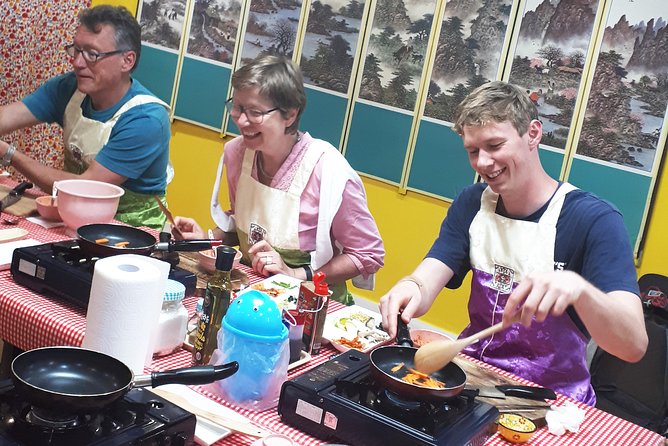
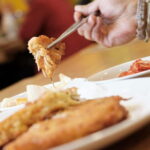
You’ll create four Korean dishes during the class. The tour information specifically mentions bibimbap rice and dakgalbi as examples of what you might cook, which is useful because these are both iconic, flavor-forward Korean comfort foods.
The real payoff isn’t just that you learn recipes. It’s that the class connects method to ingredient. In the reviews, hosts explain ingredient choices and why certain items matter—like learning about spring onions instead of chives, or why a dish relies on certain textures and seasoning balance. Those little lessons are the difference between cooking something that looks right and cooking something that tastes like Korean food.
Because the class is run through a home kitchen, you’re also more likely to learn shortcuts and techniques that feel realistic for home cooking. Reviews praise the class for being fun and easygoing, with dishes described as not overly complicated. That’s exactly what you want in a trip souvenir: you leave with recipes you can actually use, not just a memory of complicated steps.
Tip for you: go in hungry, but keep an appetite for tasting during the market too. Once you reach the cooking portion, you’ll be working with flavors you’ve already sampled, and that makes it easier to remember what to adjust.
Hanjeongsik dinner: 10+ side dishes plus dessert and makgeolli
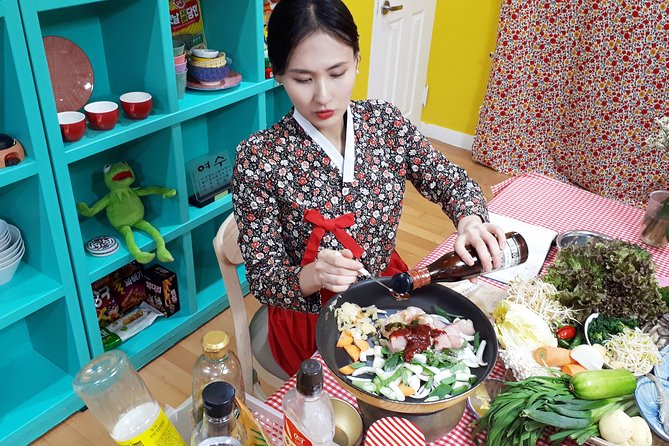
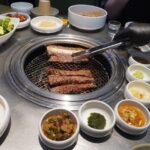
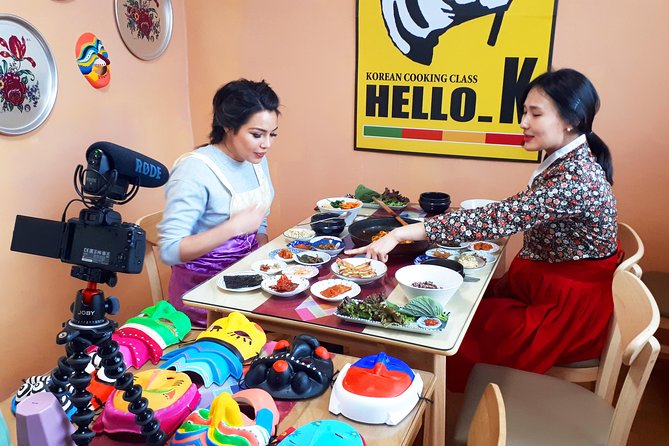
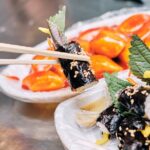
The meal part is the heart of the experience: a traditional hanjeongsik dinner that includes your homemade dishes, plus additional side dishes and dessert. The tour description calls out over 10 different side dishes, and that’s not just a lot of food—it’s a style of eating that shows how Korean meals are built as a set.
You’re not only tasting what you cooked. You’re getting the full system: how side dishes interact, how variety changes texture and flavor across the meal, and how dessert and drinks fit into the final rhythm.
The tour also includes a glass of makgeolli, a Korean rice wine. Even if you don’t drink much, it’s part of the cultural context of the meal. And since it’s served with dinner, it feels like part of the celebration rather than a random add-on.
Reviews include small meal highlights too, like hosts sharing personal stories and cooking history alongside technique. That kind of context helps you understand why the meal looks the way it does—without turning the class into a lecture.
Why this matters for value: many cooking classes teach one dish and send you on your way. Here, you build a whole-table meal and then eat it. That turns your time into a complete experience, not just a project you finish and pack up.
Price and logistics: why $91 feels fair for what you get
At $91 per person for about 3 hours 30 minutes, this class sits in a mid-range price slot for Seoul food experiences. The question is what you actually receive—and the answer here is: multiple learning stages plus a real sit-down meal.
You get:
- A guided market visit with street food tasting
- Hands-on cooking for four dishes
- A hanjeongsik dinner with 10+ side dishes
- Dessert and makgeolli included
- A max group size of 10, which means less waiting and more coaching
That combo is what makes the price feel reasonable. You’re paying for ingredients, instruction, and a full meal outcome, not just a recipe workshop. The reviews backing it up are strong too, with a 5-star rating and over 1,000 reviews, plus a 100% recommendation rate in the summary.
You’ll also appreciate the simplicity of the starting point. The meet-up is near public transportation, and the tour includes a mobile ticket. That reduces stress on a travel day when you’d rather not waste time figuring out local directions.
One practical consideration: you’ll be in an actual neighborhood, not a tourist bubble. That’s a plus for authenticity, but it also means you should expect local rhythms and a normal home-area pace.
Who this tour fits best (and who should skip it)
This class is a great fit if you want a hands-on food experience that teaches you how Korean cooking works in real life. It’s especially strong for:
- People who like learning through doing, not just watching
- Visitors who enjoy markets and want shopping skills, not just food photos
- Small groups, couples, and families (reviews describe it as enjoyable for teens and older kids)
- Anyone who wants English-friendly, friendly teaching with room to ask questions
It may be less ideal if you’re trying to pack in major Seoul landmarks in one afternoon. This is an intentional food itinerary, and you’ll get the best result if you treat it as the main event rather than a side stop.
You can also read our reviews of more tours and experiences in Seoul
Tips to get the most out of your class
Here are a few small moves that help you have a smoother experience:
- Ask about ingredient substitutes while you shop. Hosts have been praised for practical tips, including swaps and how to shop for what’s in season.
- Watch how the host teaches technique, then copy the rhythm. Most cooking success comes from timing and texture cues, not memorizing a list of ingredients.
- Use the Korean phrases that get taught. Even a few words can help you order or ask at markets later, and reviews mention that basic phrases are part of the experience.
- Bring water sense, but don’t overstuff before market snacks. You’ll want space to taste street items and still enjoy dinner.
- Plan to save the recipes. Reviews mention that hosts provide recipe copies after class, which makes the experience more useful when you cook at home.
If you’re coming with family or older kids, this class also seems to work well because it’s interactive and not overly technical. You don’t need to be a confident cook to participate.
Should you book this Korean cooking class in Seoul?
Yes—if you want a genuinely local food afternoon and you care about learning skills you can repeat. The biggest reasons I’d book it are the market-to-home flow, the small group teaching, and the fact that you finish with a proper hanjeongsik meal instead of a single-dish sample.
If you’re the type who loves trying new foods, likes markets, and wants your trip to end with something you can cook later, this is a very solid pick. And if you like warm hosts—often mentioned by name as Sarah and Junghee, with excellent English and a humorous teaching style—this class is likely to feel welcoming.
If, on the other hand, you’re mainly chasing famous sights and photos, you’ll probably enjoy it more when paired with sightseeing before or after. Treat this as the day’s culinary anchor, and you’ll get the best experience.
FAQ
Where is the meeting point for this Seoul cooking class?
You meet at the Mangwon Station entrance, at 377-20 Mangwon-dong, Mapo-gu, Seoul, South Korea.
How long is the experience?
The duration is about 3 hours 30 minutes.
What is included in the class?
You’ll join a guided market adventure with street food tasting, then do hands-on cooking to create four Korean dishes, followed by a hanjeongsik dinner with over 10 side dishes, dessert, and a glass of makgeolli.
What dishes will I cook?
The tour description specifically mentions bibimbap and dakgalbi as examples of dishes you can create, and you’ll cook a total of four dishes during the session.
Is it a small group?
Yes. The maximum group size is 10 travelers.
How much does it cost?
The price is $91.00 per person.
What is the cancellation policy?
Free cancellation is available up to 24 hours in advance for a full refund.
![[DMZ Private Full day Tour] & The War Memorial include Lunch - Getting through DMZ logistics without losing your mind](https://m.discoveringseoul.com/wp-content/uploads/dmz-private-full-day-tour-the-war-memorial-include-lunch-400x267.jpg)