REVIEW · SEOUL
Small-Group Royal Palace and Seoul City Tour (hotel pick-up)
Book on Viator →Operated by Seoul N Tour · Bookable on Viator
Two royal palaces, one long day. This tour strings together classic Seoul sights with real context, from Zen calm at Jogyesa Temple to grand Joseon-era power at Gyeongbokgung. Along the way, you’ll also get neighborhood time in Insadong and a market finish at Namdaemun.
I like that it’s built for time-savers: hotel pickup in central Seoul and an English-speaking local guide who keeps the day moving. I also like that your main ticket costs are covered, since entrance fees come with the tour price and bottled water is included.
One consideration: it’s an all-day schedule with significant transit between stops, and traffic can slow things down. Plus, the royal guard changing ceremony can be cancelled if weather turns.
In This Review
- Key takeaways before you go
- The morning start: hotel pickup and finding your rhythm in Jongno
- Gwanghwamun Gate and the royal guard changing ceremony
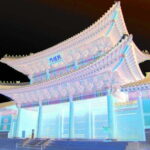
- Entering Gyeongbokgung Palace: where Joseon authority took shape
- National Folk Museum of Korea: daily life beyond palaces
- A pause for the Blue House: seeing Cheong Wa Dae from outside
- Ginseng Center and tea time in Insadong
- Changdeokgung Palace and the UNESCO payoff
- Day-of-week changes you should plan for
- Namdaemun Gate and the market finish
- Price and logistics: does $56.44 make sense?
- Guide quality: the names you might meet
- Who this Seoul highlights tour fits best
- Should you book this tour?
- FAQ
- What is the tour duration?
- How much does the tour cost?
- What’s included in the price?
- Is lunch included?
- Does the tour offer hotel pickup?
- Where does the tour drop you off?
- Which royal palaces are visited?
- What happens if Changdeokgung Palace is closed?
- What about the royal guard changing ceremony?
- Is there a mobile ticket?
Key takeaways before you go
- Small-group size (up to 16): easier questions, more personalized pacing than big buses.
- Hotel pickup in central Seoul: you start the day with less logistics stress.
- Two major palaces + UNESCO Changdeokgung: you don’t just see photos—you get the story behind them.
- Guard-changing at Gwanghwamun Gate: short and camera-friendly, but weather can affect it.
- Insadong free time without the lunch trap: you can eat when and how you like (lunch is no longer included).
- Namdaemun Market time at the end: a practical place to browse, snack, and shop.
The morning start: hotel pickup and finding your rhythm in Jongno
This is a full-day tour that starts at 9:00am, with hotel pickup offered for central Seoul. That matters because the palaces and temples are clustered in areas you can reach by train, but you’d still burn time figuring out which line goes where. Here, you board in the morning and let someone else handle the route.
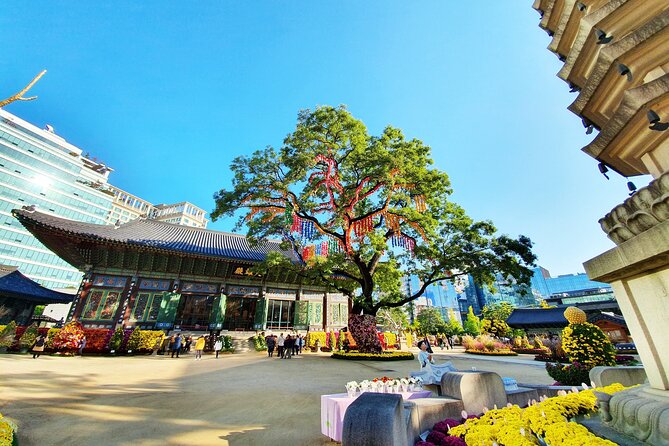
Your first stop is Jogyesa Temple, a Zen Buddhist center in the Jongno district. Even though it sits on a lively, crowded street, the temple grounds feel like a pause button. You’ll see colorful temple decorations and large golden Buddha statues, which makes this a nice visual reset before you head toward the more ceremonial parts of royal Seoul.
Jogyesa is also a good “tone-setter.” It reminds you that Korea isn’t only palaces and politics. It’s also daily spiritual practice, art, and ritual—then the tour shifts gears to the dynasty story you’ll hear at the palaces.
You can also read our reviews of more city tours in Seoul
Gwanghwamun Gate and the royal guard changing ceremony
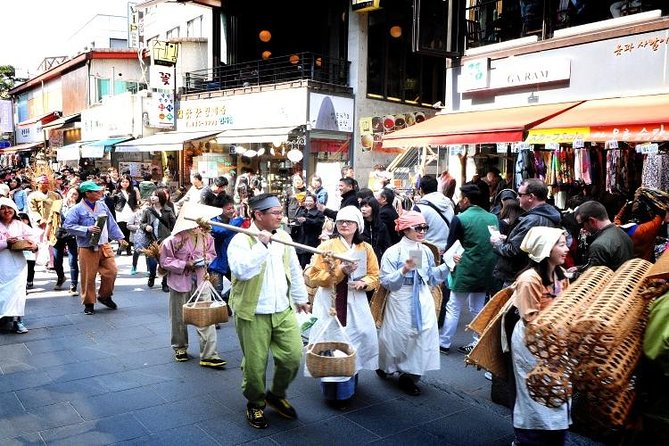
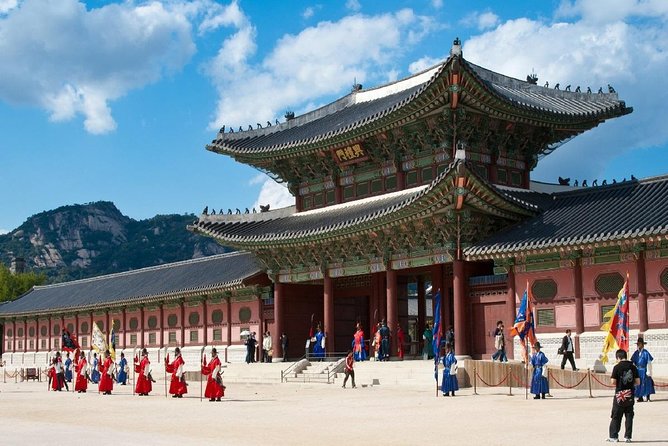
Next comes the royal guard changing ceremony area at Gwanghwamun Gate. Keep your camera ready—this is the kind of moment where a good position makes a difference, and you don’t want to be hustling for it when the ceremony begins.
The schedule gives you about 20 minutes here. That’s long enough to watch and take photos without turning it into a whole second tour of the same spot. It’s also a reminder that the day is carefully timed; if you show up late, you can miss the main action.
Two practical notes. First, admissions here are free, so you’re not losing money if the timing shifts. Second, the ceremony might be cancelled due to weather conditions—so pack for rain if it looks iffy, and don’t build your whole day on one single “perfect” moment.
Entering Gyeongbokgung Palace: where Joseon authority took shape
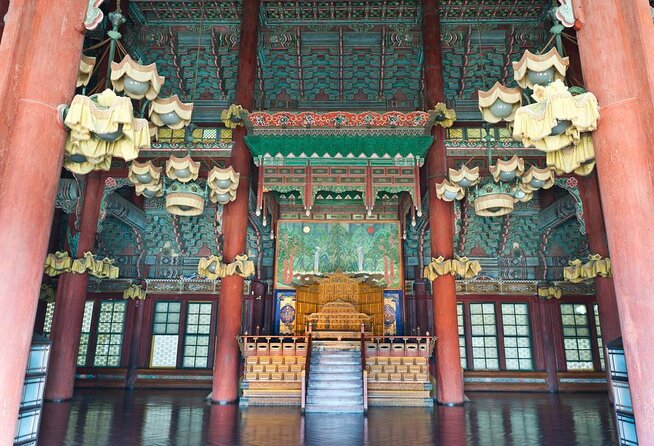
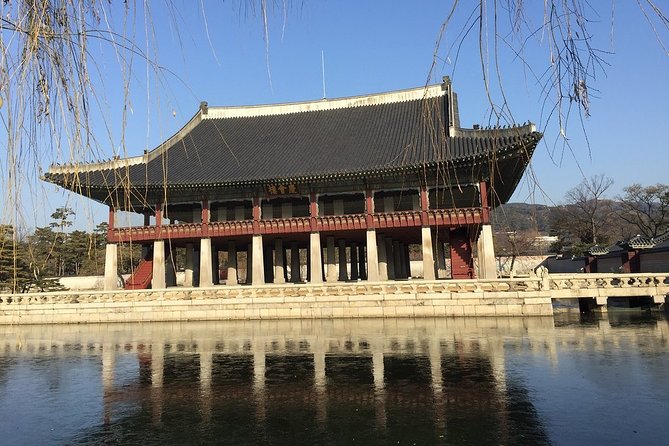
From Gwanghwamun, you move into Gyeongbokgung Palace, the main palace from the Joseon dynasty. This is the big historical backbone of the day. You’ll get a guided visit for about an hour, and entrance fees are included, which is a solid value when you compare it to paying for transport plus tickets plus a guide separately.
Gyeongbokgung isn’t just a pretty setting. It’s designed to communicate power—layout, scale, and the way the palace works visually as a center of rule. The guide’s job is to help you notice what you’d otherwise miss: what you’re looking at, why it was built, and how it connects to Korean royal life.
A smart strategy for this stop: slow down for the first few minutes. Look at the overall palace structure before you start chasing individual landmarks for photos. That way, the details land better while you’re walking.
National Folk Museum of Korea: daily life beyond palaces
After Gyeongbokgung, the day shifts from royalty to ordinary people. The National Folk Museum of Korea is visited for about 20 minutes, with admission included.
The focus here is how Koreans lived—how daily life looked from ancient times to today. This short museum stop is useful because it prevents the day from becoming one long royal highlight reel. You get context for what the palace world meant in real life: the contrast between court culture and everyday routines.
If you’re the type who likes museums but also hates slow pacing, this time window can be a sweet spot. It’s enough to learn, but not enough to drain your energy before the afternoon crowds.
A pause for the Blue House: seeing Cheong Wa Dae from outside
Then you’ll stop for an exterior view of the Blue House (Cheong Wa Dae), home to the President of the Republic of Korea. You’re not going inside—this is an outside look—so manage expectations accordingly.
What makes it interesting is the layering of place. The Blue House sits on former Joseon royal garden grounds and uses traditional Korean architectural styles. You can also see Mt. Bukak in the background. That combination of modern government site + historical landscape is exactly why this kind of “quick viewpoint” stop can work well in a packed day.
If you’re a camera person, this is the moment to step back and frame the view. If you’re not, still take a few minutes. It’s one of those locations that gives you a sense of Korea’s continuity—how old planning and new roles overlap.

Ginseng Center and tea time in Insadong
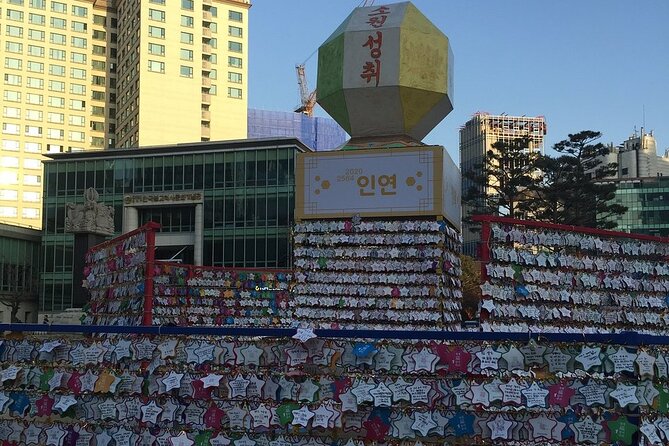
Before heading into Insadong, the tour includes a stop at a Korean ginseng center. This is about 30 minutes, with free admission. You can taste Korean ginseng tea and learn about ginseng products.
Is this stop for everyone? Not necessarily. I’d treat it as a culture-and-commercial stop rolled into one. If you love food and remedies, it’s a fun break in the day. If you’re not into tasting or shopping, you can still use it for the educational part—how ginseng is positioned and why it’s such a big deal in Korean life.
Then you arrive in Insadong, the classic traditional-culture area near Gyeongbokgung. You get about 1 hour and 20 minutes here. Insadong is known for antique shops and traditional goods, and the area is also a good place to pop into a Korean tea house if you want a slower moment mid-day.
Important practical change: lunch is not included since September 1, 2024. You’ll have free time in Insadong to choose your own meal. That’s actually workable, because you’re not stuck with a set lunch that may not match your taste. Just don’t plan to spend all your Insadong time only shopping. Give yourself room to eat.
Changdeokgung Palace and the UNESCO payoff
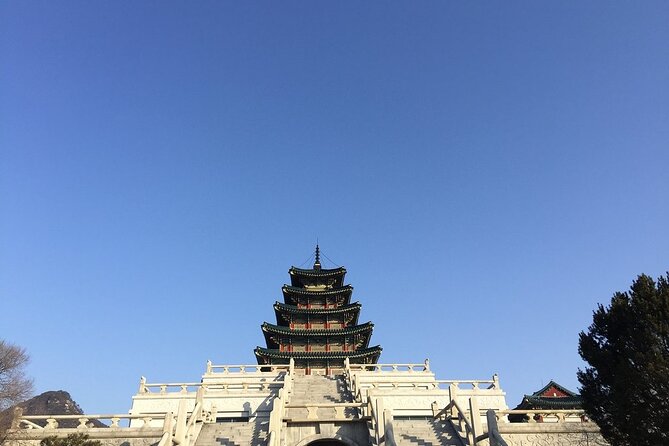
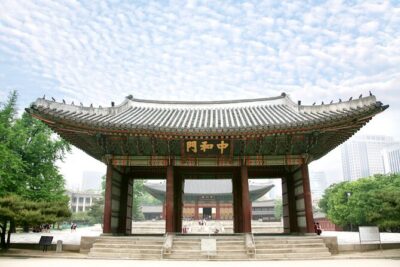
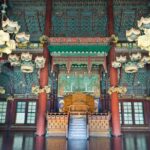
In the afternoon, the tour heads to Changdeokgung Palace. This is UNESCO World Heritage-listed, and you’ll have about an hour here with included admission.
Changdeokgung is the second royal villa built after Gyeongbokgung (1405), and it served as a principal palace for many Joseon kings. It also tends to feel more “palace-like” in a human scale way—less like a fortress set-piece and more like a working royal space connected to gardens and daily rhythms.
This is usually one of the most memorable parts of the day. If your timing works out, you’ll also experience some of the garden-oriented side of the palace grounds, which gives you a different feel than the main ceremonial areas.
Day-of-week changes you should plan for
The tour swaps stops based on what’s closed:
- On Mondays, Changdeokgung Palace is closed, so you’ll go to Bukchon traditional Hanok Village instead.
- On Tuesdays, Gyeongbokgung Palace and the National Folk Museum are closed. On those days, you’ll visit Changdeokgung (and then head to Bukchon Hanok Village in the afternoon).
So before you fall in love with any one photo spot, check the day you booked. It can change which streets and courtyards you’ll walk through.
Also remember: the royal guard ceremony might be cancelled due to weather. If that happens, the guide still keeps the day on track, but your “ceremony moment” may not be the one you expected.
Namdaemun Gate and the market finish
The final stop is Namdaemun, also known as Soongryemun, the main gate of the former Seoul fortress from the Joseon dynasty. It was built in 1396 during King Taejo’s reign (and later reconstructed).
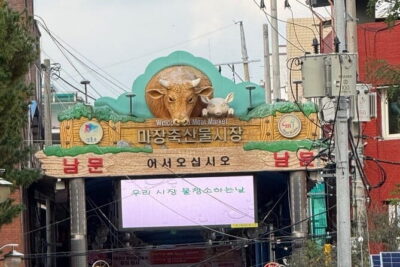
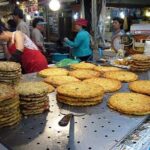
You’ll also have time at Namdaemun Market for about 30 minutes. This is a smart ending because you’re not rushing through another museum. You’re finishing with a place that’s made for browsing and atmosphere—traditional commerce, goods, and street-level energy.
If you want souvenirs that feel grounded in Seoul life, this is where you can spend your last cash and carry. Keep it light though: the day is long, and you’ll be moving toward your end point afterward.
Price and logistics: does $56.44 make sense?
At $56.44 per person for about 8 hours, this tour is priced like a practical deal, not a “pay extra for a badge” experience. Here’s what you’re buying:
- Hotel pickup in central Seoul
- An English-speaking local guide and driver/guide
- Bottled water
- Entrance fees included for the paid sites
That means you’re not calculating ticket costs and then discovering a few add-ons that make your day pricier than expected.
Two cost/value trade-offs to know. First, lunch isn’t included anymore (since Sep 1, 2024). The tour gives you free time in Insadong to eat, but you’ll pay on your own. Second, you don’t get hotel drop-off at the end. The tour drops you off around City Hall or Myeongdong only.
Also, transportation time adds up. Even with a comfortable vehicle, you should expect slower movement between areas due to traffic. One review-style pattern I’d take seriously: in winter, the cold can make waiting outside feel longer, so dress for standing around in daylight—especially if the ceremony is happening near a gate.
Guide quality: the names you might meet
One of the biggest strengths of this tour is the human element. Guides for this day tour include names like Mr. Young, BK, Sookee, Lua, and Wong—and the common theme is that the day becomes more than sightseeing. The guide explains the palace intrigue and Joseon-era context, plus modern Seoul in a way that connects the dots.
If you enjoy history but don’t want a lecture hall, you’ll probably like this format: short explanations at the right moment, then time to look and take photos.
If you prefer a strict, neutral political approach, you might notice the guide’s storytelling focus. Some days lean more toward royal-family narratives than broader country context. That isn’t wrong—it’s just a style choice. Ask questions if you want the story expanded in a different direction.
Who this Seoul highlights tour fits best
This tour is a strong match if you:
- Are in Seoul for a short stay and want two major palaces plus key neighborhoods in one day
- Like a guided framework that helps you understand what you’re seeing (especially at Gyeongbokgung and Changdeokgung)
- Appreciate hotel pickup and small-group pacing, with a max size of 16 travelers
It might be less ideal if you:
- Want a very relaxed day with lots of independent wandering between stops
- Don’t want any ginseng-related stops (the tour includes a dedicated ginseng center visit)
- Have limited patience for transfers and time spent moving by road during busy traffic hours
Should you book this tour?
If you want an efficient Seoul day that covers the essentials—temple calm, palace grandeur, museum context, and traditional shopping—this is an easy yes. The combination of hotel pickup, entrance fees included, and small-group pacing makes it feel like real value for the price.
Book it if your schedule matches a day when Changdeokgung is open. If you booked Monday or Tuesday, accept the swaps for Bukchon or the other palace closures as part of the deal. Either way, you’ll still get a well-rounded cultural day.
If you’re picky about lunch, plan your Insadong meal ahead of time. And if the guard ceremony is your top goal, dress for the weather and keep your expectations flexible.
FAQ
What is the tour duration?
It runs for about 8 hours.
How much does the tour cost?
The price is $56.44 per person.
What’s included in the price?
Hotel pickup in central Seoul, an English-speaking local guide, driver/guide, bottled water, and entrance fees for included attractions.
Is lunch included?
No. Lunch is no longer included since September 1, 2024, and you’ll have free time for lunch in Insadong.
Does the tour offer hotel pickup?
Yes, hotel pickup is offered in central Seoul.
Where does the tour drop you off?
Drop-off is at City Hall or Myeongdong only.
Which royal palaces are visited?
You’ll visit Gyeongbokgung Palace and Changdeokgung Palace, with day-of-week substitutions if either is closed.
What happens if Changdeokgung Palace is closed?
On Mondays, Changdeokgung is closed and you’ll go to Bukchon traditional Hanok Village instead.
What about the royal guard changing ceremony?
It may be cancelled due to weather conditions.
Is there a mobile ticket?
Yes, mobile ticket is listed as part of the tour.