REVIEW · SEOUL
DMZ Private Tour Admission Incl.
Book on Viator →Operated by Korea Season Tour · Bookable on Viator
A day at the border changes your perspective fast, and this DMZ trip makes it easy to pull off. Hotel pickup gets you out the door in the morning, and admission is handled so you spend less time staring at ticket lines. You’re also not stuck figuring routes and rules on your own—your guide keeps the day moving with clear commentary as you pass key sites.
I really like that the pace is structured but still feels human: you get real sight stops (Freedom Bridge, an underground bunker, the Third Tunnel, and Dora Observatory) rather than just “drive-by photos.” The only thing to watch is that “private” doesn’t always mean total freedom inside the checkpoints; you may still have set waiting times while passport checks happen and buses move as a group.
In This Review
- Key things I’d bank on before you go
- Price and logistics: what $261.58 buys you in real comfort
- From your hotel to Imjingak Park: the morning run that sets expectations
- Imjingak to the Tongildaegyo bridge: Freedom Bridge, then passport reality
- The Third Tunnel: documentary viewing and underground walking time
- Dora Observatory: the North Korea view with a guided frame
- Tongilchon-gil village and the return: finishing with the human scale
- Who this DMZ private tour is best for (and who should skip it)
- Booking advice: how to get the best day out of it
- Should you book this DMZ private tour?
- FAQ
- How long is the DMZ tour?
- Does the price include admission?
- Is hotel pickup and drop-off included?
- Is lunch included?
- What stops are included during the day?
- Will there be passport checking?
- Do I need to bring anything besides my ticket?
- What if the weather is bad?
- Can I cancel for free?
Key things I’d bank on before you go
- Door-to-door pickup from Seoul means less stress in the morning, especially if weather is messy.
- Admission included for the main DMZ stops (including the Third Tunnel and Dora Observatory) cuts down on line-hunting.
- A pro DMZ guide keeps the story coherent while you’re looking across the river and underground.
- Mobile ticket plus a set schedule helps the day run smoothly.
- You’ll do real checkpoint processing, including passport checks at the Tongildaegyo bridge area.
Price and logistics: what $261.58 buys you in real comfort
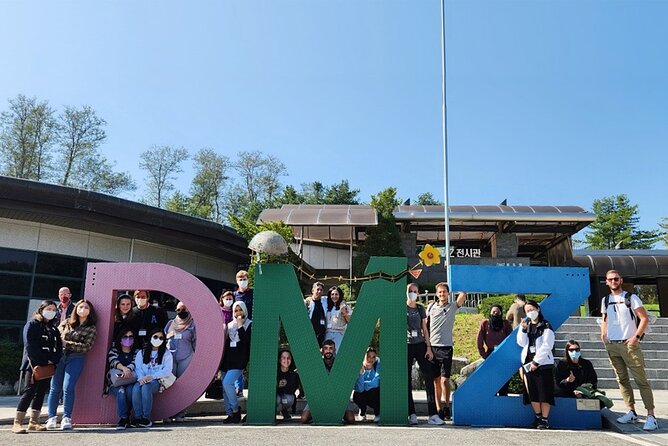
This DMZ private tour costs $261.58 per person and typically gets booked about a month ahead. For many people, the value isn’t just “private transport”—it’s that your big friction points are removed: getting tickets for multiple sites, managing the bus/shuttle timing, and spending your limited day figuring out logistics.
You’re also not just paying for driving. Admission is included for the Freedom Bridge and an underground bunker, plus the Third Tunnel and Dora Observatory, and the DMZ shuttle bus is included where applicable. On top of that, you get air-conditioned vehicle pickup and drop-off from your hotel in Seoul, which matters on both hot summer days and cold winter ones.
The main extra cost is lunch: plan on 15,000 KRW per person. If you’re hoping the day is fully “all-in,” it isn’t. But it’s also fairly normal for DMZ tours to leave lunch flexible, so you can choose what suits your appetite and timing.
One more practical note: the DMZ is about 52 km from downtown Seoul, and the whole tour runs around 6–7 hours. That means you should treat this like a full-day commitment, not a quick add-on before dinner.
You can also read our reviews of more private tours in Seoul

From your hotel to Imjingak Park: the morning run that sets expectations
The day starts with hotel pickup in Seoul City, then a drive straight to Imjingak Park, where the DMZ tour begins. It takes about one hour (roughly 54 km from downtown Seoul), though the real time can shift based on conditions and how quickly the day’s checkpoint flow moves.
I like the start here because Imjingak acts like a warm-up. You’re not thrown instantly into the most controlled spots; instead, you begin with the broader memorial landscape that explains what the DMZ represents in daily terms, not just in headlines.
At this stop, you’ll see several key sites around the riverfront theme, including the Freedom Bridge, an underground bunker, the Monument of US Forces, the Memorial Hall, and the Peace bell. It’s a mix of structures and symbolism, and your guide’s job is to connect what you’re seeing to the wider Korean War and postwar division story.
Imjingak also gives you a chance to shake out the day’s constraints. There’s a reason the tour gives you roughly 50 minutes here: you need time to orient yourself, take photos where allowed, and not feel rushed before the passport checkpoint portion of the day.
Imjingak to the Tongildaegyo bridge: Freedom Bridge, then passport reality
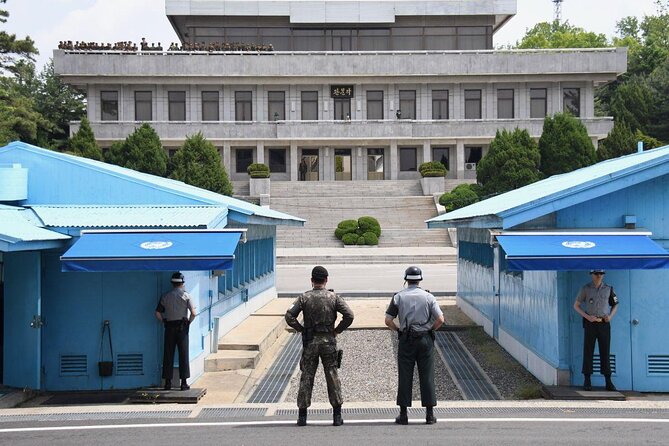
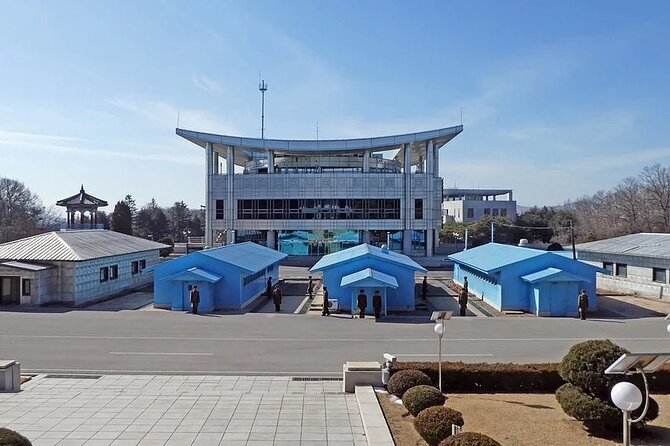
Next up is the Tongildaegyo Bridge North Gate area. This is where the DMZ shifts from “tourist sights” to “controlled border procedure.” You’ll spend about 20 minutes in this section, including a short window to handle passport checking.
It’s also your chance to stand at a point tied directly to the concept of unification—on the tongildaegyo (unification) bridge, South Korean soldiers check your passport before you move onward. The short time here can feel brisk, so keep your documents ready and follow instructions quickly.
If you’re the kind of traveler who wants to wander and linger, you may find yourself measuring your patience here. The system is orderly, but it’s still a system. The best approach is simple: plan on being flexible for checkpoint steps, and use your guide’s guidance so you don’t burn time asking the same question twice.
This section is also one reason I think it’s smart to choose a tour with admission and transfers organized. When everyone is funneling through the same checkpoints, trying to manage it alone usually turns into waiting.
The Third Tunnel: documentary viewing and underground walking time
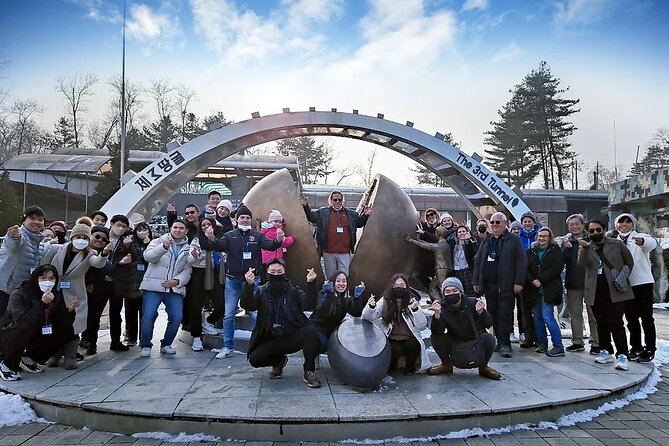
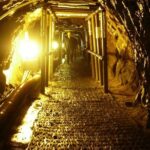
After passport checks, the tour moves to the Third Tunnel. You spend about 1 hour 25 minutes here, including around 15 minutes of transit time to reach the tunnel area and roughly 70 minutes for the tunnel visit itself.
What makes this stop special is the combination of viewing and on-site exploration. You’ll watch a documentary film, then you’ll move into the tunnel to see it firsthand. The emotional impact of being underground is hard to summarize, but it’s often the point where the DMZ stops feeling abstract.
The timing here is built for a reason: tunnel entry and exit takes longer than a normal monument stop. If you’re traveling with kids, this part can work well because it’s both visual (film) and physical (walking the space).
A practical tip for your comfort: wear shoes that are easy to move in. You’ll be spending real time on your feet, and underground areas can change how you feel about footing and air temperature.
Dora Observatory: the North Korea view with a guided frame
Then you head to the Dora Observatory, with about 30 minutes on site. The drive time to get there is short—around 10 minutes—so you’re not losing much of the day’s energy between big stops.
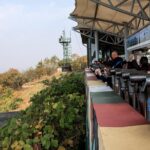
At Dora, you can observe the North Korean city Gaesung and view statues connected with the founders’ era, including figures of Kim Il-sung along with his son (as described in the tour notes). The guide’s commentary matters a lot here. Without that framing, it’s easy to see a viewpoint and miss the meaning of what’s being pointed out.
This stop is also a good reality check. From an observation deck, you’ll learn how “seeing” works in the DMZ—what you can look across at, what you can’t, and why the tour keeps returning to the same handful of sites. It’s the visual capstone of the day’s story: river, division, underground, and then the line of sight.

Tongilchon-gil village and the return: finishing with the human scale
Your next brief stop is Tongilchon-gil, the unification village area. Plan on about 15 minutes in the village section, and about 25 minutes total for this stop including travel.
This is labeled as part of the civilian off-limits area, with around 500 South Korean farmers cultivating ginseng. It’s not a long stop, but I like it because it shifts the focus away from military infrastructure and toward how people try to function under division constraints.
After that, you wrap up and return to Seoul. The ride back takes about one hour, and you’ll be dropped at your hotel.
By the time you get back, the tour is usually mentally heavy but also oddly clarifying. It’s one thing to read about the DMZ. It’s another to stand in the places where the rules are enforced and the geography tells its story.
Who this DMZ private tour is best for (and who should skip it)
This tour is a great fit if you want a guided, structured DMZ day without needing to do research on transport, sites, and ticketing. If you’re short on time in Seoul and you want the big sights covered—Freedom Bridge, the bunker, the Third Tunnel, and Dora Observatory—this format saves you decision fatigue.
It’s also good if you care about English commentary and smooth movement. Guides tied to this tour style include Wendy, Jun, Lily, and Cindy, and multiple accounts highlight clear explanations and quick help with timing and logistics.
I’d say it might be less ideal if your top priority is pure “wander at will” freedom. Even private tours here can run into checkpoint pacing, because passport checks and shuttle movement are real-world constraints.
Booking advice: how to get the best day out of it
DMZ tours are weather-dependent, so choose a date where you’re not already booked on a tight schedule. Since you’ll be outside for portions of the day (riverfront areas, bridge checkpoint area, observation deck), you’ll feel the weather.
Also, bring your passport and keep it accessible for the Tongildaegyo bridge checkpoint step. This isn’t the part to dig through bags.
Finally, think about your expectations for a “private” day. Private can mean private pickup and private guide attention, but the DMZ itself still has rules. If you go in understanding that checkpoints set the tempo, you’ll feel calmer and enjoy the day more.
Should you book this DMZ private tour?
I’d book it if you want the DMZ done in one day with door-to-door pickup, admission handled, and a guide who connects each stop to the bigger story. The value is strongest when you factor in what’s included: multiple key sites, tunnel and observatory access, and the shuttle/transfer pieces that usually add up when you plan everything separately.
I’d think twice if you hate being bound by checkpoint timing or if you’re expecting total freedom to linger at every site. In that case, you might still enjoy the sights, but you may feel constrained by the structure that keeps everyone moving safely.
If your goal is a clear, guided DMZ day with the major stops covered and minimal hassle, this is a solid choice.
FAQ
How long is the DMZ tour?
It runs about 6–7 hours total, including travel from Seoul and time at the DMZ sites.
Does the price include admission?
Yes. Admission is included for the Third Tunnel and Dora Observatory, plus Freedom Bridge and an underground bunker (and a DMZ shuttle bus is also included).
Is hotel pickup and drop-off included?
Yes. The tour includes hotel pickup and drop-off door-to-door from Seoul.
Is lunch included?
No. Lunch is not included, and the note says 15,000 KRW per person.
What stops are included during the day?
The route includes Imjingak Park (with sights like Freedom Bridge, bunker, memorial hall, peace bell), Tongildaegyo bridge checkpoint area, the Third Tunnel, Dora Observatory, and Tongilchon-gil, then the return to Seoul.
Will there be passport checking?
Yes. Passport checking happens at Tongildaegyo Bridge North Gate as part of moving forward on the tour.
Do I need to bring anything besides my ticket?
You will need your passport for the checkpoint step.
What if the weather is bad?
The experience requires good weather. If it’s canceled due to poor weather, you’ll be offered a different date or a full refund.
Can I cancel for free?
Yes. You can cancel up to 24 hours in advance for a full refund. Canceling within 24 hours does not receive a refund.