REVIEW · SEOUL
Seoul City Half Day Tour-Gyeongbok Palace Guard Changing Ceremony
Book on Viator →Operated by VIP TRAVEL Co.Ltd · Bookable on Viator
Seoul’s palaces feel big. This half-day route is built to help you get your bearings fast—Jogyesa Temple, Cheongwadae Sarangchae, and the Gyeongbokgung Changing of the Guard in one smooth morning. I love how efficiently the coach covers multiple “first-timer” stops without making you crisscross the city. I also like that the guide adds context at each site, so the sights feel like part of one story rather than random photo stops. A fair heads-up: the ginseng stop at the end can feel more like shopping than sightseeing.
If you’re aiming to see the Changing of the Guard at Gwanghwamun Gate and still have time for the rest of Seoul afterward, this tour makes a lot of sense. Still, consider timing and comfort—there’s outdoor standing for the ceremony, and the day is paced enough that you’ll want good walking shoes and weather-appropriate layers.
In This Review
- Key Highlights You’ll Notice Right Away
- Why This Half-Day Tour Works for First-Timers in Seoul
- Getting Going: Pickup, Coach Comfort, and a Central Starting Point
- Jogyesa Temple: A Downtown Calm Break (Without Losing Time)
- Cheongwadae Sarangchae: Presidents and Culture in One Exhibit Hall
- Gyeongbokgung Palace and the Guard Changing at Gwanghwamun Gate
- National Folk Museum of Korea: Everyday Life Stories Behind the Palaces
- The Ginseng (and Shopping) Stop: What to Expect and How to Stay in Control
- Tuesday Changes: When the Guard Ceremony Isn’t Running
- Price and Logistics: Is $38 Worth It?
- Who This Tour Suits Best (and Who Should Rethink It)
- What to Bring for a Comfortable Morning
- Should You Book This Seoul City Half-Day Tour?
- FAQ
- How long is the Seoul City Half Day Tour?
- Is hotel pickup included?
- What does the tour include?
- Where does the tour start and end?
- Is lunch included?
- Is the Changing of the Guard ceremony included?
- What happens on Tuesdays?
- How many people are in the group?
- Do I need good weather?
- What is the cancellation policy?
Key Highlights You’ll Notice Right Away
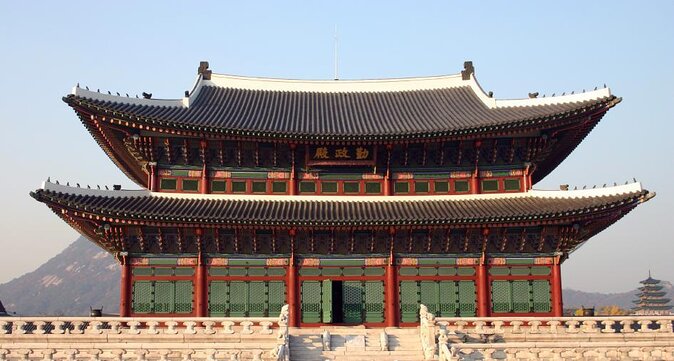
- Changing of the Guard at Gwanghwamun Gate: You’ll be positioned for a great view of the ceremony.
- Hotel pickup plus air-conditioned coach: Less hassle, more sightseeing time.
- Cheongwadae Sarangchae exhibits: Displays on Korea’s presidents, cultural traditions, and UNESCO World Heritage Sites.
- Jogyesa Temple in downtown Seoul: A calm Buddhist pause with major landmark sights.
- Ginseng stop built into the schedule: It’s part of the tour, but it can be heavy on sales.
Why This Half-Day Tour Works for First-Timers in Seoul
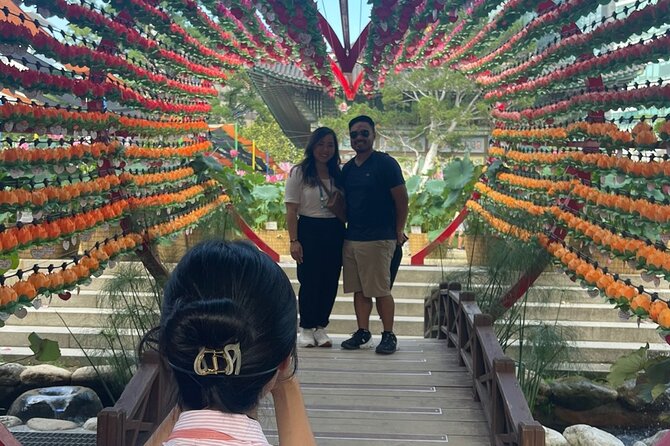
This is the kind of morning tour that helps when you land with jet lag, limited time, or a “show me the must-sees” priority list. You’re not expected to plan transit between sites. Instead, you’re dropped into a tight loop of meaningful places: a central Buddhist temple, a presidential-historical exhibit hall, and then the big royal stage at Gyeongbokgung.
The value is in the structure. At $38 per person for about 3 hours, you’re paying for convenience (pickup and coach), guide interpretation, and included entry where it matters—especially the palace portion tied to the guard ceremony. That’s often the difference between rushing on your own and actually seeing what you came for.
One more thing I like: it ends early enough that you’re not locked into a full-day schedule. The tour generally finishes around City Hall or Itaewon, which is a practical springboard for your own afternoon plans.
You can also read our reviews of more city tours in Seoul
Getting Going: Pickup, Coach Comfort, and a Central Starting Point
The tour starts with pickup from your Seoul hotel, then you meet the group around City Hall Station. That’s a smart location because it’s easy to orient yourself in the center of town. You also get a mobile ticket, which cuts down on faffing around once you’re already out in the city.
The coach ride matters more than you think. Seoul can be fast-moving and busy, and the pacing of this tour assumes you’ll be able to hop between neighborhoods without planning every leg. The bus is described as air-conditioned, which is a real comfort factor if you’re going in warmer months.
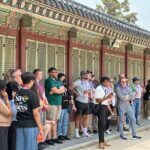
Group size caps at 40 travelers, which usually means you’ll have enough energy and movement for a coordinated morning. If you’re sensitive to crowds, this is still not a private tour—but the setup is designed to keep things orderly.
Jogyesa Temple: A Downtown Calm Break (Without Losing Time)
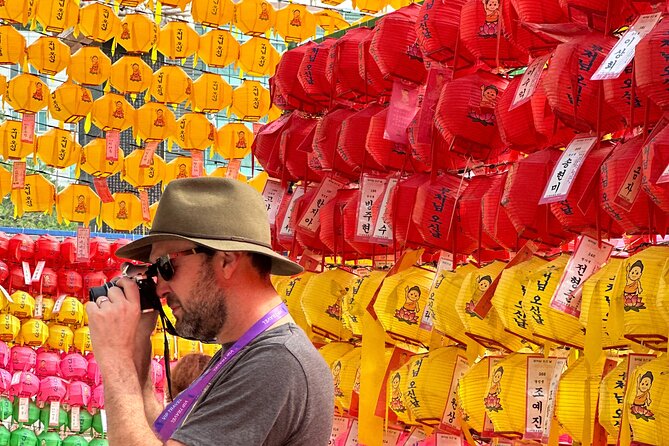
You begin at Jogyesa Temple, one of Korea’s key Buddhist sites. The timing is tight—about 40 minutes—but it’s enough to feel the change in atmosphere. This temple sits in downtown Seoul, so you get a contrast that’s almost the point: the city outside, then a quieter world under the temple’s trees and structures.
What to watch for here:
- The tree-lined entryway, which helps you “arrive” rather than just walk through.
- The seven-story pagoda view along the way.
- Time inside to see an important Buddha statue in the main temple building.
Since the admission is free, you’re not wasting your money to get a feel for the spiritual side of Seoul. If you’re the type who likes short stops with clear takeaways, this one fits.
Practical tip: wear shoes that handle uneven stone. Even on a short visit, you’ll be doing temple-walk surfaces and stairs.
Cheongwadae Sarangchae: Presidents and Culture in One Exhibit Hall
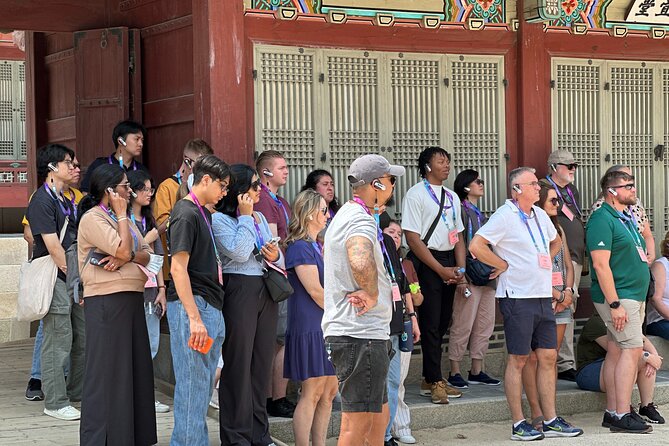
Next comes a stop at Cheongwadae Sarangchae, an exhibition hall tied to Korea’s presidential site area. Think of it as context you can actually use while you’re walking around the capital later.
The displays cover:
- Korea’s presidents
- Korean cultural traditions
- UNESCO World Heritage Sites in Korea
I like this kind of stop because it interrupts the pattern of “temple, palace, photo.” Instead, it gives you a frame for what you’re seeing next—royal history right after national identity exhibits.
You also get the sense of location. The tour route includes passing by the Presidential Blue House (Cheongwadae) by coach. You’re not being asked to do a deep security-style visit here; it’s more about seeing the place as part of Seoul’s geography.
If you’re short on time and want more meaning per hour, this is a good middle step.
Gyeongbokgung Palace and the Guard Changing at Gwanghwamun Gate
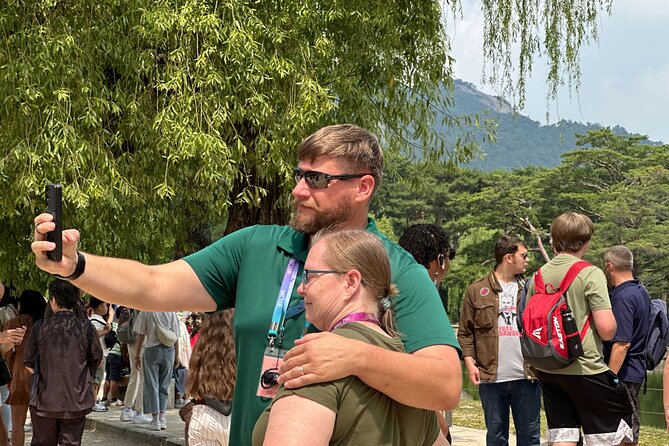
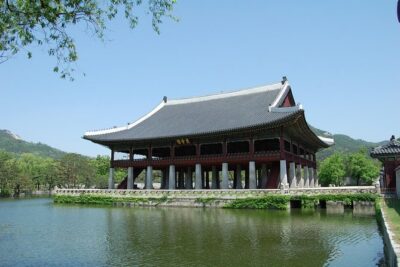
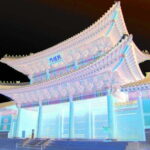
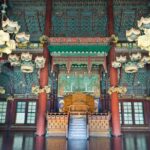
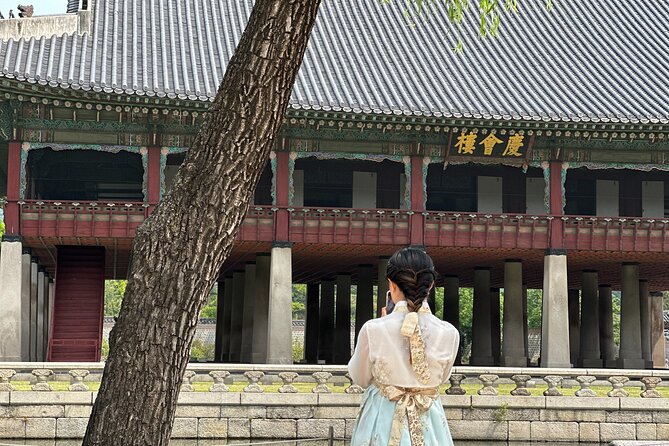
This is the star of the morning. Gyeongbokgung Palace served as the main royal residence during the Joseon Dynasty and is described as the largest of the Five Grand Palaces. It also has the kind of scale that makes the guard ceremony feel even more “official.”
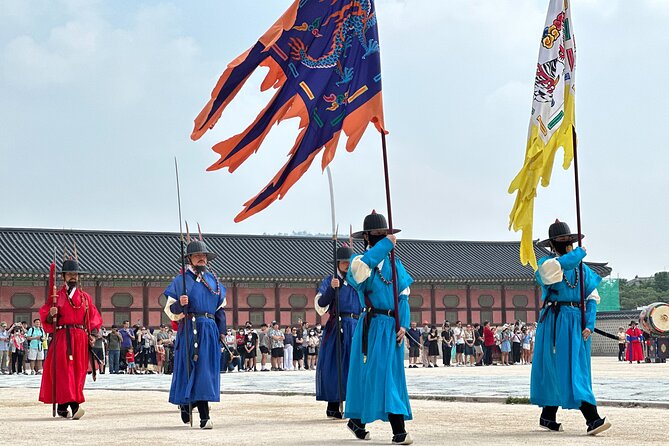
The tour focuses your time around the Changing of the Guard at Gwanghwamun Gate, with about 1 hour set aside. The ceremony is known for being choreographed and visual, and this tour specifically aims to position you for a solid view. Many guests also praise guides for finding good spots—so your odds of seeing the action clearly improve when you’re part of a coordinated group.
A couple things to plan mentally:
- You’ll likely be standing for parts of this. Bring layers for temperature shifts.
- The palace grounds can be busy, and timing matters. Staying with the group keeps you from getting lost in the crowd.
Also, watch for a key scheduling detail: Gyeongbokgung Palace and the National Folk Museum are closed on Tuesdays. If your day falls on Tuesday, the tour uses replacement sights (see the Tuesday section in the FAQ).

National Folk Museum of Korea: Everyday Life Stories Behind the Palaces
After the palace stop, the tour includes the National Folk Museum of Korea for about 30 minutes, with admission included. Even if museums aren’t your first pick, this time window can help you connect the palace spectacle to real-life culture.
Why it’s worth your attention:
- It was initially established as the Korean Imperial Museum in 1908, then renamed and relocated over time.
- The name “folk museum” signals a broader angle than royal-only history, so it’s a nice balance to the guard ceremony.
In a half-day tour, 30 minutes is brief. But it’s also enough to get the big themes and leave you with names and concepts to look up later.
If you hate rushing indoors, keep expectations realistic. This is built as a quick cultural stop, not a full museum day.
The Ginseng (and Shopping) Stop: What to Expect and How to Stay in Control
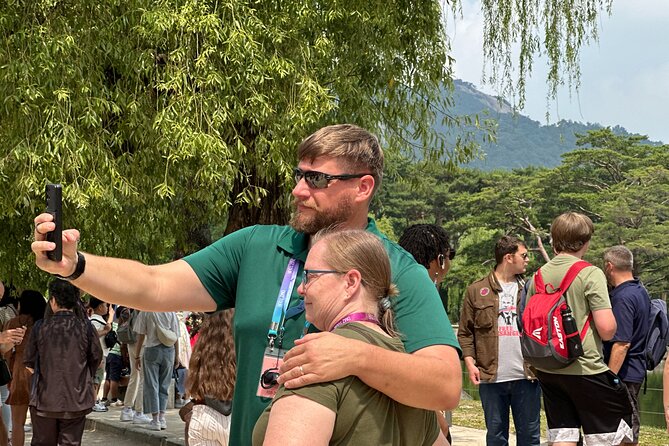
The last scheduled portion is a visit to Cheongga or Korea ginseng-related shopping/learning (listed as 청하고려인삼(주), described as a ginseng museum & shopping stop). Expect around 30 minutes, with admission noted as free.
Here’s the honest part. Multiple guests have said this part can feel like a hard sell—less museum, more shop. The tour’s description supports that it’s a place to learn a bit about ginseng and then browse or buy.
My advice: treat this stop as optional in your mindset. You can:
- Focus on the informational bits you actually care about.
- Decide before you enter whether you want to buy anything.
- If you’re not interested in purchases, keep your time to “look, learn, move on.”
If you’re traveling with someone who loves skincare, supplements, or Korean herbal products, this stop could be genuinely fun. If you’re purely there for temples and ceremonies, this is the part most likely to feel off-target.
Tuesday Changes: When the Guard Ceremony Isn’t Running
If you’re visiting on a Tuesday, plan for a substitution. The tour notes that Gyeongbokgung Palace and the National Folk Museum are closed on Tuesdays.
What replaces them is described as alternate palace/neighborhood options such as Deoksugung Palace (and the Seoul Museum of Art is on those grounds) and also references Changdeok Palace with Bukchon Hanok Village as part of the Tuesday routing.
So if your trip date is Tuesday and the Changing of the Guard at Gyeongbokgung is your one non-negotiable, I strongly suggest double-checking the exact swap before you lock in—because your “must-see” might move to a different palace.
Price and Logistics: Is $38 Worth It?
At $38 per person for roughly 3 hours, I see this tour as good value if you want three things:
- Pickup and coach transport, so you aren’t solving transit between scattered sights.
- A guided experience, where you’re told what you’re looking at and why it matters.
- Included ceremony time at Gyeongbokgung, which is the moment most people actually want.
If you already have a full afternoon planned and you’re trying to avoid scheduling headaches, paying for convenience makes sense. You also get admissions included for the palace ceremony segment and the folk museum, and the Jogyesa visit is free admission.
The main “value risk” is the ginseng stop. If you end up feeling like it’s too sales-heavy for your taste, the effective value drops. That’s why your expectations matter. Go in knowing it’s part of the tour, and decide what you’ll do with it.
Who This Tour Suits Best (and Who Should Rethink It)
This tour fits you best if:
- You’re on a short stay and want a smart Seoul sampler.
- You care about the Changing of the Guard at Gyeongbokgung and want help timing the best viewing area.
- You’d rather spend energy on photos and atmosphere than on route planning.
- You like guides who share clear explanations—many guides (for example, names like Kelly, Emily, Ray, and Crystal show up in positive feedback for communication and pacing).
You might consider a different option if:
- You hate shopping stops or dislike sales presentations.
- You prefer total control and want to wander at your own speed without a group rhythm.
- You’re traveling during hot or cold extremes and don’t want outdoor ceremony standing.
What to Bring for a Comfortable Morning
This tour can be short, but it’s still outdoors at a major palace. I’d plan like the weather will matter:
- Comfortable shoes for temple stone and palace walking
- Sun protection (a hat was specifically recommended by one guest)
- Layers for cold mornings or sudden changes
- Water, since the day runs from pickup through several sites
If you’re sensitive to crowds, arrive with patience and stick to your guide’s instructions during transitions.
Should You Book This Seoul City Half-Day Tour?
If your goal is a first-time Seoul hit list—Jogyesa, Cheongwadae Sarangchae, Gyeongbokgung and the guard ceremony—then yes, I’d book it. The biggest strength is that it turns scattered highlights into one managed morning, and the time at Gyeongbokgung is the center of gravity.
The only reason I’d hesitate is the last stop. If you know you’ll be annoyed by shopping or sales pressure, that portion can make the whole day feel mismatched. But if you can treat the ginseng stop as a brief look-and-go, the rest of the tour is strong.
In short: book it for the ceremony and the cultural framing. Then leave yourself a relaxed afternoon to explore on your own.
FAQ
How long is the Seoul City Half Day Tour?
It’s about 3 hours (approximately).
Is hotel pickup included?
Yes. Hotel pickup is included.
What does the tour include?
The tour includes a professional guide (English or Chinese), hotel pickup, and all taxes, fees, and handling charges. Admission for the palace/ceremony portion and the National Folk Museum is included, and Jogyesa entry is free.
Where does the tour start and end?
It starts near City Hall Station and ends at Seoul City Hall or Itaewon.
Is lunch included?
No, lunch is not included.
Is the Changing of the Guard ceremony included?
Yes. You’ll witness the ceremony at Gwanghwamun Gate in front of Gyeongbokgung Palace, and it’s listed as included.
What happens on Tuesdays?
On Tuesdays, Gyeongbokgung Palace and the National Folk Museum are closed, so the tour visits alternative sites instead, such as Deoksugung Palace (with Seoul Museum of Art nearby) and/or Changdeok Palace and Bukchon Hanok Village, depending on the day’s routing.
How many people are in the group?
The tour has a maximum of 40 travelers.
Do I need good weather?
Yes. The experience requires good weather. If it’s canceled due to poor weather, you’ll be offered a different date or a full refund.
What is the cancellation policy?
You can cancel up to 24 hours in advance for a full refund. Within 24 hours, there’s no refund.