A local walks you through Seoul. This private tour is interesting because you can shape the day around your interests, then follow your guide through key sights and quieter corners with real local context. I especially liked the custom itinerary planning and the way the route often includes off-the-main-road surprises that feel like you found them the right way, not the tourist way.
One thing to consider: this is a true walking experience (2 to 6 hours), and while pickup may be available, moving between some sites can mean extra public transport or taxi costs if you want to save time.
In This Review
- Quick hits before you plan your Seoul day
- How customization works in real life, not just on paper
- Jongno to palaces: seeing Seoul’s core without feeling rushed
- Bukchon-style alleys: traditional houses without the souvenir rush
- Cheonggyecheon Stream: a calm walk break in the middle of Seoul
- Plaza stops, statues, and a wider view of Korean identity
- Food, markets, and small culture stops that make the day feel lived-in
- Guides matter: what to look for based on real guide styles
- Price and time: is $76.87 per person good value?
- Logistics that actually affect your day
- Who should book this Seoul highlights and quiet corners tour?
- Should you book this tour?
- FAQ
- How long is the Seoul Highlights and Hidden Gems private walking tour?
- Is this tour private?
- Where does the tour start and end?
- Is pickup offered?
- Is it only walking, or is there transportation?
- Are attraction tickets included?
- Are food and drinks included?
- Can I customize the itinerary before the tour?
- Does the tour help if I don’t speak Korean?
- Is free cancellation available?
Quick hits before you plan your Seoul day
- Private and customizable: You fill out a short questionnaire, then your host contacts you to tailor the route to history, food, shopping, culture, or K-pop-style fun.
- Start/end anchored in Jongno: The default meeting point is in Jongno District (109 Jae-dong), and the tour ends back there.
- Seoul highlights, but flexible order: You can build your day around classic big-name places like Gyeongbokgung Palace, and also add choices like N-Seoul Tower depending on your interests.
- Walking-first, transport-second: It’s designed around walking, but public transport (or local taxis) may be used between sites at your own cost.
- Guides make it feel personal: Many tours feel like a conversation, with helpers who can also assist with photos, transit tips, and even small “family needs.”
How customization works in real life, not just on paper
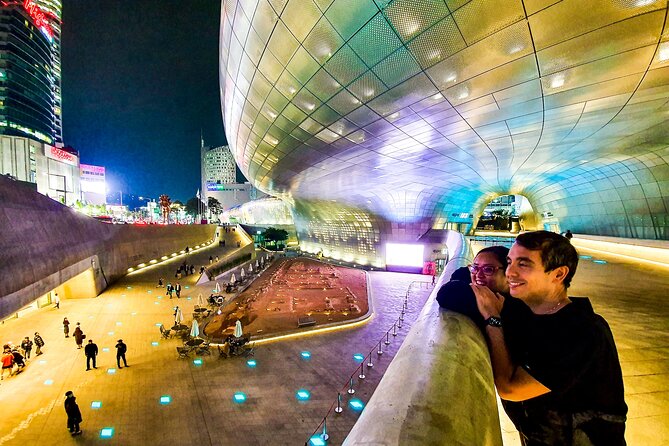
This tour’s big strength is simple: you’re not stuck with a fixed route. You start by sharing your preferences through a pre-tour questionnaire, and then you communicate directly with your host to build an itinerary that matches your energy level and what you actually want to see.
That matters in Seoul, because the city can feel like a lot of similar-looking neighborhoods until you know where to spend your time. With this format, I like that you can steer toward:
- major landmarks (palaces, big public spaces)
- traditional areas with hanok houses
- artsy streets, tea-house vibes, and small craft stops
- markets and everyday street life
- viewpoints and skyline moments like N-Seoul Tower
The practical payoff is that your guide can decide what to prioritize first, what to cut, and what to swap in if the day feels too crowded or you’re running late. I also appreciate that flexible start times are offered, so you’re not forced into the most touristy schedule.
You can also read our reviews of more walking tours in Seoul


Jongno to palaces: seeing Seoul’s core without feeling rushed
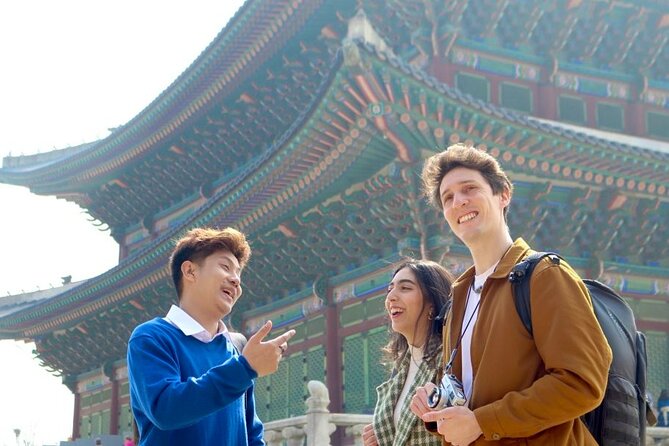
A typical route often centers around palace-area history and the “Korea of yesterday” feeling you can still walk into. One of the anchor stops is Gyeongbokgung Palace, Seoul’s largest royal palace. Even if you’ve seen photos, there’s something different about standing in front of the scale of it and reading the place through a local’s explanation.
At Gyeongbokgung, you’ll generally get time to wander the courtyards and take in the architecture up close. The tour also tends to include that special layered look you get when traditional clothing shows up around the palace—some visitors wear hanbok, and your guide can help you understand what you’re seeing and why it matters.
One useful detail: if you’re choosing a shorter option (around 2 hours), you’ll want to pick a “palace focus” route, because the palace area rewards slower viewing. If you’re going for 4 to 6 hours, you can usually pair the palace with nearby cultural neighborhoods so your day doesn’t feel like one stop and done.
Bukchon-style alleys: traditional houses without the souvenir rush
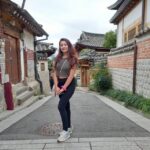
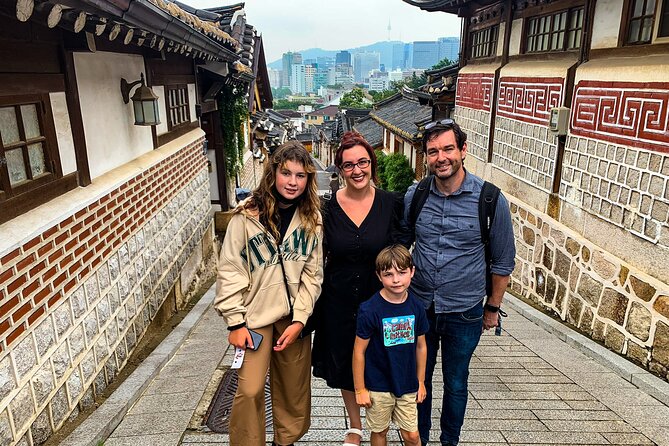
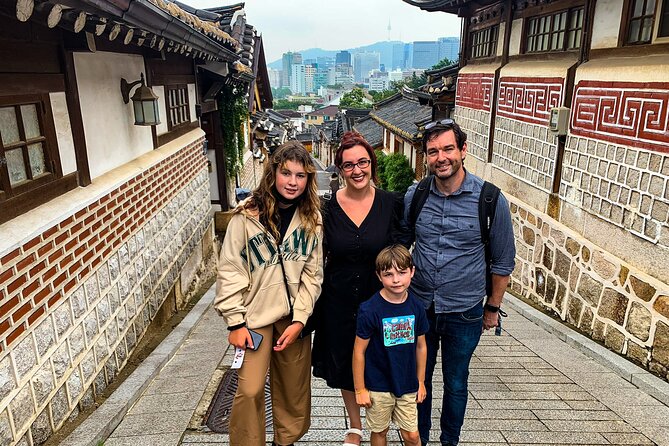
After the palace area, a common move is toward Bukchon Hanok Village—those winding lanes lined with preserved hanok houses. This is where you start to feel Seoul as lived-in layers: old homes, old streets, and the modern city pressing in around them.
What makes this stop work on a guided walk is pacing. A guide can steer you through the lanes in a way that helps you notice the details instead of just chasing viewpoints. You’ll also learn how the area changed over time, including how it developed from a more noble district role into the kind of preserved neighborhood you see today.
If you’re the type who hates crowded photo lines, this is where choosing the longer duration helps. You can spend less time fighting for a clear angle and more time enjoying the street textures, door shapes, and the quiet mood in between the busier streets.
Cheonggyecheon Stream: a calm walk break in the middle of Seoul
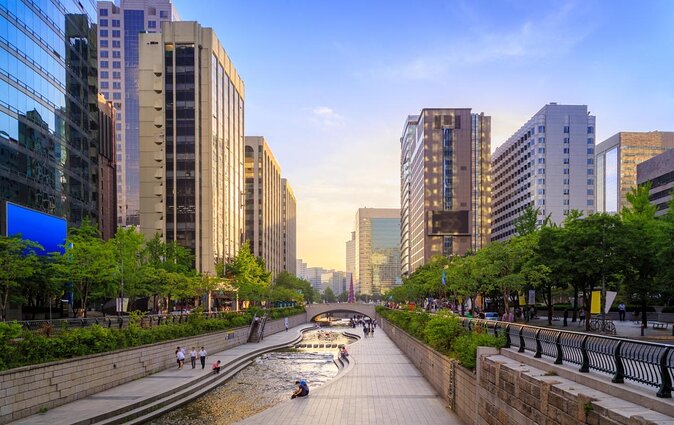
One of the most relaxing parts of the day can be Cheonggyecheon Stream, a scenic urban waterway that cuts through the city. It’s the kind of place that’s almost unfairly peaceful once you’re in it.
On your walk here, you’ll pass under bridges and along art installations while the city noise softens around you. In terms of itinerary flow, I love this kind of stop because it prevents the day from turning into a checklist of monuments. It’s also a great place to slow down for photos and just reset before the next neighborhood.
If you’re traveling with kids or anyone who gets tired of palace walking, this is one of those “everyone can breathe” sections of the route.
Plaza stops, statues, and a wider view of Korean identity
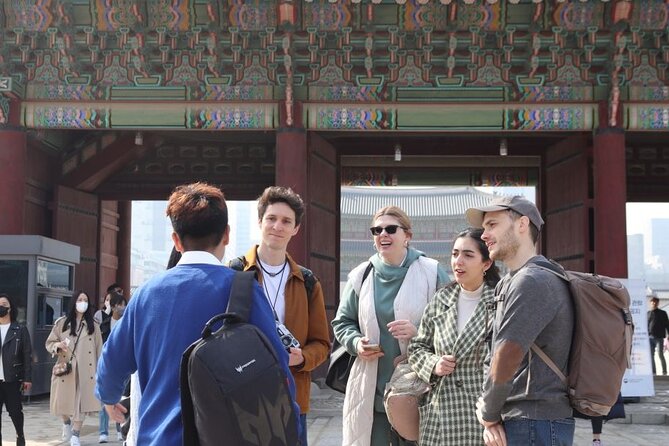
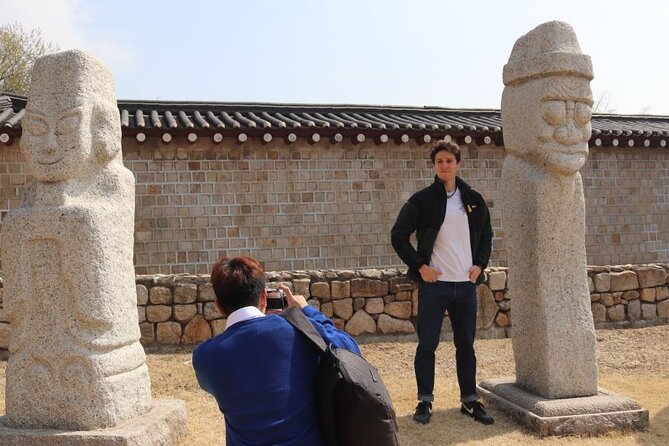
Another stop that often appears on palace-adjacent routes is a grand plaza framed by Gyeongbokgung Palace and the modern skyline. Your guide can point out key statues in that space—specifically King Sejong and Admiral Yi Sun Shin—so you’re not just taking photos, you’re understanding who these figures are and why they’re placed where they are.
This kind of stop is underrated because you can spend a lot of time inside the palace gates and still miss the bigger “why” of the public spaces outside. With a guide, you’ll get a clearer sense of how history, leadership, and national identity show up in the urban design.
You can also read our reviews of more private tours in Seoul



Food, markets, and small culture stops that make the day feel lived-in
A walking route in Seoul can go two ways: either you only see official landmarks, or you include everyday places where locals actually eat and shop. This tour is built to let you pick that balance.
Depending on what you asked for, your day might include:
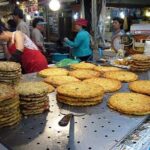
- a market visit where you can try dumplings or other street foods
- tea-house or craft-shop streets
- street performances and small creative stalls
- shopping detours that are actually fun, not a waste of time
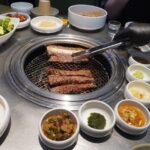
I like that the tour is flexible about this, because Seoul’s food and shopping scenes change neighborhood to neighborhood. If you’re the kind of person who wants to eat at a place that makes sense after you learn the area’s background, this is a strong match.
Important note: food, drinks, and attraction tickets are not included. That’s normal for this kind of walking tour, but it does mean you should budget for your own meals and any entry fees you decide to pay.
Guides matter: what to look for based on real guide styles
A private tour only works as well as the guide. In the best cases, you get energy, context, and real tailoring.
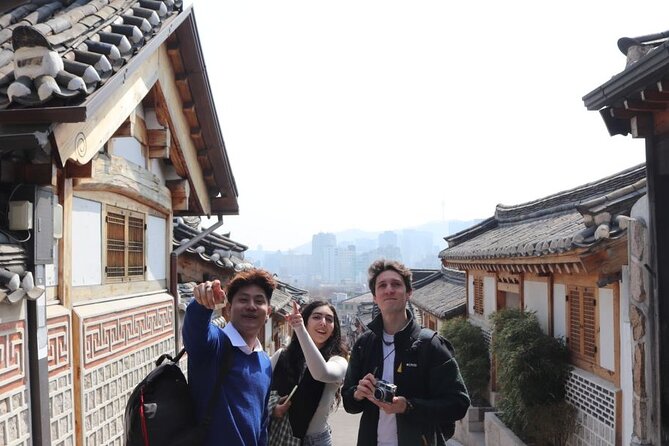
For example, guides like GJ and Jeeseon are repeatedly described as enthusiastic and able to customize strongly around family needs and personal interests. Some guides like Hans go beyond the walking script by helping arrange hanbok experiences for palace visits, which can be a huge highlight if that’s on your wish list.
Other guide styles you might encounter:
- Photo-friendly help: Some guides actively help you with photos and even pacing for pictures.
- Transit coaching: If you ask, you may get practical advice for using public transport so you can continue exploring solo later.
- Extra consideration: In some cases, guides handle small group needs like snacks or water so the walk stays comfortable.
Now, a balanced caution: one experience did not go smoothly due to discussions about extra time and added costs. That’s not the typical pattern, but it’s a good reminder. If you want taxis instead of trains, or if you plan to add stops late in the day, ask clearly how extra transport time or changes will be handled so there are no surprises.
Price and time: is $76.87 per person good value?
At $76.87 per person, the value depends on what you want your time in Seoul to do.
Here’s the way I think about it:
- If you have just a day (or part of a day) and want a structured start—this price can pay off fast because you’re buying local direction, not just walking.
- If you love flexibility and you’re going to use the customization feature, you’re more likely to feel you got your money’s worth.
- If you plan to spend most of your day alone anyway, and you already know exactly which places you want to hit, you might feel like you could do it cheaper on your own.
Duration options range from 2 to 6 hours. My practical advice:
- Choose 2 hours if you want a focused intro and you’re okay with fewer neighborhoods.
- Choose 4 hours if you want highlights plus at least one “less obvious” section.
- Choose 6 hours if you want a fuller mix of palaces, traditional streets, and a calmer finishing stretch like Cheonggyecheon.
Also remember: tickets, food, and attraction entry are not included. So your final total will depend on which stops you choose to enter.
Logistics that actually affect your day
Because it’s a walking tour, your comfort matters. Wear shoes you trust. Seoul floors can be uneven, and you’ll be doing real walking between sites.
A few logistics points to know:
- It’s private: only your group participates.
- Pickup is listed as offered, but the meeting point is in Jongno District at 109 Jae-dong, and the tour ends back there.
- Public transport or local taxis may be used to transfer between sites, with exact costs discussed with your host after you reserve.
- Flexible start times are available, which helps if you’re pairing this with other plans like museum visits or later views from the skyline.
If you’re the type who wants your day to run on a tight schedule, consider choosing a guide option that matches your stamina. If you’re unsure, pick the middle range (around 4 hours) so you have time to slow down without feeling trapped.
Who should book this Seoul highlights and quiet corners tour?
This tour is a strong fit if you:
- want a first-day introduction to Seoul that helps you understand how areas connect
- prefer walking with an actual plan you can customize
- want history context without turning your day into a lecture
- care about local food stops, markets, tea streets, and everyday culture
- like having someone help with photos and practical questions
It may be less ideal if you:
- want a mostly indoor, minimal-walking day
- only care about one attraction and don’t want to move between neighborhoods
- dislike paying separate costs for transport transfers, food, and tickets
Should you book this tour?
If you’re spending limited time in Seoul and you want to feel oriented quickly, I think this is one of the smarter ways to do it. The customization is the real value: you’re not stuck with a generic checklist, and you can shape the day toward what you actually enjoy—palace landmarks, traditional hanok streets, calmer waterway walks, and market-style food culture.
Book it when you can answer the questionnaire honestly and ask for what you want. Then treat your guide like a local friend for a few hours—ask questions, request photo stops, and adjust the pace. For $76.87 per person, you’re paying for direction, pacing, and context. In Seoul, that’s often the difference between collecting sights and actually understanding the city.
FAQ
How long is the Seoul Highlights and Hidden Gems private walking tour?
It runs from 2 to 6 hours, depending on the option you choose.
Is this tour private?
Yes. It’s a private tour, so only your group participates.
Where does the tour start and end?
The meeting point is 109 Jae-dong, Jongno District, Seoul. The tour ends back at the same meeting point.
Is pickup offered?
Pickup is offered, but the meeting point is listed in Jongno District.
Is it only walking, or is there transportation?
It’s a walking experience, and a private vehicle is not included. Public transport or local taxis may be used to transfer between sites, and those costs can be discussed with your host.
Are attraction tickets included?
No. Tickets to attractions are not included.
Are food and drinks included?
No. Food and drinks are not included.
Can I customize the itinerary before the tour?
Yes. You’ll receive a pre-tour questionnaire and can communicate directly with your host to tailor your itinerary.
Does the tour help if I don’t speak Korean?
The tour is designed to help you explore beyond the language barrier challenges that can come up when you travel solo.
Is free cancellation available?
Yes. You can cancel up to 24 hours in advance for a full refund.