REVIEW · SEOUL
DMZ Tour, 2nd Tunnel & UNESCO Suspension Bridge Tour from Seoul
Book on Viator →Operated by I Love Seoul Tour · Bookable on Viator
Most days in Seoul feel busy.
This one goes way off the normal tourist map, with a guided visit to the DMZ 2nd Tunnel and the striking geology of the Hantangang area after. You get a controlled look at a place built for invasion, plus a natural stop that helps reset your brain before the day ends.
I also love the human side of this tour: the best version of it hinges on your guide. In my notes, the English-speaking guide Leo comes up again and again, with clear explanations and real care for pacing.
One consideration: you’re signing up for a long day—about 11 to 13 hours including the ride out of the city—and the visit depends on good weather. If you’re low on energy or have limited stamina, that’s the part to plan for.
In This Review
- Key things to know before you go
- A long day starts early: Myeong-dong at 7:00 am
- Korean Workers’ Party Headquarters: a short stop with big context
- The 2nd Tunnel: what you see (and what you don’t) matters
- Cheorwon Peace Observatory: the view is the payoff
- Woljeongri Station and the Iron Triangle Battlefield: history in plain sight
- Hantangang Sky Bridge and the Geopark: tension gets a reset
- Bidulginang Waterfalls: a short walk tied to a local story
- Price and value: what $87 covers (and why it’s not just cheap)
- Guide Leo and the real difference: clear explanations
- Who should book this DMZ + suspension bridge day trip?
- Should you book this DMZ Tour, 2nd Tunnel & UNESCO Suspension Bridge Tour from Seoul?
- FAQ
- What is the total duration of the DMZ Tour with the 2nd Tunnel and Hantangang Sky Bridge?
- Where does the tour start and end?
- What time does the tour begin?
- Is lunch included?
- What is included in the price?
- Which major stops are on the itinerary?
- Is the 2nd Tunnel visit the full tunnel length?
- What fitness level do you need?
- What happens if weather is poor?
- Is there a cancellation option?
Key things to know before you go
- 2nd Tunnel access is limited to about 500m, so you’ll be walking, but not underground for the whole length.
- Cheorwon Peace Observatory adds perspective with exhibition space plus an upper observatory view.
- Woljeongri Station is a historical waypoint just before entering the DMZ area.
- Hantangang Sky Bridge is tied to the drama Crash Landing on You, but you’re there for the real views.
- Bidulginang Falls offers a quick nature break, including the story of doves nesting behind the falls.
- Small groups aren’t the point here, but the tour does cap at a maximum of 80 people, and it runs with a professional guide.
A long day starts early: Myeong-dong at 7:00 am
This tour begins in Myeong-dong with a 7:00 am start. From there, you’ll ride in an air-conditioned vehicle with hotel pickup included, which is a relief on a day that’s basically “big distance + structured stops.”
Plan your expectations for time. The itinerary runs 11 to 13 hours, and that includes travel. The drive time round trip out to the DMZ zone area is typically about 4 to 5 hours, so you’ll spend a noticeable chunk of the day on the road.
What makes that trade-off worth it is simple: the stops are not random. They’re arranged to give you a “cause → construction → impact → present-day view” flow—tunnel history first, then peace observatory and DMZ-adjacent sites, then a nature-and-culture reset at Hantangang.
Practical tip: wear comfortable shoes and plan for a long sit plus some walking. Your feet will do fine if you pace yourself, but this isn’t a sit-on-a-bus only kind of day.
You can also read our reviews of more tours and experiences in Seoul.
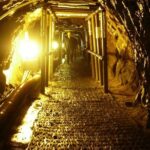
Korean Workers’ Party Headquarters: a short stop with big context
The first stop is the Korean Workers’ Party Headquarters. The setting is stark, and the timeline is a bit complicated—records you’ll hear point to construction as early as early 1946, before the Workers’ Party of North Korea was formally established.
This stop usually feels like a “set the stage” moment rather than the main event. It’s short—about 30 minutes—and admission is free. If you’ve been to other divided-history sites, you’ll recognize the pattern: you get a quick orientation so later stops land with more meaning.
The good part of doing this early is mental. When you move on to the tunnel, you’re not just looking at an attraction. You’re viewing a physical tool built for a specific strategy.
The 2nd Tunnel: what you see (and what you don’t) matters
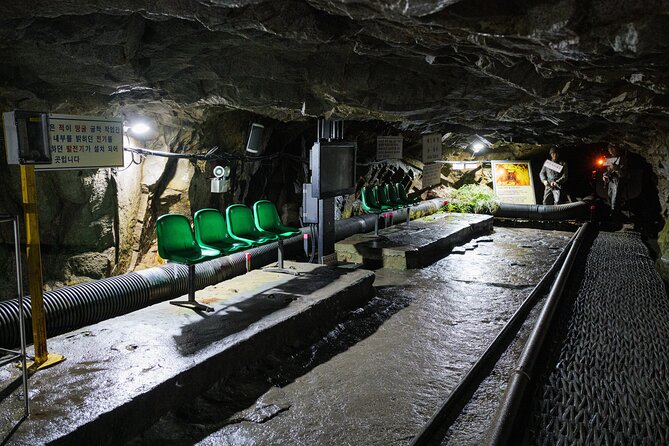
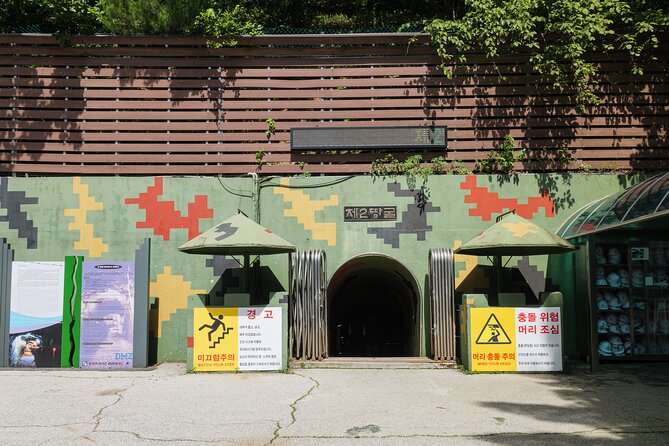
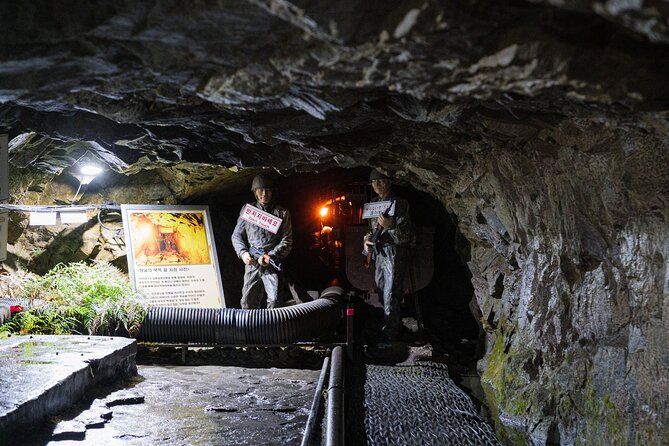
The centerpiece is the 2nd Tunnel, built by North Koreans and discovered in the mid-1970s. It’s reported as 3.5 kilometers long and located 50 to 160 meters below the surface. The tunnel’s real scale is the first thing you’ll wrap your head around: the reported width is about 2.1 meters, height around 2 meters, and it’s described as an area where large military forces could potentially move quickly if it were used for infiltration.
Now the practical part: you don’t get the full tunnel experience. You can explore about 500 meters of it, and it’s accessible to the nearest Southern limit line. So you’re not “touring” the entire structure like a long walking cave. Instead, you’re given a guided slice that’s meant to show how tight the corridor is and what that meant operationally.
Also, the geology is part of the experience, not just trivia. The tunnel is associated with rock formations formed roughly 110 million years ago, later covered by basalt lava flow, and then eroded into asymmetrical views. That’s why the tunnel and nearby paths can feel visually dramatic even when the focus is political and historical.
The tunnel stop is about 1 hour 30 minutes, and the admission is included. Whether you feel emotional, reflective, or just shocked by the construction details, the format is consistent: you’ll be guided, you’ll walk a set length, and then you’ll get back on the vehicle with your thoughts still running.
One thing to watch for: if you’re easily uncomfortable in enclosed spaces or you don’t like confined walking, treat this as the main physical consideration of the day. This is not a long hike—but it is a tight-world moment.
Cheorwon Peace Observatory: the view is the payoff
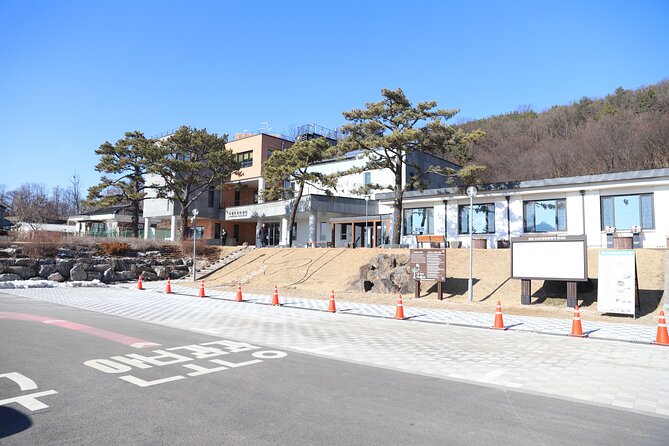
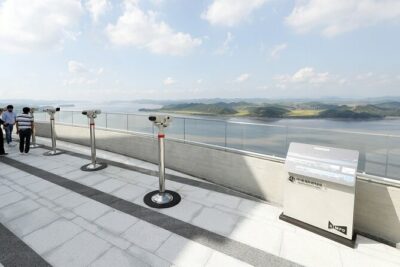
Next comes the Cheorwon Peace Observatory, a place designed for observation rather than confrontation. It opened in November 2007 and has three stories plus a basement.
The stop is about 1 hour, and admission is included. You’ll typically see:
- An exhibition hall on the first floor (context and explanation)
- An observatory on the second floor, where you can observe the environment and defensive features
The value here is perspective. After the tunnel, your brain is primed to think about movement, threat, and the logic of military planning. The observatory pulls you back to the present-day reality of what’s visible now: the ecosystem, the fortress-related structures, and the broad differences between how areas function on each side.
If you’re the type of traveler who likes to connect the dots—how buildings, geography, and policy meet—this is one of the strongest stops. It gives you a structured way to look.
Woljeongri Station and the Iron Triangle Battlefield: history in plain sight
Before you go deeper into DMZ-adjacent territory, you’ll stop at Woljeongri Station, also associated with the Iron Triangle Battlefield story. It’s described as the last stop before reaching the DMZ, and you’ll see remnants tied to the old rail system used for frequent trips during earlier conflict periods.
The signage and the atmosphere are what make it feel different from a museum. There’s a sign that reads like a warning and a hope at the same time—The iron horse wants to run again—and around it you can see physical remains of the past.
This stop runs about 30 minutes and is free. Think of it as a “bridge stop” in the itinerary: you’re moving from the tunnel’s manufactured underground world to the broader landscape where infrastructure shaped how people moved.
It’s short enough that you won’t feel stuck, but it’s long enough to catch the mood shift.

Hantangang Sky Bridge and the Geopark: tension gets a reset
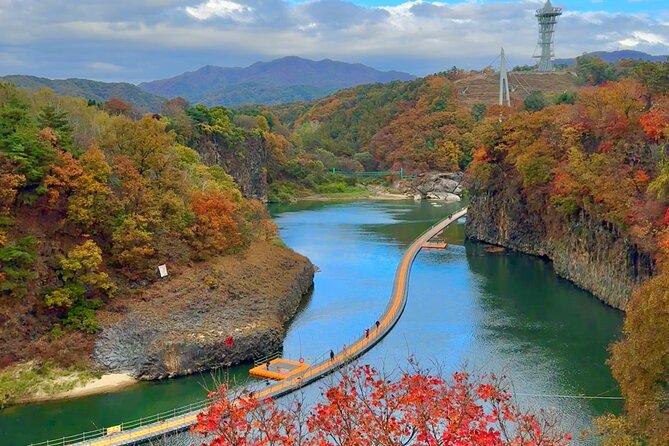
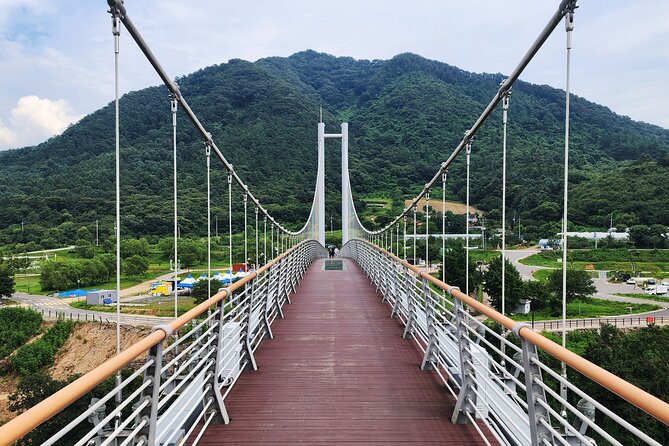
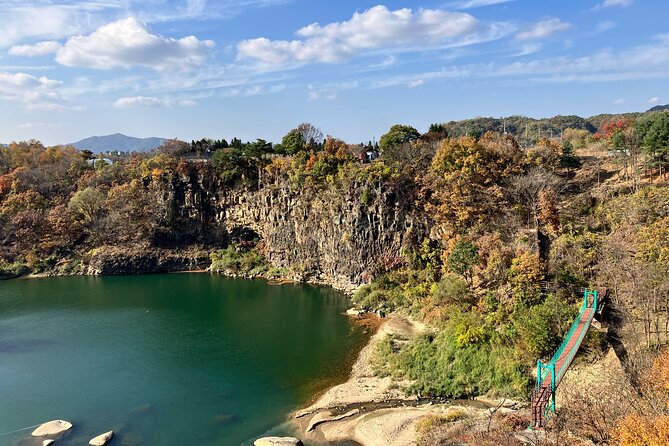
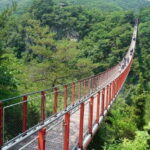
After the DMZ-focused part of the day, you’ll head to Hantangang Geopark for the Sky Bridge and surrounding views. This is one of the stops that makes the long ride feel more balanced.
You’ll visit the suspension bridge area (the Sky Bridge is known from the drama Crash Landing on You), but the tour doesn’t lean on fan service. The point is the real scenery—wide views, river angles, and the feeling of being out in open air again.
This stop is about 30 minutes, and admission is free. It’s also a strategic pacing choice. By this point, you’ve processed a lot of difficult material. A bridge viewpoint gives you a clear change of pace and a different kind of memory: not history through objects, but history through geography and view.
If you like your travel days to have variety—intense stop, context stop, then nature—you’ll appreciate how this one breaks the rhythm.
Bidulginang Waterfalls: a short walk tied to a local story
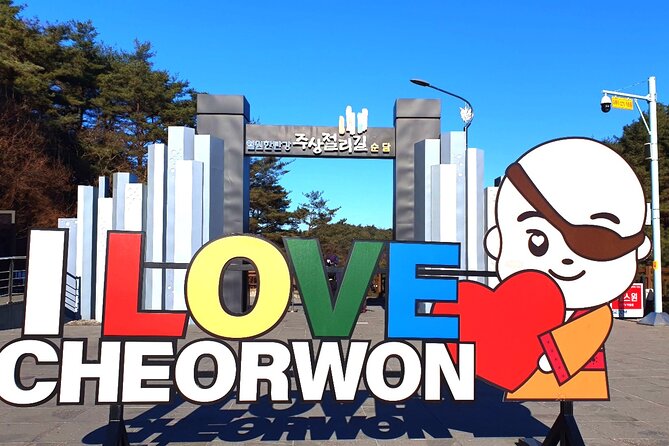
The last nature stop is Bidulginang Falls, and it comes with a specific legend that makes it more than a quick photo stop. The name is tied to a Korean word connected to nesting, inspired by the story of hundreds of white doves once nesting in a cave behind the waterfall.
You’ll spend about 20 minutes here, and admission is free. This is a small window, so don’t expect a long nature trek. Instead, it’s a palate cleanser: water sounds, fresh air, and a break from the rigid timeline of military-focused sites.
Even if you’re not the “legend first” type, the story helps you pay attention to details—how the falls sit in the terrain and how the area feels like it has its own routines of life.
Price and value: what $87 covers (and why it’s not just cheap)
At $87 per person, this tour isn’t priced as a “light day.” It’s a full-day format with multiple paid-included elements, long road time, and professional guidance.
Here’s what you’re getting for the price:
- A professional English-speaking guide
- Hotel pickup and round-trip transport by air-conditioned vehicle
- Entry/tickets for key stops, including the 2nd Tunnel and Cheorwon Peace Observatory
- Taxes, fees, and handling charges
Two items are not included: lunch and travel insurance. That matters because you’ll need a plan for food, especially on an 11–13 hour schedule. In the guidance you may receive on the day, it’s common for the guide to help point you toward a good local meal rather than expecting you to eat before you leave and then forget about it.
This is also where guide quality really impacts value. If your guide helps you pace the day and adds clarity, your experience feels more complete—even if the tour is structured.
And for planning: the group cap is up to 80 travelers, and it runs only when it meets the minimum participant requirement (at least two people for the activity to take place). If you care about timing and stress reduction, booking ahead helps because these DMZ days are popular.
Guide Leo and the real difference: clear explanations
The standout praise in your experience is strongly tied to the guide. Leo is singled out for being friendly, informative, and very supportive. The practical difference is that the day can feel heavy, so you want someone who can explain what you’re seeing without rushing, and who can keep the pace realistic.
You’ll also benefit from a guide who knows when to give you space—when to let you look and when to explain. That’s especially helpful at the tunnel and observatory stops, where you may feel overwhelmed by the scale and the emotion.
One other detail that shows the guide’s approach: even though lunch isn’t included, there’s mention of Leo taking the group to a local restaurant for lunch and it being a highlight. That kind of local handoff is the difference between surviving a day and actually enjoying it.
Who should book this DMZ + suspension bridge day trip?
I think this tour fits best if you:
- Want a structured DMZ day from Seoul without piecing together transport
- Prefer an organized explanation over reading a few signs and guessing
- Enjoy a day with variety: heavy history, then open-air views and waterfalls
You might want to choose another option if:
- You hate long days and don’t handle extended travel well
- You have strong anxiety about enclosed spaces, because the tunnel portion is a core part of the experience
- You need guaranteed lunch included, since lunch is not part of the package
If you’re traveling with someone who needs a calmer pace, this tour is still doable, but you’ll want to be honest with yourselves about time and walking.
Should you book this DMZ Tour, 2nd Tunnel & UNESCO Suspension Bridge Tour from Seoul?
Yes, if you’re excited by the idea of seeing how the DMZ is interpreted on the ground—and you don’t mind a long day. For the money, the balance of guided history plus a nature and viewpoint reset is a solid value. The included tickets for the tunnel and observatory also help justify the price versus doing it all separately.
I’d book it especially if you’re confident that you’ll handle the day’s rhythm: early departure, tunnel-focused time, observatory context, then a slower wind-down at Hantangang and Bidulginang Falls. With a guide like Leo, the explanations can turn the trip from a list of stops into a coherent story.
Skip it if you want a short, casual outing or if your schedule can’t handle the travel time. Also, remember this experience depends on good weather. If forecasts look bad, you’ll likely need to be flexible.
If you choose it, go in with one mindset: this is not just sightseeing. It’s a guided look at how geography and conflict shaped real structures—and how you can still find breathing room afterward.
FAQ
What is the total duration of the DMZ Tour with the 2nd Tunnel and Hantangang Sky Bridge?
The tour runs about 11 to 13 hours, including round-trip travel time from Seoul.
Where does the tour start and end?
It starts and ends at Myeong-dong Station in Seoul, with the tour meeting point at Myeong-dong subway station.
What time does the tour begin?
The start time is 7:00 am.
Is lunch included?
No. Lunch is not included in the tour price.
What is included in the price?
Included items are a professional English-speaking guide, hotel pick-up, air-conditioned vehicle, and all taxes, fees, and handling charges, plus admission tickets for certain stops.
Which major stops are on the itinerary?
The itinerary includes the Korean Workers’ Party Headquarters, the 2nd Tunnel, Cheorwon Peace Observatory, Woljeongri Station, Hantangang (Sky Bridge and views of Hantangang Geopark), and Bidulginang Waterfalls.
Is the 2nd Tunnel visit the full tunnel length?
No. You can explore about 500 meters of the tunnel as part of the visit.
What fitness level do you need?
The tour recommends a moderate physical fitness level.
What happens if weather is poor?
The experience requires good weather. If it’s canceled due to poor weather, you’ll be offered a different date or a full refund.
Is there a cancellation option?
Yes. You can cancel for a full refund up to 24 hours before the experience’s start time.