
REVIEW · SEOUL
Seoul: Learn Traditional Korean Strings Instrument & Hanbok
Book on GetYourGuide →Operated by TRIPPER · Bookable on GetYourGuide
A zither lesson in a hanbok feels magical. This 80-minute class in Bukchon Hanok Village lets you learn the Gayageum with an English-speaking instructor, then play a famous tune such as Arirang while dressed for the part in a hanbok. I love how the teaching stays hands-on and beginner-friendly, and I also love the built-in photo moment that turns a lesson into a keep-something memory.
One consideration: at 80 minutes, you are getting the essentials plus a short performance, not a full masterclass that makes you tour-ready for months of practice.
In This Review
- Key Things to Know Before You Go
- A Hanbok-and-Gayageum Lesson in Bukchon Hanok Village
- Getting There: Meeting Point and Timing You’ll Actually Feel
- Hanbok Rental: More Than a Costume Change
- Meet the Instructor: Clear English Guidance for First Timers
- Learning the Gayageum: From First Notes to Real Tunes
- How the 80 Minutes Typically Unfold
- The Photos: Professional Shots That Feel Like Part of the Craft
- The Little Extras: Diploma and a Keep-Sake Moment
- Price and Value: Is $106 for 80 Minutes Fair?
- Who This Class Suits Best (and Who Might Skip It)
- Should You Book This Gayageum and Hanbok Class?
- FAQ
- How long is the Gayageum and Hanbok class?
- What instrument will I learn in this experience?
- Do I need prior music experience?
- Is the class taught in English?
- What’s included with the hanbok?
- Are professional photos included?
- Where is the meeting point?
Key Things to Know Before You Go
- Bukchon Hanok Village location gives the class a real sense of place, with traditional streets nearby.
- Gayageum lessons for all levels focus on quick fundamentals and doable techniques.
- Hanbok rental for the full class means your outfit stays part of the experience the whole time.
- You’ll play a recognizable Korean song after learning the basics.
- Professional photos are taken while you hold and play the Gayageum.
- English instruction helps you follow comfortably, especially if your Korean is still warming up.
A Hanbok-and-Gayageum Lesson in Bukchon Hanok Village
If you like culture that you can hold in your hands, this is a smart Seoul choice. You’re not just watching performances or browsing photos on your phone. You learn the Gayageum, then put it into action, all in a setting that feels intentionally traditional.
Bukchon Hanok Village is one of those neighborhoods that makes you slow down. The streets and hanok-style architecture are part of the experience because the class happens right there, not in a generic studio that could be anywhere. You’ll feel the contrast between modern Seoul around it and the older rhythm of this area.
What I like most is that the class connects three things that usually stay separate on a trip: music, clothing, and a specific historic neighborhood.
You can also read our reviews of more tours and experiences in Seoul.



Getting There: Meeting Point and Timing You’ll Actually Feel
The meeting point is listed as 3F, 43 Bukchon-ro 5ga-gil, Jongno-gu, Seoul. Plan to arrive a little early so you don’t have to rush through check-in and get settled in your hanbok comfortably.
The duration is 80 minutes, which is the sweet spot for a first-time instrument lesson. You’ll have enough time to learn basic positions and techniques, practice together, and end with a short song and photos. If you’re the type who gets restless in long classes, this format is friendly.
Group size isn’t listed in the details you provided, so I can’t promise it will be tiny. Still, the experience is designed for beginners, so expect clear step-by-step guidance rather than a fast lecture.
Hanbok Rental: More Than a Costume Change
The hanbok part is not an afterthought here. You get the hanbok rental for the duration of the class, so your outfit matches every step: first instructions, practice time, and the final photo moment.
That matters because the hanbok isn’t just visual. It changes how you move and sit, which in turn makes the whole activity feel like a cultural experience, not a workshop that happens to include traditional clothing. One detail worth noting from instructor-led experiences like this: you’ll want to feel comfortable with fit and positioning before you start playing.
In the class setup, there’s also guidance if you’re unsure about styling. That’s helpful if you’re worried about how the outfit will sit or match your preferences.
Meet the Instructor: Clear English Guidance for First Timers
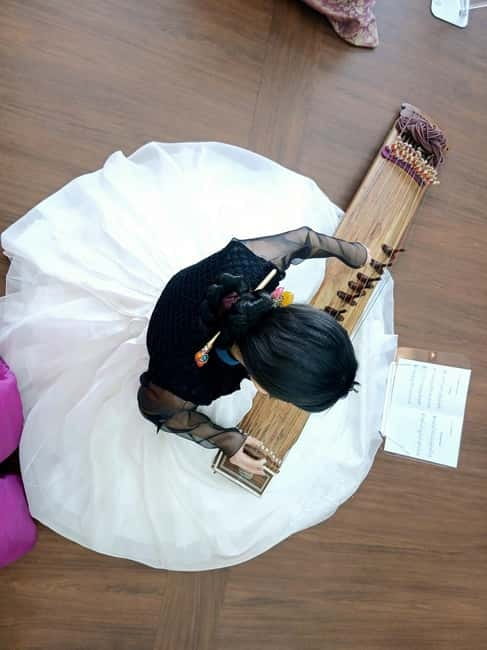
Instruction is listed as English, and the class is built for people with no prior musical experience. In the experiences shared, teachers are described as patient and upbeat, with explanations broken into small steps.
Names you might hear in this kind of class include Ava and Yu Min, both mentioned as instructors. One instructor was highlighted for years of performance experience, yet the teaching style stayed beginner-friendly and calm. That combination is exactly what you want: real craft, without the pressure.
If you’ve ever felt nervous about picking up an instrument in front of people, this format is designed to reduce that stress. The goal is not perfection; it’s getting the sound and the basic technique into your hands.
Learning the Gayageum: From First Notes to Real Tunes
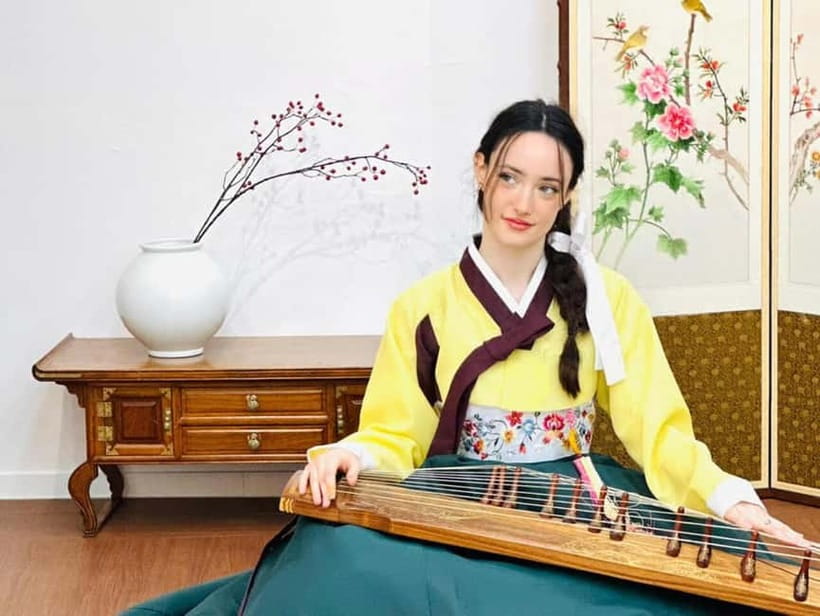
The Gayageum is a 12-string Korean zither, and the teaching starts with the basics. You’ll learn the instrument’s setup and the first techniques needed to make music that sounds like music, not noise.
Then you move toward an actual performance. The class description calls out playing a famous song like Arirang after you learn the fundamentals. That’s a big deal for value. Many “intro to culture” activities end with watching. Here, the class aims for an end result you can recognize.
One of the more practical bits to appreciate: the class is designed so you can follow along even if you are starting from zero. You won’t need to read Korean music notation, and you’re not expected to already know how to handle a string instrument.
You may also hear that classic Korean tunes are part of the learning, and there’s mention that popular songs can be worked in too. Even if you don’t know the melody in advance, you’ll usually finish with something familiar by the end.



How the 80 Minutes Typically Unfold
Here’s the flow you can expect based on how the class is described and how the instruction is structured:
First, you settle in and get your hanbok on. You’ll also get a short intro to the instrument and what you’ll be doing over the session.
Next comes the hands-on part: step-by-step guidance on key positions and technique. The teaching approach described for this activity emphasizes small, clear steps that you practice together.
Then you work toward a song. In most versions of this class, you end by playing together, so you’re not just learning isolated movements. The class is designed so you leave with a recognizable performance moment.
Finally, you move into the photo portion while you’re still in character with your hanbok and the Gayageum.
The Photos: Professional Shots That Feel Like Part of the Craft
The photo session is included, and it’s not a quick selfie moment. You get professional photos taken while playing the Gayageum, which changes the whole tone of the experience. Instead of documenting the outfit, you’re documenting the act of making music.
One useful detail from the experiences shared: people who don’t feel confident in front of cameras still ended up with lots of good photos. That suggests the photographer and setup are doing the work of helping you look natural.
If you’re worried about awkward posing, treat this like a performance. Focus on the instrument and your posture while the photographer guides the rest.
Also, because your hanbok stays on for the full class, the photos won’t look like a separate event tacked on at the end. The outfit and the playing match.
The Little Extras: Diploma and a Keep-Sake Moment
You might also receive a diploma with a picture you can choose. That’s a small souvenir, but it fits the spirit of the class: you’re leaving with proof you completed an activity that takes coordination, patience, and practice, even if you’re a first-timer.
For many visitors, that diploma becomes the thing they remember when the other photos blur together. It’s also a tidy way to share the story later without needing a long explanation.
Price and Value: Is $106 for 80 Minutes Fair?
At $106 per person, this isn’t a budget activity. But it’s not priced like a generic entry ticket either. You’re paying for three bundled things:
- A structured Gayageum lesson with an instructor
- Hanbok rental for the full class length
- Professional photos taken while you play
When you compare that to the cost of hiring a private photo session plus paying for a cultural workshop separately, the bundled value starts to make sense. You also save time. You’re doing everything in one go inside the same traditional setting, with no extra scheduling.
One more value point: the class is built to deliver an actual outcome for beginners. If you leave able to play a recognizable song like Arirang, that’s more than a novelty. It becomes a real memory tied to a skill you practiced.
Who This Class Suits Best (and Who Might Skip It)
This class is a great fit if you want an activity that is hands-on, not just observational. If you enjoy traditional arts and you like the idea of combining music with a visual cultural experience, you’ll likely enjoy it a lot.
It’s also a smart choice if you’re traveling with someone who isn’t sure they want a “long museum day.” An 80-minute format is easy to slot into a broader Seoul itinerary, especially if you want something distinctive.
If you’re the type who wants to learn deeply over multiple sessions, you might find the time short. This is an introduction and a performance moment, not a long-term instrument course.
Should You Book This Gayageum and Hanbok Class?
Book it if you want a memorable, beginner-friendly activity where you learn a real instrument, wear a traditional outfit, and leave with professional photos. The English instruction, the focus on basics for first-timers, and the aim to play something recognizable like Arirang make it feel practical, not performative.
Consider another option if you’re chasing a long, slow learning curve or you don’t care about photos. At 80 minutes, the class is designed to land on a satisfying finish, not to turn you into a lifelong Gayageum student on the spot.
FAQ
How long is the Gayageum and Hanbok class?
The class lasts 80 minutes.
What instrument will I learn in this experience?
You’ll learn to play the Gayageum, a traditional Korean string instrument.
Do I need prior music experience?
No. The experience is designed for absolute beginners and also works if you’re just a music enthusiast.
Is the class taught in English?
Yes, the instructor provides instruction in English.
What’s included with the hanbok?
You get hanbok rental for the duration of the class.
Are professional photos included?
Yes. Professional photos are taken while you’re playing the Gayageum in your hanbok.
Where is the meeting point?
The meeting point is listed as 3F, 43 Bukchon-ro 5ga-gil, Jongno-gu, Seoul.