REVIEW · SEOUL
Deoksugung & Jeongdong-gil: A Walk in Korea’s Rich Heritage
Book on Viator →Operated by S.A. Tour · Bookable on Viator
Five minutes and Seoul’s past talks. This 3-hour walk stitches together late 19th–early 20th century Korea with an English guide, moving from palace grounds to a modern landmark finish at Cheonggyecheon. I especially like the way the route pairs traditional and Western-influenced stories in the same day, so Seoul feels like one ongoing conversation, not separate guidebook chapters.
Two things I really like: first, many of the stops have free admission, which makes the $48 price feel more like you’re paying for guidance and context rather than entry fees. Second, the Appenzeller Noble Memorial Museum connects a missionary-era education story to what became Pai Chai University in Daejeon, giving you a concrete thread you can remember long after the walk.
One consideration: this tour needs good weather. If conditions are poor, you’ll be offered another date or a full refund, so keep an eye on forecasts if you’re trying to lock in a tight schedule.
In This Review
- Key points you’ll care about
- A 3-hour route from Deoksugung Palace to Cheonggyecheon
- Deoksugung Palace and Gyeonghuigung: Joseon-era power in modern Seoul
- Appenzeller Noble Memorial Museum: Baekjae Hakdang to Pai Chai University
- Jeongdong Theater pause: coffee, restrooms, and traditional performance culture
- Jungmyeongjeon Hall: 1899 imperial library and Emperor Gojong’s move
- Gwanghwamun Square and King Sejong: ending in Seoul’s public life
- Price and guide-led value: what $48 gets you
- The best fit: who this walk suits
- Should you book Deoksugung & Jeongdong-gil? My take
- FAQ
- How long is the tour?
- What does the tour cost?
- Where does the tour start and when?
- Where does the tour end?
- What’s included in the price?
- Are there admission fees at the stops?
- What’s the cancellation policy?
- How many people are in a group?
Key points you’ll care about
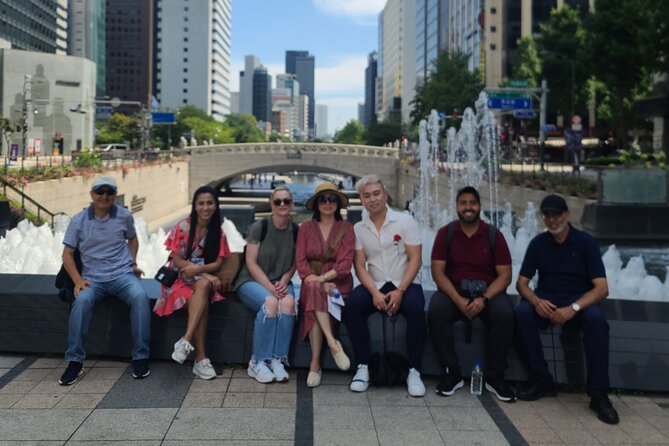
- A small-group English walk (max 15 people) that keeps the pace friendly and the explanations clear
- Deoksugung + Gyeonghuigung cover Joseon-era palace life right in central Seoul
- Appenzeller Noble Memorial Museum ties Baekjae Hakdang to Pai Chai University in Daejeon
- Jeongdong Theater gives you a break for coffee/drinks and restrooms while staying on-theme with cultural performances
- Jungmyeongjeon Hall (1899) brings you to an imperial library site with Emperor Gojong’s connection after the 1904 fire
- Gwanghwamun Square (built 2009) lands the tour in today’s Seoul with King Sejong’s statue and a big fountain
A 3-hour route from Deoksugung Palace to Cheonggyecheon
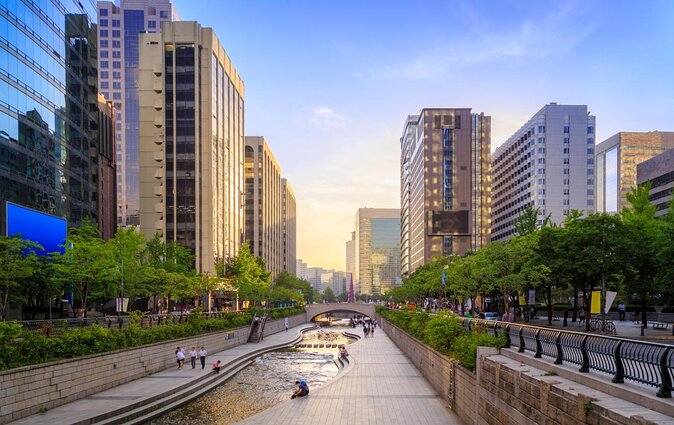
This tour starts at Deoksugung Palace at 9:30 am (99 Sejong-daero, Jung District). It ends at Cheonggyecheon Stream in Jongno District. That matters because you’re not just circling inside palace walls—you’re gradually stepping toward one of Seoul’s most popular pedestrian waterways, which is a great way to reset your brain at the end.
The total time is about 3 hours, which is long enough to feel like you learned something meaningful, but short enough that you’re not stuck in transit all day. The meeting point is in an easy-to-reach area with public transportation nearby, and you’ll use a mobile ticket, which is a nice low-friction start.
You’ll also notice the structure: multiple short palace-and-site stops, then a theater break, then two major context points (imperial library hall and Gwanghwamun Square). It’s designed for “see, explain, walk, connect,” not for museum-depth study. If you like history that stays grounded in place names and real buildings, this format works well.
You can also read our reviews of more historical tours in Seoul
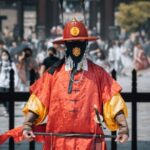
Deoksugung Palace and Gyeonghuigung: Joseon-era power in modern Seoul
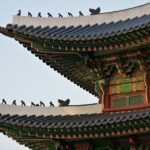
Your first two stops are Deoksugung Palace (also called Gyeongun-gung) and Gyeonghuigung Palace (also called Gyeonghui Palace). Both are rooted in the Joseon Dynasty era, and both sit in central Seoul—so you get that head-spinning contrast immediately: royal gates and formal palace spaces right beside everyday city life.
Deoksugung is described as historically significant and built during the Joseon Dynasty. Starting here is smart because the palace context helps you read everything that comes after. When you understand that palaces were not just pretty architecture but real centers of state life, you start to notice details that you might otherwise skip: the scale, the layout, the sense of ceremony built into the approach routes.
Then you head to Gyeonghuigung Palace in Jongno-gu, built in 1623 during the Joseon Dynasty. That specific date is useful because it anchors your mental timeline. Two Joseon palaces in one morning can feel repetitive if you only look for differences in style—but with a guide, it becomes about political continuity and change. You’re basically being taught to look at Korea’s late imperial transformation as a shift layered over older foundations.
A practical tip: wear shoes you’re comfortable in for a steady pace. Even though each palace stop is relatively brief, the ground around palace complexes can include uneven areas and lots of walking between key points.
Appenzeller Noble Memorial Museum: Baekjae Hakdang to Pai Chai University
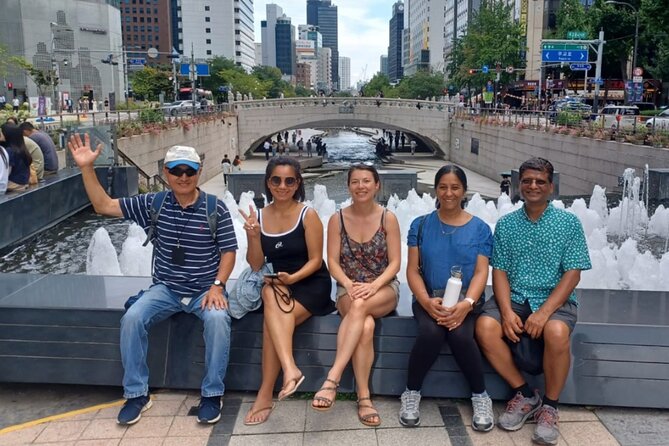
Stop three is Appenzeller Noble Memorial Museum, connected to the former home of Baekjae Hakdang, a missionary school. Over time, that school expanded into a university; today it’s known as Pai Chai University in Daejeon. The museum’s role in this tour is important because it adds a different kind of “history lesson” than palaces do.
Palace history often centers on rulers and buildings. This museum connects the late 1800s and early 1900s story to education and religious influence—specifically tied to a Methodist school context. That gives you a fuller picture of what was changing in Korea during the era when the country was handling pressure from outside powers and modernization at home.
I like this stop because it teaches you to spot how culture travels through people and institutions. A school growing into a university is a slow-motion kind of change, the sort that shapes generations. By the time you’re done here, you’re more likely to connect the political history you’ll hear next with the social history happening alongside it.
If you’re the kind of person who likes learning a single strong thread you can carry through the rest of your trip, this is that thread: Baekjae Hakdang becoming Pai Chai University.
Jeongdong Theater pause: coffee, restrooms, and traditional performance culture
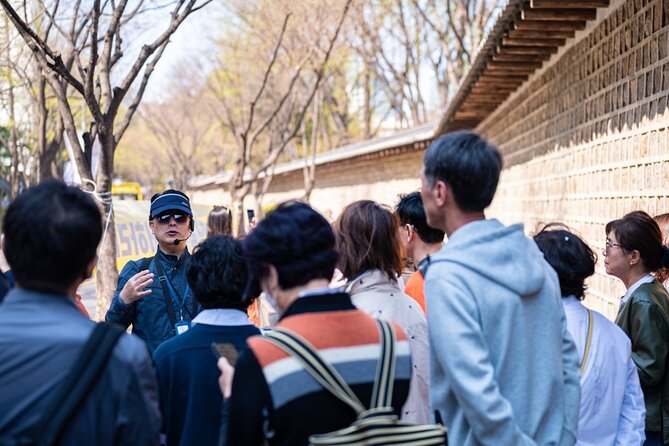
Stop four is Jeongdong Theater. This is a smart mid-tour break because it’s not just a random pit stop. The theater features concerts, plays, and musicals that incorporate elements of traditional Korean culture. That means the pause still matches the tour theme: Korea’s identity isn’t only preserved in palaces—it’s also performed and remixed.
The tour uses the stop as a rest moment, so you’ll have time to grab coffee or other drinks and to use the restrooms. In practical terms, this is where you recharge your legs and reset your attention for the final stretch.
One small consideration: if you’re the type who prefers constant walking and constant information, the theater stop may feel like a breather. But for most people, it prevents the last portion from feeling rushed. It’s also psychologically nice—palaces for a bit, museum context, then a cultural venue, then back into major public space with Gwanghwamun.
Jungmyeongjeon Hall: 1899 imperial library and Emperor Gojong’s move
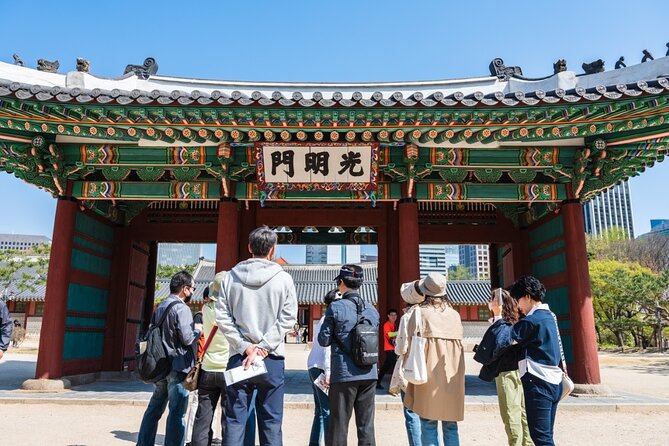
Stop five is Jungmyeongjeon Hall, built in 1899 as the imperial library of the Korean Empire. Then comes a key historical pivot: after Deoksugung Palace caught on fire in 1904, this hall became the temporary residence of Emperor Gojong.
This is the kind of site that makes the era feel real. The transition from palace to temporary residence tells you that history wasn’t neat and scheduled—it was reacting to disasters and political pressure. A place that began as a library becomes a home for power. That’s a powerful idea, and it’s exactly why this stop matters within the tour.
The hall is also noted as the place associated with the infamous Eulsa T… event (the name is cut off in the provided details). Even with the truncated text, the implication is clear: this building connects to one of the darker, consequential chapters of that era. In other words, you’re not only seeing architecture—you’re standing on ground linked to decisions that reshaped Korea’s fate.
If you want a good way to get more from this stop: slow down and take a moment to picture a library being used with the urgency of a residence. That mental shift helps you remember why an imperial library site can matter to political history.
Gwanghwamun Square and King Sejong: ending in Seoul’s public life
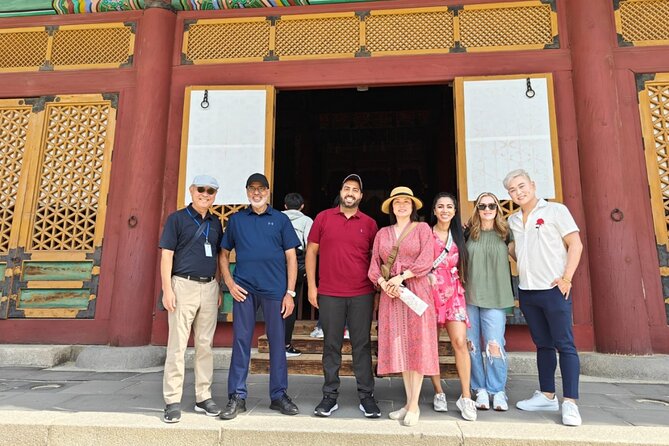
The final stop is Gwanghwamun Square, a large central Seoul public square built in 2009. You’ll find a big fountain and a statue of King Sejong the Great. This is where the tour’s “past meets present” theme lands in a way that feels modern and immediately usable.
The value here is perspective. You’ve spent the morning moving through places tied to royal governance and imperial identity. Now you’re in a public square designed for gathering—something you can recognize from daily life, not just historical timelines.
King Sejong’s presence in particular is a useful anchor because Sejong is associated with cultural and intellectual legacy, and that connects nicely back to Jungmyeongjeon Hall’s role as an imperial library. Whether you focus on governance or learning, the theme of national identity in public memory keeps echoing.
After Gwanghwamun Square, the tour finishes at Cheonggyecheon Stream. Ending near this kind of pedestrian space is practical: you can cool down, take photos without feeling rushed, and plan your next move without immediately getting swallowed by traffic.
Price and guide-led value: what $48 gets you
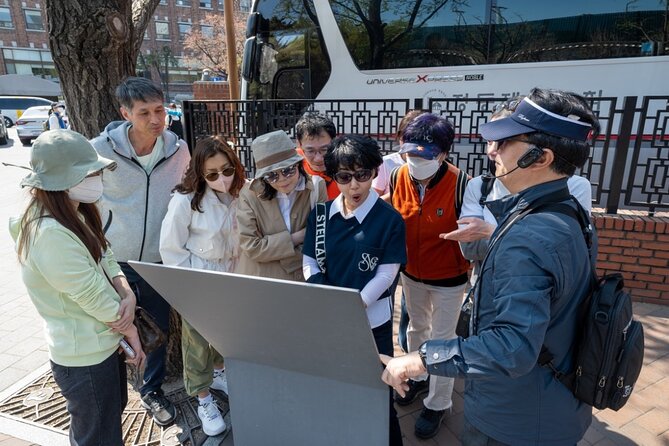
At $48 per person for about 3 hours, the big value isn’t the entry cost—it’s the guide’s ability to connect the sites into one coherent story. What you’re buying is time with a professional English tour guide and a small-group structure (max 15 people), which helps keep questions possible and explanations focused.
Another value point: the provided stop info indicates free admission at each listed stop. That matters because it changes the math. You’re not paying extra to “make” the tour worth it—you’re already getting a full set of meaningful stops without being hit by multiple entrance fees.
If you’re traveling on a budget, this is a helpful pattern: you can spend your money on meals later rather than on stacking admissions. Lunch isn’t included, so plan for a meal on your schedule after the walk.
I also appreciate that the guide-led approach matches the tour theme. Korean history here is not just dates; it’s locations where power, education, culture, and public memory overlap. A good guide helps you see those overlaps while you’re standing in front of the buildings.
The best fit: who this walk suits
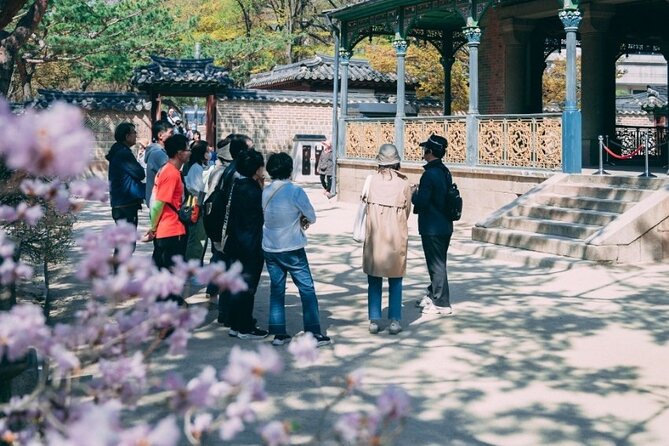
This tour is a strong match if you want:
- A history-forward walk without needing to read a textbook first
- A blend of Joseon palace sites plus imperial-era story points
- A chance to learn about education and missionary-era influence through the Appenzeller Noble Memorial Museum
- A clear morning route that ends near a pleasant public space (Cheonggyecheon)
It’s also a nice option for first-time Seoul visitors because you end in a central area and you cover several major landmarks in a short window. If you already know Seoul’s basics and want something more thematic than just sightseeing, the late 19th–early 20th focus is a good choice.
If you hate walking, this may be more effort than you want. The schedule is built for steady pace and short stops rather than long rest breaks—except for the planned Jeongdong Theater break.
Should you book Deoksugung & Jeongdong-gil? My take
I think you should book this tour if you want Seoul to make sense fast. The route connects palaces, an education museum, an imperial library/residence site, and a modern public square. That mix is exactly what turns “cool buildings” into a real timeline you can remember.
Book it if you like learning from a guide and prefer paying for interpretation rather than museum tickets. And if your schedule is flexible enough to handle weather changes, it’s a smart way to spend a morning.
Skip it only if you’re strictly looking for long indoor museum time or if you strongly dislike outdoor walking in any season. Otherwise, this is a clean, well-shaped introduction to how Korea’s past shows up in everyday Seoul.
FAQ
How long is the tour?
The tour is approximately 3 hours.
What does the tour cost?
It costs $48.00 per person.
Where does the tour start and when?
It starts at Deoksugung Palace (99 Sejong-daero, Jung District, Seoul) at 9:30 am.
Where does the tour end?
It ends at Cheonggyecheon Stream in Jongno District.
What’s included in the price?
A professional English tour guide is included, and you’ll receive a mobile ticket.
Are there admission fees at the stops?
The listed stops show admission ticket as free.
What’s the cancellation policy?
You can cancel for a full refund if you cancel at least 24 hours before the experience’s start time, and cancellations can be done free up to that point.
How many people are in a group?
The tour has a maximum of 15 people.