REVIEW · SEOUL
Discover Seoul: Local Life and History
Book on Viator →Operated by MORTOUR GUIDED TOURS · Bookable on Viator
Old Seoul and modern Seoul walk together here. This guided loop through Gyeongbokgung Palace and the Jongno-area hanoks is the fastest way I’ve seen to connect monuments to everyday Korean culture. I especially like how the history feels practical at each stop, not like a museum speech, with the palace and its guard change as the anchor. One thing to keep in mind: this is an outdoor walking route, and parts of it can be affected by conditions like poor weather or occasional closures.
I also love that the tour nudges you toward real local life. You’ll get stops in Insadong for traditional tea houses and craft-style browsing, plus direct guidance on where to eat and drink, including famous Korean beer chicken. With a route like this, the main downside is simple: you should be ready for walking and a plan that can shift if the day is closed or weather turns.
In This Review
- Key highlights to know before you go
- Starting at Seoul City Hall and Seoul Plaza: your bearings in 30 minutes
- Gwanghwamun Square and Avenue: reading the Joseon story in public space
- Gyeongbokgung Palace and guard change: the tour’s biggest payoff
- Insadong: tea houses, craft shops, and food you can actually plan
- Bukchon Hanok Village: why a preserved 600-year neighborhood feels different
- Guides, group size, and what makes this tour feel worth the money
- Who should book this Discover Seoul route (and who might not)
- Should you book?
- FAQ
- How long is the Discover Seoul: Local Life and History tour?
- How much does the tour cost?
- Is this tour ticket handled with a mobile ticket?
- Are there admission fees for the stops on the itinerary?
- What happens if the tour can’t run due to poor weather?
- Can I cancel and get a full refund?
Key highlights to know before you go
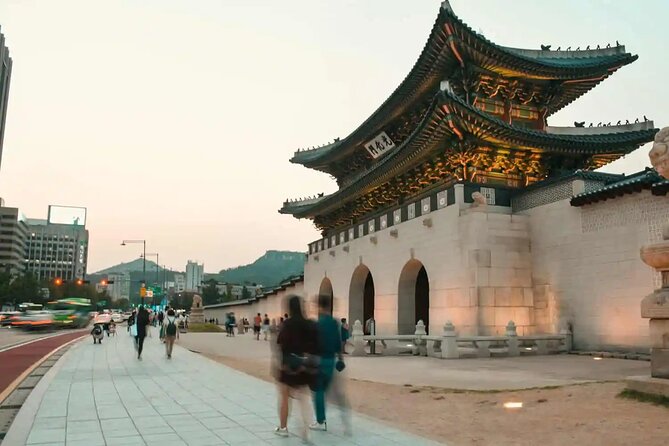
- Gyeongbokgung Palace plus the guard change as the clearest Joseon-era moment on the route
- Gwanghwamun Avenue history with statues of King Sejong and Admiral Yi Sun-sin right by the main gates
- Insadong wandering with tea houses, galleries, bars, and craft shops in traditional hanok lanes
- Bukchon Hanok Village at hilltop viewpoint level, with a neighborhood preserved to reflect about 600 years
- Small group size (max 20) and a guide who ties sites to how Koreans live today
- Food and drink pointers that focus on where you can actually order and enjoy local favorites
Starting at Seoul City Hall and Seoul Plaza: your bearings in 30 minutes
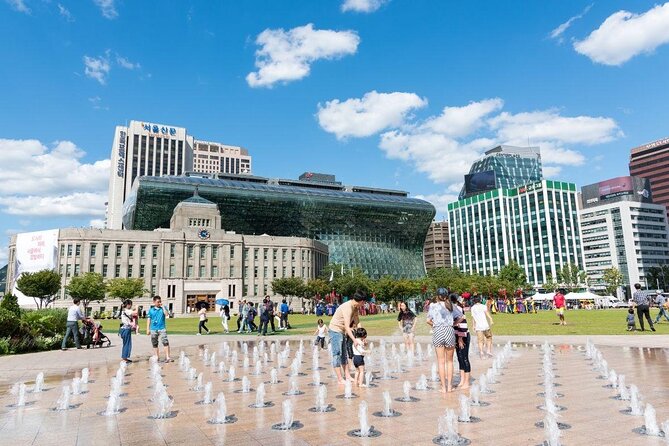
The tour begins at Seoul Plaza (Seoul Plaza, 110 Sejong-daero, Jung District). If you’re new to Seoul, this is a smart starting point because it puts you near a web of major streets and gives you context before you go deeper into Jongno.
The first stop is Seoul City Hall, flagged as free entry and positioned as a quick history introduction. I like this kind of warm-up because it makes the later sights easier to decode. You’re not just taking photos of big buildings and gates; you’re learning what kind of city Seoul has been trying to be—administrative center first, then a modern global hub layered on top.
There’s one practical consideration here. Seoul City Hall is listed as free, but the note says it might be closed some Tuesdays. If that happens on your date, don’t panic. The tour is still designed around the next core areas (Gwanghwamun, Gyeongbokgung, and Jongno lanes), so you won’t lose the whole story—just a short opening stop.
You can also read our reviews of more historical tours in Seoul

Gwanghwamun Square and Avenue: reading the Joseon story in public space
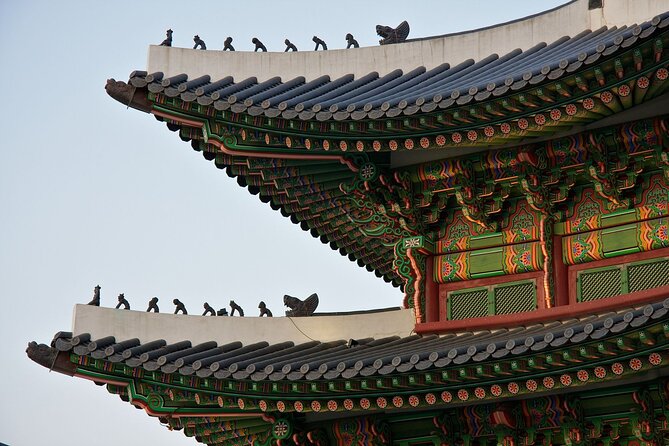
Next you move to Gwanghwamun Square and Gwanghwamun avenue. This is where Seoul’s central history gets projected into something you can walk through without a ticket line. The pace here is manageable—about 35 minutes for the avenue and major sights.
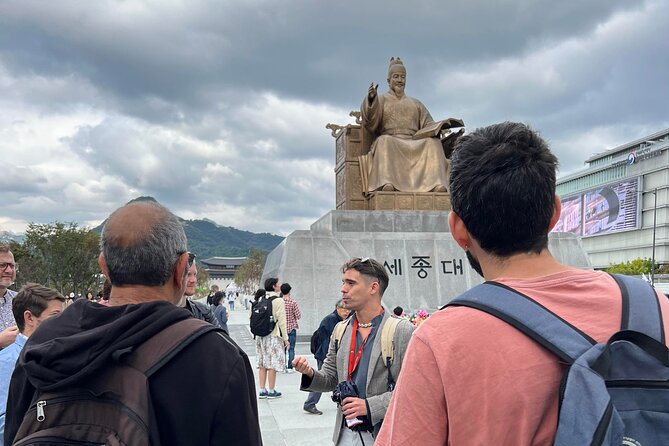
Right near the Gwanghwamun gate area, you’ll also stop for a short moment at the public space that features statues connected to two famous Joseon-era figures: King Sejong and Admiral Yi Sun-sin. Even with just a brief stop, this works because it gives names you’ll hear repeatedly in Korean history. It’s one of those small time investments that makes later sightseeing feel more connected.
A quick tip for this stretch: look up as you walk. Gwanghwamun is a wide-street setup, so it’s easy to keep your eyes on the ground and miss the way the streets frame monuments and palace-aligned views.
Gyeongbokgung Palace and guard change: the tour’s biggest payoff
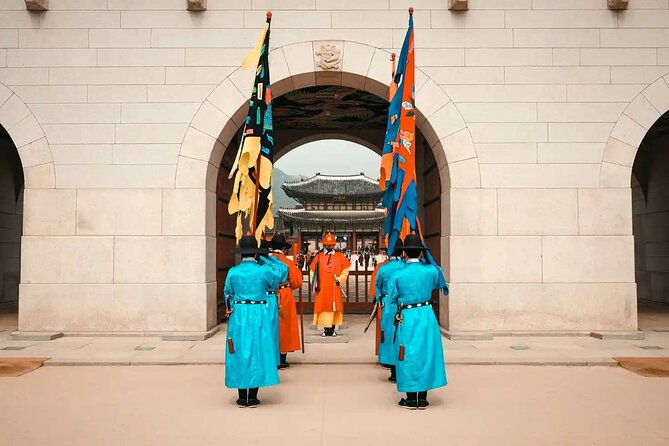
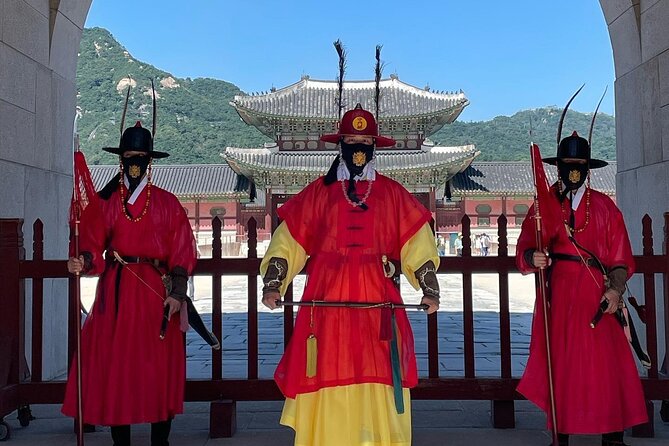
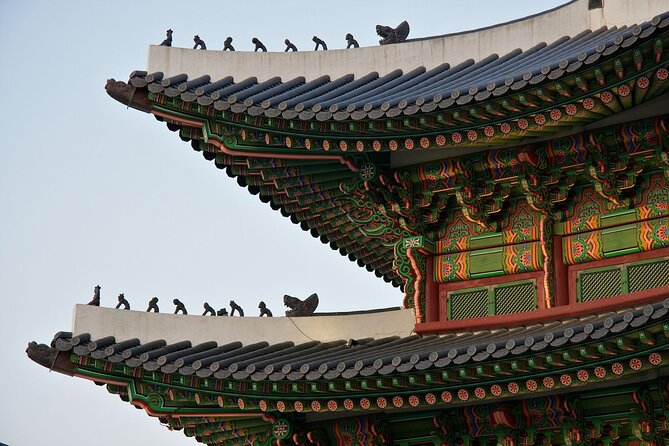
If the rest of the route is about context and character, Gyeongbokgung Palace is the centerpiece. This stop runs about 30 minutes and is listed as free entry for this tour plan.
What I like most is the way the guide turns a palace into a story you can follow. You’re not just looking at gates and walls; you’re getting an introduction to the palace as the main royal palace of Seoul, then seeing the change of the guards as a living tradition. Even if you’ve only seen palace footage online, being there with a guide helps you understand what you’re looking at and why it matters in how the Joseon dynasty is remembered.
This is also the moment where good shoes pay off. The ground can be uneven in places, and even when timing is short, you’re still doing real walking. If you’re the type who hates rushing through big sights, treat this stop like your photo-and-observation anchor.
Insadong: tea houses, craft shops, and food you can actually plan
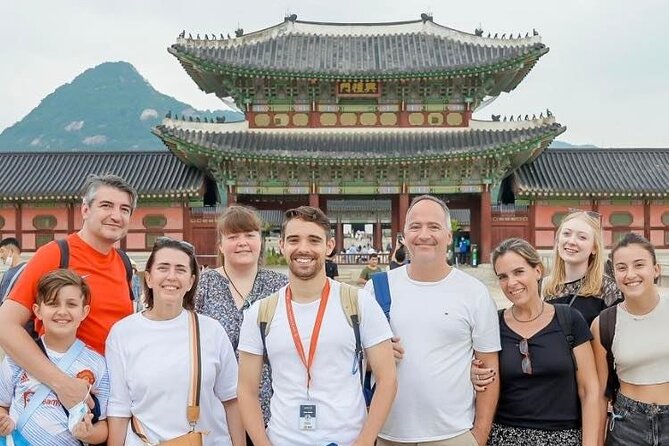
After the palace, the tour heads into Insadong, one of Seoul’s older neighborhoods. It’s a classic area for hanok streets, and your route is designed to thread through the kind of small storefronts that make Insadong feel like more than a shopping district.
This stop is about 30 minutes, and it’s described as a mix of traditional tea houses, galleries, bars, and craft shops tucked into labyrinth-style lanes lined with hanoks. I like Insadong on a tour because a guide can separate what’s tourist-friendly from what feels local. You’ll get pointers that fit how you’d actually spend your time here after the tour ends.
The food and drink angle is a big deal. The tour includes the guide’s best tips on where to eat and drink, with specific mention of Korean beer chicken among the recommendations. That matters because in a neighborhood like this, it’s easy to waste time scanning menus and second-guessing what to order. A plan helps you move faster and eat with confidence.
A small practical thing: Insadong can be busy at peak hours, so you’ll enjoy it more if you use the tour time to learn the lane layout. When you step out on your own after, you’ll feel like you know where you are.
Bukchon Hanok Village: why a preserved 600-year neighborhood feels different
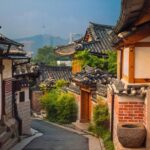
The tour ends at Bukchon Hanok Village. The area is described as a traditional village perched on a hill between major palace zones, including Gyeongbok Palace, with hanok houses and preserved lanes meant to reflect about 600 years of heritage.
This stop runs about 30 minutes. Even in that short window, it’s the kind of place where you can sense the design and human scale. Bukchon’s value isn’t only the architecture. It’s the way the streets step up and around, shaping how you experience the neighborhood. On a walking tour, you get those turns and sightlines, not just a postcard view.
The tour also finishes at Cafe Onion Anguk (5 Gyedong-gil, Jongno District). That’s a handy end point because it gives you a place to slow down after the walk, especially if you want tea or coffee while you plan your next neighborhood.
If you’re sensitive to hills or uneven ground, this is the one segment where you should be extra aware. The tour positions Bukchon on higher ground, so it’s not just a flat stroll.




Guides, group size, and what makes this tour feel worth the money
This is priced at $96.75 per person and lasts about 3 hours 30 minutes. That’s not a bargain price, but it can be good value if you use the guide time well—history context at major sites, then practical suggestions for food and drink when you’re in the neighborhoods where you’d otherwise spend extra effort figuring things out.
A key detail that helps the experience: the group maximum is 20 travelers. In a walking-and-explaining setup, smaller groups generally mean fewer long waits and more flexibility for questions. It’s especially useful here because the route mixes palace history with everyday street-level Seoul in Insadong and Bukchon.
I’ve also noticed strong marks for the guide experience from past departures. English quality comes up in the feedback, and guides like Moïse and Gemma are highlighted for connecting history to what you can actually see and do next. People also emphasize that the guide gives enough background to make the country’s culture feel understandable, not just memorized.
One more value point: several stops are listed as free entry (including Seoul City Hall, Gwanghwamun Square areas, Gyeongbokgung, Insadong, and Bukchon for this tour plan). Even if you still pay for whatever you choose to buy in neighborhoods, it’s nice when the “core sites” aren’t stacking ticket fees on top.
Who should book this Discover Seoul route (and who might not)
You should seriously consider this tour if:
- You want a first-timer-friendly overview of central Seoul, focused on Gwanghwamun, Jongno, Gyeongbokgung, Insadong, and Bukchon.
- You like tours where the guide explains what you’re looking at, then points you toward places to eat and drink right after.
- You’d rather do a structured loop than spend half a day figuring out the order of neighborhoods.
You might want a different option if:
- You dislike walking on uneven ground or you’re worried about hills, especially toward Bukchon.
- You’re traveling with someone who needs a lot of sitting time; the format is still a walking circuit.
Should you book?
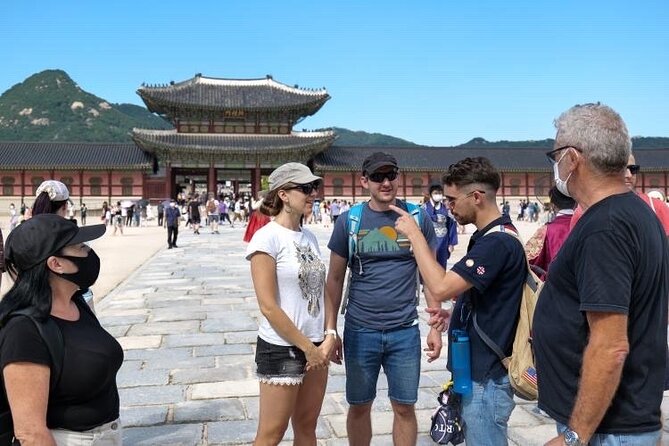
If your goal is to get oriented fast and understand Seoul’s old-and-new story without wasting your first day, I think this tour is a smart bet. The route is tightly focused: palace history at Gyeongbokgung, major Joseon figures at Gwanghwamun, hanok lanes and tea culture in Insadong, then Bukchon’s preserved neighborhood feel with about 600 years of context.
At $96.75 for a 3.5-hour guided walk with small group size and free-entry stops listed in the plan, it’s best viewed as a time-saver and confidence-builder. Book it when you can, especially since the tour is commonly reserved about 24 days ahead on average.
If you’re deciding last minute, check the weather. The tour requires good weather, and if it has to be changed or canceled due to poor conditions, you’ll be offered another date or a full refund. That safety net helps you take the leap.
FAQ
How long is the Discover Seoul: Local Life and History tour?
It’s approximately 3 hours 30 minutes.
How much does the tour cost?
The price is $96.75 per person.
Is this tour ticket handled with a mobile ticket?
Yes, it includes a mobile ticket.
Are there admission fees for the stops on the itinerary?
The stops listed in the itinerary are marked as free admission (including Seoul City Hall, Gwanghwamun Square, Gyeongbokgung Palace, Insadong, and Bukchon Hanok Village for this tour plan).
What happens if the tour can’t run due to poor weather?
The tour requires good weather. If it’s canceled due to poor weather, you’ll be offered a different date or a full refund.
Can I cancel and get a full refund?
Yes. You can cancel up to 24 hours in advance for a full refund.