REVIEW · SEOUL
(Closed) Korea’s White House Walking Tour Blue House
Book on Viator →Operated by Epic Korea Days · Bookable on Viator
Seoul’s White House is open—for now. This 2.5-hour walking tour gets you inside Cheong Wa Dae before public access changes, in a group capped at nine people. I like that you’re not just looking at buildings; you’re hearing the political and cultural meaning behind them as you go. One catch: there’s no hotel pick-up, so you’ll want to plan your arrival around the meeting point at Gyeongbokgung Station.
What I really appreciate is the guide experience. Many tours stop at facts; this one uses strong English storytelling to connect architecture to real decision-making spaces. For example, I saw repeated praise for guide Jungho, including clear meeting instructions and explanations that made the grounds feel understandable rather than confusing.
In This Review
- Key highlights worth planning around
- Why the Blue House gates matter this year
- Price of $199: what you’re buying beyond entry
- Meeting at Gyeongbokgung Station: simple logistics, no hotel pick-up
- The Blue House walk: what you’ll see stop by stop
- Stop 1: Cheong Wa Dae Yeongbingwan (guest welcome building)
- Stop 2: Blue House main building (Cheong Wa Dae)
- Stop 3: Former main office area (before the main building)
- Stop 4: Presidential residence area (privacy, family life)
- Stop 5: Chimnyugak House (traditional pavilion break)
- Stop 6: Sangchunjae (beautiful traditional guest and meeting building)
- Stop 7: Chunchugwan (former press center for announcements)
- The guide makes or breaks it: Jungho’s storytelling style
- How to get the most from a 2.5-hour format
- Who this tour fits best
- Booking timing: don’t treat this as casual
- Should you book the Korea’s White House Blue House walking tour?
- FAQ
- How long is the Blue House walking tour?
- What time does the tour start, and where do I meet?
- How many people are in the group?
- Is the entrance to Korea’s White House included?
- Do I get an English-speaking guide?
- What is the refund if I cancel?
Key highlights worth planning around
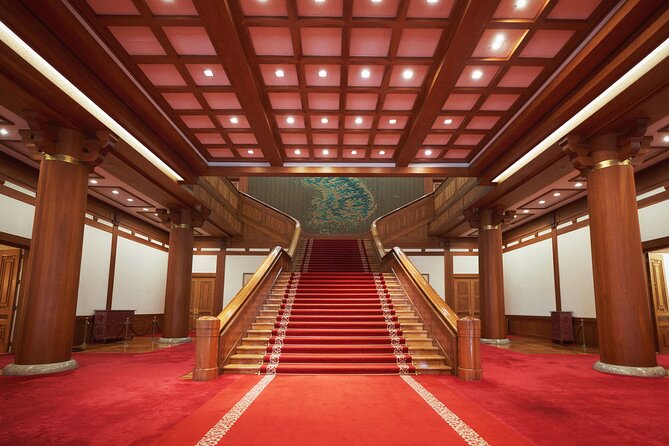
- Reserved entrance to Cheong Wa Dae with a max of 9 people, so you can actually hear your guide and ask questions
- Licensed English guide who turns sites into context, not just photos and nameplates (Jungho is repeatedly singled out)
- A route that covers office, residence, and guest buildings, so you get a full picture of how the place functioned
- Short, timed stops across multiple structures, which keeps the tour moving and prevents long waits inside secured areas
- Easy public-transport start at Gyeongbokgung Station, and you end back there
Why the Blue House gates matter this year
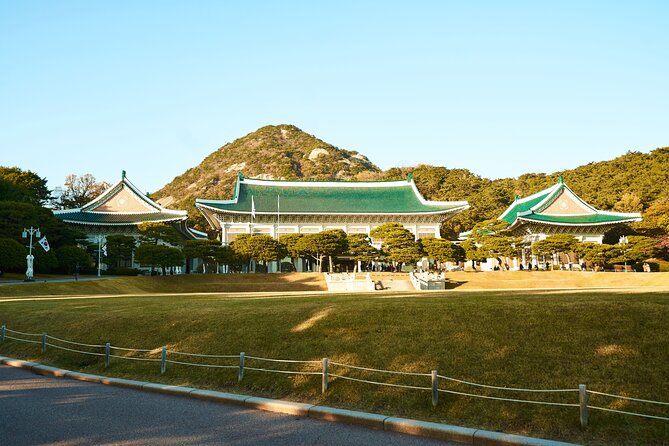
The Blue House, South Korea’s presidential residence and office, was closed to normal visitors for decades. Entry was limited to special guests and high-profile visitors, which is part of why it still feels like a big deal even for seasoned travelers. Now the gates are open, but access isn’t guaranteed forever. The tour is designed specifically around that temporary window before public access ends in June.
That time pressure changes the whole vibe. You’re not doing a casual check-the-box stop. You’re visiting a place that was historically off-limits, while it’s still possible to see it in a guided, structured way. In practical terms, it also explains why you should book sooner rather than later: this isn’t something you want to treat like a last-minute add-on.
You can also read our reviews of more walking tours in Seoul
Price of $199: what you’re buying beyond entry
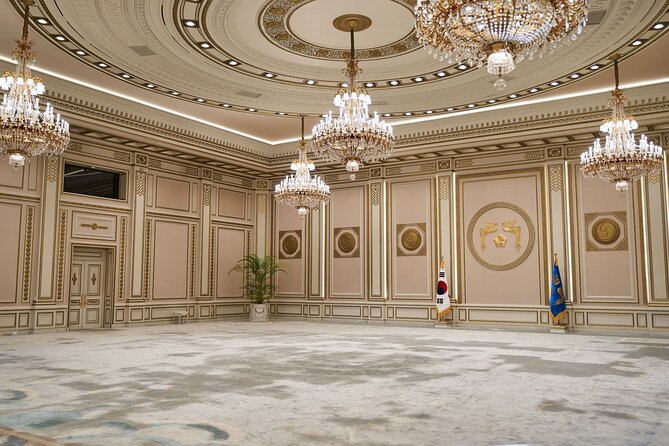
At $199 per person for about 2 hours 30 minutes, this isn’t a budget tour. But you’re paying for two things that matter in Seoul: reserved entrance and a licensed English guide. The stops include admissions that are listed as free for the tour, so the price is less about ticket fees and more about guided access plus interpretation.
The small-group limit (nine people) also affects value. In a bigger crowd, you often spend half your time waiting for your view line to shift. Here, the format is built around keeping the group together and letting the guide explain what you’re looking at while you’re looking at it.
So the real question isn’t only whether $199 is “cheap.” It’s whether you want meaning with your access. If you’d rather read signage on your own, you may feel underwhelmed. If you want the why behind the what, it’s a strong use of money.
Meeting at Gyeongbokgung Station: simple logistics, no hotel pick-up
The tour starts at 10:00 am and begins at Gyeongbokgung Station in Seoul. You end back at the same meeting point. There’s no hotel pick-up or drop-off, which means you’ll need to get yourself there on time.
The good news: it’s near public transportation. Also, the tour states that most travelers can participate, and service animals are allowed. If you’re comfortable walking through a secured, guided route (rather than wandering freely), this should fit your day well.
My practical tip: arrive a little early and get your bearings around the station. When a tour is time-based and you’re entering a controlled area, being 10 minutes late can turn into a stressful scramble.
The Blue House walk: what you’ll see stop by stop
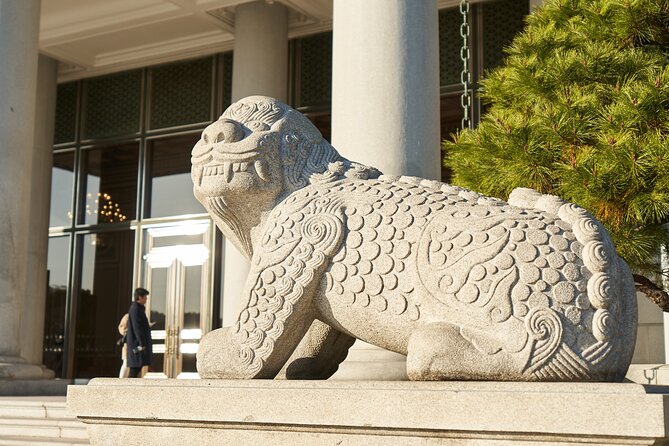
This tour is built like a guided walk through how the Blue House worked: guest welcome spaces, the main office area, the president’s residential area, and smaller pavilions tied to ceremony and quiet administration. Each stop is brief, which is helpful in a place where movement and access may be limited.
Stop 1: Cheong Wa Dae Yeongbingwan (guest welcome building)
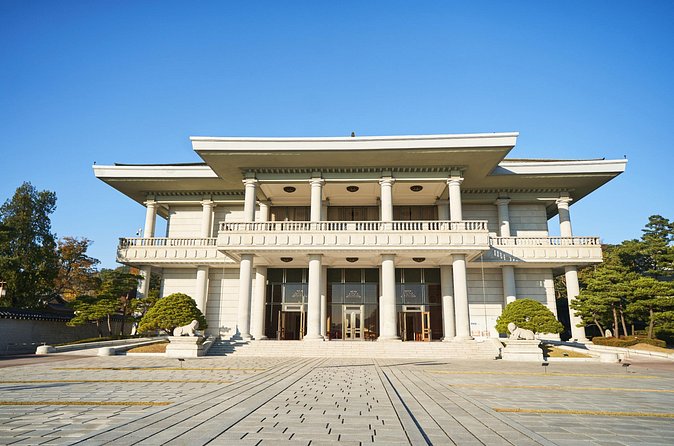
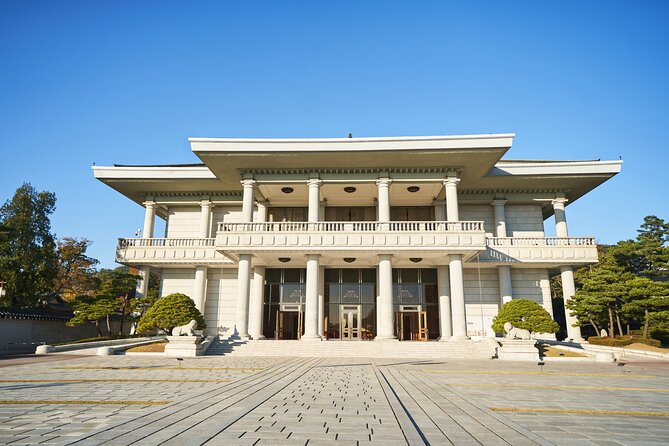
Yeongbingwan is where important foreign guests were welcomed. Presidents met foreign leaders here, and larger events like dinners or meetings were held inside. The building’s described as modern in appearance, and that contrast is actually a useful lesson: even in a highly traditional image of the Blue House, function and era matter.
What to watch for: notice how a welcome building acts like a diplomatic stage. It’s not the place where daily policy is made; it’s where relationships are framed.

Stop 2: Blue House main building (Cheong Wa Dae)
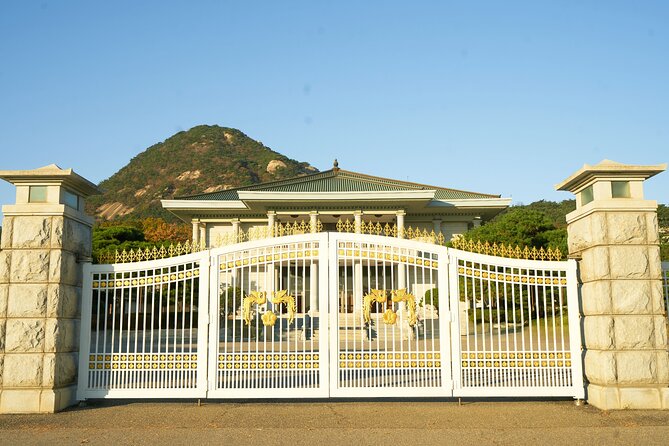
This is the core of where the president worked, where major meetings happened and big decisions were made. The blue roof is a well-known symbol of the Korean government, but the guide’s storytelling is what makes it more than just an iconic silhouette.
What to watch for: focus less on taking in everything at once and more on understanding how space supports authority and protocol. Even if you’re not a political-history expert, the guide’s framing helps.
Stop 3: Former main office area (before the main building)
This area is described as the former presidential main office site, used before the current main building was built. That means you’ll be seeing how the role and workflow evolved over time.
Why it’s valuable: it gives you continuity. The Blue House isn’t just one structure. It’s a living compound that changed as Korea’s leadership needs changed.
Stop 4: Presidential residence area (privacy, family life)
Here you’re in the residential part of the Blue House, separate from office spaces to protect privacy. The area is described as quiet and surrounded by trees, creating a noticeably calmer feeling compared with office-focused zones. The tour also notes that there were bedrooms and living spaces inside, emphasizing the difference between public duty and private life.
What to watch for: the shift in atmosphere. Even without going deep into architecture jargon, you’ll get the point—this place was designed to separate work and family life.
Stop 5: Chimnyugak House (traditional pavilion break)
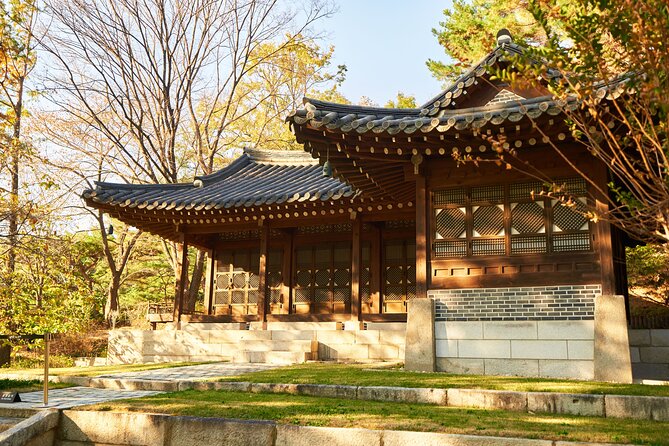
Chimryugak is a small traditional pavilion surrounded by trees. The tour includes a short break here while the guide explains architecture and history tied to the pavilion’s quiet function.
Practical value: this stop gives you a mental reset. If you’re the type who forgets everything by the third secured area of the day, this short pause helps the story stick.
Stop 6: Sangchunjae (beautiful traditional guest and meeting building)
Sangchunjae is described as one of the most beautiful traditional buildings on the grounds. You walk around its wooden structure and learn how it was used for special guests and quiet meetings.
What to watch for: the way traditional design supports respectful conversation. You’ll likely understand faster here why ceremonial spaces matter, especially in cultures where formality is part of communication.
Stop 7: Chunchugwan (former press center for announcements)
Chunchugwan is the former press center, where official announcements were made. Reporters from Korea and around the world came to hear the president speak, and the tour gives you a moment to stand where those announcements happened.
Why it lands: it reframes the whole experience from inside the compound to how decisions reach the public. It’s not only about power behind closed doors. It’s also about how information flowed outward.
The guide makes or breaks it: Jungho’s storytelling style
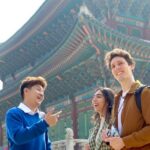
The biggest recurring praise in the feedback centers on the guide. Multiple people highlighted Jungho specifically for being exceptionally engaging, explaining architecture and historical significance clearly, and using excellent English.
You can also see why his style works. The tour format depends on interpretation, because you can’t just wander and “solve” the place with your eyes alone. At this kind of site, the facts matter, but the connections matter more—why each building existed, what it was used for, and how the layout supports different roles.
A small, practical perk: one reviewer noted that he walked them back toward the metro station after the tour. That’s not something you always get with paid tours, and it can save you time and confusion when you’re done and ready to move on.
If you want the most out of your visit, come with one or two questions ready. It could be about how the office/residence separation worked, or why certain welcome spaces were important. The guide’s answers are clearly part of the experience’s strongest value.
How to get the most from a 2.5-hour format
This is a 2-hour 30-minute tour with multiple stops. That means you’re moving through key points instead of lingering for long photo sessions. If you love slow sightseeing, you might feel a bit rushed. But for most people, the timing is actually a plus: you get coverage without spending half your day in secured-area transitions.
Here’s how I’d approach it:
- Keep your phone ready, but don’t let filming replace listening. Your guide’s context is what turns the buildings into a story.
- Expect each stop to feel like a “chapter,” not a destination you exhaust.
- Use the pavilion pause to reset your attention before you move back into office and ceremony spaces.
And if you’re traveling with someone who wants different things—history versus photos—this format usually works because each stop has a visual element and a meaning layer.
Who this tour fits best
This tour is ideal if you:
- Want to understand Korea’s presidential role through space and function, not just headlines
- Like guided history and political context in clear English
- Prefer small-group tours where you can hear explanations and get answers
- Are visiting Seoul for a limited number of days and want a high-impact, once-in-a-while access experience
It may be less ideal if you:
- Want free-roaming time or a slow, self-paced walk
- Don’t care about context and mainly want scenery shots
- Need hotel pick-up or very flexible meeting arrangements (since it starts at Gyeongbokgung Station and returns there)
Booking timing: don’t treat this as casual
The tour is commonly booked about 38 days in advance on average. That’s your signal that availability can tighten, especially given the limited window before June changes public access.
If you’re aiming for a specific date, book early. And if your schedule is flexible, you might still want to lock something in rather than waiting for the “perfect day.” With sites like this, the ideal plan is the one that you actually secure.
Should you book the Korea’s White House Blue House walking tour?
I think you should book if your ideal Seoul day includes meaning—places where architecture reflects how leadership worked, how diplomacy happened, and how announcements reached the world. The reserved entry plus a strong English guide is the core reason it feels worth it, and the consistently high feedback—especially around Jungho’s clear instructions and engaging explanations—points to a guided experience that actually helps you understand what you’re seeing.
Skip it if you’re shopping for a budget outing, or if you’d rather wander than listen. This is a structured walk with timed stops, and the value is in the story, not just the access.
If you’re on the fence, ask yourself one question: do you want the Blue House as an iconic photo, or as a place with context? If it’s context, this tour is a very solid choice.
FAQ
How long is the Blue House walking tour?
It’s approximately 2 hours 30 minutes.
What time does the tour start, and where do I meet?
The start time is 10:00 am, and the meeting point is Gyeongbokgung Station in Seoul, South Korea.
How many people are in the group?
The tour has a maximum of 9 travelers.
Is the entrance to Korea’s White House included?
Yes. The tour includes reserved entrance to Korea’s White House (Cheong Wa Dae).
Do I get an English-speaking guide?
Yes. The tour includes an English-speaking licensed tour guide.
What is the refund if I cancel?
You can cancel for a full refund if you cancel at least 24 hours in advance of the experience start time. If you cancel less than 24 hours before, it won’t be refunded.