Seoul at night has a different heartbeat.
This 2-hour walk strings together campus life, hilltop streets, and the Hanyang City Wall view as the sky turns dark and the city lights start working overtime. You get English storytelling focused on how Korean daily life actually feels, not just postcard facts.
I especially love the contrast between Ehwa Mural Village’s colorful wall art and the quieter, older textures of the surrounding neighborhoods. I also like how the guide frames what you see through culture topics like student life and social expectations, so the places connect into a bigger picture.
One thing to plan for: the route climbs. Expect uphill stairs and a hill walk, with breaks, but it is not a good fit if you have mobility limits or difficulty walking on uneven steps.
In This Review
- Key Reasons This Tour Works So Well
- Why This Night Walk Feels Local Instead of Tour-Only
- Meeting at Hyehwa Station Exit 2 and Getting Rolling
- Seoul National University at Night: Student Culture Without the Museum Vibe
- Naksan Park and the Dragon Art: How the City Gets Read Like a Story
- Ehwa Mural Village and Maronie Park: Photos, Color, and a Real Hill Neighborhood
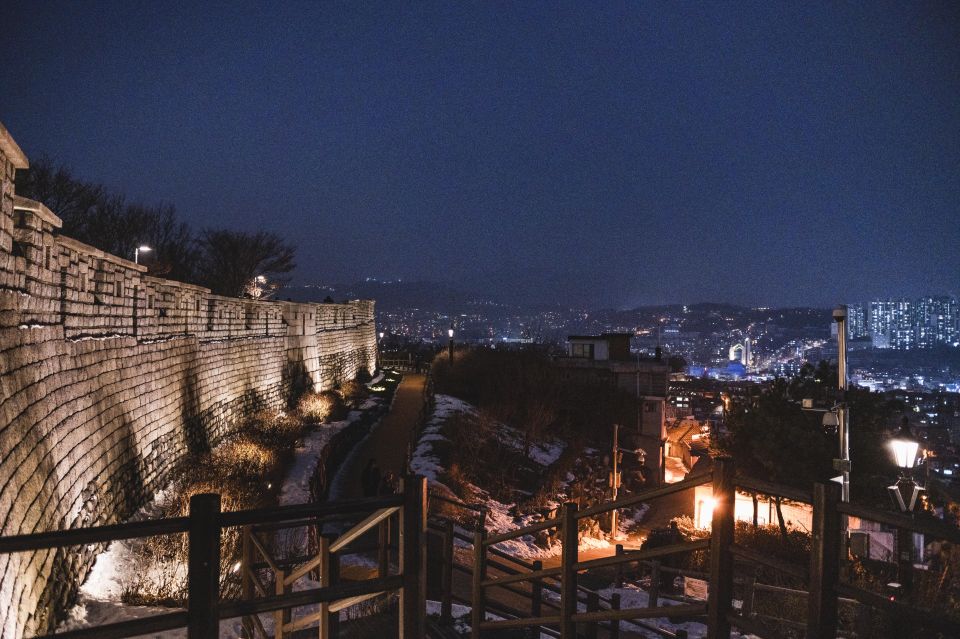
- The Hanyang City Wall at Night: Where Seoul’s Lights Start Showing Up
- Guides Like Leah, Jessica, Jun, Ethan, and Sumin Make the Stories Click
- The Real Challenge Here Is Footing and Stamina
- What You’ll Learn About Korean Society in Two Hours
- Price and Value: Is $33 a Fair Deal?
- Should You Book This SeoulDude Night Walk?
- FAQ
- How long is the Seoul night walking tour?
- Where do I meet the guide?
- Is the tour offered in English?
- What is included for winter season?
- Is the walk easy?
- What footwear should I bring?
- Is free cancellation available?
- How much does it cost?
Key Reasons This Tour Works So Well
- A short time window with big payback: you cover several meaningful stops in just 2 hours.
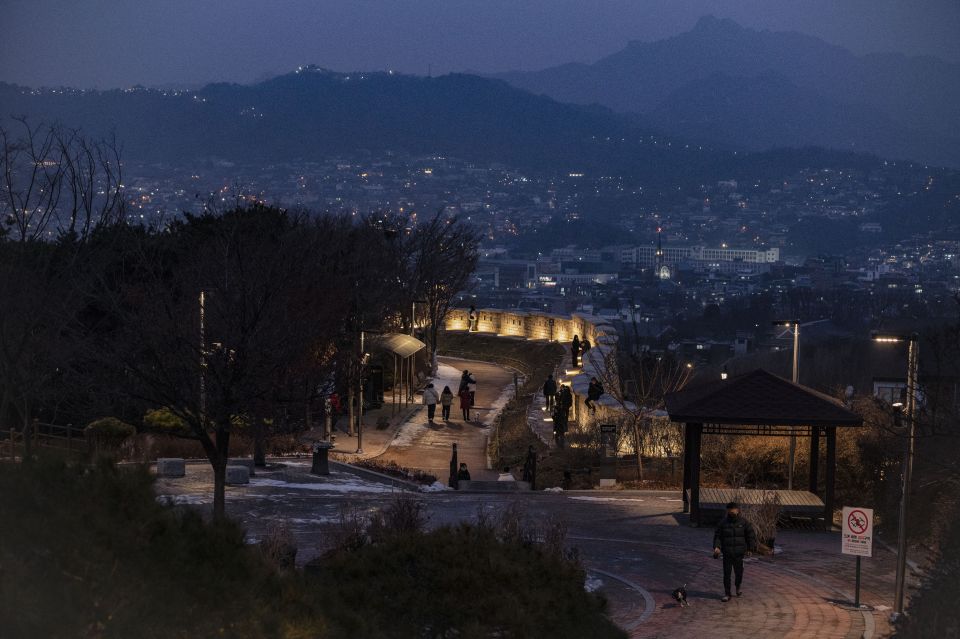
- Night views that build as you climb: the city gets brighter the higher you go on the hill.
- Art you can actually photograph: Ehwa Mural Village delivers bold wall scenes and photo angles.
- Local culture stories, not lecture mode: guides use humor and clear explanations to connect history to modern life.
- Clear audio on the move: many guests highlight the use of a microphone and personal receivers, which helps on stairs and in narrow streets.
- Winter comfort included: hot packs are provided in the winter season.
Why This Night Walk Feels Local Instead of Tour-Only
Seoul at night can turn into one long stream of neon. This tour keeps the focus tighter. You start in a central area, then slowly shift into places that feel more lived-in—university streets, older hill blocks, and the long line of the city wall.
The best part is the way the route turns scenes into context. You’re not just looking at buildings. You’re picking up how people move through school culture, daily routines, and community life. That gives the tour staying power after the photos.
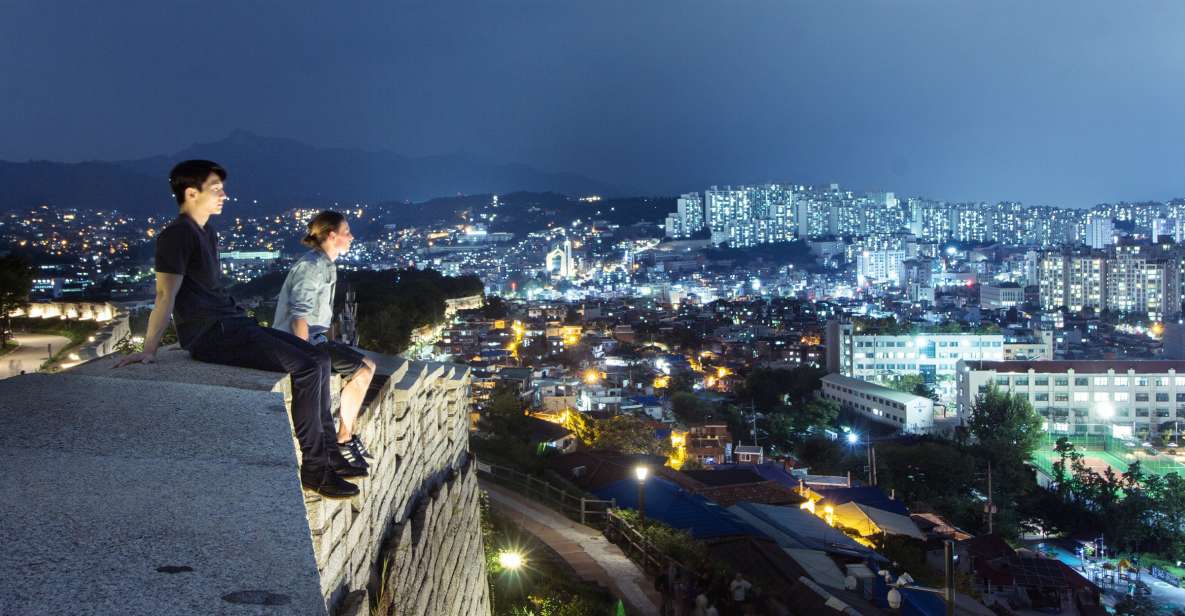
And yes, the views matter. The Hanyang City Wall stretch is a real reason to do this at night. The light changes fast, so the timing has a payoff even if the weather isn’t perfect.
You can also read our reviews of more walking tours in Seoul
Meeting at Hyehwa Station Exit 2 and Getting Rolling
The meeting point is simple: Hyehwa Station, Exit 2, with a guide waiting outside. That matters because the tour is built for a smooth start—2 hours is short, and you don’t want to burn minutes searching for the group.
You’ll be walking with a live English guide. That also means questions get answered on the spot, which is a big deal on a night walk where you often miss details while hurrying between stops.
In winter, you get practical help too: hot packs are included. It might sound small, but it’s the difference between enjoying the night and constantly thinking about cold hands.
Seoul National University at Night: Student Culture Without the Museum Vibe
One stop that sets the tone is Seoul National University (SNU). Instead of treating it like a sightseeing checkbox, the guide focuses on uni culture in Korea—what student life looks like and how campus routines shape social behavior.
Nighttime at a university feels different than daytime. Streets can look calmer, and the mood shifts from tourist curiosity to something closer to real-life atmosphere. It helps you see the city as something people actually live inside, not something you only pass through.
If you’re the kind of traveler who likes understanding how societies work—education pressure, daily rhythms, and how young people socialize—this is where the tour starts paying off. You’ll likely catch stories that connect landmarks to modern culture, which makes later stops easier to interpret.
Naksan Park and the Dragon Art: How the City Gets Read Like a Story
After the campus area, the tour heads toward Naksan Park, including the Art of Naksan dragon. The point isn’t the artwork alone. The guide uses it as a jumping-off point for a bigger theme: how Seoul’s location and identity are explained through traditional ideas and local storytelling.
This is the kind of stop that can be easy to skip on your own. You’d see a cool piece of art and keep walking. With a guide, the art becomes a clue—something that connects place, meaning, and how people talk about their city.
Naksan also works as a transition zone. You start to feel the shape of Seoul as a hill-and-river type of city. That helps once you move onto the city wall route, because the geography stops feeling random.
Ehwa Mural Village and Maronie Park: Photos, Color, and a Real Hill Neighborhood
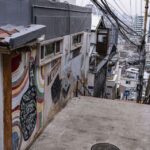
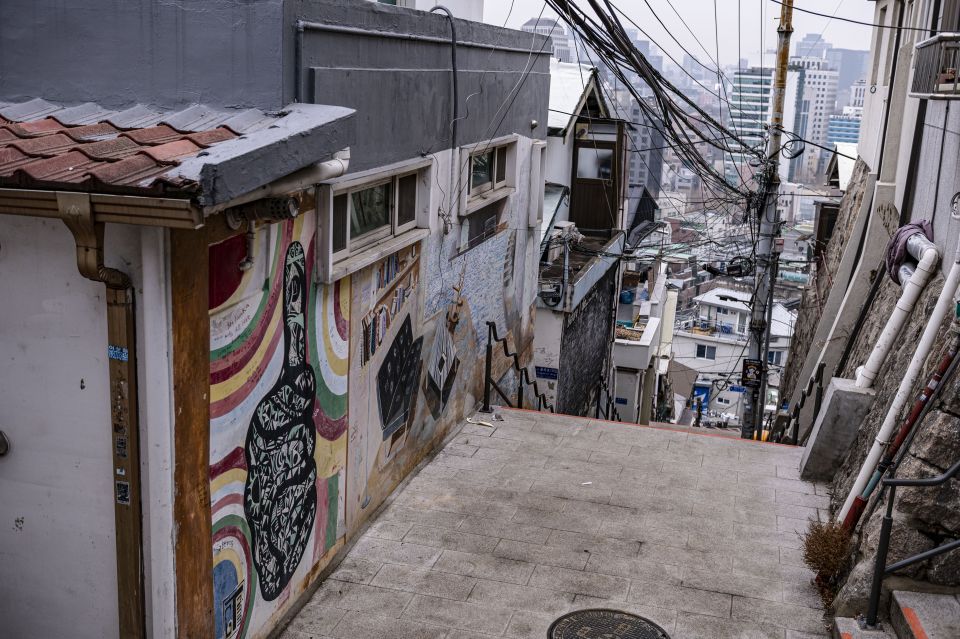
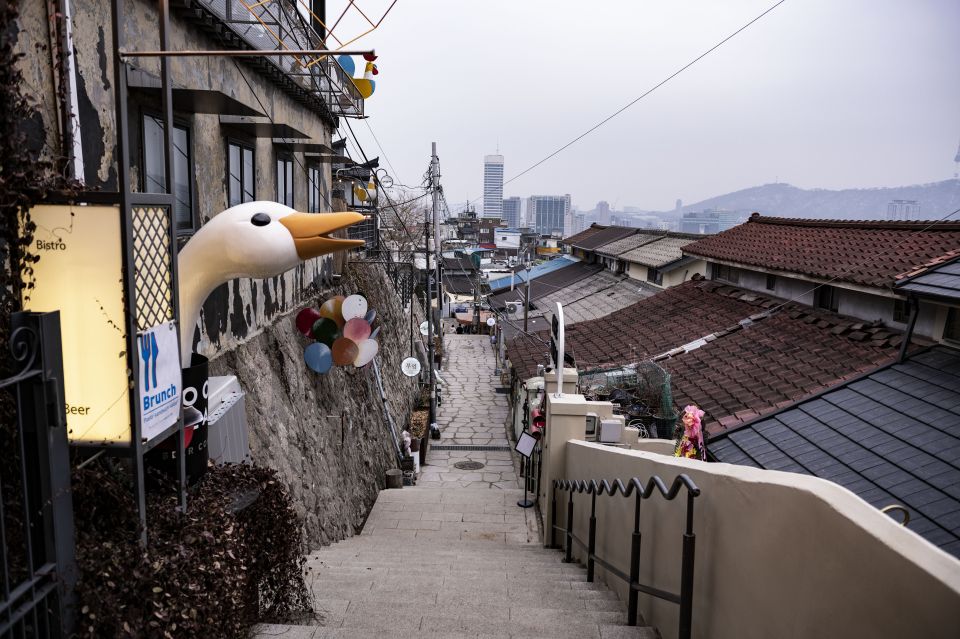
Then comes Ehwa Mural Village, described as an old hill village with art walls that make for great photos. This is where you’ll understand why the tour is timed for night. Many mural areas look good in daylight, but at night the colors feel sharper, and the streets look more cinematic.
You’ll get time to wander the walls and take pictures, and the guide stories keep it from becoming pure photo time. The mix of art and cultural context is a strong combo, especially if you don’t want to feel like you’re only doing the same sightseeing loop you can do from any guidebook.
Along the way you also visit Maronie Park. Expect it to work as a breather and viewpoint pause—useful when the walk is uphill and you want a moment to reset. Even short rests help when you’re moving through stair-heavy sections.
Practical note: wear shoes that grip well. A lot of this experience depends on good footing.


The Hanyang City Wall at Night: Where Seoul’s Lights Start Showing Up
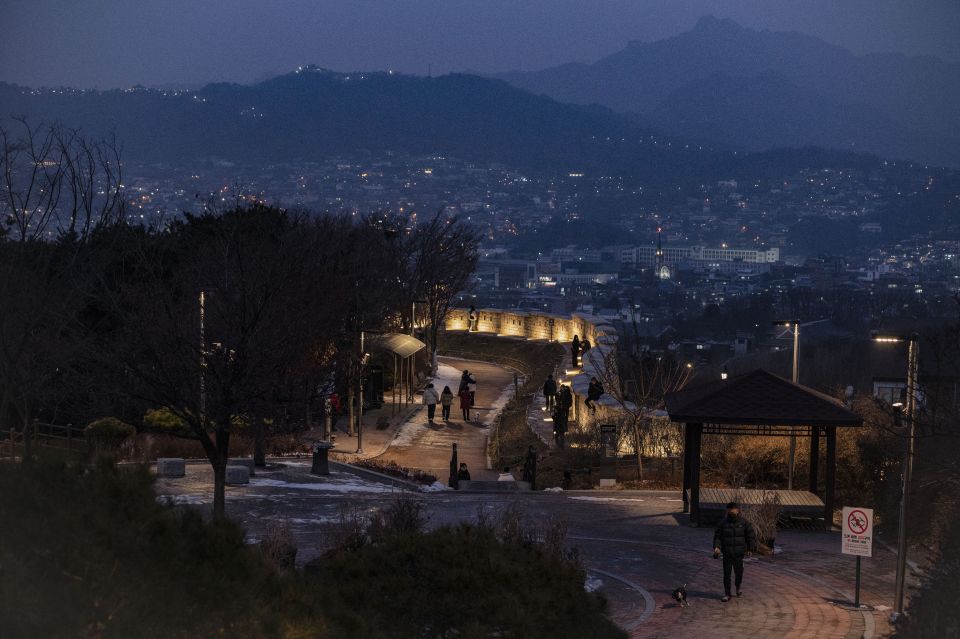
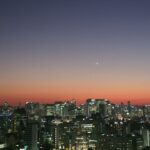
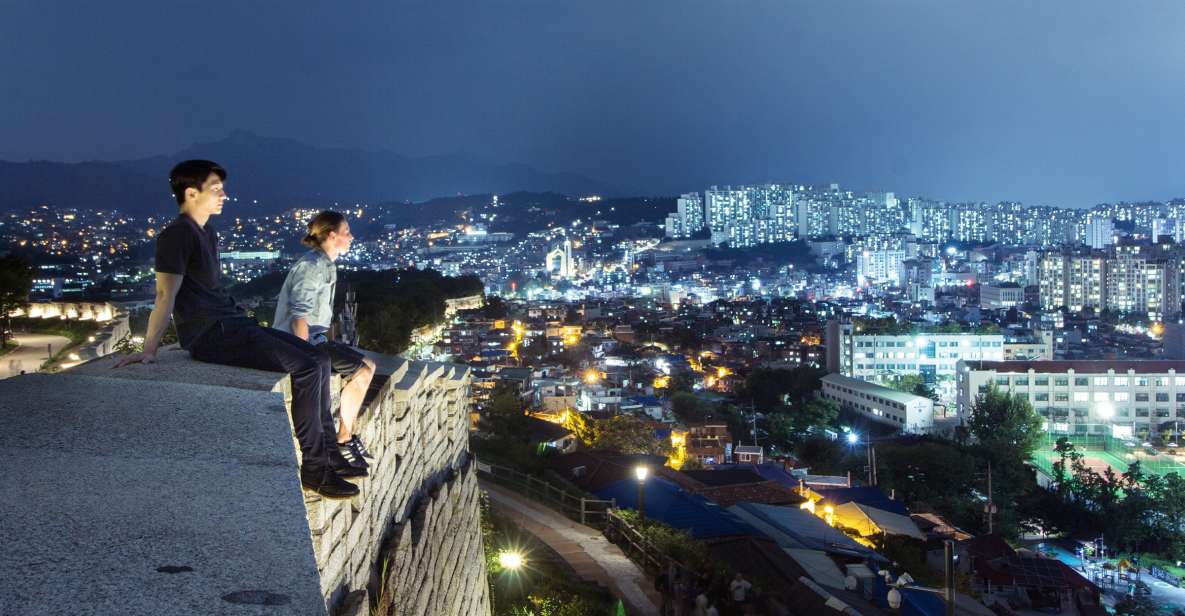
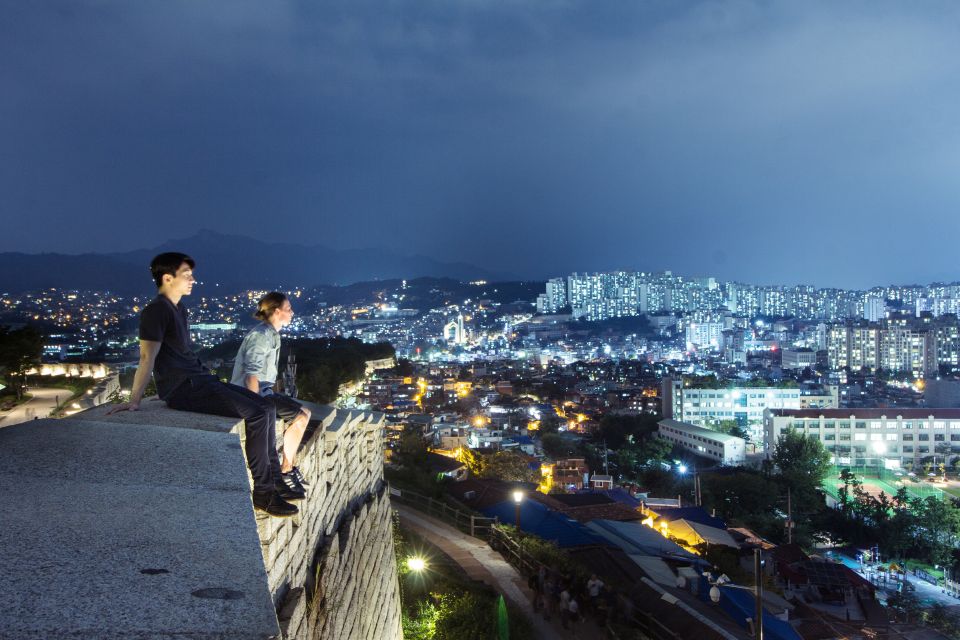
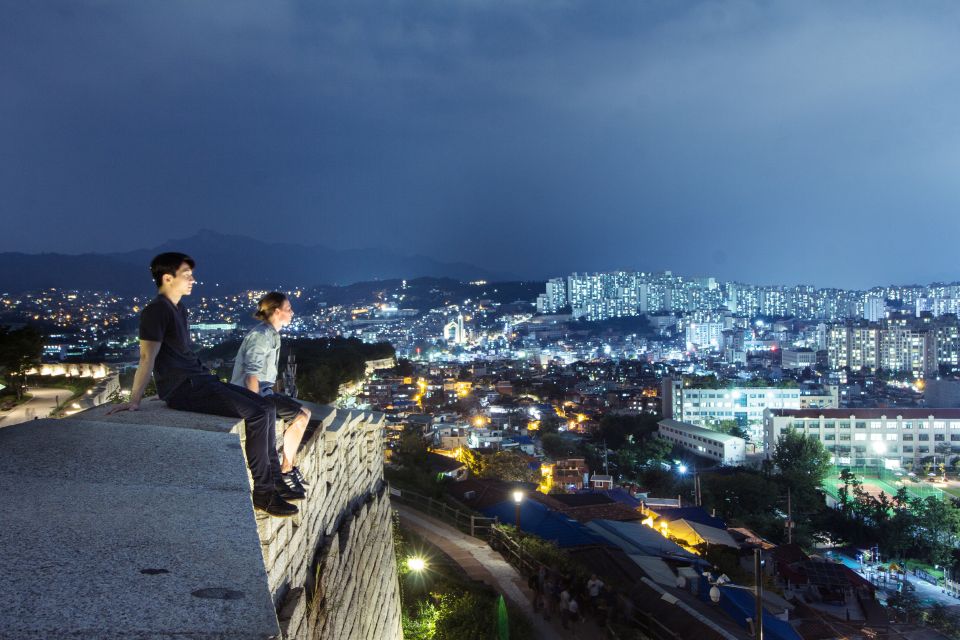
The heart of the tour is the walk on Hanyang City Wall, with one of the big draws being the night view. The route is built so your perspective improves as you go. The higher you climb, the more light fills in, and Seoul starts looking like a connected grid instead of scattered blocks.
The guide also frames this wall as more than an old structure. You get stories that connect what the wall meant and how the area relates to modern Seoul. That’s what turns the view into an experience instead of a stop.
You’ll likely feel the stairs. Multiple guides and guests mention a lot of walking uphill, but also regular breaks. In other words: this is not a casual stroll, but it’s not a death march either if you’re in decent shape.
If you’re traveling with people who love views and history in the same breath, this portion is the one you’ll remember most. The wall lines give you a sense of scale, and at night the city feels layered—lights, rooftops, and darkness all stacked.
Guides Like Leah, Jessica, Jun, Ethan, and Sumin Make the Stories Click
A big reason this tour scores so high is the human factor. The guide mix can vary, but names that show up often include Leah, Jessica, Jun, Ethan, Sumin, and Lisa.
What matters for you isn’t who leads that particular night. It’s the style. Many guests specifically highlight guides who:
- explain with cultural clarity
- keep energy up with humor
- answer questions patiently
- help with photo moments and pacing
That question-friendly approach is useful on a night tour. When you see something unfamiliar—a campus culture detail or a place-name story—you want answers immediately, while the idea is still fresh in your mind.
Also, audio support shows up in the tour experience. People note the guide uses a microphone and personal receivers, which makes a difference when you’re climbing or when groups cluster around narrow viewpoints.
The Real Challenge Here Is Footing and Stamina
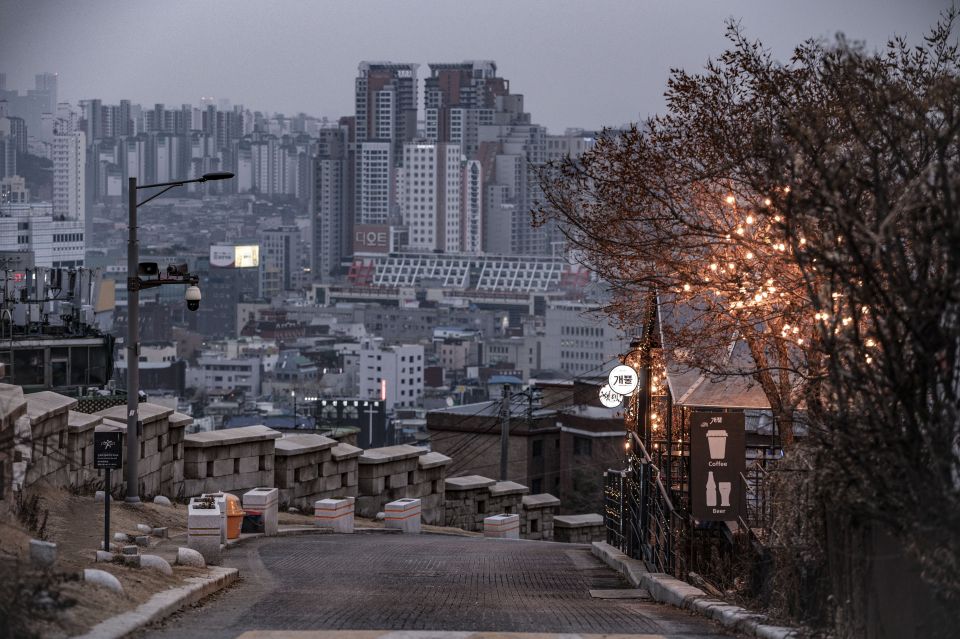
This is a short tour, but it’s not flat. The tour includes uphill walking and steps. The good news: breaks happen at stops, and the pacing is meant to keep you moving without rushing.
The drawback is that the route still demands walking endurance. The experience is not suitable for people with mobility impairments, and it’s also not for people over 70.
Also note the footwear rule: high-heeled shoes are not allowed. That’s a clear signal to bring walking shoes, not fashion shoes.
If you’re deciding between tours in Seoul, treat this as a hill-walk tour with culture stops, not an easy evening stroll.
What You’ll Learn About Korean Society in Two Hours
The learning goal here is practical. You’re meant to leave with a changed outlook on how Korean society works—especially around education and student life.
From the kinds of stories that come up in the tour, you can expect themes like:
- how students live and what pressures shape their routines
- how education culture impacts daily life
- work culture and social expectations, shared through landmark stories
- how neighborhoods have shifted over time, seen through the mix of old streets and modern city life
This is why the route matters. You don’t just hear facts in one place. You get cultural context while you’re standing in front of the physical clues: campus streets, mural corners, park pauses, and the long line of the city wall.
That’s the “value” behind the walk. It turns Seoul from a list of sights into a place with logic.
Price and Value: Is $33 a Fair Deal?
At $33 per person for 2 hours, this tour is priced like a solid mid-range night activity. The value comes from several things you’re not likely to replicate easily on your own:
- guided cultural interpretation tied to real spots
- a structured route that includes multiple areas you’d otherwise piece together with transit
- nighttime viewpoints plus art-wall time in one loop
- winter comfort support with hot packs
- English live guide and audio assistance (microphone and receivers highlighted by guests)
Could you walk these places alone? Sure. But the “alone” version usually turns into missed context. The guide’s stories are what make the experience feel like more than movement and photos.
If you’re in Seoul for a short trip and you want a single night plan that connects culture, views, and local neighborhoods, the price looks fair.
If you hate walking hills or you need step-free accessibility, then the price doesn’t matter much—this one won’t fit.
Should You Book This SeoulDude Night Walk?
I’d book it if you want:
- night views from Hanyang City Wall
- university and neighborhood culture stories in English
- a short, organized route that doesn’t waste your limited time
- photo-friendly stops like Ehwa Mural Village
- a guide-led pace with breaks and clear audio
Skip it if:
- you have trouble with stairs or uphill walking
- you need step-free routes
- you’re looking for a mostly flat evening stroll
If you’re a first-time visitor to Seoul, this tour is also a smart way to get your bearings. You’ll leave with a sense of how the city connects student spaces, older neighborhoods, and the geometry of its walls.
FAQ
How long is the Seoul night walking tour?
The tour lasts 2 hours.
Where do I meet the guide?
Meet at Hyehwa Station, Exit 2. A guide will be waiting outside of Exit 2.
Is the tour offered in English?
Yes. The tour includes a live English guide.
What is included for winter season?
In winter, hot packs are included.
Is the walk easy?
It’s described as an easy walk with breaks at stops, but it includes walking up a hill. If you have walking issues, you should contact the guide in advance, and the tour is not suitable for people with mobility impairments.
What footwear should I bring?
High-heeled shoes are not allowed, so wear comfortable walking shoes with good grip.
Is free cancellation available?
Yes. You can cancel up to 24 hours in advance for a full refund.
How much does it cost?
The price is $33 per person.
If you tell me your travel dates and who’s in your group (ages and walking comfort), I can help you decide if the hill + stairs part will be a good fit.