REVIEW · SEOUL
Bukhansan National Park: The Summit Course
Book on Viator →Operated by Sam LEE · Bookable on Viator
Seoul has a real mountain day. This Bukhansan National Park summit course sends you up toward Baek-un-dae, with seasonal mountain feel just a short ride from the city.
I like two things most: the plan is built for a 4-hour ascent-style hike instead of the usual longer route, and the guiding feels organized and safety-first with Koa and Sam.
One caution: the climb is steep, including a 25–45 degree rope-assisted section, and it is not recommended if you have knee issues.
In This Review
- Key things to know before you hike
- Bukhansan’s Summit Course: why the Baek-un-dae day feels worth it
- The route profile: 600 meters up and the rope-assisted Baek-un-dae segment
- Timing and meeting point: 8:00 am starts and a clean finish
- What you’re really paying for: value at $64.89 per person
- The guiding style: Koa and Sam’s focus on safety and small-group pacing
- Lunch after the climb: tofu-forward food with a vegan-friendly setup
- Who this hike fits best (and who should skip it)
- Weather matters more than you think
- Small group ceiling: why max 20 feels different on a steep mountain
- Should you book the Bukhansan Summit Course?
- FAQ
- FAQ
- How long is the Bukhansan National Park: The Summit Course?
- Where does the hike start and where do we end?
- What time does the tour start?
- Is lunch included, and how much does it cost?
- Is trekking pole rental available?
- How fit do I need to be, and is it okay for knee problems?
- What happens if the weather is bad?
Key things to know before you hike
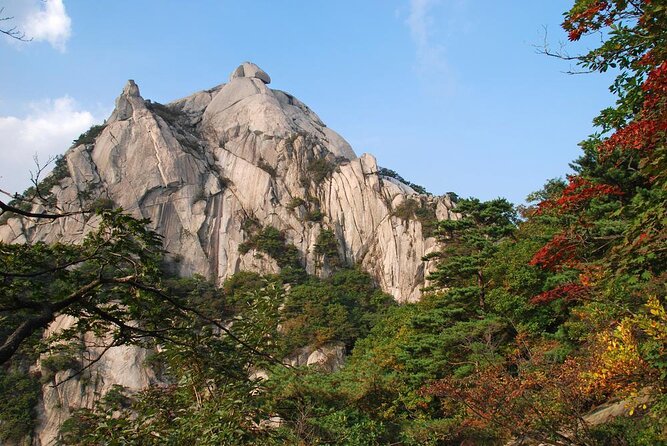
- Fast summit pacing: You aim for about 4 hours up to the peak area instead of a typical 6 hours.
- Big climb in a short span: Around 600 meters of elevation gain over 2.1 km.
- Rope-assisted highlight at Baek-un-dae: A steep 20–30 minute segment uses ropes.
- Small group energy: Max group size is 20, and guides work closely.
- Optional tofu lunch after the hike: 9,000–15,000 KRW, and it’s vegan/vegetarian friendly.
Bukhansan’s Summit Course: why the Baek-un-dae day feels worth it
If you want mountain views without losing half your day, this hike makes a strong case. You’re in Bukhansan National Park, right on the Seoul boundary, and the “highest peak in Seoul” goal gives the whole morning a clear purpose.
I also like that it is not a vague nature walk. The course is designed with timing in mind: you target roughly 4 hours instead of a more standard 6-hour effort. That matters when you’re trying to fit real hiking into a city trip.
And yes, this mountain is popular for a reason. It’s famous, accessible, and scenic. But it’s also serious enough that hundreds get rescued every year, which is exactly why the safe-trail approach feels more than marketing. You’re not just going up; you’re going up with structure.
You can also read our reviews of more walking tours in Seoul

The route profile: 600 meters up and the rope-assisted Baek-un-dae segment
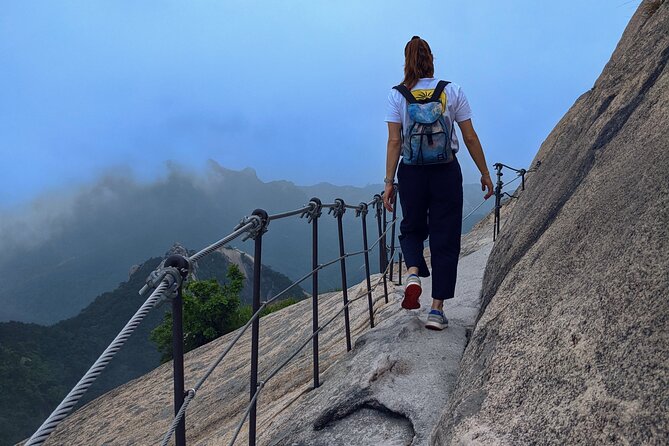
Let’s talk about the effort honestly. The ascent portion includes about 600 meters (2,000 ft) of elevation change over 2.1 km (1.3 miles). That normally takes people around 100–120 minutes, so even if you move efficiently, you should treat it like a workout.
A helpful way to picture it from the course description: it’s like going up and down roughly 200 floors of stairs. If you are moderately fit, you’ll likely find it challenging but manageable. If you’re not, you may end up fighting your pace instead of enjoying the climb.
Now for the part that separates “I can hike” from “I can hike anywhere.” The Baek-un-dae peak segment requires climbing at about a 25–45 degree angle, and it’s aided by ropes. The course description also notes that this part lasts around 20–30 minutes and, if you have a fear of heights, it can be avoided by taking a break.
That detail is important for planning your mindset. You can choose to pause rather than panic. If heights are an issue for you, this tour’s format gives you a way to handle that without pretending it won’t be steep.
Timing and meeting point: 8:00 am starts and a clean finish
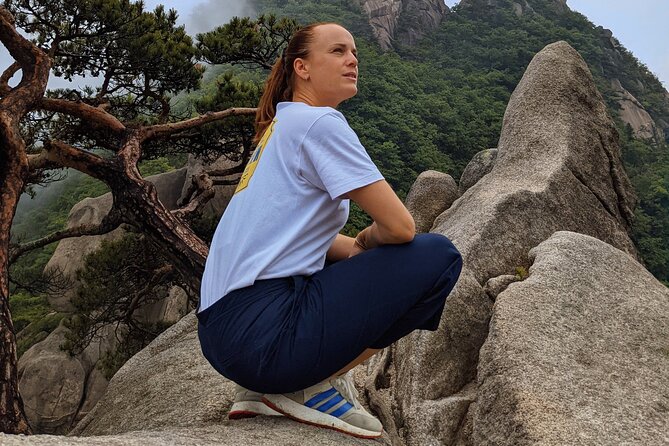
This experience starts at 8:00 am from Bukhansan UiSeoul. The end is back at the same meeting point, so you don’t have to solve transportation puzzles at the end of a tiring hike.
The tour duration is about 4 hours 30 minutes. In practice, the total time you spend will depend on conditions and the group pace, but the structure is still compact enough that you can plan the rest of your Seoul day afterward.
Also, it’s near public transportation. That sounds basic, but when you’re heading out early, easy access makes a real difference. It reduces stress before the first step, and it helps you keep your energy for the climb.
What you’re really paying for: value at $64.89 per person
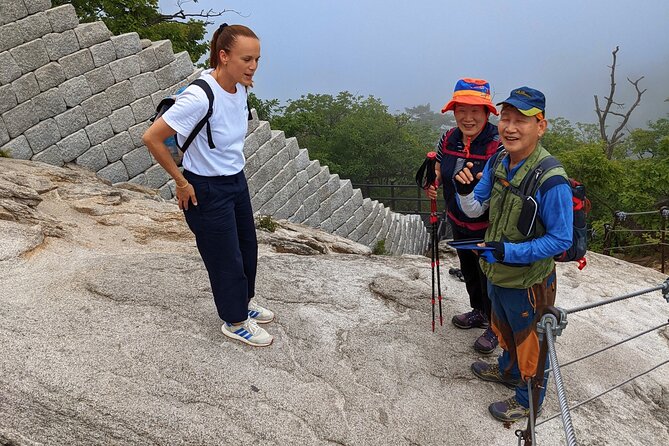
At $64.89 per person, this is not a budget bus tour, and it’s also not priced like a private mountain guide. What you’re paying for is the mix of structure and risk reduction.
First, the route is specifically chosen to be faster: you aim for about 4 hours rather than the regular 6 hours. Saving time can be the difference between fitting Bukhansan into your itinerary or skipping it entirely.
Second, you get small-group attention. The group cap is 20 travelers, and the guiding team (including Koa and Sam, with the provider listed as Sam Lee) is repeatedly praised for staying on safety and keeping the group together.
Third, the course takes seriously the fact that this mountain sees rescues. You’re still hiking outdoors and using your legs, but you’re not doing it blindly.
One more small value note: there’s a mobile ticket, so you’re not scrambling with paper confirmations. It’s the kind of thing that helps when you’re rushing to an early meeting.
The guiding style: Koa and Sam’s focus on safety and small-group pacing
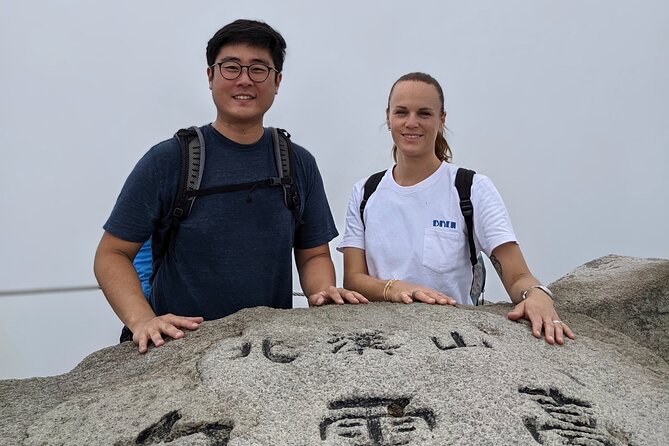
The standout pattern in the feedback is how much people appreciated the guides. Koa and Sam show up again and again in the strongest comments, especially for working well with a smaller group and keeping things organized.
The practical benefit for you is simple: when the hike gets steep or technical, you want a guide who can manage the flow. Here, the focus is described as safety-first while still making sure the experience feels fun, not robotic.
You’ll also notice the tour is framed as a “safe and sound trail” rather than an anything-goes route. That aligns with the summit goal and the rope-assisted climbing at Baek-un-dae. It’s not just about reaching the top; it’s about getting there with less risk and fewer surprises.
If you’re a confident hiker, you’ll likely appreciate the efficiency. If you’re a newer hiker, you’ll likely appreciate the reassurance that someone is watching the trail and the group.


Lunch after the climb: tofu-forward food with a vegan-friendly setup
Hike first, then eat. Lunch is listed as optional, and it’s paid separately at a tofu-specialty spot where they make food from scratch. The price range is 9,000 to 15,000 KRW.
Here’s why I think this option is worth considering: you’re already doing a peak-focused morning, so a meal that’s consistent and close by is a win. Plus, the description says it’s vegan/vegetarian friendly, while still having meat options too. That’s useful if you’re traveling with different diets.
Just don’t count on lunch being included. If you want it, decide ahead of time so you’re not stuck negotiating your hunger after a steep morning.
Who this hike fits best (and who should skip it)
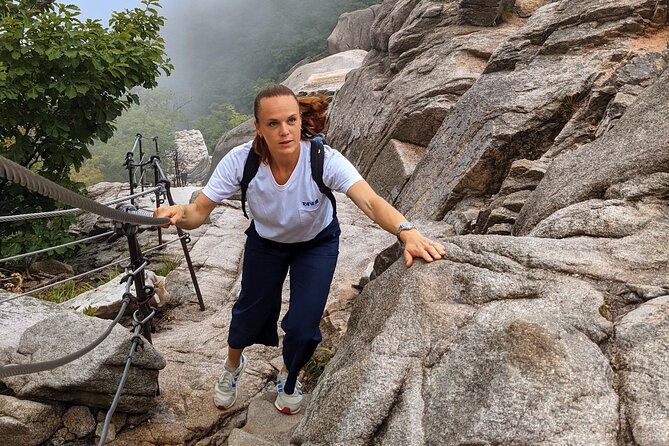
This is best for people who want a real vertical challenge but can handle the steepness with a moderate fitness base.
The tour description is clear:
- You should have moderate physical fitness.
- It’s not recommended if you have knee issues.
- The rope-assisted climbing at Baek-un-dae includes steep angles.
So here’s my practical read: if you’re comfortable with uphill cardio and you can climb stairs without pain, you’ll probably find it rewarding. If your knees flare up on descents, or you already avoid steep grades, you should probably choose a different option.
One more mental-fit point: the climb to the summit is designed to be faster than average. That usually means fewer long rests. The pace works for many people, but if you need frequent breaks for comfort, you may want to plan for that upfront.
Weather matters more than you think
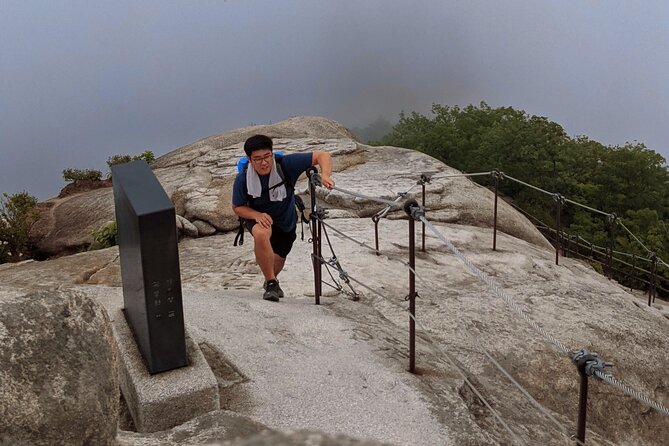
This experience requires good weather. The cancellation guidance says that if it’s canceled due to poor weather, you’ll be offered a different date or a full refund.
Also note the stricter part: the experience is non-refundable and cannot be changed for any reason. So you’re not just paying for the hike; you’re committing to a day that fits weather reality.
If you’re booking late, think about how flexible your Seoul schedule really is. Bukhansan can look gorgeous even when conditions are rough, but the tour is set up to protect the group by not running in bad weather.
Small group ceiling: why max 20 feels different on a steep mountain
A lot of hikes advertise small groups. This one gives a clear number: max 20.
Why that matters on a mountain? Because steeper sections and rope-assisted stretches are where crowds can make things awkward. Smaller groups generally mean fewer bottlenecks, more space to move safely, and more frequent checks from the guide.
It’s also consistent with what you see in the feedback. People describe a small group and praise how Koa worked with them, including ensuring everyone stayed safe first while still enjoying the moment.
Should you book the Bukhansan Summit Course?
Book it if you want:
- Seoul’s highest peak goal with a guided, structured plan
- A faster route (about 4 hours to the key effort) that fits a day
- A small-group hike with clear safety attention from Koa and Sam
- Optional tofu lunch after the climb, with vegan/vegetarian friendly choices
Skip it if:
- You have knee issues, because the tour is explicitly not recommended
- You know steep terrain and heights stress you out and you don’t feel comfortable with the idea of taking a break during the rope-assisted segment
If you’re moderately fit and you’re ready for a steep, satisfying morning, this is one of the more direct ways to get a mountain day from Seoul without losing your whole schedule.
FAQ
FAQ
How long is the Bukhansan National Park: The Summit Course?
It runs for about 4 hours 30 minutes (approx.).
Where does the hike start and where do we end?
The meeting point is Bukhansan UiSeoul, South Korea and the activity ends back at the same meeting point.
What time does the tour start?
The start time is 8:00 am.
Is lunch included, and how much does it cost?
Lunch is optional and paid by individuals. It costs 9,000–15,000 KRW.
Is trekking pole rental available?
You can rent hiking poles, but it costs extra and can only be rented out if you inform the provider in advance. The poles are described as not really necessary unless you have bad knees.
How fit do I need to be, and is it okay for knee problems?
The tour expects moderate physical fitness. It is not recommended for people with knee issues.
What happens if the weather is bad?
The experience requires good weather. If it’s canceled due to poor weather, you’ll be offered a different date or a full refund. The experience is non-refundable and cannot be changed for any other reason.