REVIEW · SEOUL
Best Walking Tour to Gyeongbok Palace Bukchon Hanok Village
Book on Viator →Operated by Korealinx Corporation · Bookable on Viator
Gyeongbokgung and Bukchon in one clean, guided loop. This 3-hour Seoul walk ties together royal architecture, everyday Joseon-era life, and the way north-central Seoul still feels lived-in, not staged. I like how the route gives you context fast, starting near major palace landmarks and finishing in the Insadong area where you can keep wandering.
I especially liked two things: entrance fees are included, so you don’t waste time figuring out tickets on the fly, and the small group size (max 8) keeps it personal enough for real questions. If your guide is Jay Kim, Stella, Joe, Jack, or Paul (names I’ve seen attached to this experience), the storytelling style tends to connect the palace details to how people actually lived.
One consideration: the tour needs moderate fitness. You’ll walk a lot, and Bukchon Hanok Village has steps and uphill stretches, so it’s not a great match if mobility is limited.
In This Review
- Key highlights you’ll feel on the walk
- Why this Gyeongbokgung-to-Bukchon route makes sense in 3 hours
- Meeting at Taepyeongno and finishing in Insadong
- Gyeongbokgung Palace: guard ceremony first, then the architecture story
- Between palace landmarks: Gwanghwamun and the King Sejong Statue stop
- National Folk Museum of Korea: how “daily life” becomes concrete
- Bukchon Hanok Village: hidden looks, uphill streets, and real neighborhood feel
- The guide is the difference: why small-group tours feel different
- What $88 buys you here: value beyond the headline price
- Who should book this tour (and who might want a different plan)
- Best weather and time-of-day habits
- Should you book this Gyeongbokgung Palace and Bukchon Hanok Village walking tour?
- FAQ
- How long is the walking tour?
- Is admission included?
- Where does the tour start and end?
- What group size should I expect?
- Is the tour suitable if I have trouble with steps or uphill walking?
- Do I need to worry about weather?
Key highlights you’ll feel on the walk
- Royal guard changing ceremony at Gyeongbokgung Palace, a moving, visual way to start the day
- All entrance fees included, including a stop at the National Folk Museum of Korea
- King Sejong Statue stop, useful for understanding why this area matters in Korean history
- Bukchon Hanok Village inside access moments, so you see more than just photo angles
- Small group of up to 8, meaning less waiting and more time to ask questions
- Finish in Insadong, which is ideal for food and souvenirs after the tour
Why this Gyeongbokgung-to-Bukchon route makes sense in 3 hours
Seoul can feel like sensory overload. This tour helps because it funnels you into one compact zone where old and new are right next to each other. You start in the palace orbit, then slide into Bukchon, where the streets and hanoks show how that history still breathes.
The timing is smart for first-timers. In about three hours, you cover the main visual hits you came for, plus the explanations that make them click. You don’t leave with random facts. You leave with a mental map for what you’re seeing and why it matters.
Another quiet win is the pacing between stops. You get time at Gyeongbokgung to see the grounds properly, and you don’t treat Bukchon like a drive-by. Even the shorter Bukchon segment is designed to give you a feel for the neighborhood’s layout and traditional homes.
You can also read our reviews of more walking tours in Seoul

Meeting at Taepyeongno and finishing in Insadong
The tour starts at 24-1 Taepyeongno 2(i)-ga, Jung District. That’s a convenient central area for public transit, and it also puts you in the right neighborhood for walking into the palace zone.
You’ll end near 75-5 Insa-dong, Jongno District, which basically means you finish in the Insadong area. That matters more than it sounds. When the tour is done, you’re already placed in a district where it’s easy to keep going: tea shops, street snacks, and easy strolling.
One practical tip: wear shoes you can trust. This isn’t an “easy stroll only” situation. The itinerary includes steps and uphills in Bukchon, and the palace complex involves lots of moving around even when you’re not climbing aggressively.
Gyeongbokgung Palace: guard ceremony first, then the architecture story
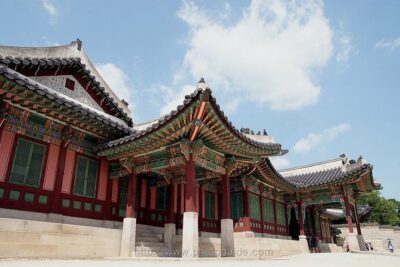
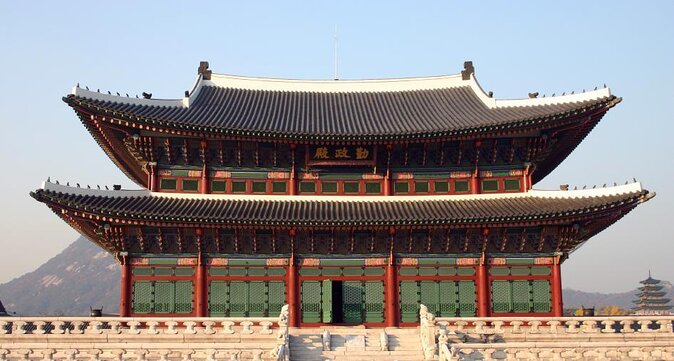
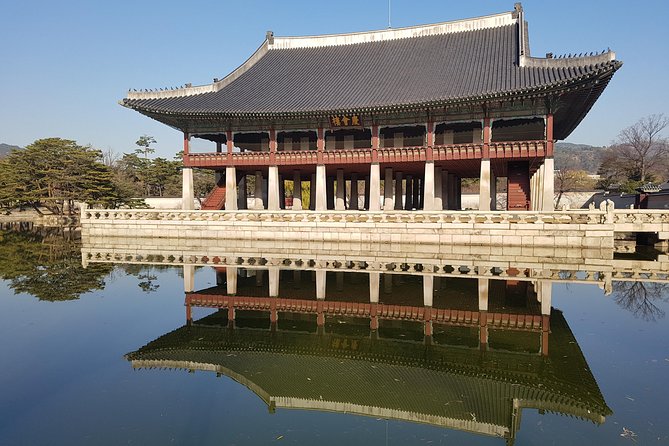
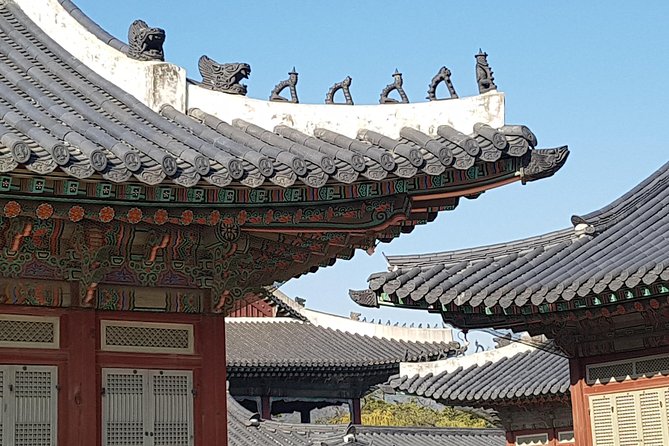
Gyeongbokgung Palace is the headline, and it earns the spotlight. The tour focuses on the highlights you’ll want to see with a guide explaining what you’re looking at, not just pointing out buildings.
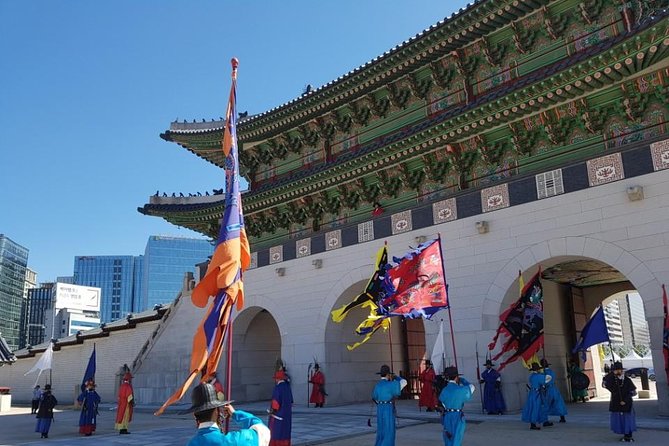
A key moment is the royal guard changing ceremony. It’s not just a photo stop. It gives you a sense of formality and schedule, the kind of order that shaped court life during the Joseon Dynasty. If you’ve never seen one in person, it’s one of those experiences that makes the palace feel more alive instead of frozen.
Once the ceremony moment happens, you shift into architecture and spatial logic. The palace layout can look overwhelming if you’re on your own. With a guide, you start connecting structures, courtyards, and ceremonial spaces to the way the palace functioned. You also learn to spot traditional construction techniques and what they were designed to do.
You get about one hour at Gyeongbokgung with an admission ticket included. That timing is realistic. You can walk key areas, see what’s worth lingering over, and still keep enough energy for Bukchon afterward.
Between palace landmarks: Gwanghwamun and the King Sejong Statue stop
This tour doesn’t treat the palace area like a sealed-off museum. You move through the larger historic core, including a route that brings you toward Gwanghwamun Gate and a King Sejong Statue stop.
Why does that matter? Because Gyeongbokgung is not just a building. It’s part of a city story. When you see Gwanghwamun and then pause for King Sejong, it helps you understand how modern Seoul honors (and sometimes uses) royal-era significance as a navigational and symbolic center.
That in-between walking time is also when you get context. A good guide uses the simple act of moving from point to point to explain how power, culture, and geography overlapped in Joseon-era Seoul. You’ll likely start noticing details you might otherwise miss, like directional cues, sightlines, and how streets frame the palace complex.
National Folk Museum of Korea: how “daily life” becomes concrete
After the palace intro, the tour continues to the National Folk Museum of Korea. This stop is a strong value add because it turns the palace from a single-world setting into a broader cultural picture.
You’ll learn about South Korea’s history through a huge collection, including over 98,000 artifacts. The point isn’t to memorize catalog numbers. The point is to see how tools, household items, clothing, and everyday customs help you imagine daily life in different eras.
This is a great stop if you like history but don’t want only court politics. Museums like this make the past feel touchable. Even if you’re not a museum person, the size of the artifact collection gives your guide room to explain the bigger themes that connect to what you’re seeing outside.


Bukchon Hanok Village: hidden looks, uphill streets, and real neighborhood feel
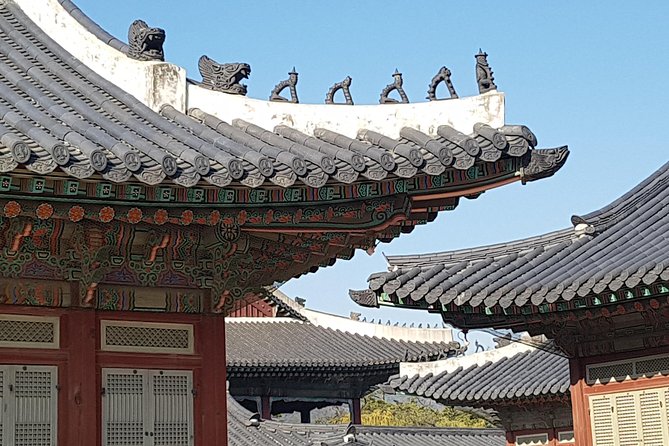
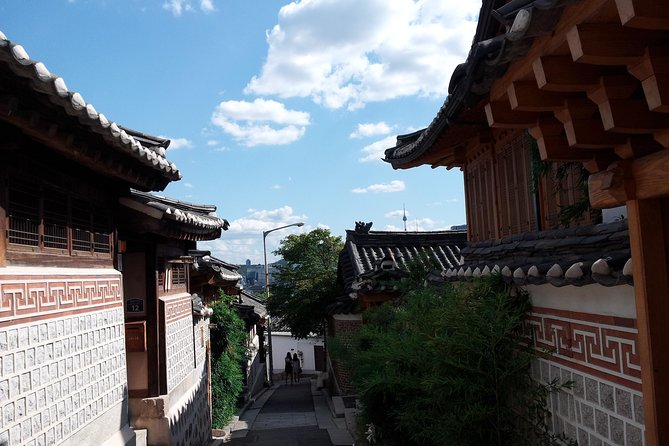
Then comes Bukchon Hanok Village, and it’s the visual payoff for the earlier context. You move between the palace area and the neighborhood positioned between major palace sites, including the route that runs toward the area between Gyeongbokgung and Changdeokgung.
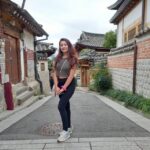
The tour focuses on hidden looks rather than just “stand here for a photo.” You get moments where you can peer inside traditional homes and get a feel for Korean lifestyles from the past. Even when a hanok isn’t your private home, the details of how spaces work can be surprisingly understandable once a guide points out what to notice.
Timing here is about 30 minutes with the stop described as free entry. That duration works. Bukchon can easily eat hours because the streets reward wandering. The tour keeps you moving so you get a meaningful snapshot, but it doesn’t promise you’ll see everything. You’ll probably want to come back later on your own for the longer wandering.
Main caution: Bukchon involves steps and uphill walking. The terrain is part of the reason it feels special, but it can drain you fast if you’re not used to hills. Plan for comfortable socks and shoes, and slow down. This is one place where rushing leads to slipping and regret.
The guide is the difference: why small-group tours feel different
This experience caps at 8 travelers, and that changes the whole feel. In a small group, questions don’t get swallowed. You get faster answers, and your guide can adjust explanations based on what you care about.
The reviews around this tour strongly lean into guide impact: people consistently praise friendly, professional guidance and clear English. I’ve seen names like Jay Kim and Stella tied to structured storytelling, plus Joe, Jack, and Paul associated with lots of follow-up questions and fun cultural touches.
There’s also a useful reality check. Even in great tours, the guide’s energy and style can swing your day. If you want more than basic pointing—if you want answers when you ask why something looks a certain way—show your interests early. A good guide will run with it.
If you’re the type who likes to understand what you’re seeing at each step, this format fits you well. If you prefer total freedom with only occasional facts, you might find the tour feels more structured than you want.
What $88 buys you here: value beyond the headline price
$88 can sound steep until you look at what’s included. Here, the entrance fees are included, and you’re covering more than one paid sight. You get admission support at Gyeongbokgung and a museum stop, which is where self-guided days often add up quickly.
You’re also paying for translation of complexity. Palaces and hanok neighborhoods are layered. Without help, you can easily walk past the most meaningful details. With a guide, the same buildings and streets become easier to “read,” which makes the day feel longer even when the tour is only three hours.
One more value angle: because the group is small and the tour finishes at Insadong, you can convert that time into an easy next step. You’re not stranded miles away at the end of a schedule. You end in a place where it’s natural to eat and keep exploring.
Who should book this tour (and who might want a different plan)
This walking tour is a strong match if:
- You want a first solid orientation to Gyeongbokgung, Joseon-era themes, and Bukchon
- You like architecture plus “how people lived” context, not just dates and kings
- You can handle moderate walking, including steps and some uphill sections
- You like small groups where you can ask questions without shouting over crowds
It may be less ideal if:
- You have walking difficulty with steps or hills
- You prefer long, self-paced wandering with no structure
- You want a fully packed day beyond three hours (this tour is designed to be focused)
If your Seoul trip is short or you want one “anchors of the north” day, this fits neatly.
Best weather and time-of-day habits
This experience requires good weather. That’s not a random rule. Walking between palace areas and Bukchon means rain can quickly make surfaces slippery and cut down comfort and photo time.
Dress for walking. Think light layers, water, and a hat or umbrella if needed. Also, plan to slow down in Bukchon. Hills make it feel longer than it is, and the goal is to enjoy the streets and viewpoints without turning it into a workout.
Should you book this Gyeongbokgung Palace and Bukchon Hanok Village walking tour?
I’d book it if you want a tightly guided, high-impact first day in Seoul. You get the palace centerpiece with the guard changing ceremony, a serious history stop at the National Folk Museum of Korea, and a meaningful look into Bukchon Hanok Village without needing to plan ticket logistics.
Skip it or choose carefully if mobility is an issue, or if you dislike guided time because you feel you lose freedom. This tour rewards curiosity. If you ask why something is built a certain way or how the spaces worked, you’ll likely feel like the three hours went by fast—in a good way.
If you do book, grab your spot early since it’s commonly reserved about 30 days in advance, and bring shoes you’ll be happy wearing for hills and steps.
FAQ
How long is the walking tour?
It runs for about 3 hours.
Is admission included?
Yes. Entrance fees are included, with an admission ticket for Gyeongbokgung Palace and a museum stop.
Where does the tour start and end?
It starts at 24-1 Taepyeongno 2(i)-ga, Jung District, and ends in the Insadong area near 75-5 Insa-dong, Jongno District.
What group size should I expect?
The tour has a maximum of 8 travelers.
Is the tour suitable if I have trouble with steps or uphill walking?
No. It’s not recommended for travelers with walking difficulty on steps and uphills, and it does require moderate physical fitness.
Do I need to worry about weather?
Yes. The experience requires good weather, and if it’s canceled due to poor weather, you’ll be offered a different date or a full refund.