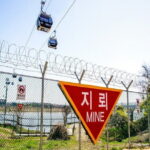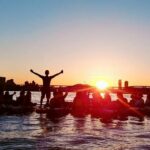
North Korea, without crossing the line. This DMZ-adjacent day trip gets you to Aegibong on the Jogang River for some of the most direct, border-facing views from South Korea, plus a stop at Starbucks Aegibong, often described as a striking symbol of security and global culture. You’ll also walk through peace memorial spots and end with a top-end viewpoint at 조강전망대 (Jogang Observatory).
I especially like the tight mix of places that each add a different angle: Marines’ war memory at the Marine Corps Memorial, then calm stop-and-look moments at the peace parks, then the big payoff at the final observatory. I also like that the itinerary stays structured even with security checks, so you don’t spend your day guessing what’s next.
One drawback to weigh: this tour does not enter the DMZ. You’ll be close to it and see North Korea from the South Korea side, but if your goal is an official DMZ entry experience, you may feel boxed in by the rules and timing.
In This Review
- Key highlights to know before you go
- Aegibong and the Jogang River: why the sightlines feel so close
- Tour route from Seoul: pickups, coach comfort, and how the day moves
- The Aegibong ticket office checkpoint: passport matters
- Marine Corps Memorial: the context stop that makes the views make sense
- Peace eco-parks and themed gardens: meaning plus great angles
- Peace Bell and the unity altars: small rituals, big symbolism
- Starbucks Aegibong: coffee stop with real-world geopolitics
- 조강전망대 observatory: the final view that earns your time
- Guides like Gogo, Judy, Hana, Alex, and Juno: what to look for
- Who should book this DMZ-by-the-river tour (and who might skip it)
- Should you book this best North Korea view tour?
- FAQ
- How long is the tour?
- What does it cost?
- Does the tour enter the DMZ?
- What time does the tour start?
- Where do pickups happen?
- Do I need a passport?
- Is coffee included at Starbucks?
Key highlights to know before you go
- Jogang River views from Aegibong, right where you can face the border-side landscape
- 조강전망대 observatory for a clear look, with binoculars helping you pick out distant details
- Peace eco-park stops with the Peace Bell and photo-friendly bridge over to the best angles
- Marine Corps Memorial for context on why this area looks the way it does today
- Starbucks Aegibong for a coffee stop that comes with geopolitical bragging rights (your latte is not included)
Aegibong and the Jogang River: why the sightlines feel so close
If you’re chasing North Korea views from Seoul, the math is simple: distance, elevation, and whether anything blocks your line of sight. This tour’s best asset is that it puts you along the Jogang River near Aegibong and then routes you through the area’s closest-feeling public viewpoints, so you’re not just “touring the DMZ region.” You’re actually looking at it.
The final stop, 조강전망대, is the moment many people care about most. The setup is built for looking—your time is capped, but the viewing focus is clear. And the tour includes binoculars on-site, which matters a lot when you’re trying to spot villages and movement at a distance.
Now add the peace eco-park sequence. You go from memorial-style stops to real “stand here and look” zones. That flow helps you read what you’re seeing: war-era context first, then the border-facing calm afterward. It’s a lot more coherent than bouncing randomly around a coastline.
You can also read our reviews of more tours and experiences in Seoul.
Tour route from Seoul: pickups, coach comfort, and how the day moves
This is a half-day-style tour that runs about 5 hours total, starting at 9:00 am. You’ll do round-trip transportation by coach, which is the easiest way to reach this part of the border area without dealing with transfers and schedules on your own.
Pickups can happen at multiple subway exits:
- Myeongdong Subway Station Exit 9
- Seoul City Hall Subway Station Exit 6
- Hongdae Subway Station Exit 3
And the meeting information also references Hongik Univ. Station Exit 3 as the practical “anchor.”
That matters because your morning plan changes if you’re staying in Myeongdong versus Hongdae. If you can, pick the station closest to where you’re already going to be at 9:00 am, so you don’t spend your DMZ time crisscrossing Seoul.
The schedule is also practical for visitors with limited time. You’re not stuck all day, but you’re given enough short stops to keep momentum. Still, keep your expectations realistic: this kind of security-area outing moves at the pace of checkpoints, not your personal itinerary.
The Aegibong ticket office checkpoint: passport matters
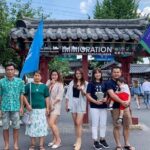
The tour gets you to Aegibong ticket office early in the day, and this is where security becomes real. It’s a brief stop—about 10 minutes—but it’s also the place where you need to show your passport in order to pass through the security area.
That’s not a “nice-to-have.” It’s a hard requirement: you cannot enter without a passport. If you’re the type who likes to travel light, build a habit here: passport in a secure pocket or travel document pouch before you leave your hotel. And bring a pen if you’re the kind of person who always ends up filling out forms.
Also note the tour’s size limit: it runs with a maximum of 100 travelers. That’s big enough to have a lively group, but small enough that you’re not drowning in chaos at every stop.
Marine Corps Memorial: the context stop that makes the views make sense
Right after the ticket checkpoint, you hit the Marine Corps Memorial. This stop lasts about 20 minutes, and it’s timed to do a specific job: give you the story behind the scenery.
The memorial marks the sacrifice of 15,000 Marines who battled in the Korean War. Standing there (even for a short time) helps you understand why people treat this area as more than a photo op. The border isn’t a backdrop—it’s the result of war, stalemate, and the way those conflicts still shape daily reality.
A practical tip: don’t rush through this stop. It’s tempting to zoom toward the views, but the memorial is your “decoder ring.” Once you’ve got that context, your later stops at the peace parks read less like set dressing and more like the other side of the same story.
Peace eco-parks and themed gardens: meaning plus great angles
After the memorial, the tour moves into the Aegibong Peace Eco Park for about 1 hour. This is where you transition from war memory to reconciliation-focused spaces designed to face North Korea. It also includes war relics and trails, so it’s not just benches and plaques.
Next comes an additional Aegibong Peace Ecological Park segment, about 30 minutes. This portion includes themed gardens and a Sky Forest canopy. The tour notes 80+ rare bird species as a point of interest, though the bird-spotting experience will naturally depend on season and conditions.
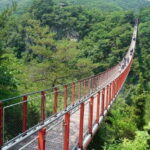
Then you get to the bridge segment: the 애기봉 평화생태공원 흔들다리 (a 150m thrill bridge). You’ll have about 30 minutes here, and it’s a rare chance to mix adrenaline with border-facing photography. If you’re traveling with kids or someone who dislikes heights, this is the moment where you’ll want to decide early whether to cross. (One guide experience shared with similar tours includes mention that the bridge may close due to weather, which could mean a hike if you still want the best views.)
There’s also a short rest window at the outdoor performance stage area (about 20 minutes). If there’s timing for cultural performances, you might catch something. Even if not, it’s still a sensible pause: take a breather and use the view time strategically rather than just standing there.


Peace Bell and the unity altars: small rituals, big symbolism
Several stops on this tour are brief but memorable because they’re interactive.
First, you ring the 애기봉 평화의종 (Peace Bell) for about 15 minutes. The bell is described as cast in 2000, tied to hope for reunification. Even if you’re not a “ritual person,” this one gives you a clear way to participate without needing extra instructions or language fluency.
Later, you reflect at an altar (about 10 minutes) built in 2018. Again, it’s not long, but it’s designed as a pause point—good for resetting your head after security and war context.
These ritual stops don’t replace seeing the border. Instead, they change how you experience the border. You go from “look at the place” to “feel why people care about it.”
Starbucks Aegibong: coffee stop with real-world geopolitics
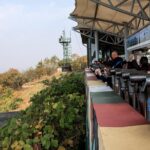
This tour’s headline curiosity is the Starbucks stop at Aegibong. It runs about 1 hour, and yes, it’s marketed as the closest Starbucks to North Korea, with coverage noting it as a security symbol and pointing out that the border can feel surprisingly visible from here.
Important practical detail: while the tour includes the admission ticket for the stop, it does not include coffee or tea. So bring cash/card and decide if you want to treat this as a souvenir moment—or just use the time to regroup and enjoy a latte with the border in your field of view.
Is it worth it? For some people, it’s the perfect capstone because it’s a normal everyday activity in an extraordinary location. For others, it may feel like “too much emphasis on one brand,” especially if your priority is only the viewing parts.
My advice: order quickly if you’re pressed for time, and don’t make it your whole experience. Treat it as a comfort stop that happens to come with the most dramatic backdrop on your itinerary.
조강전망대 observatory: the final view that earns your time
The last viewing knockout is 조강전망대 (Jogang Observatory), about 30 minutes. The tour frames it as Korea’s closest observatory to the DMZ, and it notes that binoculars can reveal villages roughly 1.4km away.
That’s the number worth thinking about. From a normal city distance, 1.4km isn’t far. But in this setting you’re still dealing with line-of-sight limits, atmospheric conditions, and what’s actually visible across the river and restricted zones. So bring a simple expectation: you might see shapes, movement, and settlement areas—not a postcard-level view.
For photos, I’d plan on using your phone without expecting perfect zoom. Use binoculars for clarity first, then use your camera as a capture tool. And if visibility is reduced by weather or haze, don’t fight it—use the time to take in the overall geography so you can “read the border” instead of hunting for details.
This is also where your earlier memorial and peace-park stops pay off. You’ll spend the last part of the day with a clearer mental map of what you’re seeing and why it matters.
Guides like Gogo, Judy, Hana, Alex, and Juno: what to look for
A day like this lives or dies by the guide. This tour includes an English or Chinese guide, and the standout common theme from praised guides is clear history framing plus room for questions.
Names that have come up with high marks include Gogo, Judy, Hana, Alex, Juno, and Alice. If your guide is strong, they’ll connect the physical layout you’re seeing—river, parks, observatory—to the political history that created it. That makes your photos more meaningful and your viewing time less confusing.
My practical tip: ask at least one question early—something about how the area became divided or why these viewing points exist on the South Korea side. Then watch how your understanding sharpens as you move from memorial to parks to observatory.
Who should book this DMZ-by-the-river tour (and who might skip it)
This is a strong fit if:
- You have limited time in Seoul and want a high-impact border-view day
- You care about both history context and photos
- You like structured itineraries with multiple short stops rather than one long bus ride
It’s a weaker fit if:
- You specifically want an official DMZ entry experience (this tour does not technically enter the DMZ)
- You dislike security procedures and passport requirements
- You’re the type who thinks longer Starbucks time means less sightseeing (you’ll want to manage that hour well)
Families can work here too, since many stops are timed and organized. Just remember: there’s a bridge crossing in the itinerary, and security checkpoints can slow things down.
Should you book this best North Korea view tour?
I’d book it if your main goal is the closest South Korea viewing experience with a day that balances history stops, peace spaces, and a serious final observatory. At $49 per person with round-trip transport and entrance fees included, it’s also priced for value if you want the “big-view” package without building your own itinerary around multiple locations.
I’d think twice if your dream is an inside-the-DMZ experience. You’ll still see North Korea from the outside of the restricted zone, but the emotional payoff depends on whether you’re chasing official access—or the reality of border visibility and context.
If you do book, go in with two goals: use the observatory time well, and let the memorial/peace stops set the meaning. Do that, and this won’t feel like a gimmick day—it’ll feel like a focused border-view outing you can talk about.
FAQ
How long is the tour?
It’s listed at about 5 hours (approx.).
What does it cost?
The price is $49.00 per person.
Does the tour enter the DMZ?
No. It doesn’t technically enter the Korean Demilitarized Zone, but it takes you up to the edge along the Jogang River near Aegibong.
What time does the tour start?
The start time is 9:00 am.
Where do pickups happen?
Pickups are offered at Myeongdong Subway Station Exit 9, Seoul City Hall Subway Station Exit 6, and Hongdae Subway Station Exit 3. The meeting information also references Hongik Univ. Station Exit 3.
Do I need a passport?
Yes. A passport is required during the tour, and you cannot pass through without it.
Is coffee included at Starbucks?
No. Meals and coffee or tea are listed as not included, so you’ll need to pay for your drinks at Starbucks.