REVIEW · SEOUL
Seoul Self-Guided Audio Tour
Book on Viator →Operated by Uvamai Niche Tourism · Bookable on Viator
Seoul sounds better when you control the pace. This self-guided audio tour uses 16 short attraction tracks to help you stitch together Korea’s royal past and today’s tech-meets-design Seoul. You get a mobile ticket plus access links you can reuse to plan your route.
I love how the stops are mixed on purpose: palaces, temples, museums, and city-design landmarks in one loop. And I like that you’re not locked into a tour group voice—just click each map point and listen when it suits your feet and your curiosity.
The main drawback: it’s not a step-by-step guided walk or a timed-entry ticket. If you show up after an attraction closes, or if you expect the links to arrive instantly, you can feel stuck.
Key points before you go
- 16 attractions designed to fit an easy ~3 hours (about 10 minutes per stop)
- SoundCloud audio links plus a Google My Maps itinerary map tied to each stop
- Several stops are free, but some major sights require entry tickets (not included)
- You choose the order and timing, including the option to stretch it across multiple days
- A private activity setup means it’s just your group using the same access links
- The tour works best if you check your email access links before you start walking
In This Review
- A 3-Hour Game Plan Across Seoul’s Old and New
- Getting Audio On: SoundCloud Links and an Interactive Map
- Stop 1: Gyeongbokgung Palace and Joseon Royal Power
- Stop 2: Bukchon Hanok Village’s Real Neighborhood Vibe
- Stop 3: Changdeokgung Palace and the Secret Garden Setup
- Stop 4: Jogyesa Temple and Modern Buddhist Practice
- Stop 5: Cheonggyecheon Stream and the City’s Water Comeback
- Stop 6: Dongdaemun Design Plaza (DDP) and Zaha Hadid’s Influence
- Stop 7: Myeong-dong Cathedral and Korea’s Political Echoes
- Stop 8: N Seoul Tower for Views and the Love Lock Tradition
- Stop 9: Namsan Park and Feng Shui Thinking
- Stop 10: Leeum Art Museum for Traditional Meets Contemporary
- Stop 11: War Memorial of Korea for Modern History in Exhbits
- Stop 12: National Museum of Korea and a 5,000-Year Timeline
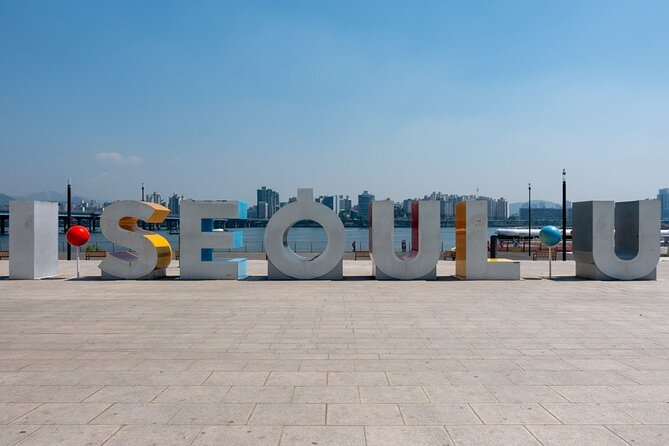
- Stop 13: Hangang Park for River Time and Korean Culture
- Stop 14: Bongeunsa Temple in Modern Seoul’s Middle
- Stop 15: Starfield Library and Seoul’s Literature Meets Commerce
- Stop 16: Seoul Sky for Tall-Building Engineering and Big Views
- Price and Value: What $9 Actually Buys You
- The Real Logistics: Timing, Opening Hours, and How to Not Get Frustrated
- Who This Tour Fits Best (and Who Should Skip It)
- Should You Book This Seoul Self-Guided Audio Tour?
- FAQ
- How long is the Seoul Self-Guided Audio Tour?
- What is the price per person?
- How many attractions are included?
- Do I need to pay entry fees for the stops?
- Is transportation included?
- Where can I start and end the tour?
- When will I receive access to the audio guide?
- What format is the audio guide in?
- Is there an interactive map?
- Can I use the links for more than one day?
- Is this tour refundable if I cancel?
A 3-Hour Game Plan Across Seoul’s Old and New
This tour is built for the way most people actually travel: you want highlights, but you don’t want to rush like you’re trying to win a footrace. The format is simple. You start wherever you like in Seoul, and the tour nudges you through 16 places with around 10 minutes of audio at each stop. Total time is listed as about 3 hours, but you’ll likely slow down at a few locations—especially the ones with views, gardens, or exhibits.
What makes this experience interesting is the contrast. You’re moving from Joseon-era power centers and Buddhist practice spaces into modern urban engineering, design architecture, and skyline drama. It’s not just sightseeing. The audio is meant to connect the dots: how Seoul grew from a royal capital into a global tech-and-design hub.
The value shows up in the structure. For $9, you’re buying narration for 16 stops, plus an interactive map that links location to audio. The tradeoff is also clear: you’re still responsible for getting yourself between points and respecting opening hours, since entry fees and transportation aren’t included.
Getting Audio On: SoundCloud Links and an Interactive Map
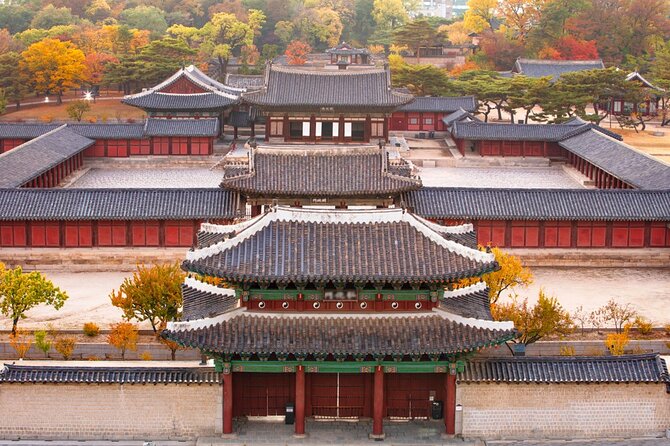
Before you go, you’ll receive two access links by email on your travel date, before your starting time: one to the audio on a secure SoundCloud web link, and one to a Google My Maps itinerary map. The map matters because each location is a clickable point tied to that stop’s audio.
Here’s the practical advantage: you can listen to individual attraction guides or the whole tour in advance. That helps you arrive with context instead of staring at a building and guessing the story. It also lets you reorder your day. If you know you’ll prefer temples over towers, you can.
Also pay attention to a key lesson: this is not an app that forces a schedule onto you. You’ll use your map to navigate between stops, and at each location you click to play the relevant audio. If you expect automated, turn-by-turn guidance, you may feel disappointed.
One more real-world tip: since some access-link issues have shown up in past experiences, I’d treat the email like your boarding pass. Check it before you leave the hotel. If you start walking and your links haven’t arrived yet, you’ll feel the “now what?” stress fast.
You can also read our reviews of more guided tours in Seoul


Stop 1: Gyeongbokgung Palace and Joseon Royal Power
Gyeongbokgung Palace is your big historical on-ramp. This is where you get the Joseon Dynasty context: grand architecture, royal function, and the weight of Korea’s palace-era story. Even if you don’t catch every detail at ground level, the audio helps you understand what you’re looking at.
This stop is also a reminder that timing matters. The tour provides audio for about 10 minutes here, but the palace itself can have a different schedule depending on the day. Since entry tickets aren’t included, you’ll want to plan for both the ticket and enough time to actually enjoy the grounds.
What I’d do: keep your audio track for the palace as a “starter narration,” then use the remaining time you want to spend wandering on your own.
Stop 2: Bukchon Hanok Village’s Real Neighborhood Vibe
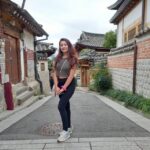
Next is Bukchon Hanok Village, which the tour frames as a living museum of traditional hanok houses. You’re learning the principles of hanok architecture while also seeing how that neighborhood has changed into a trendy cultural district.
This stop often works best when you slow down and look at small things: the shapes, the relationship of buildings to narrow streets, and the way the area feels more like a community than a staged attraction. The audio gives you grounding, but your eyes do the rest.
It’s also a free stop. That makes Bukchon a good choice for your schedule flex. If you’re running behind or want a quick story break, you can spend 10 minutes and move on without feeling like you paid per minute.
Stop 3: Changdeokgung Palace and the Secret Garden Setup
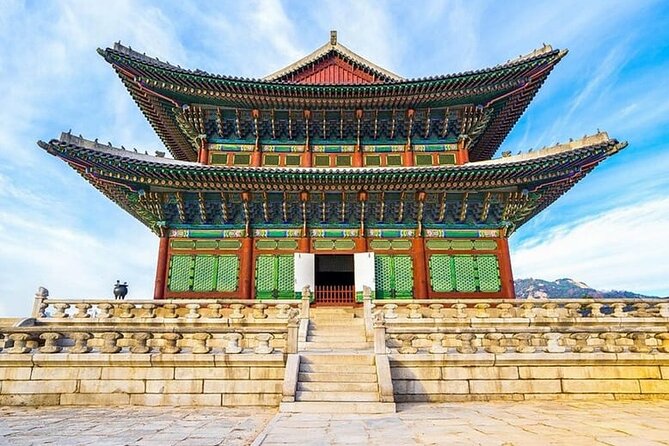
Changdeokgung Palace is another Joseon-era anchor, and it’s highlighted as a UNESCO World Heritage site. The key hook here is the palace’s connection with nature, including its famous Secret Garden.
Even with a short audio window, this stop can click because it changes your mental picture of palace life. Instead of only thinking in terms of official ceremonies and stone walls, you hear why the design aimed for harmony with the landscape.
One practical caution: this stop isn’t marked as free in the tour details, so entry tickets aren’t included. If you want the Secret Garden component, check what’s required ahead of time and build in time to get inside.
Stop 4: Jogyesa Temple and Modern Buddhist Practice
Jogyesa Temple is presented as a center of Korean Buddhism, with its role in modern Korean history and an explanation of Buddhist practices and symbolism. That’s a valuable shift from palaces. You’re no longer looking at state power. You’re seeing religious life embedded inside the city.
The best way to use a stop like this is to treat it as both educational and observational. Spend your 10 minutes listening, then look around quietly. If you’re respectful and aware of where photos are allowed, you’ll get more out of it than just the narration.
And again, this is a free stop on the tour list. So it works as a low-cost recharge button between heavier ticketed sites.



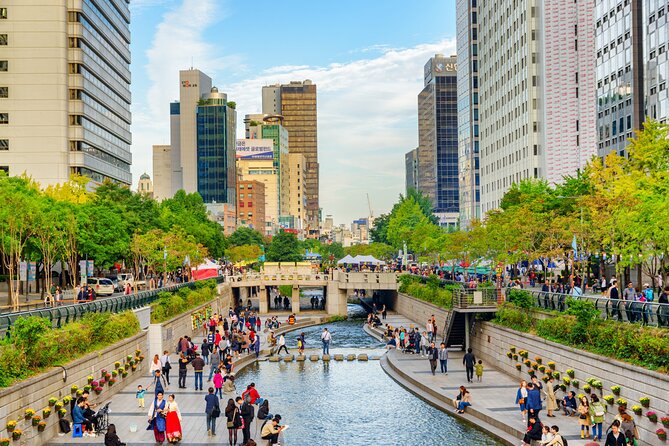
Stop 5: Cheonggyecheon Stream and the City’s Water Comeback
Cheonggyecheon Stream is one of the tour’s “how Seoul reinvented itself” moments. The audio explains its transformation—from a covered highway space into a vibrant public space—and touches on impacts on Seoul’s ecology.
This is where the narration helps you read the city like a living system. You’re walking along engineered water, but the story is about policy, urban renewal, and the choice to bring nature back into a dense area.
This stop is free, and it’s a great option for slowing your pace. If the weather is good, you’ll likely want more time than the suggested 10 minutes just to wander along the waterline and take in the rhythm.
Stop 6: Dongdaemun Design Plaza (DDP) and Zaha Hadid’s Influence
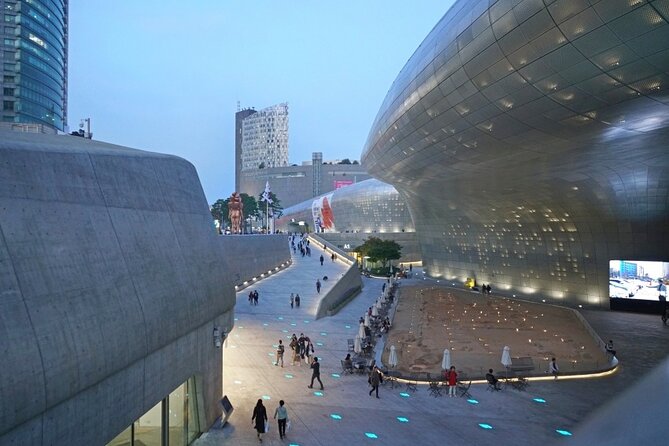
Then you hit Dongdaemun Design Plaza, or DDP. The tour calls out the futuristic landmark designed by Zaha Hadid, and positions it as a hub for design and fashion.
Even if architecture isn’t your main interest, this kind of stop is useful because it shows modern Korea through built form. You learn the “why it looks this way” story rather than just snapping photos and moving on.
This stop is listed as free. That’s a win if you want a modern city highlight without paying another ticket.
Stop 7: Myeong-dong Cathedral and Korea’s Political Echoes
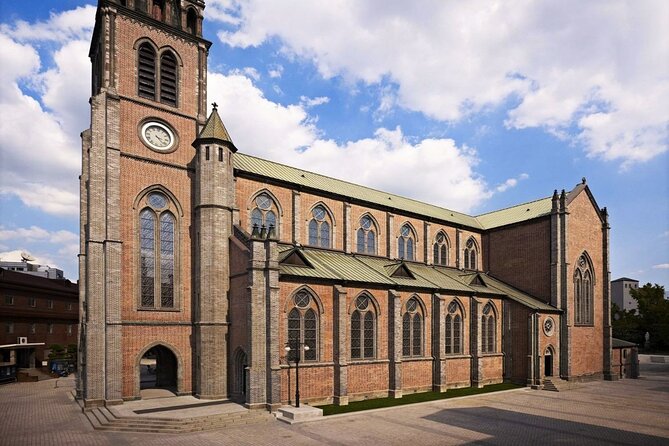
Myeong-dong Cathedral is your Gothic revival architecture moment, with an emphasis on its role in Korea’s democracy movement. That political thread gives the building weight beyond style.
This stop is free on the tour list, so it’s a good place to take a pause indoors or just stand back and look at the details you might otherwise miss.
Practical tip: churches can have rules around photography and quietness. The tour time here is short, so if you want more time, plan for it.
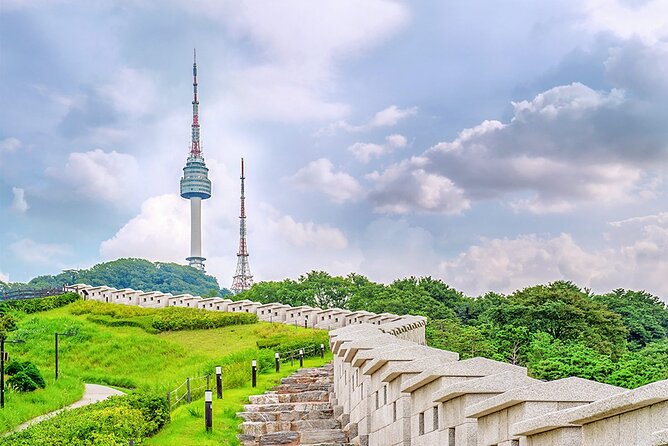
Stop 8: N Seoul Tower for Views and the Love Lock Tradition
N Seoul Tower is one of those “yes, you need to go” skyline landmarks. The audio focuses on the tower’s history and the love lock tradition that turned it into a romance hotspot.
This stop isn’t listed as free, so entry tickets aren’t included. It’s worth planning around opening hours and daylight. If you can, aim for a time when you’ll get both daylight views and nighttime city glow—though the tour doesn’t promise timing, it just provides the audio context for the spot.
Even if you don’t do the love lock tradition yourself, the tower is still about perspective. You can see how the city layers expand outward.
Stop 9: Namsan Park and Feng Shui Thinking
After the tower, the tour moves into Namsan Park, Seoul’s central mountain green space. The audio ties the park to feng shui principles and explains its role as a green oasis in the middle of urban life.
This is a good “transition stop” because it changes your experience from built structures to terrain and air. Depending on where you enter, you might feel more walking than the suggested 10 minutes implies.
If you’re sensitive to steep paths, plan lightly. Use the audio as a guide for what to notice, but don’t force a strict stop-by-stop timetable.
This stop is free.
Stop 10: Leeum Art Museum for Traditional Meets Contemporary
Leeum Art Museum is highlighted as world-class, with a mix of traditional Korean art and contemporary works, housed in buildings designed by renowned architects.
This is one of the stops where the audio context matters most. Art museums can be hit-or-miss if you don’t know what to look for. Since admission tickets aren’t included, you’ll likely want to check hours and ticket requirements before committing.
If you only have the 3-hour window, treat this as a decision point: if you love art, you’ll be glad it’s on your list. If you’re more about architecture and city streets, you might want to shorten the listening time and keep your energy for the next views and river moments.
Stop 11: War Memorial of Korea for Modern History in Exhbits
The War Memorial of Korea is a serious stop. The audio encourages reflection on Korea’s turbulent modern history, especially the Korean War, and how the peninsula’s division continues to shape the present.
This isn’t the place for multitasking. Even with a short audio guide segment, you’ll want a quiet, focused mindset. If you’re traveling with kids or people who want lighter content, you might choose to pause your audio or shorten the time here.
This stop is free per the tour details, which makes it easier to include even if you have limited budget.
Stop 12: National Museum of Korea and a 5,000-Year Timeline
Next up is the National Museum of Korea, described as a journey through 5,000 years of Korean history and culture. The audio is positioned around key artifacts that shaped Korean identity, from prehistoric times to the modern era.
In 10 minutes, you can’t experience everything. But you can leave with a stronger frame for what you’ll see if you return later or if you visit other cultural sites afterward.
This stop is free.
Stop 13: Hangang Park for River Time and Korean Culture
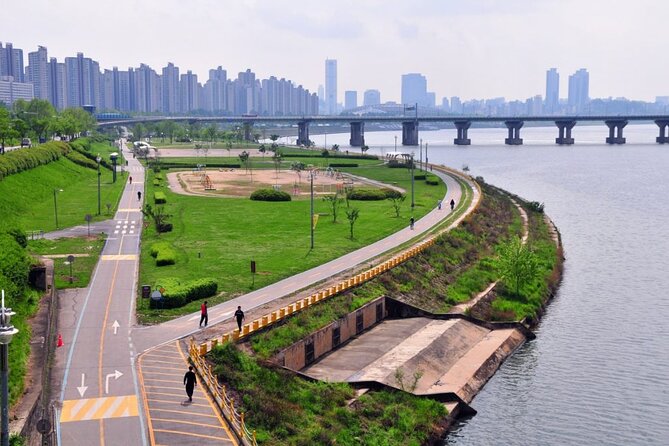
Hangang Park is your breathing-space stop. The audio explains the Han River’s role in Seoul’s development and its importance in Korean culture, and you’re encouraged to relax along the river banks.
This is where you can feel the city’s scale. Seoul is dense, but the river line gives you a sense of depth and openness. Even if you don’t stay long, a short reset here makes the rest of your walk feel more enjoyable.
This stop is free.
Stop 14: Bongeunsa Temple in Modern Seoul’s Middle
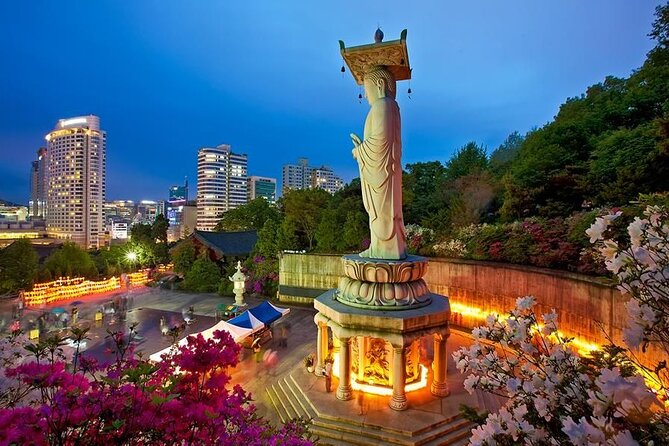
Bongeunsa Temple is described as an oasis of tranquility in Seoul’s most modern district, with a 1,200-year history and its role in spreading Korean Buddhism.
This stop is fascinating because it shows how religious life sits alongside skyscrapers. You get a contrast that feels real, not theatrical. The audio helps you connect that physical contrast to the longer story of Buddhism in Korea.
This stop is free.
Stop 15: Starfield Library and Seoul’s Literature Meets Commerce
Starfield Library is labeled Instagram-famous, and the audio points out how it blends literature and commerce in a uniquely Korean way.
If you like public spaces, this stop is fun for photos and for people-watching. But if you’re strict about ignoring anything that feels too social-media driven, you can still use the narration for understanding the design purpose behind the place.
This stop is free.
Stop 16: Seoul Sky for Tall-Building Engineering and Big Views
Finally, Seoul Sky is the tour’s big “finish with height” moment. The audio encourages you to ascend Korea’s tallest building for views, and it also explains engineering behind a super-tall skyscraper and Seoul’s rapid urban development.
This stop isn’t included with admission, so entry tickets are required by you. Since the tour’s audio is about 10 minutes at this stop, it’s best used to make the views more meaningful: you’ll have context for what changed in Seoul, not just what you can see.
This stop is listed as not free.
Price and Value: What $9 Actually Buys You
At $9 per person, the audio guide is priced like a small add-on, not like a full guided tour. The value is in coverage: 16 attraction tracks and a map that ties each track to a location.
But the big value catch is that you’re not buying access to buildings. Entry fees are explicitly not included for several highlights, including major palaces and ticketed attractions like N Seoul Tower, Leeum Art Museum, and Seoul Sky. Transportation isn’t included either, so you’ll need subway or rideshare as you connect stops.
So the best way to judge the price is this: if you’re the type who likes understanding what you’re seeing, $9 for audio context across many stops is a good deal. If you’d rather just wander without narration, you might feel the cost isn’t worth it.
One more expectation check based on common snags: the product works best when your email links arrive before you start walking. If you’re the kind of traveler who moves fast and hates waiting, double-check the access email timing before you begin.
The Real Logistics: Timing, Opening Hours, and How to Not Get Frustrated
This tour is self-guided and private, so you control the route. There’s no requirement for you to meet at a fixed starting point, since the start and end are simply Seoul, South Korea. That flexibility is great.
The frustration risk comes from two places:
- Opening hours still rule the day. If a palace or tower closes, the audio won’t reopen it.
- Access links must be ready before you start. The tour states you’ll receive email access links before your starting time, and validity is up to 6 days, but you still need those links at the right moment to use the map-and-audio flow.
If you’ve ever bought a “tour time” product expecting someone to lead you at a specific hour, adjust expectations here. This is narration plus an itinerary tool. You’re the captain.
Who This Tour Fits Best (and Who Should Skip It)
This tour fits you if you:
- Want a curated mix of royal sites, temples, museums, and modern Seoul design without paying for a full guided package
- Like short listening blocks and self-paced wandering
- Plan to use the interactive map so you don’t waste time figuring out where to go next
- Are comfortable handling your own transit between stops
You might skip (or at least reduce expectations) if you:
- Want true guided walking directions through streets
- Need a timed-entry or escort-style experience
- Hate checking email timing before you head out
Also, with an average rating of 3.3, it’s smart to go in with a clear expectation: the audio is there to add context, not to remove all friction from sightseeing.
Should You Book This Seoul Self-Guided Audio Tour?
I think this tour is worth booking if you want quick context across a lot of major Seoul landmarks and you’re willing to manage your own entry tickets and timing. The strongest part is the way the stops connect: palaces explain state history, temples add spiritual context, museums anchor identity, and modern architecture shows what Seoul became.
Before you buy, do two things:
- Confirm you can check your email and open the SoundCloud audio link and the Google My Maps map before you start
- Make a simple plan for which ticketed stops you’ll actually enter (since several are not included)
If that sounds like your style, this is a practical, budget-friendly way to get more meaning out of your Seoul day. If you’re hoping for a guided “follow me” experience or you tend to arrive at attractions at the last possible minute, look for something with a tighter guide structure.
FAQ
How long is the Seoul Self-Guided Audio Tour?
The tour is listed as about 3 hours.
What is the price per person?
It costs $9.00 per person.
How many attractions are included?
The audio guide covers 16 attractions.
Do I need to pay entry fees for the stops?
Entry fees are not included. Some stops are free, while others are not included and require tickets.
Is transportation included?
No. Transportation (pick-up and drop-off) is not included.
Where can I start and end the tour?
Start and end are in Seoul, South Korea. Since it’s self-guided, you can choose your starting and ending point.
When will I receive access to the audio guide?
You’ll receive two access links by email on your selected date of travel, before your starting time.
What format is the audio guide in?
The audio guides are accessed through secure SoundCloud web links, with individual attraction guides or the whole tour available.
Is there an interactive map?
Yes. You’ll get a secure Google My Maps itinerary map with points for all 16 attractions, and each point links to its audio guide.
Can I use the links for more than one day?
The link validity is up to 6 days, and you can explore at your own pace, including splitting the experience across multiple days.
Is this tour refundable if I cancel?
No. This experience is non-refundable and cannot be changed for any reason.