REVIEW · SEOUL
Seoul: Gyeongbok Palace, Bukchon Village, and Gwangjang Tour
Book on GetYourGuide →Operated by I LOVE SEOUL TOUR Co., Ltd. · Bookable on GetYourGuide
Seoul hits hard in one tour day. You’ll get a fully narrated route through Gyeongbokgung Palace, Bukchon Hanok Village, Bugak viewpoints, and a Korean ginseng stop, with an easy finish at Gwangjang Market.
I also love the set piece on this itinerary: the Royal Guard Changing Ceremony at the palace, plus real time to wander the hanok streets and grab photos.
One drawback to plan around: it runs rain or shine and the pace is brisk, so you’ll want proper walking shoes and patience for short stops.
In This Review
- Key highlights at a glance
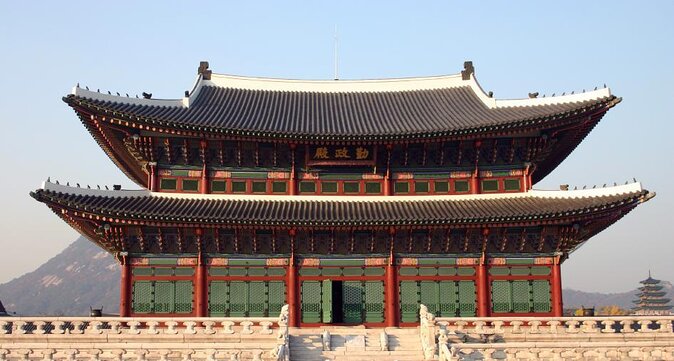
- Gyeongbokgung Palace and the Royal Guard Changing Ceremony
- Bukchon Hanok Village: your fast photo walk with context
- Bugak Skyway and Bugak Palgakjeong: Seoul from above
- Cheongha Korea Ginseng: shopping with learning built in
- Gwangjang Market drop-off: food freedom after the tour
- Tuesday and full-day options: how the day changes
- Price and value: why $32 can actually make sense
- Who this tour is best for
- Small details that help you enjoy the day more
- Should you book this Seoul Gyeongbokgung, Bukchon, and Gwangjang tour?
- FAQ
- How long is the Seoul Gyeongbokgung, Bukchon, and Gwangjang tour?
- What’s included in the tour price?
- Is lunch included?
- Are hanbok rentals included?
- Does the tour include N Seoul Tower entry?
- Does the tour run in the rain?
- Is hotel pickup available?
- Where does the tour end?
- Is the tour suitable for wheelchair users?
- Can I join the tour after it starts at Gyeongbokgung Palace?
Key highlights at a glance
- Royal Guard Changing Ceremony at Gyeongbokgung (and Deoksugung on the Tuesday option)
- Bugak Palgakjeong panoramic viewpoint on Bugaksan Mountain slopes
- Bukchon Hanok Village photo-friendly hanok lanes with guided context
- Korean ginseng museum time for shopping and learning basics about ginseng
- Gwangjang Market drop-off so you can snack or lunch on your own
Gyeongbokgung Palace and the Royal Guard Changing Ceremony
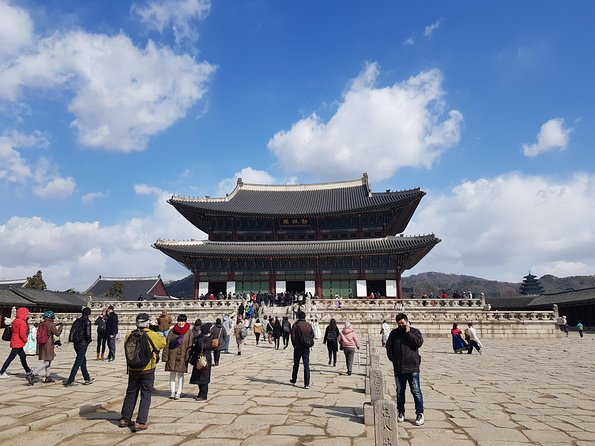
If you’re short on time in Seoul, starting at Gyeongbokgung Palace makes sense. It’s the largest of the five main royal palaces, and the guided portion gives you the backbone story: why this place mattered, how the palace layout works, and what you’re looking at as you move through the grounds. The tour spends about one hour here, so you’re not just passing by—you’re actually building the mental map.
The biggest moment is the Palace Royal Guard Changing Ceremony. This isn’t a random performance stuck somewhere in the middle of a mall. It’s tied to the palace setting, with guards and formal timing that make the whole scene feel ceremonial rather than staged. Even if you’re not a history deep-dive person, it helps you “read” the place. You’ll understand what you’re seeing instead of just collecting photos.
Practical note: the ceremony and the flow of the palace area can affect where you stand and how you move. Plan to follow your guide’s timing closely, especially because the tour rules are strict about meeting after it begins at Gyeongbokgung. If you’re the type to show up late and wander in, this isn’t that kind of tour.
You can also read our reviews of more tours and experiences in Seoul.
Bukchon Hanok Village: your fast photo walk with context
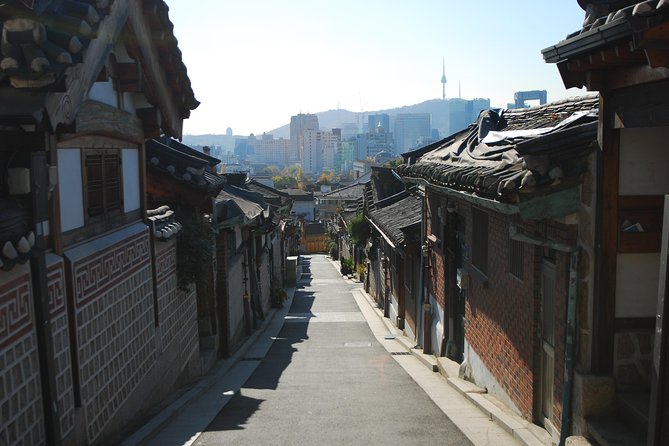
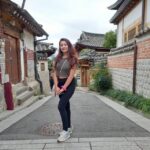
After the palace, you head to Bukchon Hanok Village, the classic “northern village” neighborhood where traditional hanok houses line up along lanes. You’ll get about 30 minutes with a guide, which is enough time to see the vibe and get your bearings. The best part is that the tour doesn’t just point; it helps you notice the small features that separate a hanok from a normal house—roof lines, courtyard feel, and the way buildings sit along the street.
This is where you’ll likely slow down and start framing shots. The hanok streets are built for photos, but the guided piece keeps it from feeling like a random Instagram walk. You’ll leave knowing what the area represents and why it still matters to Seoul’s cultural identity.
A smart planning point: you’ll be walking. This stop is short, but it’s not “sit and watch.” Wear shoes you can trust on uneven stone and crowded sidewalks. If you go in winter, expect cold steps and wind between buildings.
Bugak Skyway and Bugak Palgakjeong: Seoul from above
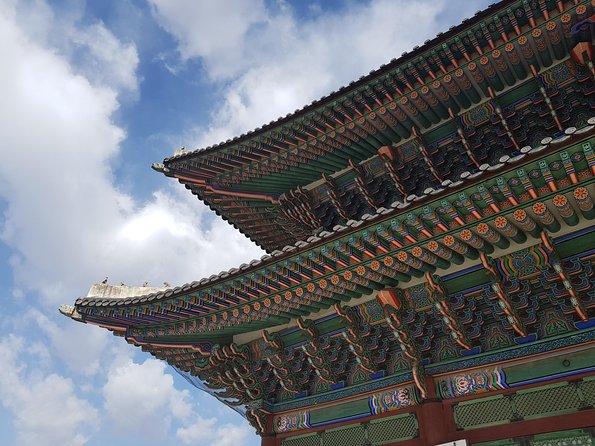
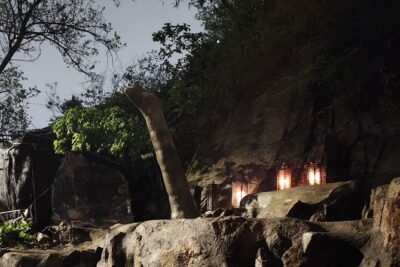
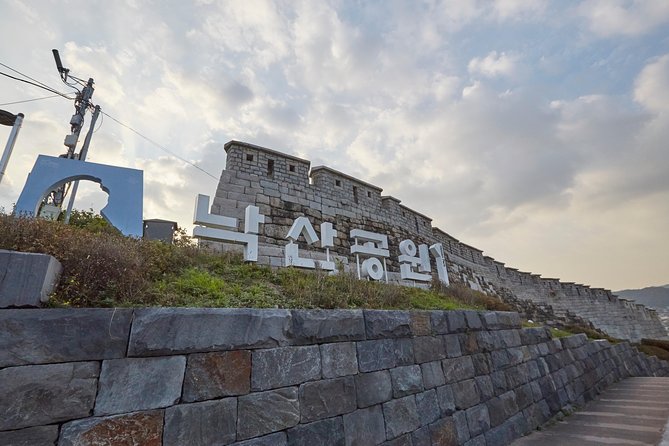
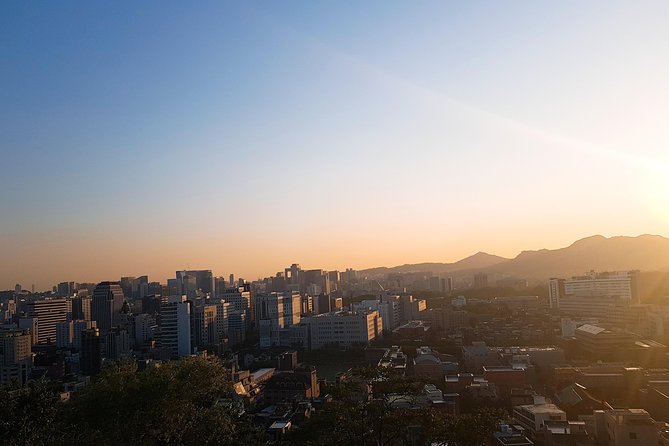
Then comes the part that makes this tour feel like more than just palaces and streets: the views. First, you visit Bugak Skyway (about 30 minutes with guidance), followed by Bugak Palgakjeong—the Bugak Pavilion—with a shorter guided stop (around 10 minutes). The total time is brief, but the reward is big: you get a wide look at the city spread out below.
This is a great contrast after the structured palace grounds and the dense hanok lanes. Up here, the world opens. Your brain switches from “read the architecture” to “see the city’s scale.” If you like skyline photos, this stop gives you that without forcing you into a full day at a tower.
Weather matters. The tour runs rain or shine, so if it’s wet, you’ll want to move carefully on paths and expect reduced visibility. Still, even in gray skies, the viewpoint experience is often worth it because it breaks up the day and gives you a different angle on Seoul.
Cheongha Korea Ginseng: shopping with learning built in
Next is the stop that sounds touristy on the surface but works well when it’s taught: the Korean ginseng museum (about 30 minutes of shopping time). You’ll shop, yes, but you’ll also get the story behind ginseng—what it is, how it’s been used historically, and why Korean ginseng gets attention for certain properties.
The tour specifically mentions how ginseng is described in old texts and how Korean ginseng is studied for adaptogenic properties. You don’t need to be a supplement expert to get value here. The real benefit is learning what to look for when you’re shopping: how to think about quality, what products are commonly sold, and how to avoid buying purely because of flashy packaging.
Keep your expectations practical. You’re not guaranteed that every product is right for your health needs, and this isn’t medical advice. But you can still leave with useful buying instincts and a souvenir that feels connected to Korean culture rather than generic “market gifts.”
If you’re not into shopping at all, this stop can feel like dead time. However, even non-shoppers usually find it interesting because the guide’s explanations give the place meaning beyond selling.
Gwangjang Market drop-off: food freedom after the tour
The tour typically ends with drop-off at Gwangjang Market on the main route. That’s a smart finish because you’ve already seen the major cultural sights; now you get to eat at your own pace without a guide herding the group.
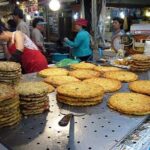
Gwangjang is known as Korea’s first market, and the focus is less on luxury brands and more on selection and value. You’ll find plenty of snacks and meals, and it’s easy to build a food plan even if you’re traveling with mixed tastes.
The tour highlights a couple of signature bites you should strongly consider:
- Bindaetteok (mung bean pancakes)
- Mayak gimbap (seaweed rice rolls)
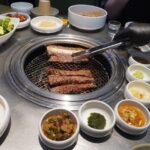
Since lunch isn’t included, you’ll decide what fits your budget and hunger level. And because you get dropped off rather than staying locked into a schedule, you can wander for desserts, coffee, or second helpings.
Tuesday and full-day options: how the day changes
This tour isn’t always the same exact shape, and that matters if you want specific sights. Here’s how the schedule can shift based on the option you choose.
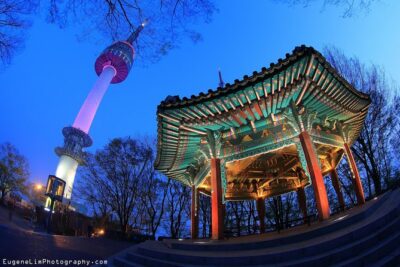
On the Tuesday shared group tour, you swap in N Seoul Tower (the observatory isn’t included) plus Deoksugung Palace with the Royal Guard Changing Ceremony. That means you get another palace scene, but with a different palace atmosphere than Gyeongbokgung. Deoksugung adds a second ceremonial option, and the tower part becomes more about city views from the area than a full ticketed tower experience.
On the full-day version, you go beyond the classic palace + hanok + viewpoint arc. You’ll have lunch time on your own at Gwangjang Market, then you move into deeper Seoul landmarks like the War Memorial of Korea (with focus on the 3rd floor United Nations Memorial Cemetery), plus cultural sites including Jogye Temple and Tapgol Park. The day ends with a drop-off at Myeongdong Cathedral instead of staying around the market.
If you like variety and you’re okay with more walking and more time out, the full-day option can feel like a well-rounded Seoul day. If your priority is getting the best “core” sights without committing a full day, the shorter version is the cleaner fit.
Price and value: why $32 can actually make sense
At about $32 per person, this tour isn’t trying to be fancy. It’s built around hitting the big points efficiently. And value is mostly about three things here: guided time, transport, and entrance fees.
You get:
- Entrance fees
- A local English-speaking guide
- Air-conditioned transport via minivan or coach
- Hotel pickup only if you select that option (and only for certain central areas)
That combo is what makes the low price feel realistic. In Seoul, transport plus admission can add up fast if you do everything on your own. With this tour, someone else handles the routing and timing, and you get the history context that turns random sightseeing into a clearer story.
The other “value” is time efficiency. Many first-time visitors spend too long bouncing between spots. This tour compresses the must-sees into a single flow: palace → hanok village → viewpoint → ginseng stop → market drop-off.
Who this tour is best for
This experience works especially well if you:
- Want a short introduction to Seoul’s palace and neighborhood culture
- Prefer guided context over reading signs alone
- Like photo stops but still want the meaning behind them
- Have limited time and don’t want to plan every hop between sites
It may not be the best match if you:
- Need step-free access or wheelchair-friendly routing (it’s noted as not suitable for wheelchair users)
- Want long stays at each place (some stops are purposely short, especially the viewpoint segment)
- Dislike shopping at all (the ginseng museum includes shopping time)
Small details that help you enjoy the day more
A few practical points can save you stress:
- Bring comfortable shoes. This is a walking-and-standing day.
- The tour runs rain or shine, so dress for weather and keep layers.
- Hanbok rental isn’t offered, so don’t plan on changing costumes mid-day.
- Alcohol and drugs aren’t allowed on the tour.
- Your meeting point matters. Joining after the tour starts at Gyeongbokgung Palace isn’t permitted, so arrive early and follow your confirmation details.
On the transport side, you can use the subway for convenience, but if you pick the hotel pickup option, it runs within a set window in central areas. The pickup timing is typically between 7:20 AM and 8:40 AM when included.
One more thing: the human factor. The guide quality seems to be a strong point. Names that show up often include Grace, Sophie, Sunny, Shin, Chloe, Henry, and Winnie. Several groups also highlight that guides use tools like a tablet for group photos or handle the cold with practical extras such as hand warmers during winter conditions.
Should you book this Seoul Gyeongbokgung, Bukchon, and Gwangjang tour?
Yes—if you want an efficient, guided way to see Seoul’s big cultural hits plus one of its most enjoyable food zones at the end. This tour earns its value by combining Gyeongbokgung Palace, the Royal Guard Changing Ceremony, a hanok neighborhood walk, and a viewpoint break that prevents the day from feeling repetitive.
Book it with your expectations set to match the format: short guided stops, a clear route, and then freedom at Gwangjang Market to eat on your own terms. Skip it if you’re seeking a slow, deep, no-rush exploration—or if you need wheelchair access.
If your goal is to get your bearings fast and leave with both photos and actual context, this is a very solid bet.
FAQ
How long is the Seoul Gyeongbokgung, Bukchon, and Gwangjang tour?
It lasts about 4 to 9 hours, depending on which option you book.
What’s included in the tour price?
Entrance fees, a local guide, and transport by air-conditioned minivan or coach are included. Hotel pickup is included only if you choose that option.
Is lunch included?
Food and drinks are not included, so you’ll need to pay your own lunch or snacks. Some options include a lunch time block at Gwangjang Market for you to purchase your own meal.
Are hanbok rentals included?
No. Hanbok rental time is not offered.
Does the tour include N Seoul Tower entry?
On the Tuesday option, N Seoul Tower is included, but the observatory is not included.
Does the tour run in the rain?
Yes, it takes place rain or shine.
Is hotel pickup available?
Pickup is optional and is offered only for private tour customers or selected options, usually from central Seoul. When included, pickup happens between 7:20 AM and 8:40 AM.
Where does the tour end?
Drop-off depends on the option. The main route includes drop-off at Gwangjang Market, while other options may end at places like Myeongdong Cathedral.
Is the tour suitable for wheelchair users?
No. It is not suitable for wheelchair users.
Can I join the tour after it starts at Gyeongbokgung Palace?
No. Meeting at Gyeongbokgung Palace after the tour has started, or contacting the guide once the tour is in progress, is not permitted.