REVIEW · SEOUL
Seoul: Guided Small Group V.I.P Morning Pedicab Tour
Book on GetYourGuide →Operated by We Ride Korea · Bookable on GetYourGuide
Seoul by pedicab feels like a movie. This VIP-style morning loop is built for moving fast but still seeing the key corners of Old Town, with guide explanations and frequent photo stops. I especially like the comfort touches—Wi‑Fi, a power bank, and a blanket in the pedicab—and the way it wraps landmark sightseeing with a stop at a traditional market for real food-time, not just photos. The main drawback is that each stop is brief, so if you want long lingering time, you’ll feel the clock.
What makes this tour practical is the balance: it’s small (up to 3 people), it stays guided the whole time, and it lasts long enough to connect neighborhoods like Cheonggyecheon, Gyeongbokgung, Seochon, Bukchon, and Jogyesa without you needing to plan every turn. You can even choose between riding in the e‑rickshaw and using the bike option, so you’re not stuck doing one exact thing the whole morning. My one caution: you’ll be moving on and off often, so wear shoes that can handle short bursts of walking and quick transitions.
You also get a professional setup right away: a short safety briefing, optional helmet, and an insured experience that works in most weather. On truly extreme days, you’ll be offered a refund or an alternative date—so you’re not gambling with your whole schedule.
In This Review
- Key highlights that matter in real life
- Why this VIP pedicab tour works in 3 hours
- Finding We Ride Korea on Jong-ro and starting smoothly
- Cheonggyecheon: a calm start that sets the tone
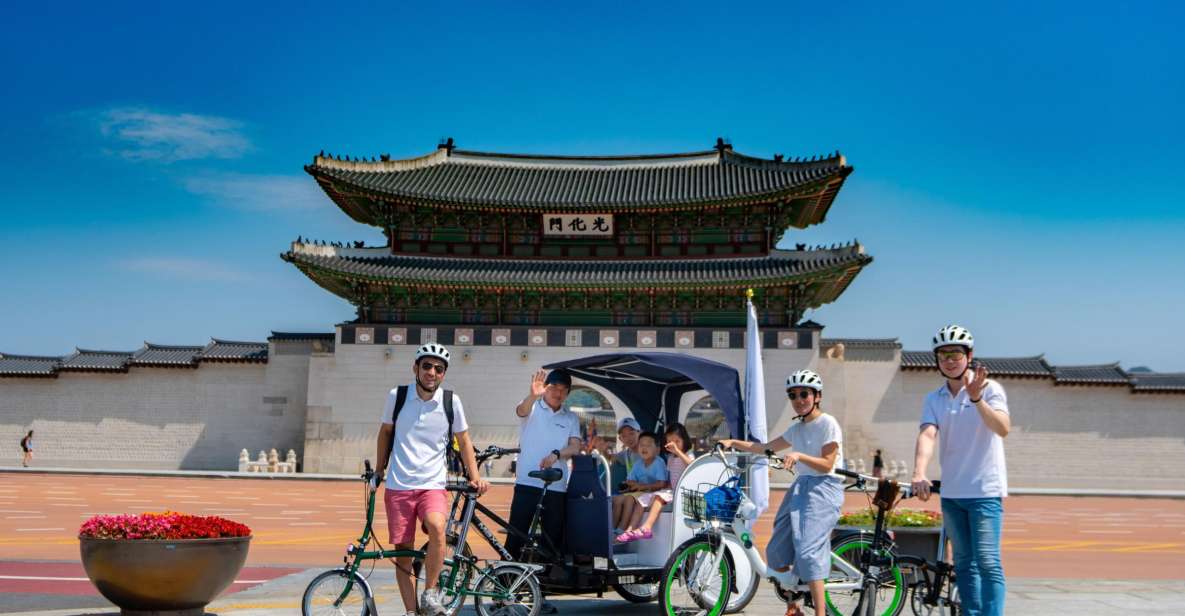
- Gwanghwamun: quick photo guidance at the main gate area
- Gyeongbokgung: palace architecture without the stress
- Seochon Hanok Village and the street-life rhythm
- Tongin Traditional Market: your food stop isn’t an afterthought
- An extra stop off the main track, then the Blue House ride
- Bukchon Hanok Village: preserved houses and hillside views
- Jogyesa Temple: where the morning slows down
- Getting the most from guide explanations and photo help
- What to watch for: short stops, weather, and the rules
- Who this tour suits best (and who should check options)
- Should you book this Seoul morning pedicab tour?
- FAQ
- How long is the Seoul morning pedicab tour?
- What is the group size and price?
- Do I have to ride in the pedicab, or can I use the bike option?
- What’s included in the tour?
- Where do I meet the guide?
- Are there any restrictions on alcohol?
- Is it wheelchair accessible or suitable for mobility impairments?
Key highlights that matter in real life
- A tight Old Town route with major landmarks: Cheonggyecheon, Gwanghwamun, Gyeongbokgung, the Blue House area, Bukchon Hanok Village, and Jogyesa
- Frequent photo stops with guide guidance: you’re not just pointing and guessing
- VIP comfort perks: Wi‑Fi, a power bank, and a blanket in the pedicab
- Traditional market time that includes tastings: Tongin Traditional Market for street-food-style samples
- Small group pacing: limited to 3 participants for an easier, more personal feel
Why this VIP pedicab tour works in 3 hours
Seoul can be intense. Streets pull you in ten directions at once, and self-guided plans can turn into a game of transit math and rushed photo attempts. This tour is priced at $219 per group (up to 3 people) for about 3 hours, and the value really depends on what you’re optimizing for.
If your goal is to hit the big-name sites across multiple historic areas without spending your morning figuring out routes, this format makes sense. You’re essentially paying for three things at once: a local guide, a pedicab/driver setup, and a structured sequence of stops that keeps you from wasting time backtracking.
Here’s the thing to like: it’s not only about the landmarks. It connects them through small “on-the-ground” moments—quiet streets in the west village area, traditional village lanes, and a market stop where you actually eat. That mix is what makes the time feel “used,” even though every single stop is shorter than a solo wander.
You can also read our reviews of more guided tours in Seoul
Finding We Ride Korea on Jong-ro and starting smoothly
The meeting point is on Jong‑ro Boulevard at We Ride Korea, on the 2nd floor of the Le Meiller Jongno Town building (look for the statue of a man on horseback outside). It’s between Jonggak Station (Line 1, Exit 1) and Gwanghwamun Station (Line 5, Exit 4), so you’re coming in via a main artery of the old city rather than a remote neighborhood.
Plan to arrive 20–30 minutes early. That buffer is for getting set, checking in, and getting comfortable—because the tour starts at the scheduled time and you’ll want to be ready before the first ride kicks off.
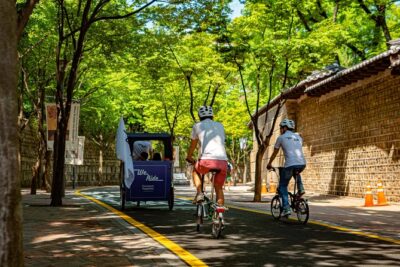
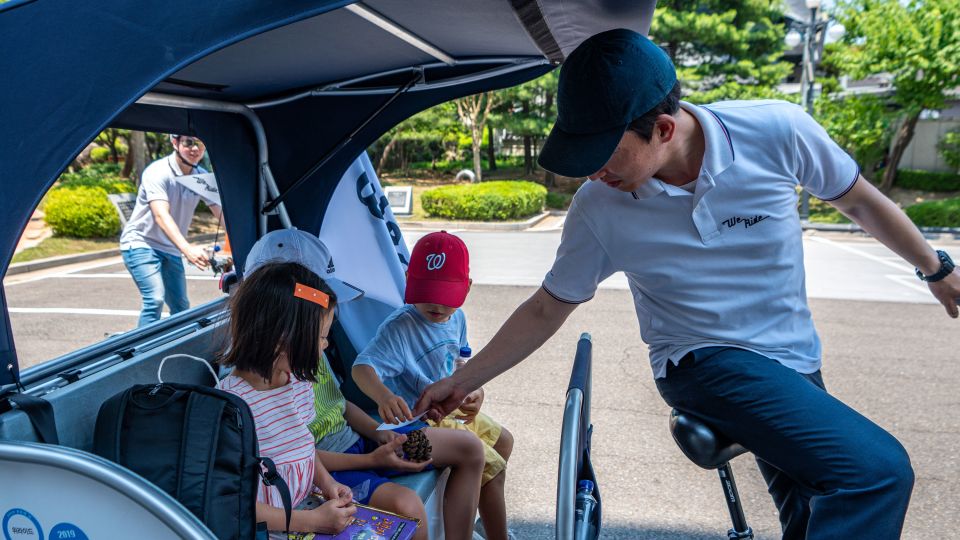
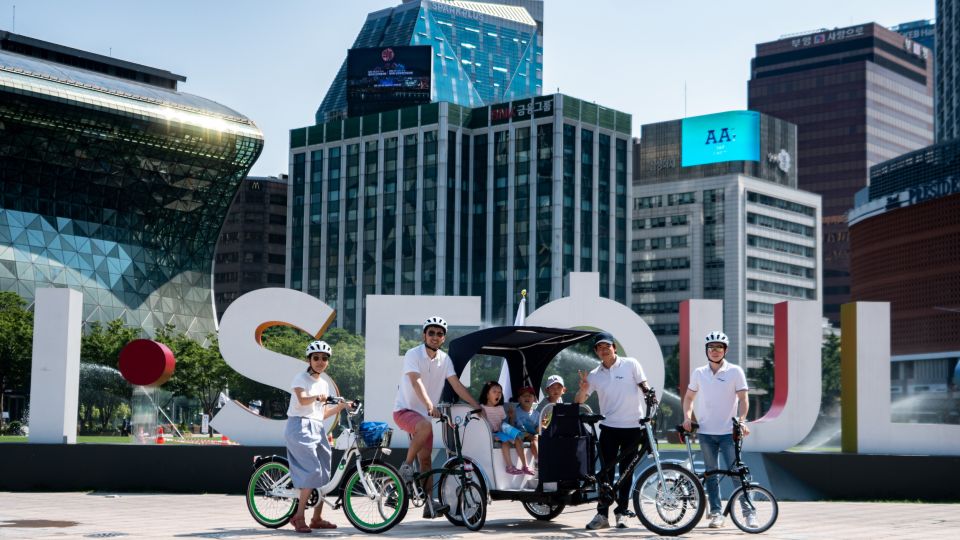
After you meet your guide, expect a short safety briefing (about 10 minutes). You’ll also have an optional helmet available. Then you’ll roll out in a new e‑rickshaw driven by a professional guide/driver, or you can choose the bike option if that fits your comfort level.
Cheonggyecheon: a calm start that sets the tone
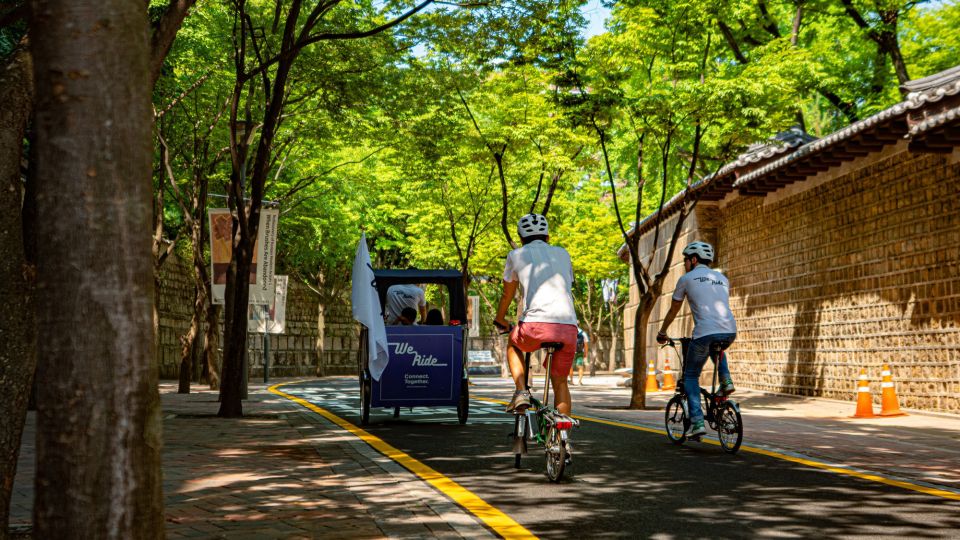
You begin with Cheonggyecheon, with about 15 minutes for guided sightseeing and a bike-tour style look around the area. This is a smart first stop because it helps you “wake up” without immediately dropping you into the most crowded gates and palace fronts.
What I like about starting here is that it gives you an early orientation to how this part of Seoul moves—where the sightlines are, how the water-adjacent walk/ride rhythm feels, and how the streets transition from “city speed” to “historic calm.” Even if you’ve seen photos of Seoul’s landmarks, this opening helps you understand how the neighborhoods link together.
Time is limited, though. You’ll get a guided pass and photo moments, not a long stroll. If you’re the type who wants to pause every 30 seconds to read everything, you’ll need to save some extra unstructured time for later.
Gwanghwamun: quick photo guidance at the main gate area
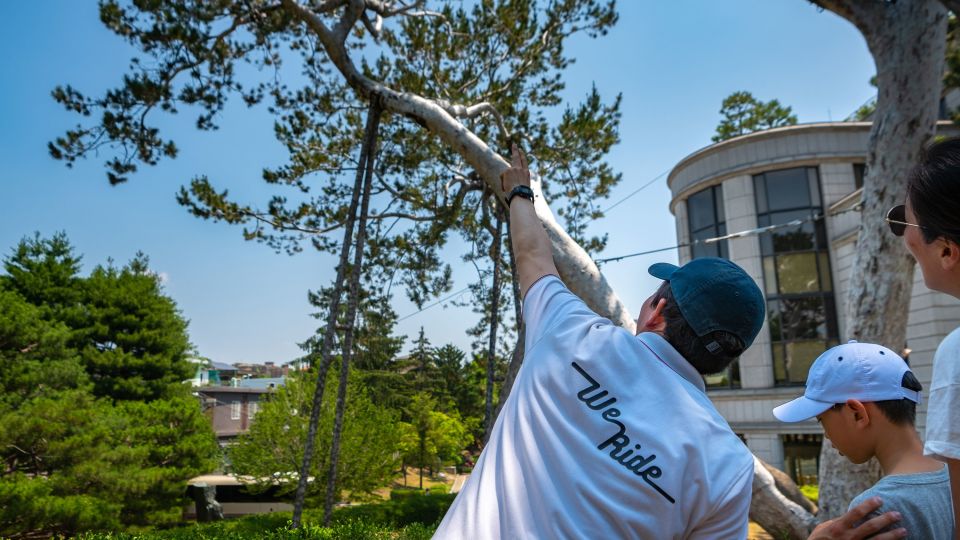
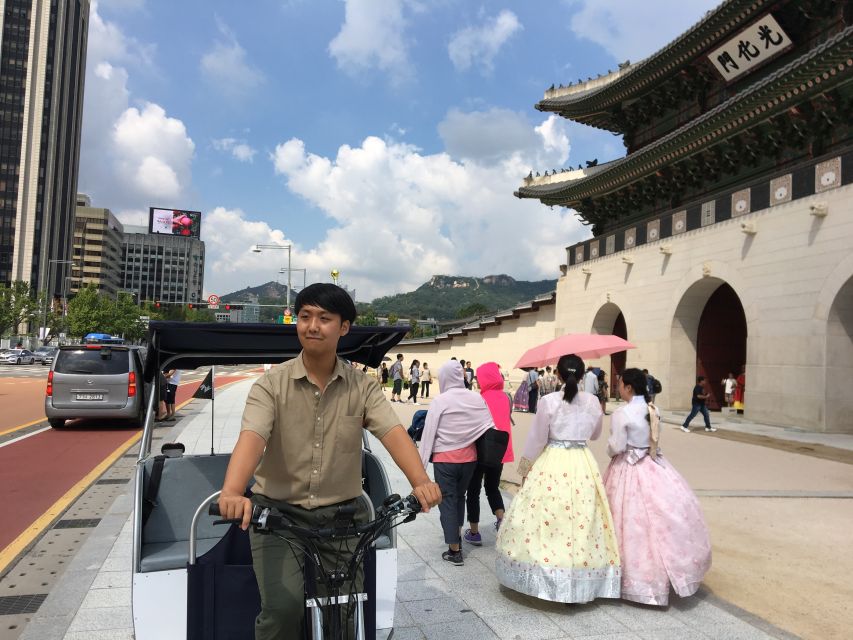
Next comes Gwanghwamun, with a guided sightseeing/photo stop around 10 minutes. This is one of those places where you can easily feel lost as a visitor: big entrances, tons of visual distractions, and crowds that make casual photos hard.
A guide helps in two ways. First, you get the “where to stand” thinking that you can’t always figure out on your own. Second, the stop isn’t just about the gate itself; it acts like a pivot from the earlier area into the more palace-and-village sequence.
The stop is short, but the payoff is practical: you leave with photos you actually like and a sense of direction for what comes next.
Gyeongbokgung: palace architecture without the stress
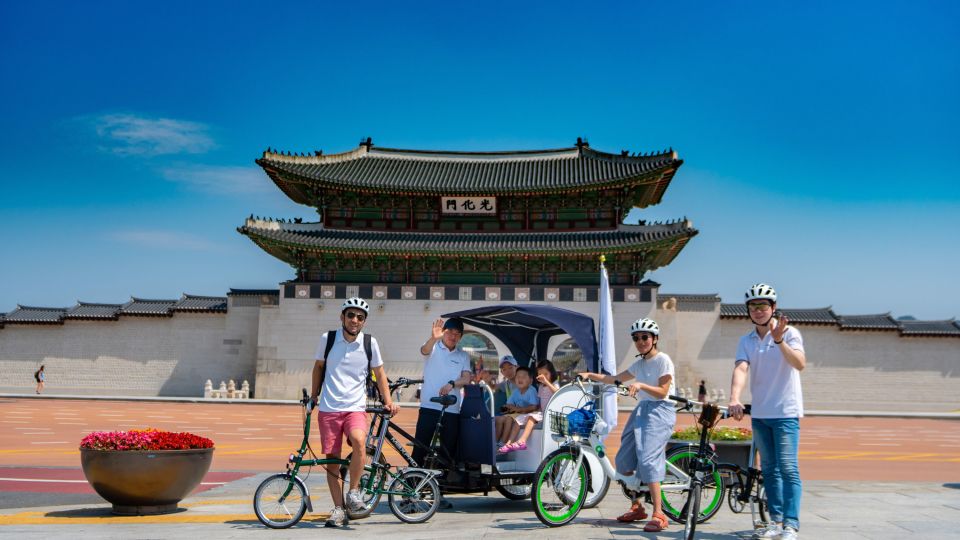
Then you head to Gyeongbokgung for about 15 minutes, including another photo stop plus guided sightseeing. The tour frames it as a look at the palace’s grand architecture, and in practice, that means you get a guided “scan” of the most important visual elements without spending your limited morning locked in queues or overthinking routes.
If you’ve got limited time in Seoul, this is a key reason to consider the tour. You see the big exterior moments, get context from your guide, and still keep momentum so you can cover more than one major historic area.
One trade-off: you won’t be able to do the kind of slow, detailed palace exploration you might do on a full afternoon. It’s a best-of presentation, not a deep, hour-by-hour study session.
You can also read our reviews of more tours and experiences in Seoul
Seochon Hanok Village and the street-life rhythm
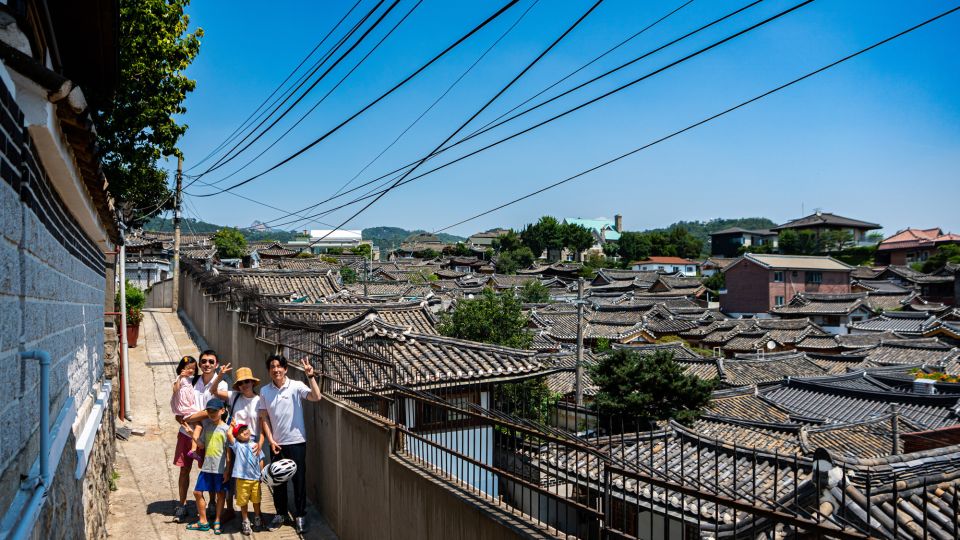
After the palace area, you ride toward Seochon Hanok Village, with roughly 30 minutes for guided sightseeing and biking, plus time for you to take it in. This is where the tour starts feeling more “lived-in” than just monumental.
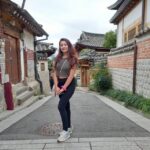
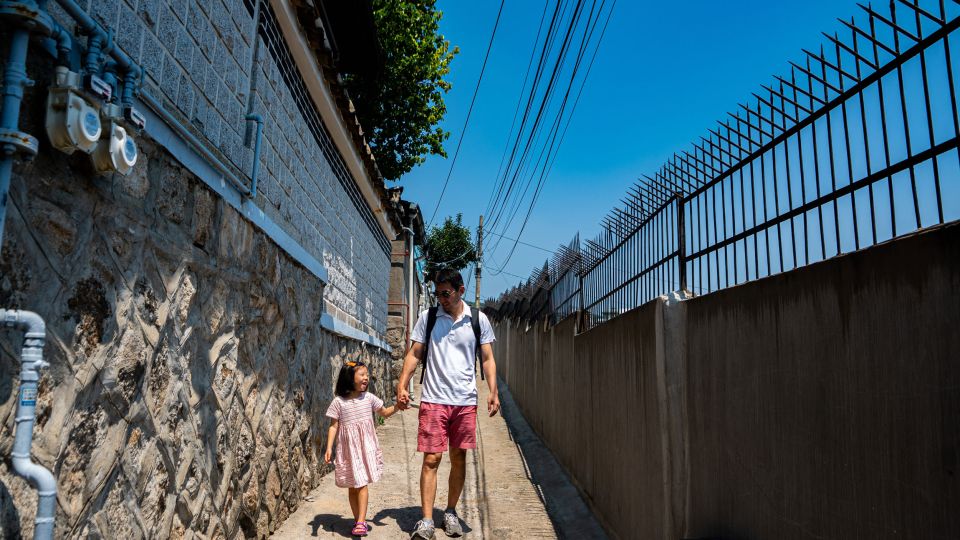
Hanok areas can be easy to misunderstand if you’re only moving quickly and taking photos. Here, you get guide context while you’re still at the pace of the street: narrow lanes, preserved-style houses, and the slow shift from grand structures into everyday traditional neighborhood scenes.
You’ll also have some room to breathe. Not unlimited time, but enough to step off the pedicab/bike rhythm briefly, pause for photos, and notice details that you’d miss if the only goal was checking boxes.
Tongin Traditional Market: your food stop isn’t an afterthought
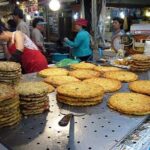
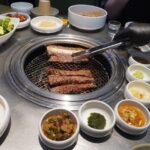
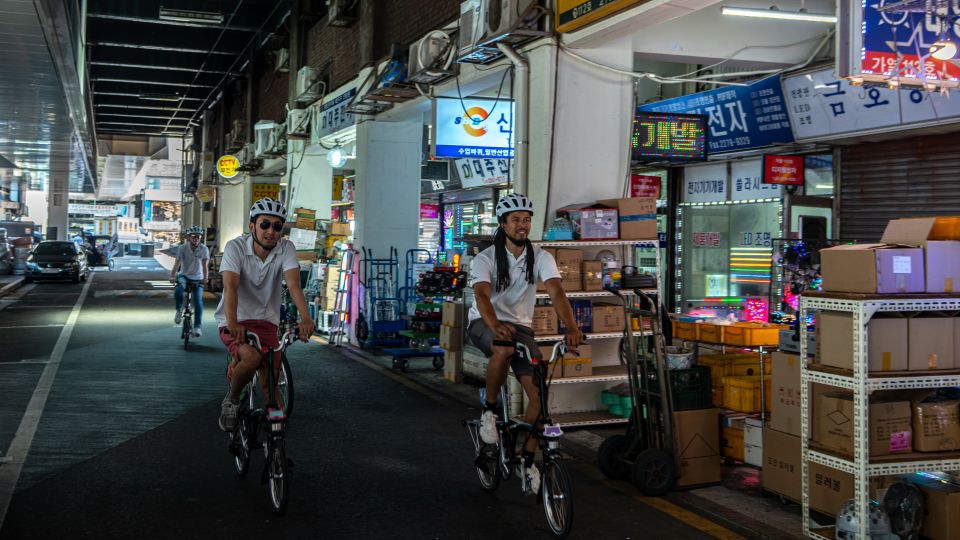
This is one of the strongest parts of the tour: Tongin Traditional Market. You get about 15 minutes here with a photo stop, a guided walkthrough, street-food-style options, and a tasting component plus some free time.
I like market food on tours when it’s clearly integrated, not stapled on at the end. Here, the market stop comes with guided context and tasting so you’re not just wandering in a busy place hoping you pick something good.
A bonus detail from real experience: you may get lots of photos taken during the tour, including around tastings. In fact, guides including Hagar and June are noted for clear explanations, and an accompanying photographer has been part of the experience on some outings. That combination helps the market stop feel memorable rather than rushed.
Still, keep expectations realistic: 15 minutes is just enough to sample and learn the vibe, not enough to make a full meal out of the entire market.
An extra stop off the main track, then the Blue House ride
Between Seochon and the later village section, there’s an additional extra stop off the main path (about 10 minutes), with a guided component and a bit of free time. This is the kind of buffer that can make the overall tour feel less repetitive. Instead of only doing “big site, big site,” you get one more chance to shop or pause for a quick look around.
Then you reach the Blue House area in Seoul for about 10 minutes, again with sightseeing and a guided pass. You’re not spending hours here, but you are seeing it as part of the story of Seoul’s old-city governance-and-neighborhood layout rather than treating it as an isolated photo target.
After that, the ride takes you up the hills toward Bukchon Hanok Village, and this is where the tour’s mobility really matters.
Bukchon Hanok Village: preserved houses and hillside views
Bukchon Hanok Village is one of the tour’s longer segments (about 30 minutes), with photo stops and guided sightseeing plus bike time. The tour highlights that the old Korean-style houses are preserved, and you feel that immediately in the street layout and the way the neighborhood looks from different angles.
A practical benefit of doing this by pedicab is altitude and effort. If you’ve ever tried to wander Bukchon on foot, you know it can turn into a nonstop climb. This route lets you see the area’s character without exhausting your legs before the final temple stop.
As with other major points: you’ll get highlights, not everything. But because the tour’s sequence is intentional, the Bukchon experience usually lands well instead of feeling like a last-minute squeeze.
Jogyesa Temple: where the morning slows down
The last major cultural stop is Jogyesa Temple, about 10 minutes with a photo stop and guided sightseeing. The guide shares a brief history of Buddhism in Korea and then you get time to take in the calmer mood of the temple area.
This is a good ending choice. After palace architecture and village streets, a quiet temple stop resets your senses. It also makes the overall tour feel balanced: history, daily-life culture, food, and then calm reflection.
You won’t have long meditation time here, but you do leave with a sense of change in pace, which is harder to do when you’re self-guiding and chasing landmarks back-to-back.
Getting the most from guide explanations and photo help
This tour’s biggest strength is that it’s guided with a clear structure, and in at least some departures, you get the added support of a photographer taking photos during the stops.
That matters because many Seoul sightseeing days fail for one simple reason: you spend your energy trying to frame pictures and identify what you’re looking at. Here, you’re guided to photo-ready viewpoints, and you get context as you go—so the photos come with meaning, not just good lighting.
If you’re worried you’ll understand too little, don’t be. English-language guide support is included, and people have highlighted that the explanations are clear. Guides like Hagar and June are specifically mentioned for making the sites and transitions easy to follow.
What to watch for: short stops, weather, and the rules
Here’s the honest pacing issue: some people find it a bit short at each spot. If you’re the type who hates moving on before you’ve finished your thought, you might feel the squeeze.
A few other practical notes from the tour details:
- It runs in most weather, but extreme conditions can mean a refund or an alternative date.
- The tour begins at the advertised time, so plan to arrive early and allow time to get ready.
- Intoxication isn’t allowed. If you’re thinking about a big night out, plan this tour for a day when you’re fully clear-headed.
- Comfortable shoes are your best friend, even if you’re using the pedicab/bike setup.
Also, note that this is a private-use pricing structure: the pedicab can seat up to two adults and one child, or three children. Even though the tour limits the group to 3 participants, the pedicab seating rules still apply.
Who this tour suits best (and who should check options)
This works best for:
- First-time visitors who want a fast, guided hit of multiple historic districts
- People who like taking photos at structured spots but still want walking/bike-style moments
- Travelers who want a traditional market stop with tastings included
Check carefully if you have mobility needs. The activity information includes wheelchair accessibility, yet it also states it is not suitable for people with mobility impairments. That contradiction means you should confirm directly with the operator about what support is actually available for your situation.
If you’re comfortable with short distances and quick transitions, you’ll probably enjoy it more than a tour that’s either fully on foot or fully ride-only.
Should you book this Seoul morning pedicab tour?
Book it if you want your Seoul morning to feel organized: major sites, photo stops, traditional food, and a guide tying it together within about 3 hours. At $219 per group for up to 3 people, it’s a strong option when you’re valuing time savings and guided context more than unhurried wandering.
Skip it or consider a different format if you know you want long stops at each landmark. This is designed to move, connect, and keep momentum. You’ll leave feeling like you saw the key parts of Old Town, but you won’t leave feeling like you studied each location for hours.
If you want a guided morning that blends architecture, preserved neighborhoods, temple calm, and a real market food experience—this pedicab tour is a very practical way to do it.
FAQ
How long is the Seoul morning pedicab tour?
The tour lasts about 3 hours.
What is the group size and price?
It’s limited to 3 participants, and the price is $219 per group (up to 3 people).
Do I have to ride in the pedicab, or can I use the bike option?
You can hop aboard the e‑rickshaw driven by the guide, or you can choose to take your own bike (when available as part of the tour options).
What’s included in the tour?
Included items are the rickshaw, professional local guide, bottle of water, Wi‑Fi and a power bank during the ride, and insurance. A safety helmet is optional.
Where do I meet the guide?
Meet at We Ride Korea on the 2nd floor of the Le Meiller Jongno Town building at Jong‑ro Boulevard. It’s on the between Jonggak Station (Line 1, Exit 1) and Gwanghwamun Station (Line 5, Exit 4).
Are there any restrictions on alcohol?
Yes. Customers under the influence of alcohol will not be allowed to participate.
Is it wheelchair accessible or suitable for mobility impairments?
The activity is listed as wheelchair accessible, but it also says it is not suitable for people with mobility impairments. If that applies to you, it’s important to check with the provider before booking.