REVIEW · SEOUL
Jinhae Cherry Blossom + Busan Sunrise from Seoul
Book on Viator →Operated by Korea Time Tour · Bookable on Viator
Pink petals, two cities, one long night. This trip is built for people who want Jinhae’s festival lights and photo paths without the hassle of planning trains or buses. I especially like the round-trip transfers that move you from Seoul to beach viewpoints and then into the cherry-blossom areas. One real consideration: it runs through the night and gets you back to Seoul the next day with no sleep break.
What makes this experience interesting is the mix of scenery and timing. You start with Haeundae Beach and a sunrise moment at Haedong Yonggungsa Temple, then pivot to Jinhae for cherry blossoms at multiple famous points. You’ll get English-speaking help and admission coverage, but you’ll still be responsible for meals and drinks on your own.
Finally, cherry blossoms don’t care about itineraries. If the blooms aren’t fully at their best, the operator can reschedule or cancel, so your best move is to book with flexibility in your schedule and expectations.
In This Review
- Key Things I’d Focus On
- Night-Start Logistics: Why the Timing Matters
- Seoul-to-Busan Transfers: The Value of Being Taken Care Of
- Haeundae Beach: A Breather Before the Sunrise Stop
- Haedong Yonggungsa at Sunrise: The Moment You Came For
- Moving to Jinhae: The Festival Phase Starts
- Yeojwacheon Stream: First Blossom Hits
- Gyeonghwa Station Cherry Blossom Road: The Walk That Delivers
- Mt. Jaehwangsan Area: Why It’s Mentioned
- Price and What You’re Actually Buying for $108.49
- When Blossoms Aren’t Fully Bloomed: Plan for Reality
- Who This Trip Fits Best
- Should You Book This Jinhae + Busan Sunrise Trip?
- FAQ
- FAQ
- How long is the Jinhae Cherry Blossom + Busan Sunrise tour?
- Where does the tour start and where does it return to?
- Does the tour include breakfast?
- What’s included in the price?
- Are meals included anywhere during the day?
- What happens if the cherry blossoms are not fully bloomed?
- What should I do to get back to Hongik Univ. Station after the tour?
Key Things I’d Focus On
- Two cherry-blossom bases: You get time at both Yeojwacheon Stream and Gyeonghwa Station Cherry Blossom Road.
- Sunrise add-on in Busan: You’re scheduled for early morning at Haedong Yonggungsa rather than only doing daytime viewing.
- Low-planning stress: Round-trip transfers from central Seoul are included, with an air-conditioned minivan and English-speaking staff.
- A long day that starts at night: Expect about 19–20 hours and a return the next day with no sleep.
- Peak risk is real: If blossoms aren’t fully bloomed, changes may happen before the tour starts.
Night-Start Logistics: Why the Timing Matters
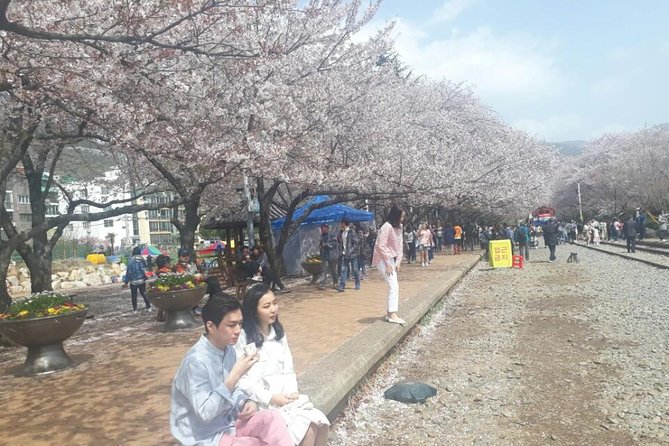
This is a big day-and-night push: it starts at night in Seoul and returns to Seoul the next day without an overnight rest. At about 19 to 20 hours, you’ll want to treat it like an endurance day, not a casual sightseeing stroll.
Plan your energy like you would for an early flight. If you can, eat a proper meal before you go, then rely on quick snacks during the long ride sections. Comfortable walking shoes matter because you’ll be out in blossom areas for stretches.
Also, the schedule is tight enough that showing up late is a problem. The rule is simple: arrive at your meeting point 10 minutes early, or latecomers/no-shows can’t be refunded.
You can also read our reviews of more tours and experiences in Seoul
Seoul-to-Busan Transfers: The Value of Being Taken Care Of
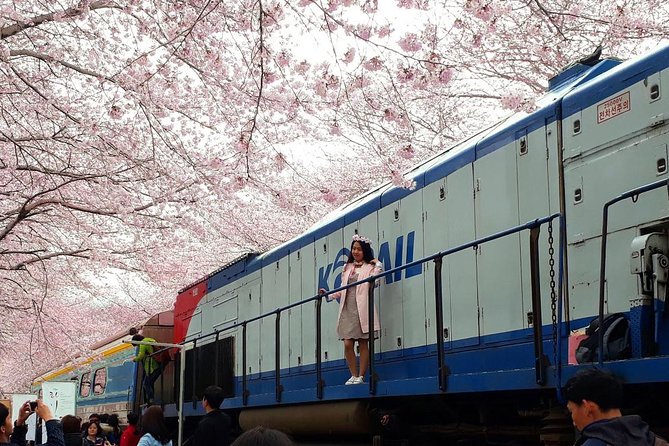
One of the smartest parts of this tour is that it’s not just ticket access—it’s the whole movement plan. You get round-trip transfers from central Seoul, plus transportation between stops in a climate-controlled minivan (the vehicle type can change depending on group size).
That means you’re not spending your energy figuring out how to get to Haeundae first, then timing the move toward Jinhae. You’re also spared the guessing game of where to stand, which is a big deal during blossom season when viewing spots fill up.
When you return to Seoul, you have two possible drop-off areas: Dongdaemun History & Culture Park or Myeongdong Station. After the tour, if you want to get back to Hongik Univ. Station, you’ll need to use subway line 2 from Dongdaemun History & Culture Park Station, because the tour doesn’t return to Hongik Univ. Station to avoid traffic.
Haeundae Beach: A Breather Before the Sunrise Stop
The morning in Busan starts with Haeundae Beach, with about 1 hour 20 minutes for beach time. The tour notes a free breakfast time window, but breakfast itself is not included, so don’t expect a meal to appear.
This stop is useful for two reasons. First, the beach context helps you reset after the long Seoul-to-Busan travel portion. Second, it gives you a place to collect yourself before the temple sunrise timing kicks in.
Bring layers. Even if the day later warms up, early morning near the water can feel cooler than you expect, and the tour is built around sunrise-style timing.
Haedong Yonggungsa at Sunrise: The Moment You Came For
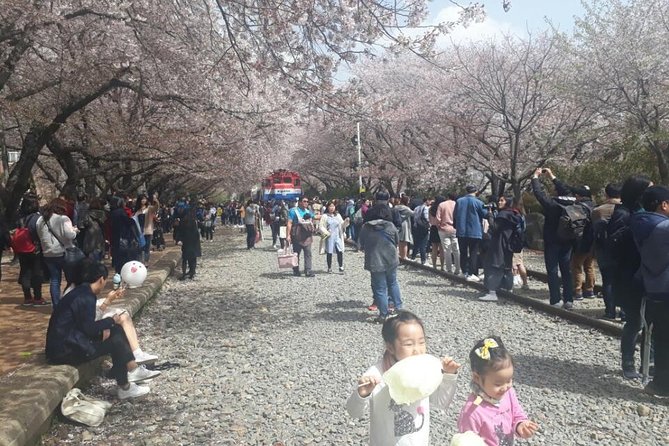
After a short transfer from Haeundae, you reach Haedong Yonggungsa Temple for a sunrise experience. You get about 1 hour 20 minutes here, and the admission is free as part of the tour.
This is the kind of stop where timing matters more than extra time. Temple lighting and the surrounding sea views tend to look best when the light is still soft, so the operator’s early scheduling is a real advantage.
Here’s how to make the most of it: keep your camera ready, but also take a few minutes to watch the scene unfold rather than treating it like a checklist. Sunrise viewpoints can get crowded, and it’s easy to feel rushed if you come in with a strict plan.
Moving to Jinhae: The Festival Phase Starts
Once you’re back on the move, you’ll transfer from Busan to Jinhae in about 2 hours 20 minutes. After that, the tour focuses on cherry blossom viewing areas in Jinhae.
There’s a festival element here too: the tour is timed around the Jinhae Gunhangje Festival, which is why this trip is especially popular during blossom season. Even if you’re not chasing performances, the festival timing shapes the crowd flow and the energy around the streets.
This is also where you’ll feel the long-day reality most. You’re traveling, then walking, then photographing, then moving again—so you’ll want a simple strategy: water first, photos second, then slow down.
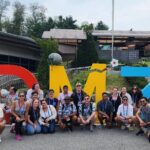

Yeojwacheon Stream: First Blossom Hits
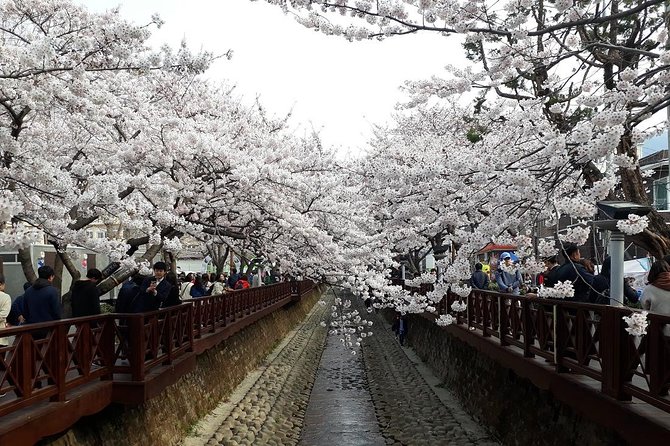
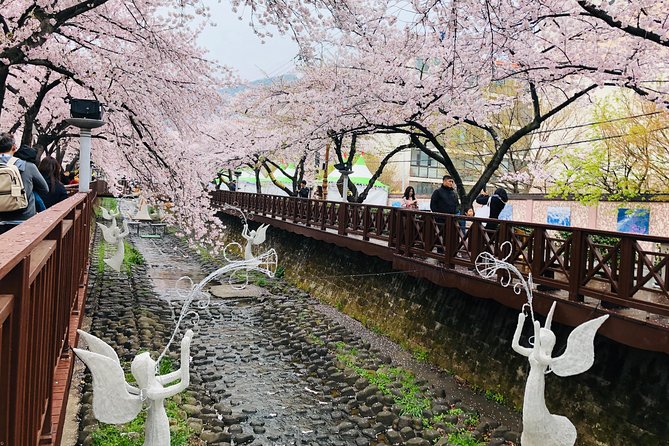
Your first cherry-blossom base is Yeojwacheon Stream, with about 2 hours allotted. This is described as the first place for cherry blossoms, and it’s the kind of spot where the scenery feels “made for photos” without requiring technical planning.
The stream setting matters because it gives your eyes a natural guide line. You can move along the walkway, find angles from different heights, and keep the blossoms in your frame as you walk.
Because you’re on a timed route, don’t wait too long to decide where you want your best photo. A good approach is to take one or two wide shots early, then later look for closer compositions once you understand how the crowd is flowing.
Gyeonghwa Station Cherry Blossom Road: The Walk That Delivers
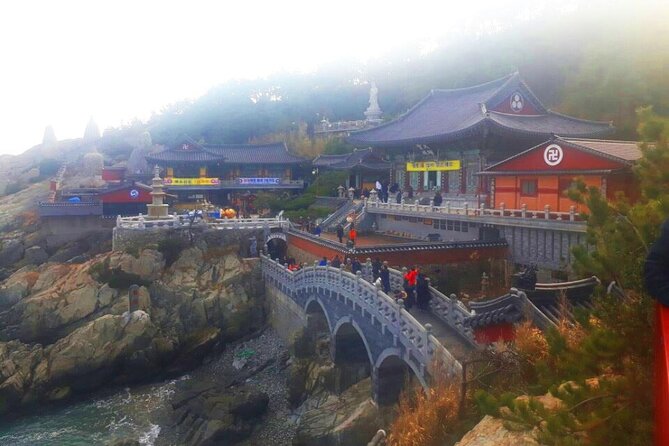
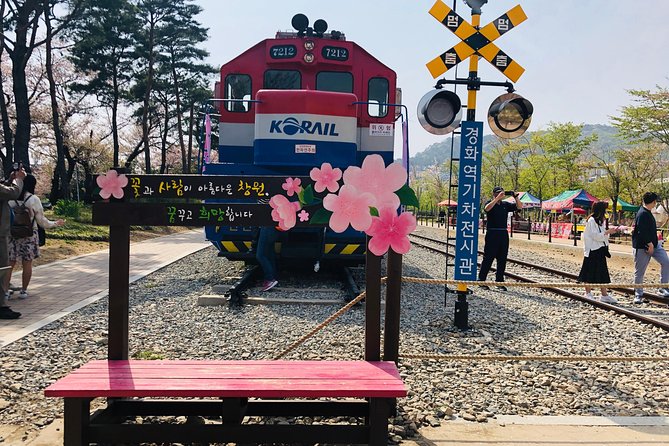
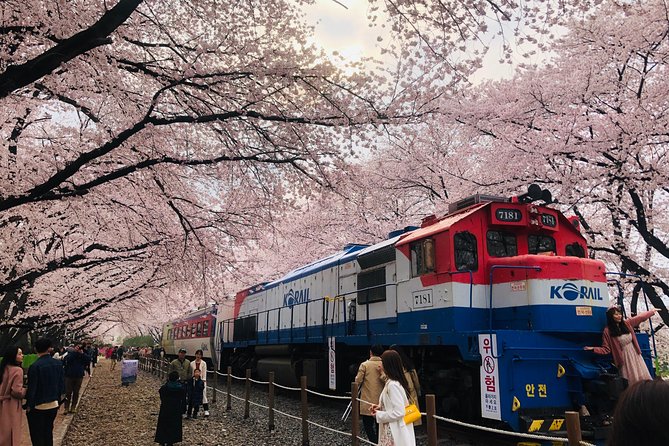
Next comes Gyeonghwa Station Cherry Blossom Road, again with about 2 hours scheduled. If Yeojwacheon feels like the first wave, this is usually where people slow down and enjoy the continuous blossom-lined views.
The big practical benefit is that this area is easy to navigate. It’s a corridor-style viewing spot, so you’re not constantly changing your plan in search of “the best place.” You can also step in and out of busier patches depending on where the light looks best.
One helpful note: the tour description says you enjoy cherry blossoms at both places for about four hours total, with the split not always meaning exactly two hours each. In plain terms, expect some variability in how the time lands between Yeojwacheon and Gyeonghwa Station.
Mt. Jaehwangsan Area: Why It’s Mentioned
The tour highlights transfers that include Mt. Jaehwangsan, where the blossoms are said to be strongest. Even when you don’t get a long hiking-style window, being routed through a higher viewing area can change how the blossoms look—more depth, more sense of coverage.
If you’re the type who cares about photo variety, this detail is worth paying attention to. Getting at least a taste of how blossoms look from different vantage levels is one way this trip goes beyond a single street view.
Price and What You’re Actually Buying for $108.49
At about $108.49 per person, this tour isn’t cheap, but it’s also not only paying for a ticket. You’re paying for a long-distance day that includes admission coverage, English-speaking staff, and round-trip transfers from central Seoul.
That’s the key value: your cost goes into transportation and time management. During peak blossom season, that kind of organized route is often the difference between stress and enjoyment.
What you still need to budget: meals and beverages. Breakfast time is mentioned, but breakfast isn’t included, and you’ll have long stretches where you’ll need snacks or food on your own. If you pack smart, you can keep your spending under control—especially during a day where you’re on the move constantly.
Also, you’ll use a mobile ticket, which is convenient as long as you’ve got your phone charged.
When Blossoms Aren’t Fully Bloomed: Plan for Reality
Cherry blossoms in Korea are timing-sensitive. The tour notes that if blossoms are not fully bloomed, the operator can reschedule or cancel, and you’ll be contacted in advance in that case.
This is not a small footnote. Peak season can shift, and even a great route can feel disappointing if the trees are past their best look. The practical lesson is to check blossom forecasts close to departure, and don’t lock yourself into a single chance if you can avoid it.
If you end up with lighter bloom coverage, you can still enjoy two things: the dedicated viewing stops and the overall scenery around festival areas and iconic temple views. Just adjust your expectation from full-on “pink everywhere” to a more mixed photo experience.
Who This Trip Fits Best
This is a strong choice for you if:
- You’re short on time in Korea and want Seoul-to-Busan cherry blossom viewing without planning connections.
- You like sunrise scenery and think the early start will be worth it.
- You’d rather pay for a route that handles transfers and admission than assemble it yourself.
I’d think twice if you:
- Hate long night travel and already know you’ll feel wrecked without sleep.
- Want lots of free time at each stop to wander slowly with no schedule pressure.
- Only want peak blossom conditions and can’t tolerate variability.
The group size is capped at 100, which keeps things from turning into a total free-for-all, though you should still expect crowds in the blossom corridors and festival areas.
Should You Book This Jinhae + Busan Sunrise Trip?
If you want maximum cherry blossom viewing efficiency with minimal logistics, I think this is worth considering. The mix of Haedong Yonggungsa sunrise plus two major Jinhae blossom areas makes it more than a single-photo-stop tour.
But book it with eyes open. This is a long, no-sleep return day, and bloom timing can be hit-or-miss. If you can handle the fatigue and you’re flexible about how peak the blossoms will look, you’ll likely walk away feeling like you squeezed a lot of Korea into one unforgettable window.
FAQ
FAQ
How long is the Jinhae Cherry Blossom + Busan Sunrise tour?
It runs about 19 to 20 hours.
Where does the tour start and where does it return to?
It starts in Seoul (central Seoul pickup/meeting) and returns to Seoul with drop-off options at Dongdaemun History & Culture Park and Myeongdong Station.
Does the tour include breakfast?
The schedule includes time for breakfast, but breakfast is not included. Meals and beverages are not included in general.
What’s included in the price?
You get round-trip transfers, admission to attractions, and English-speaking staff. You’ll also have a mobile ticket.
Are meals included anywhere during the day?
No. Meals and beverages are not included, so you’ll need to plan your own food.
What happens if the cherry blossoms are not fully bloomed?
If blossoms are not fully bloomed, the tour can be rescheduled or cancelled, and the supplier will contact you in advance.
What should I do to get back to Hongik Univ. Station after the tour?
The tour doesn’t return to Hongik Univ. Station. You should take subway line 2 at Dongdaemun History & Culture Park Station to reach Hongik Univ. Station.