REVIEW · SEOUL
Korean Folk Village Half-day Guided Tour from Seoul
Book on Viator →Operated by Seoul N Tour · Bookable on Viator
A Joseon-era village without the long commute. This half-day Korean Folk Village tour is a focused way to see how traditional life looked in Korea, with restored houses you can walk into, plus folk performances and crafts in a real park setting.
If you like culture you can actually touch, this one works.
I especially love getting inside the restored homes and seeing household artifacts in context, not just looking from the outside. And I like the way guides such as Veronica, Jenny, and Anna help you connect what you’re watching to customs, from music and dance to crowd-pleasing acts like tightrope-style performances.
One thing to consider: this isn’t ideal if you have walking limits, and some of the action is weather dependent.
In This Review
- Key highlights at a glance
- Korean Folk Village: what makes it feel real
- Price and value: why $63 can work (if you’re organized)
- Getting there from Seoul: meeting point and timing that actually helps
- Stop in Seoul: your launch pad
- Inside the Korean Folk Village: the restored houses and what to notice
- Folk performances and demonstrations: jultagi, nongak, and weather reality
- Artisan workshops: where the tour turns from watching to observing
- Your guide and group size: comfort, pacing, and good explanations
- Practical tips that make this tour smoother
- Who should book this half-day tour (and who might not)
- Should you book this Korean Folk Village guided tour?
- FAQ
- FAQ
- How long is the Korean Folk Village half-day guided tour?
- Where do I meet the tour in Seoul?
- When does the tour start?
- What is included in the $63 price?
- Are entrance fees included for the Korean Folk Village?
- Is food or drinks included?
- What can I expect to see while at the village?
- Is the tour suitable if I have walking problems?
- What happens if the weather is bad?
- What if the minimum number of participants isn’t met?
Key highlights at a glance
- Walk into Joseon-era houses with restored interiors and period details
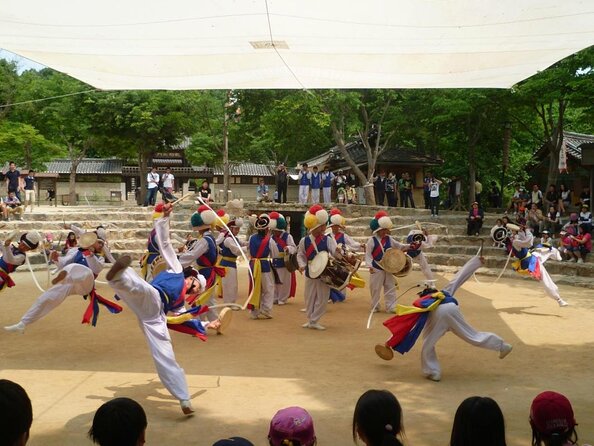
- Live folk performances that may include jultagi-style acts and nongak music (weather permitting)
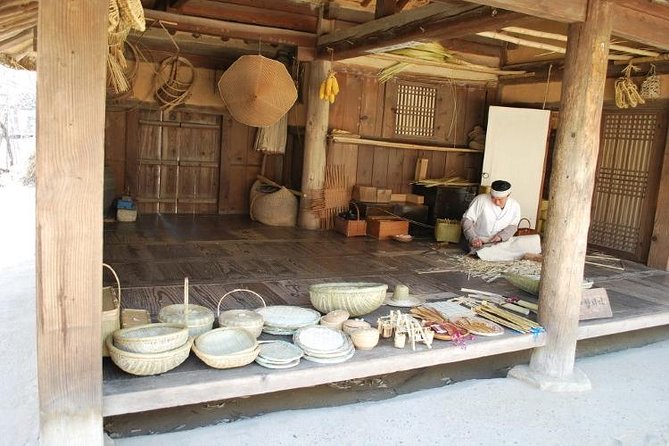
- Artisan workshops where you can see traditional making: pottery, baskets, brassware, and more
- About an hour each way by climate-controlled bus from Seoul
- Professional guide + entrance fees included, so you’re not juggling tickets
- Small-ish group size (max 40) that still feels manageable
Korean Folk Village: what makes it feel real
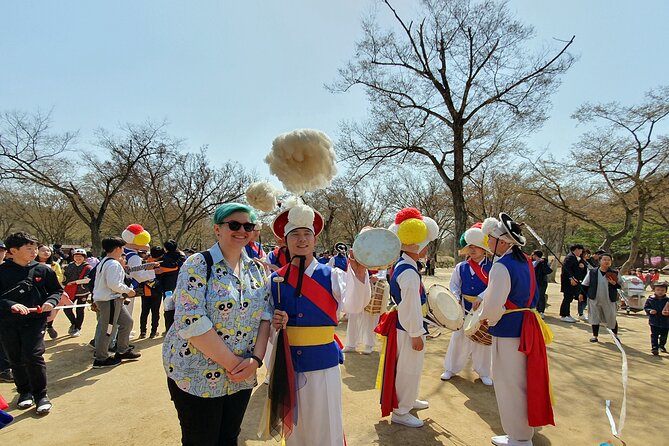
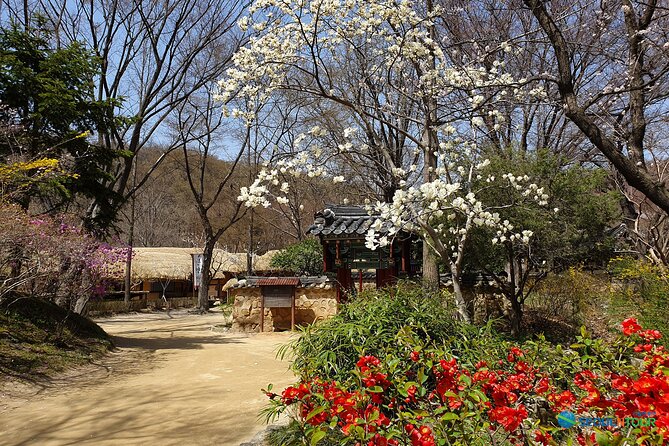
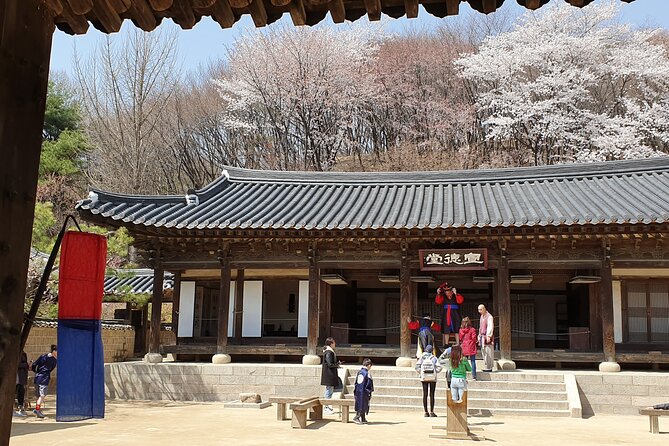
The Korean Folk Village is the kind of place where the details matter. It’s not just a backdrop. You’re surrounded by more than 270 traditional homes that represent late Joseon-era life, with structures relocated and reconstructed from different parts of Korea. That relocation detail is important: it means you’re not only seeing one “generic” version of a house. You’re seeing variation in architecture and household items, so the village feels like a curated cross-section of tradition instead of a single staged set.
The guide piece is what turns it from sightseeing into understanding. In the best moments, the explanation doesn’t slow you down. It gives you a lens while you’re walking, so you notice things you’d otherwise skip—how homes are arranged, what everyday objects imply, and why certain ceremonies or arts were practiced. This is where the guide examples you’ll see in reviews matter: Veronica, Jenny, and Anna are repeatedly described as making the cultural parts click.
You can also read our reviews of more guided tours in Seoul

Price and value: why $63 can work (if you’re organized)
At $63 per person, the value here comes from what’s bundled. The tour includes a professional guide, transportation between Seoul and the village, and all fees and taxes. Entrance fees are included too, which saves you from paying separately at the gate.
You still need to budget for food and drinks, since they’re not included. Also, hotel pickup and drop-off aren’t part of the package. That’s not a deal-breaker, but it changes how convenient the start and finish are. Instead of rolling up to your hotel door, you’ll meet at a set location in Seoul and get dropped back at a subway stop.
When I think about whether this price feels fair, I focus on two things:
- You’re paying for time-saving logistics (bus + guide + entrance).
- You’re paying for an explanation layer that would be harder to recreate on your own.
If you’re the type who likes wandering museums, you might do okay solo. If you want the “what am I looking at and why does it matter” part handled for you, the price starts to look more reasonable fast.
Getting there from Seoul: meeting point and timing that actually helps
This tour is built around an afternoon flow. You’ll meet around 12:30 pm near Myeongdong Station Exit 1061-7 in Jung District. The schedule states the tour starts in Seoul at 1 pm, and from there it’s about an hour drive in a climate-controlled bus to the Korean Folk Village.
That bus ride matters more than you might expect. It keeps the day simple, and it gives your guide a chance to set context before you arrive. One review highlight that stayed with me: Jenny is praised for giving historical background during the drive, so you land with better bearings. Even if you don’t remember every detail later, you’ll recognize patterns when you start walking between houses.
The tour ends back in Seoul with drop-off at Myeongdong Station. So you don’t lose your afternoon to a return commute.
Practical tip: wear comfortable shoes. Even if the walking isn’t extreme, you’re moving between restored structures and performance areas over a few hours. This is also explicitly not recommended if you have walking problems.
Stop in Seoul: your launch pad
Before you head out, you’re in Seoul around 12:20 pm, then you depart shortly after. The key advantage of starting at a transit hub like Myeongdong is that it’s easy to connect from other parts of the city.
What you should do with that time: use it to settle in. Check your mobile ticket, confirm any last-minute instructions your guide gives you, and take care of anything you’d regret later—like grabbing water. Since food and drinks aren’t included, being a bit proactive keeps the whole afternoon from feeling like a scramble.
Inside the Korean Folk Village: the restored houses and what to notice
The core of the tour is the time at the village itself, which runs for about 2 hours 50 minutes (plus travel). Founded in 1974, the site is large and designed for you to stroll. Your guide helps you move with purpose, but you still get time to explore.
Here’s what I’d focus on as you walk:
- House layout and household objects. The village displays architectural details and artifacts meant to represent different regions. That means the structures aren’t all identical, which makes it easier to see how life and design varied.
- Homes you can enter. This isn’t just viewing exteriors. Being able to walk inside is a huge difference. You get a stronger sense of scale and daily life because you’re not guessing.
- Joseon-era context from your guide. If your guide is doing their job well, the houses become answers to questions you didn’t know you had. You start asking: how would this space be used, what does this room suggest, and why does this detail matter?
Another bonus: Korean TV shows have used the village as a filming location for historical dramas. Even if you’re not there for pop culture, it makes sense of the setting. It’s recognizable as a place built to look historically believable.
You can also read our reviews of more tours and experiences in Seoul

Folk performances and demonstrations: jultagi, nongak, and weather reality
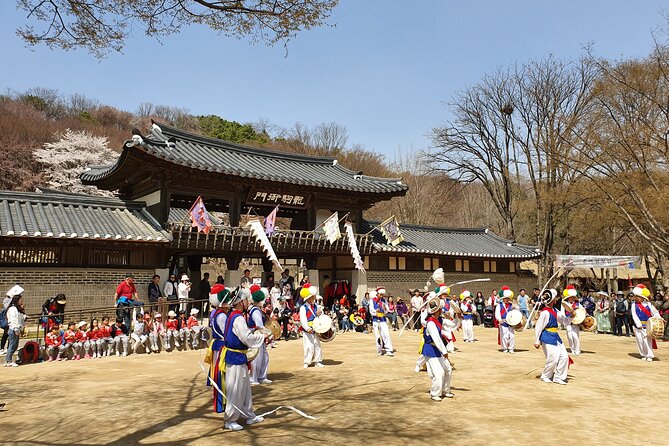
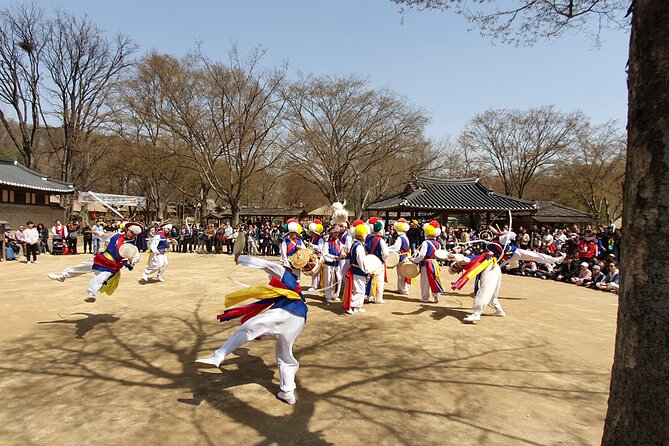
One of the big reasons people choose this tour is the chance to see traditional arts performed live. The schedule includes demonstrations and performances like:
- Folk music and dance
- Acrobatics, including jultagi tightrope-style acts
- Nongak-style musical performances
- Other traditional art forms
Two things to keep in mind. First, performances are described as weather permitting. That means on a rainier day, you might see less outdoor action or see different timing than you expected. I’d rather you plan for flexibility than hope the sky cooperates.
Second, the guide’s role is to help you understand what you’re watching. If you just watch a performance without context, it can turn into a series of impressive moves. If your guide explains the cultural connection as you go, you’ll remember the experience more clearly afterward—like how these performances relate to community life, tradition, and celebrations.
Photo tip: if you care about pictures, be mindful of where you’re standing when a performance begins. This is exactly the kind of event where you can end up blocked if you wander at the wrong moment.
Artisan workshops: where the tour turns from watching to observing
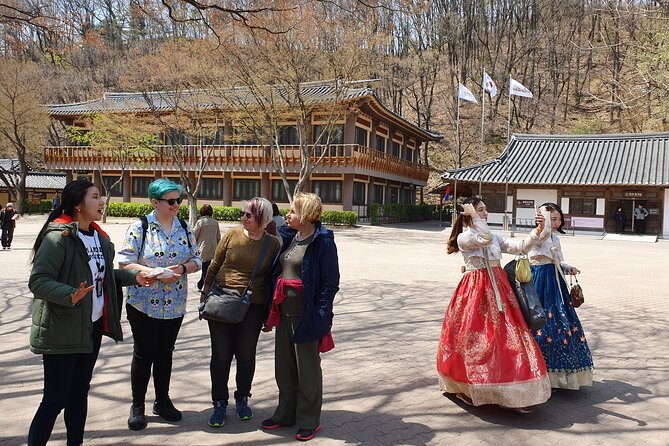
Between houses and performances, there are opportunities to see artisans at work. The village setup includes workshops where you might encounter making processes tied to traditional Korean crafts such as:
- pottery
- baskets
- brassware
- and other typical handicrafts
What makes this valuable is that it shifts the experience from passive viewing to hands-on observation. You’re not only learning what the crafts look like—you’re watching how materials become objects over time. That kind of visual learning sticks.
I also like that workshops tend to slow the pace naturally. After you’ve walked through multiple restored homes, you’ll often appreciate having something more practical to focus on. If you’re traveling with someone who finds “history buildings” less compelling, this craft element usually helps.
Your guide and group size: comfort, pacing, and good explanations
The tour caps at 40 travelers, with a minimum of 5 to run. That size usually keeps things from feeling like a long, chaotic bus tour. You still get a guided experience, and your guide can manage time so you don’t miss the live moments.
Guide quality is a recurring theme. Names like Veronica, Jenny, and Anna come up in the strongest reviews, with compliments tied to:
- clear English
- keeping explanations engaging
- making sure you catch live action shows
Even without knowing the exact guide you’ll get, you can plan to benefit if you show up ready to listen. If you ask quick questions when your guide offers context, the whole village experience becomes more personal.
Practical tips that make this tour smoother
A few small things can noticeably improve your afternoon:
- Bring water since food and drinks aren’t included.
- Wear comfortable shoes because you’ll be walking around a large outdoor village.
- Check the weather the day of travel; outdoor performances are weather dependent.
- Use your mobile ticket properly before you arrive, so there’s no last-minute friction.
- Don’t plan a tight transfer right after your return to Myeongdong Station. Give yourself a buffer so you can grab dinner calmly.
If you’re used to “see a lot, move fast” tours, this one still has structure, but it’s not a sprint. It’s a half-day designed to feel satisfying rather than frantic.
Who should book this half-day tour (and who might not)
This is a great fit if you:
- want Joseon-era cultural context instead of just photos
- like live demonstrations, especially music/dance/acrobatic-style acts
- prefer an organized route with entrance fees and transportation handled
- are staying near Myeongdong and want a straightforward afternoon plan
It’s less ideal if you:
- have walking problems, since the village involves enough walking that it’s not recommended for those limitations
- need a fully weather-proof schedule, since some performances are described as weather permitting
- hate guided group timing and prefer to wander entirely on your own
If you’re a first-timer in Seoul and you want one traditional-culture activity that’s easy to fit into a trip, this works well as a “culture anchor.”
Should you book this Korean Folk Village guided tour?
I think it’s worth booking if you want a guided, time-efficient way to experience a large traditional village with restored houses you can enter and live folk arts you can see in action. The value is strongest when you factor in guide time, transportation, and included entrance fees for one set price.
Skip it (or at least consider alternatives) if walking is difficult for you or if you’re traveling with strict expectations about outdoor performances on a specific weather forecast. That said, on a good day, this tour does what you want from a half-day: you leave with stories, images, and a clearer sense of what the traditions actually meant.
FAQ
FAQ
How long is the Korean Folk Village half-day guided tour?
The tour is listed as about 5 hours total, with the village visit taking about 2 hours 50 minutes, plus about an hour of driving each way from Seoul.
Where do I meet the tour in Seoul?
You meet at Myeongdong Station, Exit 1061-7, Chungmuro 2(i)-ga, Jung District, Seoul.
When does the tour start?
Start time is listed as 12:30 pm, and the tour description says the group departs Seoul at 1 pm.
What is included in the $63 price?
The price includes a professional guide, transportation between Seoul and the village, entrance fees, and all fees and taxes. Pick-up at 2 places in Seoul is included.
Are entrance fees included for the Korean Folk Village?
Yes. Entrance fees are included as part of the tour.
Is food or drinks included?
No. Food and drinks are not included.
What can I expect to see while at the village?
You can walk through restored Joseon-era homes, watch folk music and dance performances, and see artisans at workshops. Acrobatics such as jultagi-style performances are mentioned as possible weather-permitting highlights.
Is the tour suitable if I have walking problems?
No. The tour is not recommended for travelers with walking problems.
What happens if the weather is bad?
This experience requires good weather. If it’s canceled due to poor weather, you’ll be offered a different date or a full refund.
What if the minimum number of participants isn’t met?
If the minimum participant number (5) isn’t met, the tour can be moved to another date or canceled, with you receiving an option for a different experience or a full refund.