REVIEW · SEOUL
Seoul: Highlights of Seoul Half-Day Tour
Book on GetYourGuide →Operated by I LOVE SEOUL TOUR Co., Ltd. · Bookable on GetYourGuide
Four hours, and you leave with Seoul pinned down. This half-day route strings together N Seoul Tower landmark views, old-neighborhood walking, and palace ceremony energy, all led by a live English-speaking guide on a comfortable ride. I like that the pacing is practical: short guided stops, real time to look around, then a great place to eat at the end at Gwangjang Market. The only drawback is that it’s fast—so if you want the full observatory experience or long unstructured wandering, this schedule won’t stretch that far.
It runs rain or shine, so you’ll be on your feet in short bursts. One more detail that matters: you visit N Seoul Tower, but the tour states you don’t go up to the observatory, which changes the kind of views you get and how much time you’ll spend there.
In This Review
- Key points at a glance
- Four Hours of Seoul Highlights That Don’t Feel Rushed
- N Seoul Tower Without the Observatory: Getting the Landmark First
- Bukchon Hanok Village: Traditional Streets, Plus the Sunday Switch
- Deoksugung Palace and the 11:00 Royal Guard Changing
- Cheongha Korea Ginseng Museum: What You Learn Before You Buy
- Gwangjang Market Finish: Eat Like You Mean It (No Brand Names Needed)
- How the Transport and Timing Makes This Tour Work
- Price and Value: Is $32 Worth It?
- Who This Seoul Half-Day Tour Fits Best
- Should You Book This Seoul Half-Day Tour?
- FAQ
- How long is the Seoul half-day highlights tour?
- What does the tour cost?
- Where do I meet the tour guide?
- Do you visit the observatory at N Seoul Tower?
- What time is the Deoksugung royal guard changing ceremony?
- What happens if my tour is on a Sunday?
- What’s included in the price?
- What isn’t included?
- Does the tour run in bad weather?
- Can I cancel for a full refund?
Key points at a glance
- N Seoul Tower visit, but not the observatory for a quicker landmark stop
- Bukchon Hanok Village (or Namsangol on Sundays) depending on the day
- Deoksugung Palace with 11:00 royal guard changing as a scheduled highlight
- Ginseng Museum shopping time with cultural context, not just a store stop
- Finish at Gwangjang Market for inexpensive bites like bindaetteok and mayak gimbap
- Air-conditioned transport + a professional English guide for an easy, structured day
Four Hours of Seoul Highlights That Don’t Feel Rushed
This tour is built for one common situation: you have limited time in Seoul but still want the big-name sights, plus enough context to make them meaningful. In about 270 minutes, you’ll cover tower-landmark energy, traditional streets, a major palace, a ginseng stop with explanation, and then a food-and-shopping finish at one of Seoul’s most famous markets.
The biggest advantage is the structure. You’re not spending your half-day trying to puzzle out transit connections, meeting points, and timing. Instead, you’re on an air-conditioned minivan or coach with a guide who keeps things moving and explains what you’re actually seeing.
That said, this is not a slow, do-whatever-you-want kind of day. You’ll do short guided walks and quick looks. If your travel style is more relaxed and flexible, you might feel the schedule a bit. If your travel style is “show me the essentials fast,” you’ll likely love it.
You can also read our reviews of more tours and experiences in Seoul
N Seoul Tower Without the Observatory: Getting the Landmark First
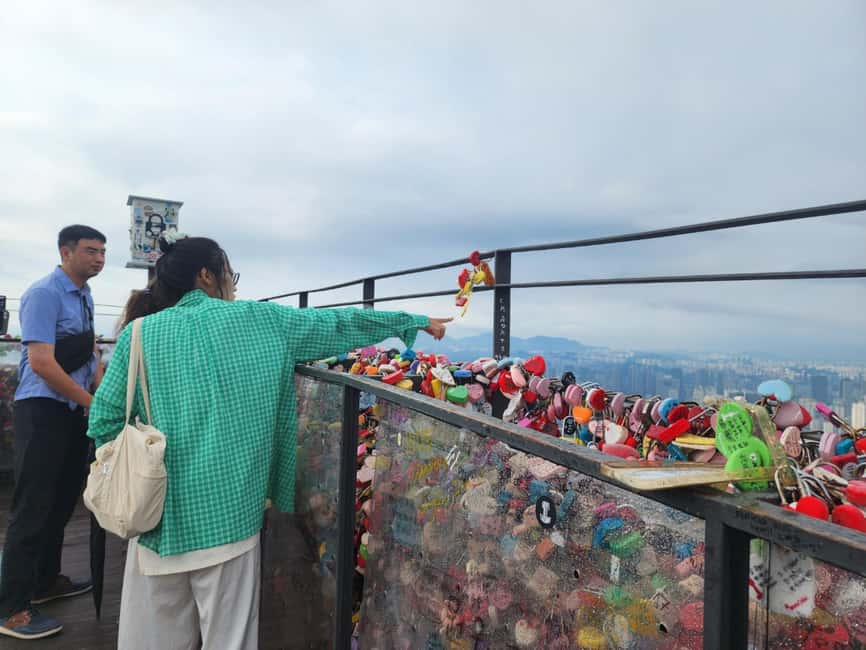
Most first-time Seoul plans eventually hit N Seoul Tower. This tour does too, and it’s smart that it’s early—seeing the tower landmark gives you mental geography for the rest of the day.
A few practical details matter here:
- The stop is about 30 minutes with a guided orientation.
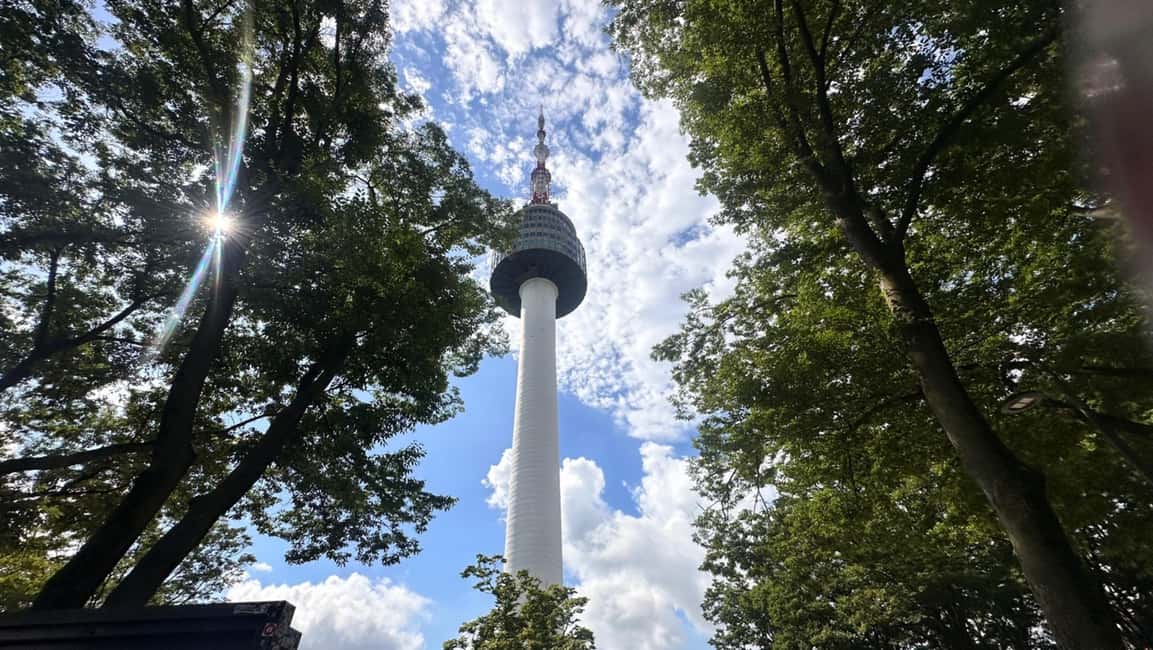
- You visit N Seoul Tower, but the tour specifically says you do not go to the observatory.
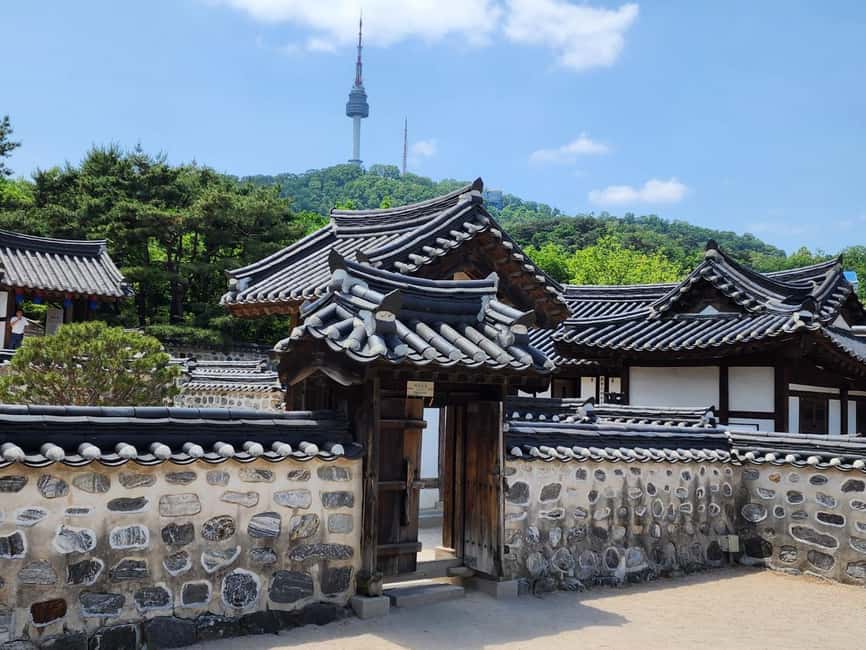
So what do you get? You get the iconic place itself and the story behind it. N Seoul Tower (officially the YTN Seoul Tower) is a 236-meter communication and observation tower on Namsan. It was built in 1971 as South Korea’s first general radio wave tower, and it currently broadcasts signals for major networks including KBS, MBC, and SBS.
Why I think this works even without the observatory: it keeps the time focused. You still get the landmark on your camera roll and you still get the explanation that makes it more than just a photo stop. If you’re the type who cares about meaning as much as viewpoints, this is a good trade.
Bukchon Hanok Village: Traditional Streets, Plus the Sunday Switch
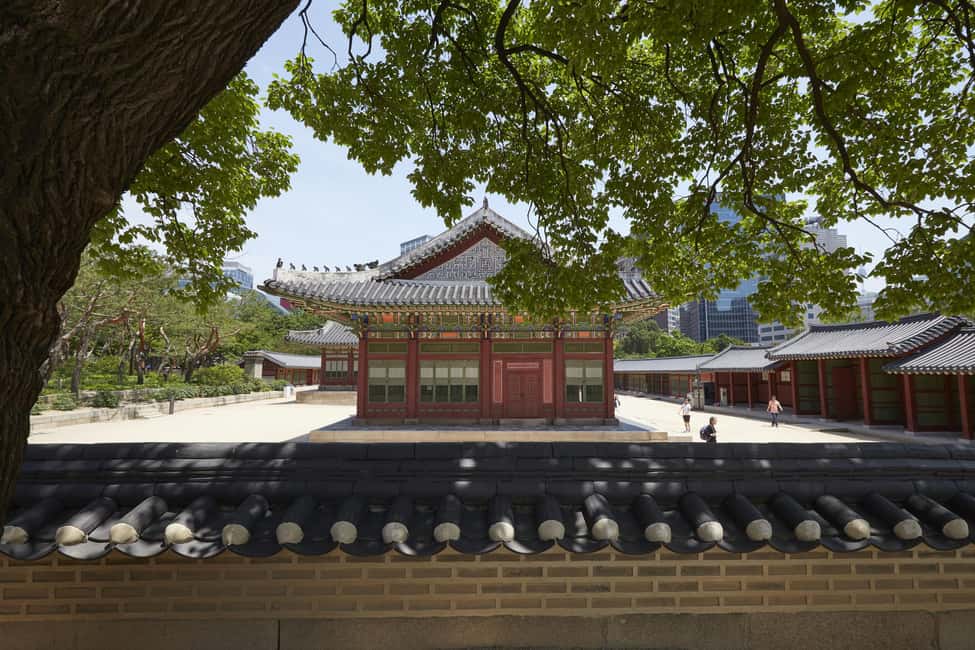
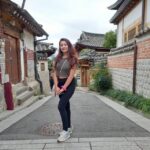
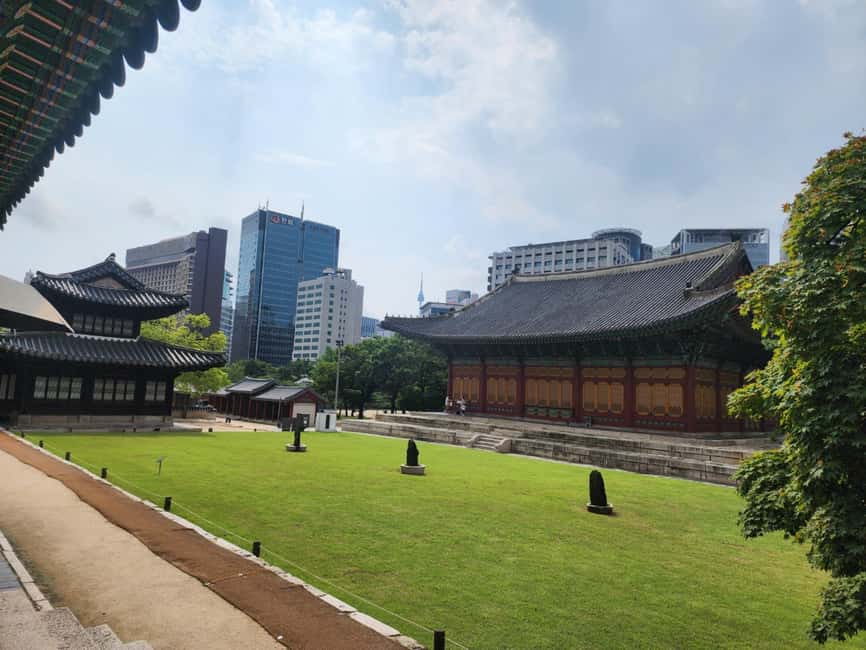
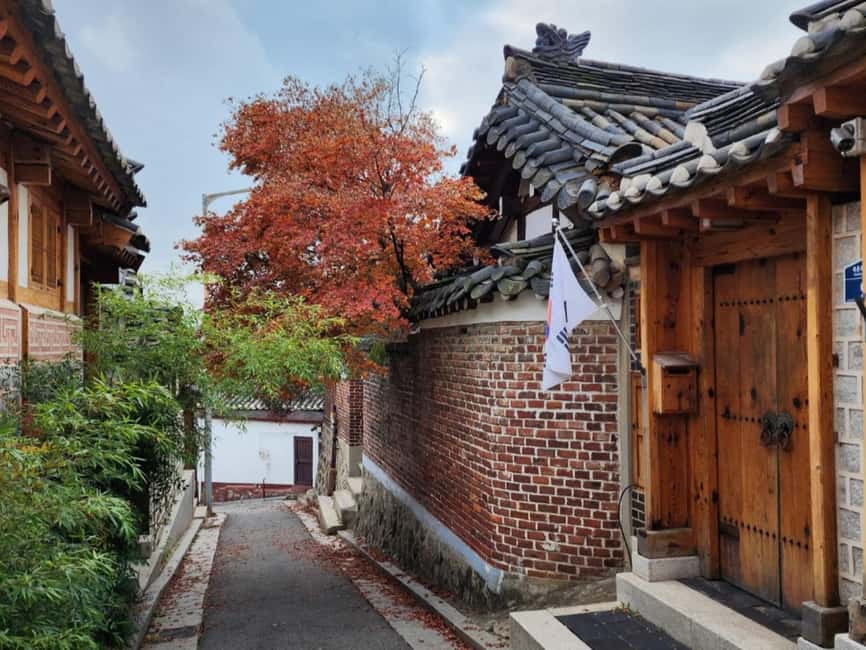
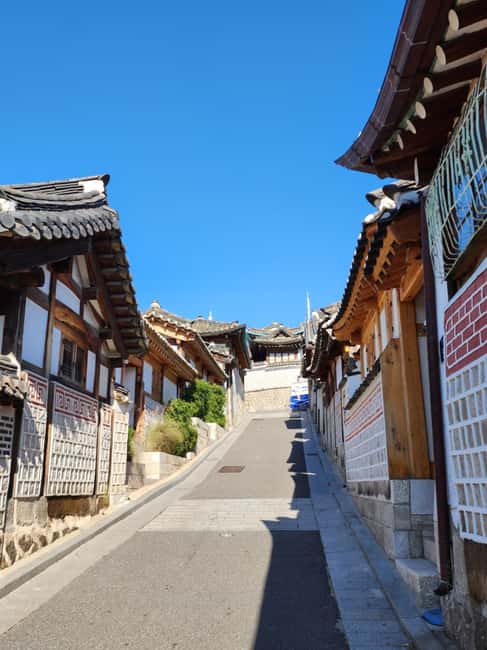
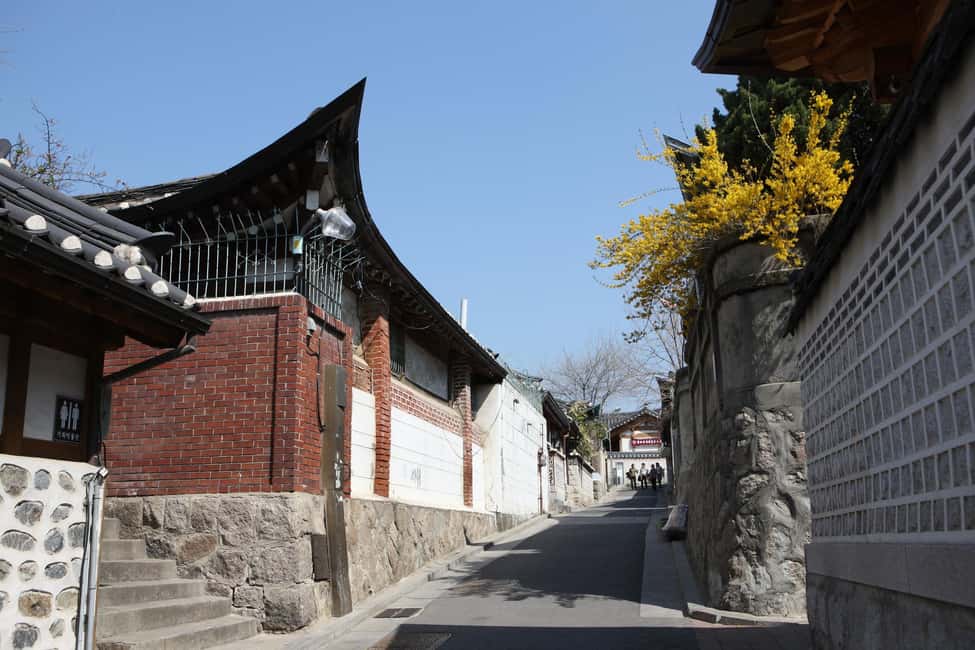
From the tower, the day shifts to old Seoul. You’ll walk around Bukchon Hanok Village, a neighborhood famous for traditional Korean houses. The area is often described as cultural-center country: many of the traditional homes function as cultural centers, guesthouses, and restaurants.
The key detail for your planning is the Sunday rule. Starting Nov 1, 2024, the tour notes that tourists are prohibited from visiting Bukchon Hanok Village on Sundays. On Sundays, the tour swaps in Namsangol Hanok Village instead.
Here’s why that matters: Bukchon and Namsangol are both traditional hanok areas, but they won’t feel identical in layout, flow, and what you can photograph. If you’re booking specifically for Bukchon, double-check which day you’re going so you don’t show up expecting one experience and get another.
The time here is about 30 minutes of guided walking. That’s enough to notice the neighborhood vibe and learn what makes these houses distinct. If you want hours to wander, you’ll probably want to add time on your own later. If you want the “taste and understanding” version, this tour delivers.
Deoksugung Palace and the 11:00 Royal Guard Changing
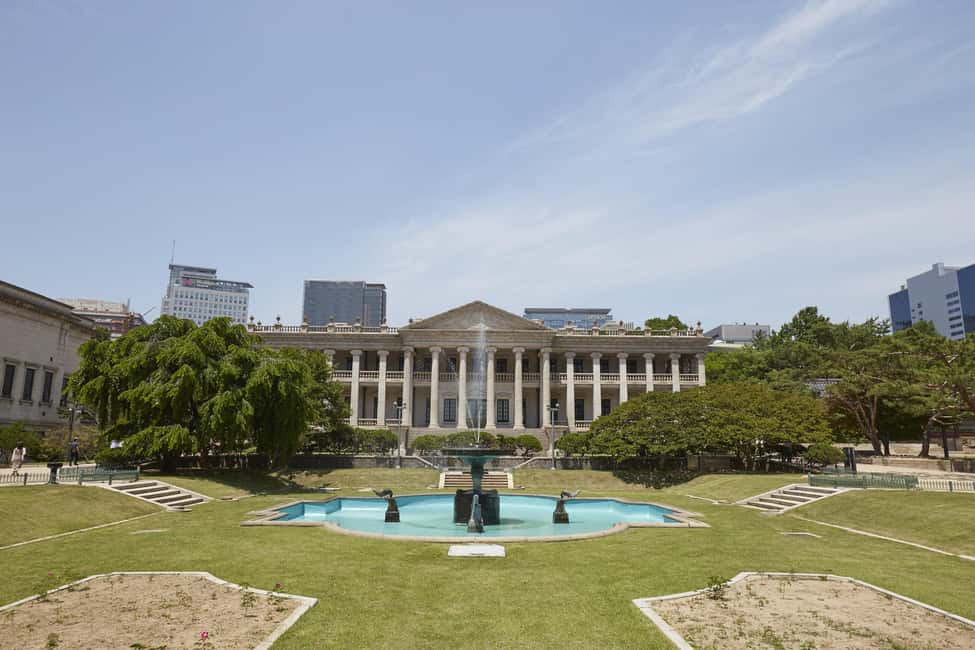
If Bukchon gives you traditional streets, Deoksugung Palace gives you palace drama. This stop includes a 1-hour guided tour, and it’s specifically timed around the royal guard changing ceremony at 11:00 AM.
Deoksugung is one of Seoul’s Five Grand Palaces, and the tour’s background helps you see it as more than a pretty gate and courtyard. Key timeline points you’ll hear include:
- It was first used as a temporary palace in 1593 after the Japanese invasion.
- In 1611, it became an official palace named Gyeongungung.
- When Emperor Gojong declared the Korean Empire in 1897, Deoksugung served as the imperial palace and included Western-style buildings.
- A major fire in 1904 destroyed many structures, and after Gojong’s abdication in 1907, it was renamed Deoksugung.
- During Japanese rule it was reduced, then after liberation it hosted the U.S.–Soviet Joint Commission, with restoration efforts continuing.
Why that context is useful: it makes the site feel layered instead of random. You start recognizing why certain buildings and features look the way they do, and why the palace’s role changed across eras.
Practical tip from the format: because the guard changing is at a set time, this is the part where arriving on schedule matters. The tour is designed around that moment, so you’ll want to stay with the group when it’s time to position yourself.
Cheongha Korea Ginseng Museum: What You Learn Before You Buy
This is a shop stop, but it’s not just a “walk in and browse” moment. The tour includes Cheongha Korean Ginseng Museum, with about 30 minutes for shopping.
Ginseng in general can feel like one of those products everyone talks about, but not everyone understands. Here, you get the cultural framing. The tour info describes ginseng as something first mentioned in the Chinese text Ji Jiu Zhang during the Han dynasty, used as a wide-reaching herb for many ailments. It also describes ginseng as having been viewed historically as a cure-all.
Then you get the modern angle: the tour mentions Korean ginseng showing strong performance in adaptogenic properties. Whether you’re a tea-and-supplements person or you’re just curious, that explanation helps you make sense of what you’re seeing on shelves.
Now the balanced part: if you don’t want to shop, this portion may feel like a sales-heavy detour. The good news is you get a defined time window, so you won’t waste your whole day stuck inside. If you do want to buy, it helps to go in with a plan—decide what you’re looking for first so you’re not overwhelmed by choices once you’re surrounded by products.
Gwangjang Market Finish: Eat Like You Mean It (No Brand Names Needed)
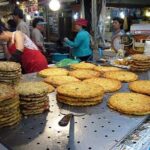
The tour ends at Gwangjang Market, described as Korea’s nation’s first market. This is a very different vibe than the palace and hanok stops. Think street energy and browsing, with lots of snack-friendly options.
The tour info emphasizes two things that make it a good finish:
- The market is known for high-quality goods at inexpensive prices.
- It’s famous for food, so it’s an easy place to have lunch or quick bites before you head off.
If you eat during your tour finish, look out for favorites named in the tour details:
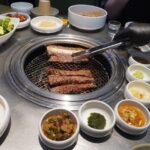
- bindaetteok (mung bean pancakes)
- mayak gimbap (seaweed rice rolls)
This is also where you can turn the day into your own story. The tour gets you here, and then you can keep going at your pace—watching stalls, tasting a couple items, and grabbing small souvenirs if that’s your thing.
How the Transport and Timing Makes This Tour Work
You’ll travel by air-conditioned minivan or coach, and the tour info notes that transport scored perfectly in feedback. That’s not a small point in Seoul, where getting from hill-to-hill can chew up energy.
The tour is also guided in English, and you’re not left alone between stops. You’re guided through the major points, and you’re given structured time blocks—30 minutes at N Seoul Tower, 30 minutes for Bukchon, 1 hour at Deoksugung, and 30 minutes at the ginseng museum.
The tour takes place rain or shine, so wear shoes that handle uneven pavement and don’t blame you for walking more than you expected. The tour explicitly recommends comfortable walking shoes, and it’s the right call.
One more “don’t get burned” detail: the tour states you can’t join after it has started, and you can’t contact the guide once the tour is in progress. So arrive on time at the meeting point—set your expectations accordingly.
Price and Value: Is $32 Worth It?
$32 per person for a half-day can feel either cheap or suspicious, depending on what’s included. Here, the math works because the tour bundles the expensive pieces of a Seoul day:
- Entrance fees (included)
- Local guide (included)
- Transport by air-conditioned minivan/coach (included)
What’s not included matters too. You’ll pay for:
- food and drinks
- hotel pickup and drop-off (so you should plan to meet at the station)
- personal expenses
- hanbok rental (not included, and hanbok rental time isn’t offered)
So who wins with this price? People who want structure. If you would otherwise spend money and time figuring out separate tickets, transit, and meeting points, paying for a guided circuit at $32 is a practical shortcut.
If you already planned to visit every single one of these places on your own anyway and you’re the kind of traveler who enjoys building a route, you might decide DIY gives you more freedom. But if your priority is saving energy and getting context fast, this is a strong value.
And the tone from the guides is a big reason people rate it highly. Names that show up with consistently positive comments include Shin, Chloe, Leo, Grace, Sophie, and Thomas—with descriptions like warm, entertaining, helpful with questions, and good at making sure the day didn’t feel rushed. The guide factor is huge on a short itinerary like this.
Who This Seoul Half-Day Tour Fits Best
This tour is a smart fit if:
- you’re short on time and want an efficient hit list
- you want guided explanations (history, culture, and what to notice)
- you like the idea of ending at a market where food is easy to grab
It may not be the best fit if:
- you specifically want the N Seoul Tower observatory (this tour states you don’t go up)
- you hate any shopping stop (the ginseng museum includes shopping time)
- you need wheelchair accessibility (the tour notes it’s not suitable for wheelchair users)
- you want hanbok included or time to rent one (it’s not offered)
If you’re traveling with kids or using strollers, the tour also notes those are not allowed—so plan accordingly.
Should You Book This Seoul Half-Day Tour?
Book it if you want a guided route that covers Seoul’s major “first visit” categories—landmark tower, traditional neighborhood walking, palace ceremony timing, a cultural product stop, and a market finish for food. The itinerary time blocks are built to make a short stay feel complete.
Skip it if you’re chasing the full observatory experience at N Seoul Tower, you want a slower unstructured day, or you’re sensitive to shopping-focused stops. Also, if accessibility is a key requirement, you’ll want to look at other options since this one isn’t suitable for wheelchair users.
If your goal is simple—see a lot without wasting half your day on logistics—this tour earns its place.
FAQ
How long is the Seoul half-day highlights tour?
It runs about 4 hours, listed as 270 minutes.
What does the tour cost?
The price is $32 per person.
Where do I meet the tour guide?
Meeting point is at Myeongdong Station Exit 9 or Myeongdong Station Exit 10, and it may vary depending on the option booked.
Do you visit the observatory at N Seoul Tower?
No. The tour includes N Seoul Tower but states you do not visit the observatory.
What time is the Deoksugung royal guard changing ceremony?
The tour includes the royal guard changing ceremony at 11:00 AM.
What happens if my tour is on a Sunday?
From Nov 1, 2024, tourists are prohibited from visiting Bukchon Hanok Village on Sundays. On Sundays, you visit Namsangol Hanok village instead.
What’s included in the price?
Entrance fees, a local guide, and transport by air-conditioned minivan or coach are included.
What isn’t included?
Food and drinks, hotel pickup and drop-off, personal expenses, and hanbok rental are not included.
Does the tour run in bad weather?
Yes. It takes place rain or shine.
Can I cancel for a full refund?
Yes. You can cancel up to 24 hours in advance for a full refund.