REVIEW · SEOUL
DMZ and North Korea Experience Hall Combined Tour
Book on Viator →Operated by Sunny Seoul Korea Tour · Bookable on Viator
A DMZ tour can feel like a drive-by history lesson. This one adds a second layer with the North Korea Experience Hall and a live Q&A with a defector, so you’re not just looking at borders—you’re learning how people live behind them.
I especially like the way the morning starts at Imjingak with big, symbolic peace-park context before you go underground and up to the observatory. I also like that the day mixes outdoor sights with indoor exhibits, so it stays meaningful even when the weather is doing its thing.
The main thing to consider is that this is a long, security-minded day: you’ll need your passport for ID checks and you should be ready for a 7–8 hour schedule with limited meal options since lunch isn’t included.
In This Review
- Key highlights at a glance
- DMZ From Seoul, With the North Korea Experience Hall
- Imjingak Pyeonghwa Nuri Park: The Peace Park Stop
- Through the Third Infiltration Tunnel: What 1978 Still Means
- Dora Observatory Views Toward Panmunjeom and Daeseong-dong
- Inside the North Korea Experience Hall and the Defector Q&A
- Price and What You Actually Get for $65
- Timing, ID Checks, and the 7–8 Hour Reality of a Long Day
- Who This Tour Fits Best
- Should You Book This DMZ and North Korea Experience Hall Tour?
- FAQ
- What time does the tour start?
- How long is the DMZ and North Korea Experience Hall tour?
- Where do you meet and where do you get dropped off?
- Do I need my passport?
- Is lunch included?
- How many people are in the group?
Key highlights at a glance
- Imjingak Pyeonghwa Nuri Park first for political context before the scary stuff
- The 3rd Infiltration Tunnel with a close-to-Seoul perspective (about 52 km)
- Dora Observatory for views toward Panmunjeom and the Daeseong-dong area inside the DMZ
- North Korea Experience Hall with exhibits and curated video content about daily life
- Live Q&A with a North Korean defector so you can ask your own questions
- Small-group feel up to 40 travelers plus an English guide and air-conditioned vehicle
DMZ From Seoul, With the North Korea Experience Hall

This tour is built for travelers who want more than a checklist of DMZ stops. You start with the peace-park area that frames the conflict, then you move into the tunnel and the observatory where geography becomes real. The big difference is the North Korea Experience Hall, designed to explain life inside North Korea today through exhibits and videos—followed by a live Q&A with a defector.
I like the structure: it doesn’t jump straight to the dramatic sights. It guides you from meaning to evidence, and then to real human stories. That makes the day easier to process afterward, instead of just leaving you with photos.
One more practical note: the tour runs for about 7–8 hours and the final drop-off is in Myeongdong around 14:30. Plan the rest of your day with travel time and energy in mind.
You can also read our reviews of more tours and experiences in Seoul.

Imjingak Pyeonghwa Nuri Park: The Peace Park Stop
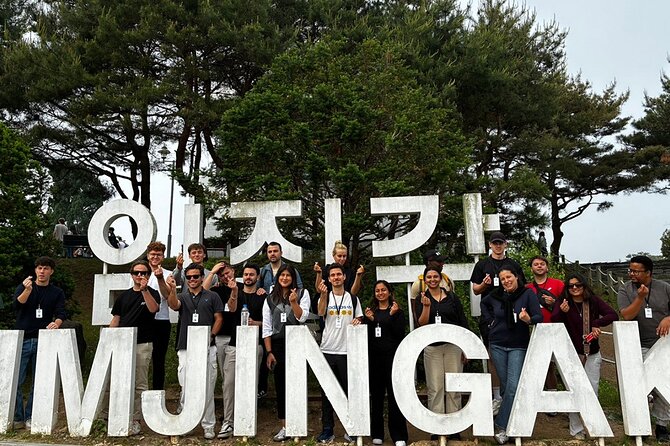
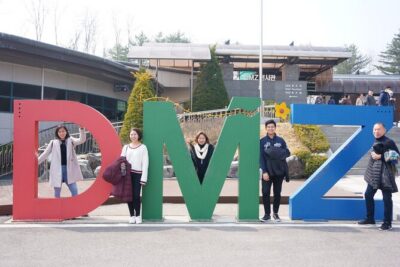
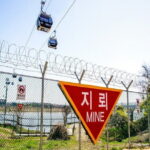
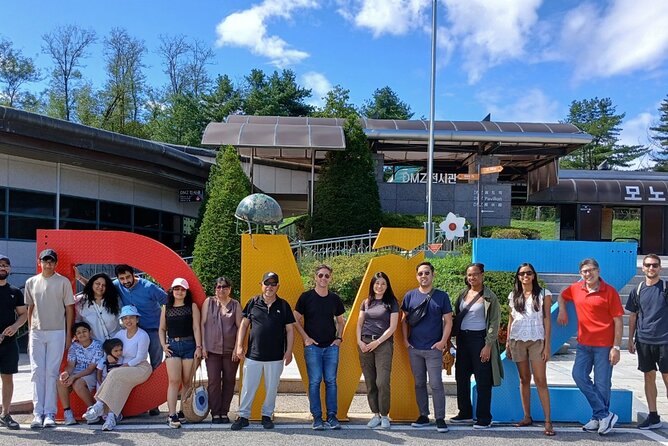
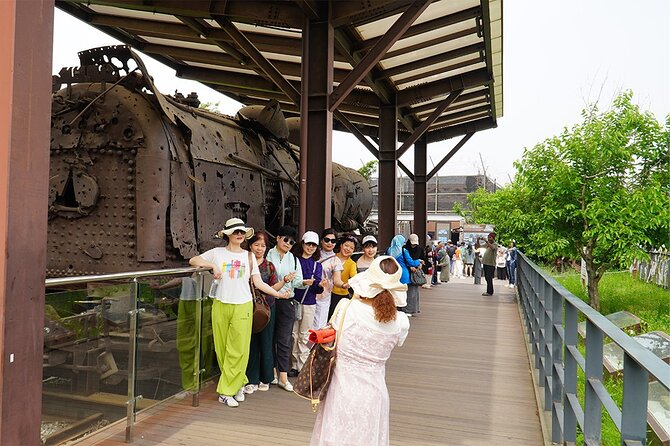
You begin at Imjingak Pyeonghwa Nuri Park (the meeting point address is 148-40 Imjingak-ro, Munsan-eup, Paju-si). This area is more than a scenic start. It’s a unification and security complex that includes things like Imjingak Pavilion, the North Korea Center, Unification Park, and multiple monuments and memorial sites.
What makes this stop valuable is the pacing. You get the background in a place that’s built to help you understand the emotional and political framing of the DMZ. It’s the kind of location where you can look around, read what’s there, and let the theme sink in before you go deeper into the security infrastructure.
The tour schedules about 2 hours 30 minutes here, which is enough time to move at your own speed rather than feeling rushed. Also, there’s an important operational moment: there’s an ID check during the day, and you should bring your passport. Don’t wait until the last minute to find it.
Through the Third Infiltration Tunnel: What 1978 Still Means

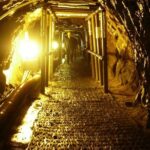
Next you go to the Third Infiltration Tunnel, the third such tunnel built by North Korea for the purpose of invading South Korea. It was discovered in 1978, and it’s described as the tunnel closest to Seoul at about 52 km.
This stop is where the DMZ stops being an idea and starts being a physical plan. Standing near the tunnel and looking at what was engineered for movement and attack gives you a new scale for the whole peninsula story. Even if you know the basics already, seeing a tunnel built for infiltration changes the way you picture the conflict.
You’ll spend about 1 hour 30 minutes here, with admission included. The visit is naturally intense and concentrated—so I’d treat this portion as your “focus block.” If you’re the type who photos everything, slow down once or twice and actually read what you can. The details are what make it stick.
If you’re thinking about comfort, tunnels tend to mean enclosed spaces. You’ll want sensible shoes and a calm pace, even though the itinerary doesn’t spell out specific physical requirements. Just use your common sense and don’t try to power through.
Dora Observatory Views Toward Panmunjeom and Daeseong-dong
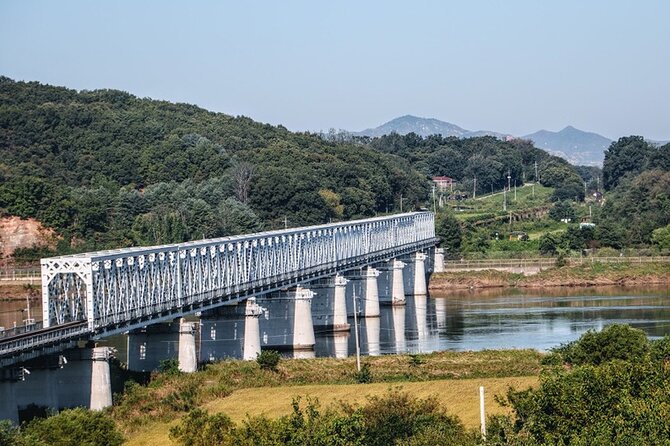
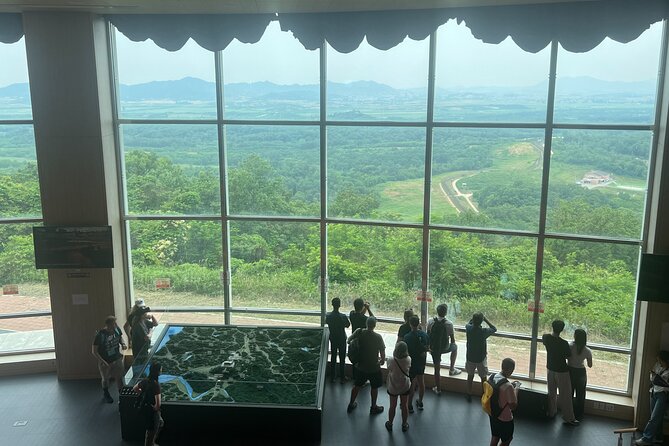
After the tunnel, the schedule brings you to Dora Observatory, the closest DMZ observatory to Panmunjeom. From here, you can see Panmunjeom and also the village of Daeseong-dong within the DMZ, along with mountains and farmlands.
This stop is powerful because it switches from “what was built” to “what you can see.” You’re not walking the same kind of hard facts you get in the tunnel, but you’re using sight lines to understand separation—how close things can be, and how far people still are.
The time is about 1 hour, and admission is included. I’d use that hour to watch how the view changes with angle and distance rather than trying to cram the entire area into a single photo. Even small adjustments can help you make sense of what you’re looking at.
Because Dora is an observatory, conditions can matter a lot. If visibility is limited, it’s still a meaningful place to stand and orient yourself. Just don’t expect every day to look like a postcard.
Inside the North Korea Experience Hall and the Defector Q&A
Now for the part that makes this tour more than a standard DMZ route.
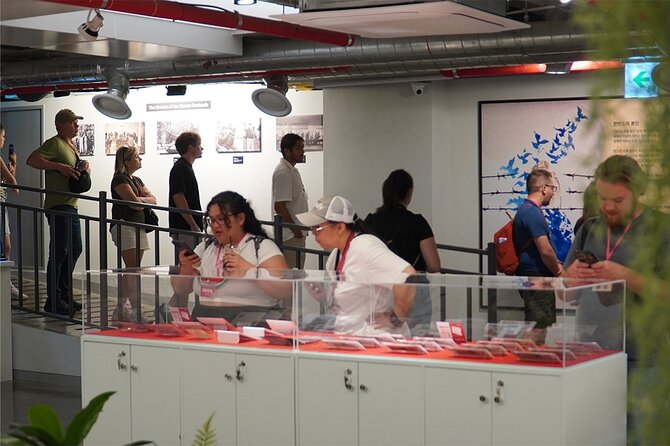
The tour includes the North Korea Experience Hall, built to give you a deeper understanding of life inside North Korea today. The format is very practical: you’ll see exhibits and curated video content that aim to reflect daily life, including struggles, culture, and current social conditions.
This matters because the DMZ can feel like politics only. The Experience Hall pushes past that and asks you to imagine what normal routines look like under a closed system. It’s not “secondhand gossip” either—it’s structured as an attempt to portray realities and constraints, so you learn within a framework rather than randomly.
Then comes the highlight: a live Q&A session with a North Korean defector. This is your chance to ask questions that matter to you personally, and to hear stories firsthand. I like Q&As like this because they force you to listen actively. You’re not just collecting facts; you’re learning how a real person understands their own past and what they wish others understood.
One detail I take from the tour experience described with the guide: English guidance helps you translate what you see into something you can interpret. In at least one run of this tour, the English guide Sue was specifically praised for being very good at explaining the story and keeping the day understandable.


Price and What You Actually Get for $65

At $65 per person, this is positioned as a value-focused day trip, and the math mostly checks out.
Here’s what’s included that you’d otherwise pay for separately in many DMZ itineraries:
- Air-conditioned vehicle
- Admission fees for the listed stops
- Private transportation
- English guide
- Mobile ticket
And what you should budget for:
- Lunch (not included)
- personal expenses
When a tour includes admissions and a guided explanation, it reduces the “hidden costs” that often creep in. It also helps you avoid the headache of juggling separate tickets for multiple sites. The day already includes several major stops, so the guide and transport aren’t “extras”—they’re the glue holding the route together.
The group cap is up to 40 travelers, so you’re not dealing with a massive crowd that makes Q&A or listening feel pointless. Still, it’s not a private one-on-one setup either, so you’ll want to be comfortable with a shared tour rhythm.
Timing, ID Checks, and the 7–8 Hour Reality of a Long Day
The tour starts at 7:00 am and runs about 7–8 hours. You’ll meet at Imjingak Pyeonghwa Nuri Park, and you’ll end with a drop-off in Myeongdong, with an estimated arrival around 14:30.
Plan your morning like a serious day trip. Security and ID checks mean you can’t be casual about timing. The itinerary explicitly requests passport for ID check, so bring it. Also, confirm you know where you’re meeting so you’re not relying on last-minute directions.
One practical heads-up from real-world experience: there was an instance where a morning pickup caused confusion, even though it isn’t typical. My advice is simple—double-check the meeting spot address, arrive a bit early, and make sure your pickup details are clear before the morning starts.
Wear comfortable layers. DMZ-area days can swing from cool to warm, and you’ll be inside and outside during the same day. The vehicle is air-conditioned, but your time outdoors will still be real.
Also, bring water and a simple snack plan. Lunch isn’t included, so you’ll want a backup so you’re not paying stressed prices or skipping the meal entirely.
Who This Tour Fits Best
This tour suits you if you want the DMZ to feel human, not just scenic. If you’re the type who reads signs, wants context, and likes structured time at each stop, you’ll probably enjoy the flow.
It’s also a good match if you care about asking real questions. The defector Q&A is a rare chance, and it makes the day feel connected rather than scripted.
I’d be cautious if you dislike long travel days or you’re not comfortable with security procedures. The itinerary requests strong physical fitness level, and there’s a tunnel stop plus time at the peace park and observatory.
Finally, if you’re traveling in a group and want English guidance that keeps you oriented, the tour’s English guide and small-group cap help a lot. Solo travelers can also enjoy it, especially if you like having a clear agenda when you visit complicated places.
Should You Book This DMZ and North Korea Experience Hall Tour?
Yes—if your goal is a DMZ day that goes beyond the surface.
Book it if you want Imjingak’s peace-and-unification framing, a close look at the Third Infiltration Tunnel, a view from Dora Observatory, and then the extra layer of learning inside the North Korea Experience Hall with a live defector Q&A. That combination is exactly what makes this tour feel different and more useful.
I’d think twice only if you want a short, low-effort sightseeing loop or if the idea of ID checks and a 7–8 hour schedule stresses you out. In that case, you might prefer a more basic, less structured outing.
FAQ
What time does the tour start?
The tour start time is 7:00 am.
How long is the DMZ and North Korea Experience Hall tour?
It runs for approximately 7 to 8 hours.
Where do you meet and where do you get dropped off?
You meet at Imjingak Pyeonghwa Nuri Park (148-40 Imjingak-ro, Munsan-eup, Paju-si, Gyeonggi-do). You’re dropped off in Myeongdong, Seoul, with an estimated arrival time around 14:30.
Do I need my passport?
Yes. There is an ID check, and you should bring your passport.
Is lunch included?
No. Lunch is not included.
How many people are in the group?
The tour has a maximum of 40 travelers.