REVIEW · SEOUL
Best 2 Days Guided DMZ and Seoul City Tours from Seoul
Book on Viator →Operated by VIP TRAVEL Co.Ltd · Bookable on Viator
The DMZ is real, and close enough to matter. I like how this tour pairs the emotional stops at Imjingak Park with the practical, high-powered views from Dora Observatory, so you get both context and actual sightlines. One drawback: English help can be limited inside some DMZ areas, so you’ll want to lean on your guide’s explanations, the way Kelly and Wendy did in the reviews.
On the Seoul side, you also get a clean mix: Buddhist calm at Jogyesa, palace grandeur at Gyeongbokgung, and shopping time in Insadong and Namdaemun. It’s guided all the way, with an air-conditioned vehicle and pickup, and it starts at 9:00 am and returns you to the meeting point.
In This Review
- Key highlights worth planning for
- Two days that balance emotion, facts, and Seoul time
- Imjingak Pyeonghoa-Nuri Park: where the war story turns personal
- Bridge of Freedom: walking the route of 1953 releases
- Third Infiltration Tunnel: tight, real, and optional at the exit
- DMZ Theater video: a short reset after the tunnel
- Dora Observatory: border-area views with binocular precision
- Jogyesa Temple: the gate between everyday Seoul and Buddhist space
- Gyeongbokgung Palace: Joseon grandeur, with scars from history
- National Folk Museum of Korea: a fast hit of everyday Joseon life
- Insadong and Namdaemun: Korean crafts, snacks, and shopping momentum
- The Ginseng Museum stop: short and free, with a practical angle
- Price and comfort: why $110 feels fair for two days
- Tips so you enjoy every stop, not just survive them
- Should you book this 2-day DMZ and Seoul tour?
- FAQ
- What’s the start time for this tour?
- How long is the tour?
- How much does it cost, and what’s included in that price?
- Is lunch included?
- Which stops are affected if your day is Tuesday?
- Can I cancel for a full refund?
Key highlights worth planning for
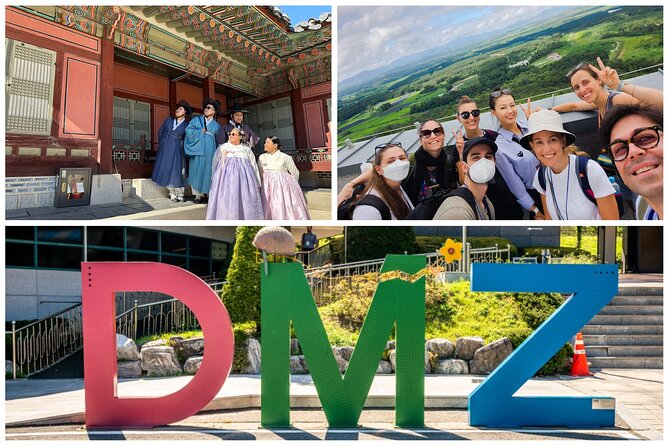
- Imjingak Pyeonghoa-Nuri Park: refugee memorial details like the Mangbaedan altar and Unification Pond shape
- Bridge of Freedom photo walk: a direct link to 1953 prisoner releases
- Third Tunnel pass: a long, tight walk-through that you can skip by waiting at the exit if needed
- Dora Observatory binoculars: clear-day chances for views toward Gaesong and the propaganda village area
- Seoul day mix: Jogyesa temple + Gyeongbokgung Palace (not on Tuesdays) + Insadong and Namdaemun markets
Two days that balance emotion, facts, and Seoul time
This is a two-day guided package built around two very different moods. Day 1 pushes into Cold War history: you visit memorial sites, walk through the Third Tunnel, and end at Dora Observatory for border-area sightlines. Day 2 swings back into daily life and culture in Seoul with temples, palaces, museums, and shopping streets.
What makes it work is the pacing. You get short guided chunks at each stop (often around 20 minutes), then you have time to look around and take photos. Since it’s capped at 100 travelers, you should still be able to hear your guide without feeling like you’re in a giant crowd, even when you’re moving between sites.
If you want a trip that turns headlines into places you can stand in, this is the kind of day-by-day structure that helps. If you hate close spaces, plan for the Third Tunnel choice ahead of time.
You can also read our reviews of more guided tours in Seoul

Imjingak Pyeonghoa-Nuri Park: where the war story turns personal
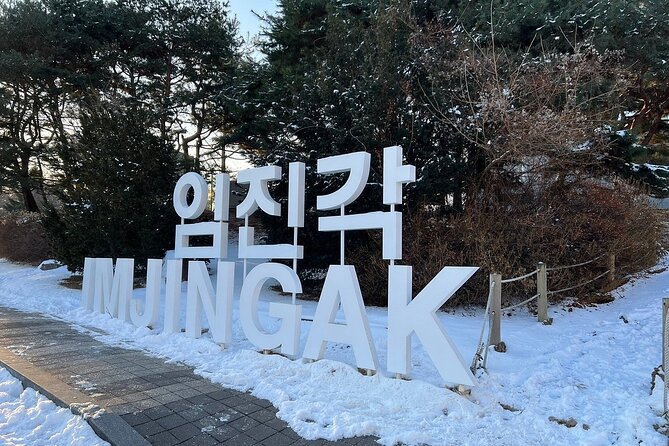
Day 1 starts at Imjingak Pyeonghoa-Nuri Park, a place built as a sanctuary for refugees who came from North to South during the Korean War. The big idea here is that this isn’t just a viewpoint; it’s a memorial space with traditions tied to family and remembrance.
You’ll see the Iron Horse train inside the park, plus the Mangbaedan altar, where refugees bow toward the graveyard direction. The tradition is done on Chuseok (Korean Thanksgiving). That detail matters because it explains why this park feels quiet and serious rather than touristy.
Next comes the Unification Pond, shaped like the Korean peninsula. It’s one of those spots where you’ll actually understand the symbolism before you start clicking photos. Then you visit the Peace Bell area, which keeps the tone reflective.
Good to know: this is also a place where your photos look better if you take a minute to slow down. The memorial elements reward careful looking more than fast scanning.
Bridge of Freedom: walking the route of 1953 releases
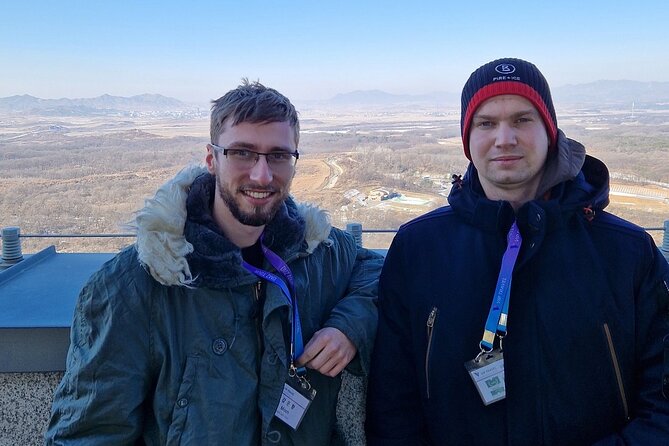
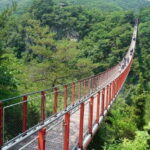
After Imjingak, you move to the Bridge of Freedom area. This bridge was built to help liberate 12,773 prisoners in 1953, and it was used by South Koreans returning home from the North.
Standing on a bridge that connects to specific numbers and a specific year changes how you feel about the setting. Instead of thinking in vague terms like Cold War, you’re anchored to a real event with a real human cost.
It also sits against a scenic backdrop, so it’s an easy place to get photos without needing special angles. Still, the best use of your time here is to walk deliberately, not just pose. Imagine the direction people would have walked back then.
Third Infiltration Tunnel: tight, real, and optional at the exit
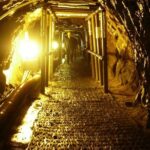
The Third Tunnel is the stop that makes this tour feel different from a typical sightseeing day. It’s located 12 kilometers from Munsan and about 52 from Seoul, and it was discovered in 1978. Its purpose was to be used to invade the South.
The tunnel details are intense: it’s 1,635 meters long and about 2 meters high and 2 meters wide. The tour describes the capacity as moving an entire division per hour, which gives you a sense of scale even if you can’t picture it at first.
When you walk inside, the experience can feel like you stepped back in time, because it’s not theory—it’s the physical space. And if you aren’t comfortable with closed spaces, you can wait by the exit instead.
Here’s the practical note for planning: English explanations may be limited inside some DMZ areas. In the reviews, that was a common frustration—people couldn’t read everything on their own—so ask your guide for the key points early, then treat the tunnel walk as the sensory part of the lesson.
DMZ Theater video: a short reset after the tunnel
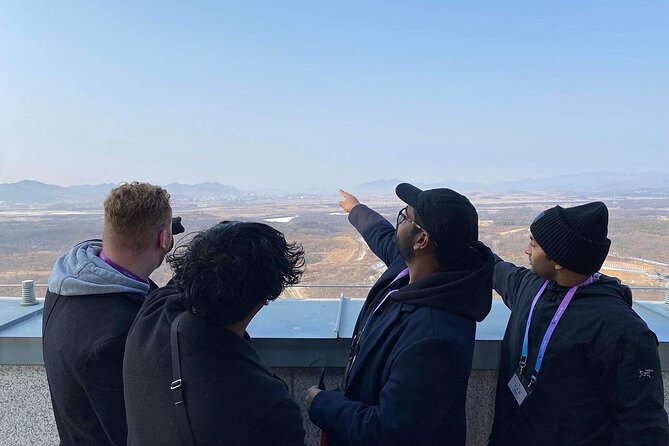
After the tunnel, you head to the DMZ Theater, where you can watch a short 7 to 8 minute video about the Korean conflict. This is a helpful reset. You just walked through a physical relic; now you get a narrative frame.
The video offers a South Korean perspective on how the DMZ came about and what’s happening today. It also gives background on the infiltration tunnels, which becomes easier to understand right after you’ve been inside the Third Tunnel.
This stop is brief, but it can change your whole interpretation of what you saw. If you tend to get tired by dense history, the short runtime is one reason this segment is included.
You can also read our reviews of more city tours in Seoul

Dora Observatory: border-area views with binocular precision
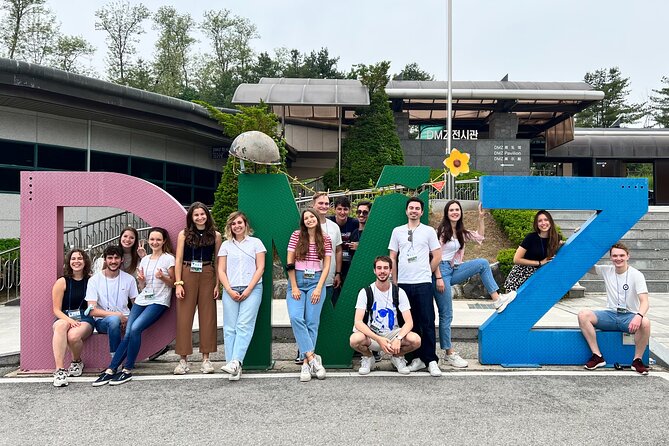
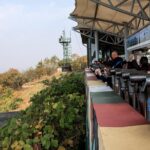
Dora Observatory is one of the tour’s most talked-about stops because it gives you the closest look you can get from this side. It’s located at Dorasan, and the setup is designed for viewing across the border area.
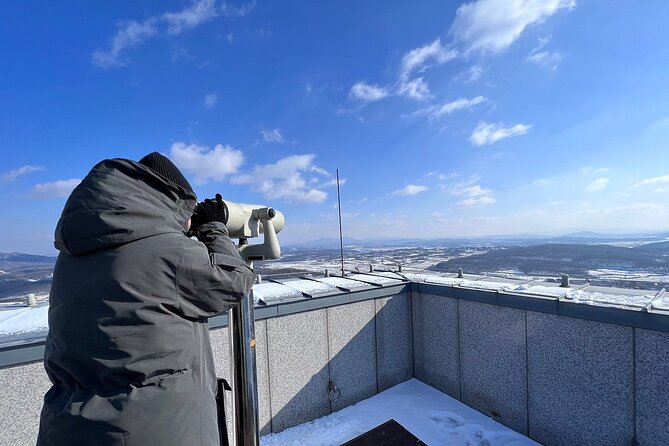
You’ll use high-powered binoculars on the third floor for extra precision. This is where the tour starts to feel practical: you’re trying to identify what you can actually see, not just learning terminology.
The tour notes you may be able to see the North’s propaganda village area located inside the DMZ, and on clear days you can see as far as Gaesong, described as the ninth-largest city in North Korea. It also mentions a bronze statue of Kim Il-sung as a clear-day possibility.
If weather matters to you, this is the stop where patience can pay off. On a clear day, the experience feels sharper. On a hazy day, it’s still meaningful, but set expectations for how far you’ll pick out details.
Jogyesa Temple: the gate between everyday Seoul and Buddhist space
Day 2 starts with Jogyesa Temple in downtown Seoul. Jogyesa is one of the most important landmarks of Korean Buddhism, first established in 1935, and it’s centered around a white pine tree.
One thing I appreciate about this stop is how it’s explained as a sequence. You go through Iljum, the one pillar gate. The Iljumun symbolizes the division between the living world and the holy Buddha world. That’s a small detail, but it changes how you enter the space: you don’t just wander in, you shift modes.
You also see golden statues and other temple features, so the stop works for both quick cultural learners and people who like slower visual time. You’ll spend about 40 minutes here, which is enough to feel present without turning it into a long detour.
If you’re short on time in Seoul, this is one of the more satisfying “meaningful in a small window” stops on the plan.
Gyeongbokgung Palace: Joseon grandeur, with scars from history
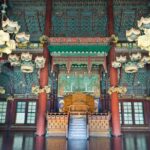
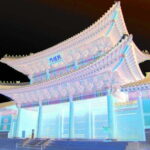
Next is Gyeongbokgung Palace, the main home of the Joseon Dynasty, constructed in 1395. It’s described as having 7,700 rooms, which gives you a sense of why it can feel like a whole world even in a single visit.
You’ll also learn why the place doesn’t look brand new. The palace was hit during the Imjin War (1592 to 1598), and later a large portion was destroyed by Imperial Japan in the 20th century. It has been restored time and again, so you see layers rather than one single era.
Your visit is about 1 hour 30 minutes, which is enough for a solid stroll and getting your bearings. But palace sites are big, and you can lose time if you stop at every doorway and photo angle.
Also note the schedule condition: Gyeongbokgung Palace is listed except Tuesdays. If your tour date lands on a Tuesday, you’ll want to be prepared for that change in what’s included.
National Folk Museum of Korea: a fast hit of everyday Joseon life
Then you’ll head to the National Folk Museum of Korea, which is closed on Tuesdays. This is a useful counterweight to palace walking. Palaces can feel like power and ceremony; this museum focuses more on how people lived.
The museum holds about 45,000 artifacts and royal treasures from Joseon palaces and the Korean Empire. It also includes 14 of South Korea’s National Treasures. The display emphasizes roughly 500 years of history, including what it might have been like for Joseon kings and queens.
You only have about 20 minutes here, so it’s not a deep scholarship session. But it’s a good way to leave palace sites with more concrete objects in your head.
If you love museums, you might wish you had more time. If you just want context without committing half a day, this is a well-sized stop.
Insadong and Namdaemun: Korean crafts, snacks, and shopping momentum
After the more formal cultural stops, the tour turns into neighborhood-style roaming.
Insadong is first: an arts and crafts market area with hand-crafted goods. You walk a long street of stalls and shops, with a poo-themed cafe at the top of the street. That little detail is exactly the kind of quirky contrast that makes Insadong fun even if you’re not a big shopper.
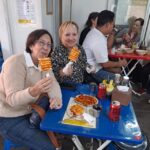
You might sample small treats like waffle bars made with matcha and plum tea. You’ll also be encouraged to stray into alleys where ceramics shops and food vendors show up, and the tour notes the locals are friendly and helpful.
Then you move to Namdaemun Market, one of the oldest and largest markets in South Korea. It’s in central Seoul, and it’s known for variety: traditional crafts and clothing alongside electronics and fashion. You get about 50 minutes here, which is enough to wander with a plan—like souvenirs first, then snacks, then electronics if you’re still interested.
One practical tip: markets can drain energy fast because there’s so much to see. Keep your list short so you don’t end up buying three things you didn’t mean to carry home.
The Ginseng Museum stop: short and free, with a practical angle
The final Seoul stop is a ginseng museum: 청하고려인삼(주), with admission listed as free. You’ll spend about 30 minutes here.
This is one of those add-on stops that you’ll either appreciate for the topic or treat as a quick cultural break. Since the tour doesn’t promise a detailed explanation in the data you provided, I’d treat it as a short informational stop rather than a must-see museum equivalent.
Still, it can be useful if you want a window into a product that’s culturally significant in Korea. At 30 minutes, it won’t derail your whole day.
Price and comfort: why $110 feels fair for two days
At $110 per person for about two days, this tour is priced for people who want a guided, structured plan without spending extra time piecing together transit.
Here’s where the value comes from: you’re getting an air-conditioned vehicle, pickup, and what the tour lists as all fees and taxes. That reduces decision fatigue. You also get mobile ticketing, which typically helps you skip some paper hassle.
What’s not included matters too: lunch isn’t included, and there’s no accommodation. That’s normal for this type of day-trip style tour package. Plan to buy lunch on your own with the guide’s recommendations, and keep a little cash or card ready for market snacks.
Group size also matters. With a maximum of 100 travelers, you should be able to move as a group efficiently, especially on transit-heavy day 1.
Finally, this is popular. It’s shown as booked around 65 days in advance on average, so if you care about a specific date or you’re traveling in a busy season, don’t wait until the last minute.
Tips so you enjoy every stop, not just survive them
A DMZ day isn’t like walking a museum. You’re dealing with time limits, security-style environments, and long lines of movement between sites.
- Wear comfortable shoes. You’ll walk through parks, bridges, and observation areas, and the Tunnel 3 experience adds awkward footing.
- If you’re concerned about closed spaces, remember you can wait by the exit for the Third Tunnel. This option matters, and you should take it if you need to.
- For the DMZ portions, plan to let your guide handle interpretation. In the feedback, limited English signage made independent reading hard. If you ask questions at the right moments, the tour becomes much more satisfying.
- On the Seoul day, keep your shopping goals simple. Insadong and Namdaemun have lots of tempting items, and 1 hour 30 minutes plus 50 minutes can disappear fast if you browse with no target.
Also, since start time is 9:00 am, build an easy morning. You’ll enjoy the day more if you’re not sprinting to meet-up.
Should you book this 2-day DMZ and Seoul tour?
I think you should book if you want a guided plan that includes the DMZ’s must-see sites plus a solid Seoul cultural day. This tour is especially good for first-time visitors who want structure: you get Imjingak’s memorial meaning, the Freedom Bridge’s human history, Tunnel 3’s physical reality, and Dora Observatory’s border-area viewpoints, then you shift to Jogyesa, Gyeongbokgung, museums, and markets.
You might skip or choose a different format if you strongly prefer self-paced exploring with lots of English signage on-site. The DMZ stops can lean on your guide for clarity, and some areas may not give you enough text to read while you’re standing there.
If you get a guide like Wendy who keeps the group moving on time, or Kelly who was praised for knowledge, the whole experience feels more connected. For most visitors, that guided thread is the difference between seeing places and understanding them.
FAQ
What’s the start time for this tour?
It starts at 9:00 am and ends back at the meeting point.
How long is the tour?
It runs for about 2 days.
How much does it cost, and what’s included in that price?
It costs $110 per person. Included features are pickup offered, a mobile ticket, air-conditioned vehicle, best tour guide, and all fees and taxes.
Is lunch included?
No. Lunch is not included, and the guide will recommend places to eat.
Which stops are affected if your day is Tuesday?
Gyeongbokgung Palace is listed as except Tuesdays, and the National Folk Museum of Korea is closed on Tuesdays.
Can I cancel for a full refund?
Yes, free cancellation is available. You can cancel up to 24 hours in advance for a full refund.

![Private Seoul Wall Trekking [Inwangsan, Bugaksan, Naksan Park, N-Seoul Tower] - Bugaksan Seoul Fortress: Northern Ridges Behind the Blue House](https://m.discoveringseoul.com/wp-content/uploads/private-seoul-wall-trekking-inwangsan-bugaksan-naksan-park-n-seoul-tower-400x267.jpg)