REVIEW · SEOUL
10day Small Group Discover Korea Tour : History, Food and Culture
Book on Viator →Operated by Here Korea Travel · Bookable on Viator
Jeju to DMZ in ten days. Small-group travel plus English-speaking guidance turns big distances into something you can actually enjoy. You’ll bounce between volcanic coasts, Silla-era history, and modern Seoul—then end with one of the most tightly regulated days in the country.
I love the way the trip ties food days to real places (Jeonju bibimbab and a Seoul cooking class), and I also love the contrast of Jeju geology mixed with hands-on markets and temples. One caution: this is a fast-moving plan, and the schedule can shift if flights are delayed or cancelled due to weather.
In This Review
- Key highlights to notice before you book
- What this 10-day South Korea tour is really buying you
- Jeju Island day 1: Dokkaebi Road, ARTE Museum, and seaside breaks
- Jeju day 2: lava tubes, sunrise peak, and Dongmun Market fuel
- Getting from Jeju to Busan: coast city energy without the planning headache
- Gyeongju: Silla temple-hopping and night views at Wolji Pond
- Pohang to Jeonju: pagodas, mountain air, and real food culture
- Seoul day by day: palaces, hanoks, markets, and Namsan views
- DMZ day: the one regulated stop you should plan to take seriously
- Seoul’s last nights: NANTA comedy and a hands-on k-cooking class
- Price, value, and who this trip fits best
- Should you book this 10-day Korea tour?
- FAQ
- What’s included in the tour price?
- Are all meals included?
- What happens if flights are delayed or cancelled due to weather?
- Does the tour include DMZ entry?
- What are the DMZ entry rules on this tour?
- What kind of ticketing do I get?
Key highlights to notice before you book
- Jeju’s natural oddities like Dokkaebi Road, lava caves, columnar rock cliffs, and waterfall time
- Real food learning in Jeonju (bibimbab) and a Seoul k-cooking class with a rotating menu
- Two big “Seoul nights”: NANTA (Myeongdong) and a traditional-style rice wine dinner in Jeonju
- Silla history with night views in Gyeongju, including Wolji Pond after dark
- DMZ rules you must follow, including no reservation and first-come, first-served entry
What this 10-day South Korea tour is really buying you
At $3,800 per person for about 10 days, you’re paying for more than a bus ticket and a checklist. You’re paying for three things that usually cost travelers time and stress: domestic flights, entrance fees, and an English-speaking guide who keeps the plan coherent.
The itinerary is also built around “first-timer value.” You get Jeju Island first (volcano terrain and coast), then the famous cities—Busan, Gyeongju, Jeonju, and Seoul—plus the DMZ. If you try to do this solo, you’ll spend a lot of energy on transport timing, ticket hunting, and figuring out what’s actually worth your limited time.
The trade-off is speed. Some days are long, and you’ll have travel days between regions. Also, one day in Jeju starts with a domestic flight, and weather can scramble the plan—your guide will pivot, but you should expect that kind of flexibility.
You can also read our reviews of more food & drink experiences in Seoul
Jeju Island day 1: Dokkaebi Road, ARTE Museum, and seaside breaks
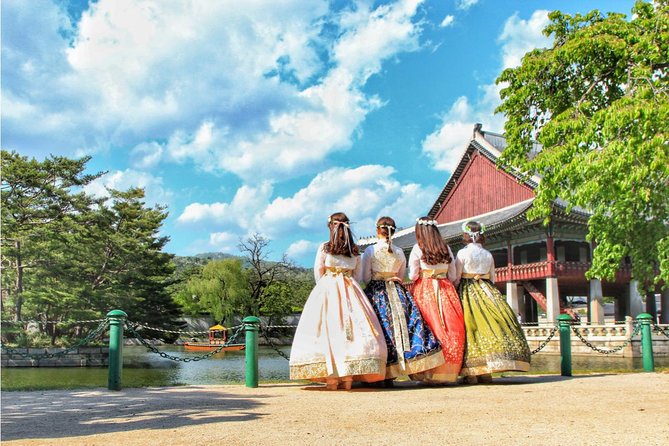
Jeju starts with a quirky warm-up: Dokkaebi Road (Goblin’s Road). The idea is simple and fun—drive/walk the uphill path, then try the “trick” moments that make it feel like it’s doing the opposite of gravity. It’s the kind of stop that feels silly until you’re standing there testing it.
Then you shift to art and light at ARTE Museum Jeju. It’s a video and light-focused museum, which makes it a good choice even if weather turns gray. Next is Spirited Garden, a bonsai-style park with a reputation for celebrity visits and award-winning tourism appeal.
After the indoor/structured stops, the tour does the smart thing: it gives you coast time. Hyeopjae Beach is where you can reset—swim if you want, or just find a café with a view. You also visit Jusangjeollidae, the columnar basalt cliffs—one of those “volcano really means something here” moments. The day closes with Cheonjiyeon Falls, small, but beloved for the easy, scenic walk.
If you’re sensitive to packed days, wear comfortable shoes. Jeju has some walking, and you’ll want your legs ready.
Jeju day 2: lava tubes, sunrise peak, and Dongmun Market fuel
Day 2 leans even harder into “this island is volcanic” realism, starting at Manjanggul Cave. This lava tube is one of the world’s longer and finer examples, and it helps you connect the dots between the island’s shape and how it formed.
Next is Sangumburi Crater, a flat crater with a wide circumference—about 2 km around—and a deep bowl from above. From the look of it, it resembles a circular stadium, which makes it easier to visualize than a textbook description.
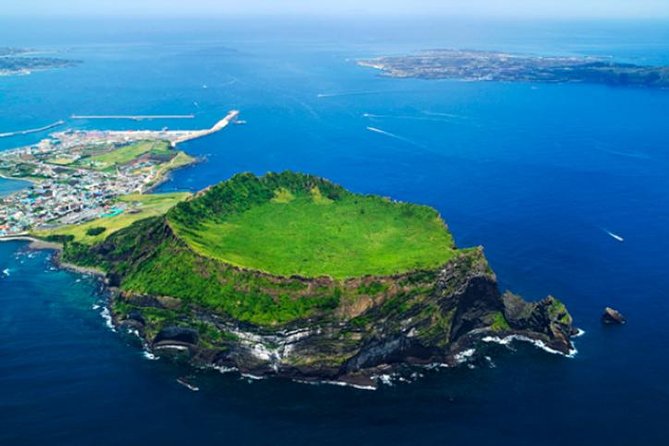
Then comes the contrast stop: Gwangchigi Beach, known for soft black sand from basalt weathering. After that, you climb Seongsan Ilchulbong (Sunrise Peak). Even if you’re not doing an actual sunrise, the top view is the payoff: a crater with grassy slopes inside the volcanic structure.
For culture, you step into Seongeup Folk Village, built at the base of Mt. Halla and focused on indigenous Jeju life. It’s a calmer pace after all the geology.
And for practical travel energy, the day ends with Dongmun Market. It’s a traditional market with a wide range of items at budget-friendly prices. When your day includes caves and craters, markets are where you refuel with something real and local.
Getting from Jeju to Busan: coast city energy without the planning headache
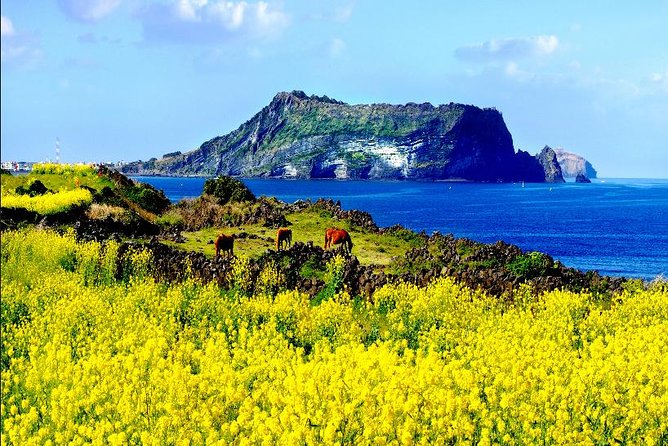
To reach Busan, you’ll fly from Jeju to the mainland (domestic flight included in the plan). You’re saving a lot of time versus slower transport, and the guide’s job is to keep the day’s sightseeing aligned after you land.
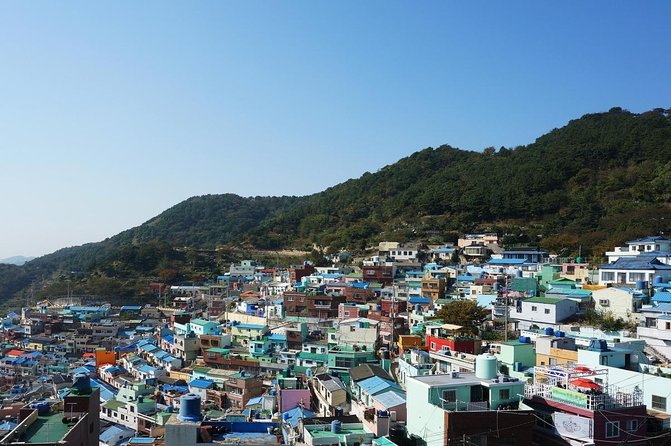
Once in Busan, your first big stop is Gamcheon Culture Village. The houses stack on a hillside in staircase fashion, shaped by coastal mountain terrain. It’s a place that’s more fun to wander than to “tour,” so expect some stairs and angles that make photos better than they look in real life.
Then you go for sea views at Songdo Skywalk. The skywalk is a classic coastal walk, and the area is also where many seafood restaurants cluster—useful if you’re hungry and don’t want to wander far.
Next up is BIFF Square, which works as both a festival landmark and a street-food area. Sweet pancakes are a must-try here if you like quick snacks you can eat while walking.
Jagalchi Market is the fish market stop. It’s lively in the literal sense—there are plenty of things, alive or not—and it’s interesting if you want to see how seafood culture sits at the center of everyday life.
The day also includes Busan’s long double-decker bridge, and it’s a good moment to notice how Busan markets night scenes—light festivals and fireworks-type events can happen around there depending on the season.
You finish with Haedong Yonggungsa, a temple on the sea. It’s one of the most scenic temple settings in Korea, and the ocean-air setting makes it feel different from inland temples.
Gyeongju: Silla temple-hopping and night views at Wolji Pond
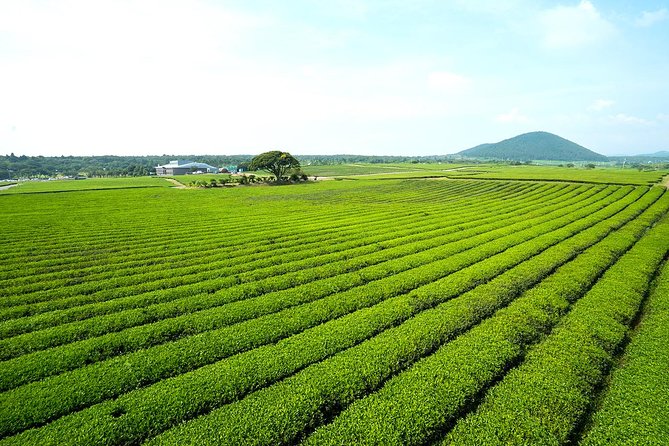
Gyeongju is where the trip slows just enough to feel like history. Day 4 starts with Golgulsa Temple in the Hamwolsan Mountain area. This is also your 1N temple stay, and that overnight element matters. It gives you more than sightseeing—it gives you time in the rhythm of a temple program area (the tour includes the stay itself, even if each guest’s experience varies).
After that, you visit Bulguksa Temple, described as a 1,000-year-old Buddhist site tied to the Shilla Kingdom. Then comes Seokguram, including the famous Buddha statue—often noted as a top carving and one of the most significant sculptures of its kind.
Day 5 keeps the Silla story going. You visit Daereungwon Tomb Complex with multiple ancient tombs across several named areas. Then you stop at Cheomseongdae Observatory, known as the oldest surviving astronomical observatory in Asia. The name sounds technical; the experience is more “wow, they built this so long ago.”
In the museum time slot, Gyeongju National Museum holds artifacts tied to Silla. It’s a good place to break up the outdoor walking.
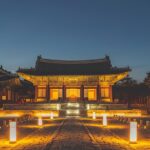
Then you get to one of the most memorable ideas on the schedule: Donggung Palace and Wolji Pond, famous for its night view. Even if you’re not a “night person,” this stop is built for photos and atmosphere.
Finally, you stroll Woljeonggyo Bridge at night, which is paired with that same evening viewing route vibe.
If you want to get the most out of Gyeongju, keep your museum and temple time flexible in your mind. This is less about “one perfect sight” and more about letting the Silla sites build a pattern.
You can also read our reviews of more tours and experiences in Seoul
Pohang to Jeonju: pagodas, mountain air, and real food culture
Day 6 shifts geography and feels like a “Korea by layers” day. After breakfast in Gyeongju, you head toward Maisan Mountain. The tour notes the mountain’s shape as horse-ear-like, and you also stop at a Maisan observatory along the way. Then you go to Tapsa Temple.
Tapsa Temple is known for its stone pagodas—over 80—built by Lee Gapyong, a retired scholar. That specific detail helps. Instead of seeing a generic temple, you’re seeing a whole stone collection shaped by one person’s long-term plan.
Then you land in Jeonju, which the tour basically treats as a food city. You’ll try bibimbab, and there’s also time to explore traditional spaces.
You then visit Gyeonggijeon Shrine, built in the early Joseon era and associated with the founder king Tae-jo. After that comes Jeondong Catholic Church, tied to Roman Catholic martyrs of the Joseon dynasty. Even if you’re not religious, the historical context makes the site feel grounded in Korea’s layered past.
From there, you get viewpoint time at Omokdae and Imokdae, observatories inside the Jeonju hanok area. It’s a practical stop: it helps you “place” the village you’ve been walking through.
And then you eat. The plan includes supper at 옛촌막걸리 삼천점, a Korean-style pub focused on rice wine. The tour description emphasizes that the more you order rice wine, the more side dishes appear on the table up to a certain count. This is a fun way to try multiple bites without feeling like you’re ordering random stuff.
Seoul day by day: palaces, hanoks, markets, and Namsan views
Seoul starts on Day 7 with a transfer from the south. The tour includes a stop at Suwon Hwaseong Fortress on the way back. Hwaseong is a UNESCO site tied to Joseon-era regional administration and city protection. It’s also a place where food culture shows up quickly—near the fortress are Suwon fried chicken streets with many fried chicken shops.
Then you’re in Seoul for Day 8, and the pacing works because it mixes big sights with snackable breaks.
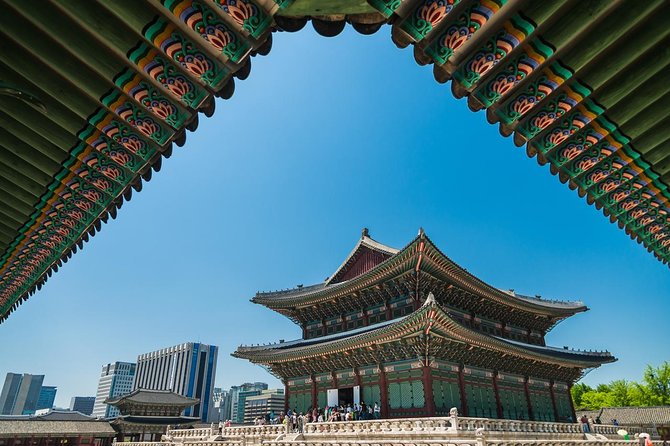
You begin at Gyeongbokgung Palace, the first and largest palace built by the Joseon Dynasty (as described in the tour). Insadong follows, a shopping and art area where older crafts sit near galleries.
Next is Bukchon Hanok Village, a hanok neighborhood with hundreds of traditional houses close together. Expect a bit of a maze: that’s the point. It’s less about one building and more about walking streets that feel preserved.
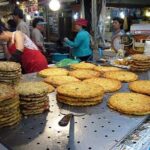
Then comes Kwangjang Market—over 100 kinds of food mentioned, including mungbean pancakes, Korean donuts, gimbap, ddeokbbokki, and fruit juice. This is your practical “eat your way through Seoul” moment, without paying restaurant prices for every bite.
After lunch chaos, you take the calmer view route: N Seoul Tower for a 360-degree city view. The tour notes the height and that it sits on/near Namsan Mountain, which makes it a clean “orientation” stop for first-time Seoul visitors.
You wrap with Jogyesa Temple, described as meaningful to Seoul because it is among the first Buddhist temples built in the city center. It’s also tied to festivals depending on the season, which can make it feel alive even when you’re just passing through.
DMZ day: the one regulated stop you should plan to take seriously
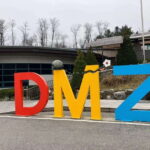
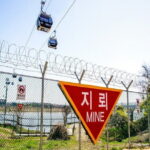
Day 9 is the DMZ. This is not a casual outing, and the schedule shows it. Entry involves procedures inside a military zone.
The tour notes key rules:
- No reservation for DMZ tickets
- First come, first served
- You need an early meeting time
That’s the biggest practical takeaway. Don’t treat this as a “sleep in and stroll over” day. Build buffer time into getting ready, because entry is the bottleneck.
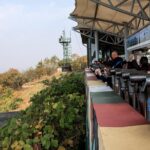
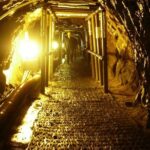
The DMZ portion includes The Third Tunnel, where you can go down and inspect the tunnel area. Then you visit Dora Observatory, where you can see North Korea with binoculars and view locations like Gaeseong city and the industrial complex area mentioned in the tour description.
You also stop at Tongil Park (Unification Park), described as the only village in the civilian control zone where people live. You can also shop for DMZ-related items there, though the main value is the setting and the reality check.
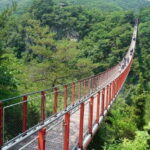
There’s also a final nature walk at Gamaksan Chulleong Bridge, with a short hike and views tied to the Korean War battlefield context. The shift from strict security to scenic walking is jarring in a good way.
Seoul’s last nights: NANTA comedy and a hands-on k-cooking class
Your final two days lean into two different kinds of Korean fun: performance and food you make with your own hands.
Day 10 starts with Cookin’ NANTA (Myeongdong). It’s a non-verbal comic show using Korean traditional rhythm, described as a fusion style. This is a great closer because it doesn’t require language skills, and Myeongdong itself gives you a sense of Seoul street-life after.
Next is the small group k-cooking class. The menu changes every month, but the tour specifically lists examples like bulgogi, gimbab, kimchi, and pancakes. Even if you’ve eaten these dishes a hundred times at home, you’ll get better at explaining what you tasted because you’ll be making parts of it yourself.
The tour also includes Seonyudo by the Han River for walking with panoramic Seoul views. It’s a good break after a long day of cooking and eating.
Then you finish with Myeongdong Shopping Street, where you can find street food vendors and shops. It’s the “last chance to buy snacks for the flight home” type of stop.
Price, value, and who this trip fits best
This $3,800 price tag looks high until you map what it includes:
- domestic flights (Gimpo to Jeju, and Jeju to Busan)
- 9 nights in 3.5–4 star accommodation
- 7 breakfasts, 7 lunches, and 2 dinners
- entrance fees on the plan
- an AC vehicle and an English-speaking guide
- the Golgulsa temple stay night
- the DMZ visit included in the schedule
If you were to do this yourself, the flights and DMZ logistics alone would cost time and money. You’d also spend hours figuring out temple timings, palace entry rules, and which markets are actually worth your stops.
This tour fits best if you:
- want a structured route that hits Jeju, Busan, Gyeongju, Jeonju, and Seoul without planning fatigue
- like mixing food with history
- can handle a busy pace and possible weather-based schedule pivots
- prefer English-speaking guidance over solo navigation
It might be less ideal if you want slow travel, zero hiking, or total schedule certainty no matter what.
Should you book this 10-day Korea tour?
If your idea of a great trip is variety—volcano scenery, Silla temples, markets, Seoul views, and one serious DMZ day—then this is a strong fit. You’re also getting value through the big-ticket pieces: flights, included admissions, meals, and that one temple stay night.
I’d only hesitate if you dislike fast schedules or hate the idea that weather can alter flight timing and the plan may adjust. If you’re the flexible type and you want one guide-threaded route through Korea’s highlights, book it.
FAQ
What’s included in the tour price?
The tour includes an AC vehicle, an English-speaking tour guide, 9 nights in 3.5–4 star accommodation, entrance fees on the plan, domestic flights (Gimpo to Jeju and Jeju to Busan), 7 breakfasts, 7 lunches, and 2 dinners, plus 1 night at Golgulsa Temple Stay. Mobile ticket and pickup are also offered.
Are all meals included?
No. The plan includes 7 breakfasts, 7 lunches, and 2 dinners. Meals that are not on the plan are not included, so you’ll eat on your own at those times.
What happens if flights are delayed or cancelled due to weather?
The tour states that weather can delay or cancel the flight, and in that case the itinerary can be changed and you’ll do something else with the guide’s assistance.
Does the tour include DMZ entry?
Yes. DMZ is included, along with visits to the Third Tunnel, Dora Observatory, Tongil Park, and a short hike near Gamaksan Chulleong Bridge.
What are the DMZ entry rules on this tour?
The tour notes that there is no reservation for DMZ tickets and entry is first come, first served. You also need an early meeting time.
What kind of ticketing do I get?
You’ll receive a mobile ticket, and admission fees for the scheduled stops are included on the plan.
![Andong Hahoe Folk Village [UNESCO World Heritage] Private Tour from Seoul - The 7:30am Pickup and the Long Road That Makes the Day Work](https://m.discoveringseoul.com/wp-content/uploads/andong-hahoe-folk-village-unesco-world-heritage-private-tour-from-seoul-400x266.jpg)