REVIEW · SEOUL
Seoul History Walking Tour
Book on Viator →Operated by CompassTour · Bookable on Viator
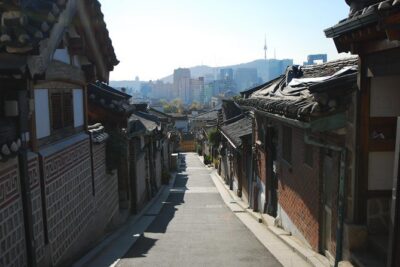
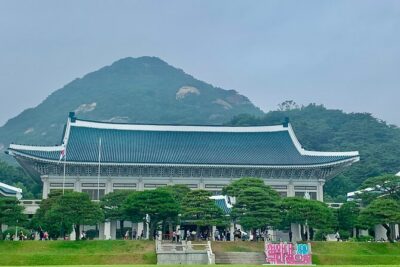
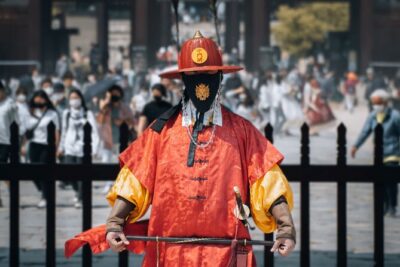
Seoul history turns street corners into lessons. This Seoul History Walking Tour links the Joseon Dynasty to modern democracy with an Australian guide and a steady story route through the city’s historic center.
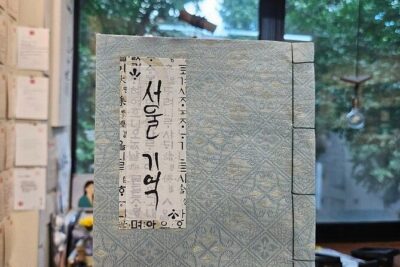
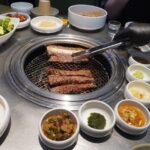
One of the biggest wins is how you get meaningful history at free stops, so you’re not juggling extra tickets. I also like that the tour includes traditional Korean snacks and an informative memento, which makes the three-plus hours feel complete.
A small consideration: it’s still a walking tour, and bottled water isn’t included, so plan for that if you’re sensitive to heat or sun.
In This Review
- Key highlights you’ll actually feel on the walk
- A 3.5-hour Seoul history walk with an Australian guide
- Pricing and pacing: what $26.60 buys you
- Bosingak Bell Pavilion: the city bell math (28 at night, 33 in the morning)
- Cheonggyecheon Stream through Joseon, war, and today
- City Hall, Seoul Plaza, and Jeongdong Observatory: reading modern Seoul
- Deoksugung Doldam-gil and Jungmyeongjeon: palace views and forced surrender
- Ewha Museum to Former Russian Legation: women’s education and royal escape
- Admiral Yi and King Sejong statues: heroes placed in Seoul context
- Gwanghwamun Square, rooftop history, and the Japan Embassy protest trail
- Jogyesa Temple bells: ending with big questions
- Who this tour suits best (and who should skip it)
- Should you book the Seoul History Walking Tour?
- FAQ
- How much is the Seoul History Walking Tour?
- How long does the tour take?
- What time does the tour start, and where is the meeting point?
- Where does the tour end?
- What group size should I expect?
- Are admission tickets included for the stops?
- What’s included in the price?
- Is bottled water provided?
- Do I get a mobile ticket and when do I receive confirmation?
- What is the cancellation policy?
Key highlights you’ll actually feel on the walk
- Bosingak Bell Pavilion: the 28-at-night, 33-in-the-morning mystery explained
- Cheonggyecheon Stream: how one waterway carried Seoul through Joseon, the Korean War, and today
- Jeongdong Observatory + city hall viewpoints: learn to read the cityscape from key perches
- Deoksugung Doldam-gil: a stone-wall romance legend that ties into place and culture
- Admiral Yi Sun-sin + Sejong the Great statues: major figures placed in their Seoul context
- Rooftop time at the National Museum of Korean Contemporary History: history, but with a skyline view
A 3.5-hour Seoul history walk with an Australian guide
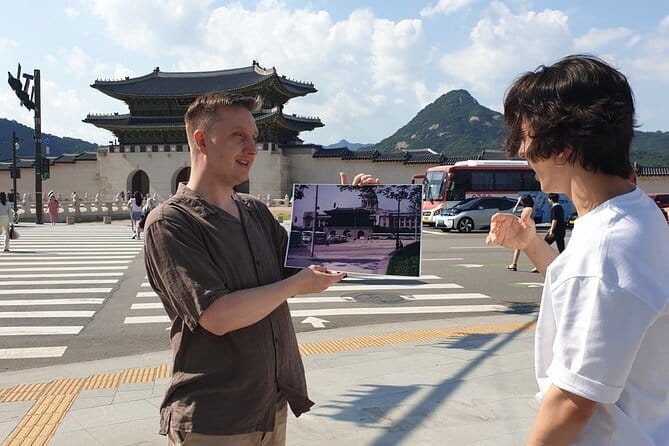
This tour is designed for people who like history that feels lived-in, not just memorized. You’re walking across the central parts of Seoul, following the idea of how the city changed from Korea’s Joseon roots into a modern global powerhouse.
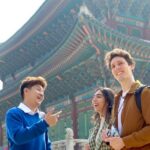
The guide is Australian (and on this experience you may meet Eric, noted for being able to answer questions clearly). That matters more than you’d think. When you can ask why a place matters, you stop treating landmarks like photo stops and start understanding them like chapters.
With a maximum group size of 8 people, the pace stays human. It’s long enough to cover a lot, but structured so you don’t feel rushed from one story to the next.
You can also read our reviews of more walking tours in Seoul
Pricing and pacing: what $26.60 buys you
At $26.60 per person for about 3 hours 30 minutes, this is good value if you care about context. You’re not paying for museums along the way; the stops are presented with free entry at each listed point, which keeps your spending predictable.
Two other practical money-savers: you get traditional Korean snacks included, and the tour uses a mobile ticket (so you’re not fussing with paper receipts). There are also group discounts, which can help if you’re traveling with friends.
One more timing detail worth noting: this tour tends to be booked around 81 days in advance on average. That doesn’t mean it always sells out instantly, but it’s a good sign that people plan this as a key Seoul activity rather than a last-minute add-on.
Bosingak Bell Pavilion: the city bell math (28 at night, 33 in the morning)
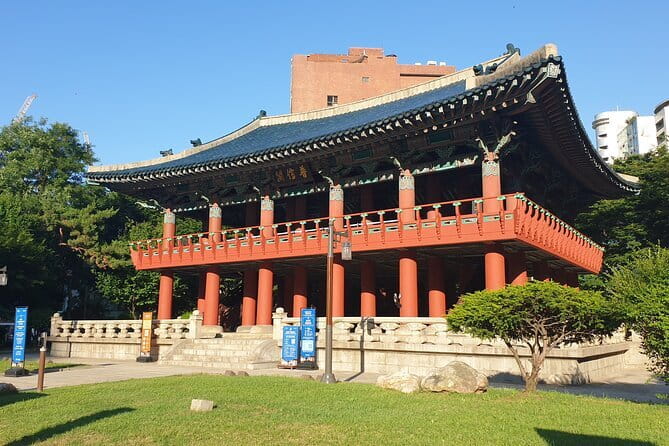
You start at the Bosingak Bell Pavilion near Jong-ro, and the first question sets the tone: why did the city bells ring 28 times at night and 33 times in the morning?
That’s the kind of detail that turns into real understanding fast. City bells weren’t random drama; they were signals for daily life—timekeeping, routine, and order. Once you start looking at public sound and public space as tools governments use, you’ll spot that theme again later in the walk.
Practical tip: the meeting spot is a clear landmark area, and since the tour starts at 2:30 pm, you’re more likely to be watching the area’s rhythm rather than timing the bell itself. Still, the story gives you the right frame for what you’re seeing.
Cheonggyecheon Stream through Joseon, war, and today
Next comes the Cheonggyecheon Stream, where you’re asked what the stream provided Seoul across major eras: the Joseon Dynasty, the Korean War, and modern times.
Waterways are an underrated way to understand a city. They often act like survival infrastructure, and they also show what’s prioritized—daily life, defense, rebuilding, and cultural memory. The tour’s angle helps you see Cheonggyecheon as more than a pretty corridor. It becomes a timeline.
What I’d watch for: how people use the stream area today compared with how you imagine it used in earlier periods. Even if you don’t get every historical detail at once, the comparison helps the big picture stick.
City Hall, Seoul Plaza, and Jeongdong Observatory: reading modern Seoul

The middle section shifts from “old Seoul” into how the city organizes itself now.
At Seoul City Hall, you’ll spend a short moment on an architectural question: how it’s an architectural gem both inside and out. That’s not just design talk. Civic buildings often show what leaders want a city to communicate—values made visible.
Then you reach Seoul Plaza, with a question about how the plaza reflects the hearts of modern citizens. Plazas are where public life becomes physical: where events happen, where people gather, and where politics becomes visible in everyday steps.
Finally, you visit Jeongdong Observatory, a perch meant to answer a simple-sounding question: how much of the palace and cityscape reveals itself from this perch? That’s a key strategy for Seoul. From a viewpoint, you start noticing which areas line up with power, administration, and historical centers. You’ll likely start seeing patterns even between stops.
If you get tired easily, this is a good moment to reset your legs. The tour includes enough small stops that you can pause briefly and still feel like you’re moving forward.
You can also read our reviews of more historical tours in Seoul

Deoksugung Doldam-gil and Jungmyeongjeon: palace views and forced surrender
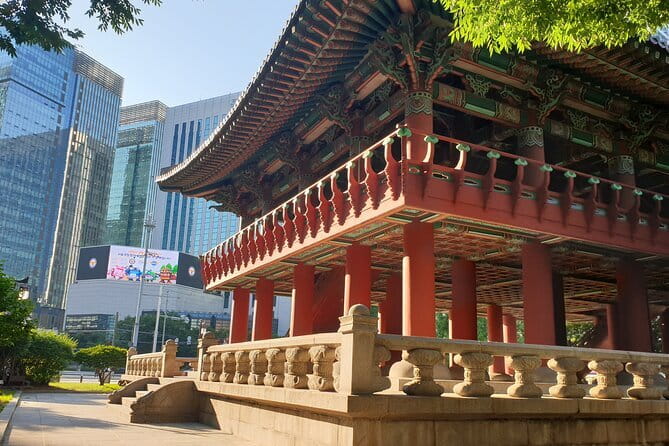
At Deoksugung Doldam-gil, the tour leans into local storytelling with a question about a stone wall and a marriage legend—walking along it with your spouse is said to lead to divorce. Humor aside, the takeaway is cultural: Korea uses place-linked stories to turn routes into memory.
Right nearby, the walk moves into heavier territory at Jungmyeongjeon Hall. Here the question is direct: how Imperial Japan forced Korea to surrender independence. This is where the tour doesn’t treat history like scenery. It’s about power, coercion, and loss of sovereignty.
A balanced approach matters here. If you’re new to Korean modern history, you may find yourself wanting more details than the walk provides. That’s normal. Use what you’re given as a starting map, then follow your curiosity afterward—because the sites themselves are clear invitations to keep learning.
Ewha Museum to Former Russian Legation: women’s education and royal escape
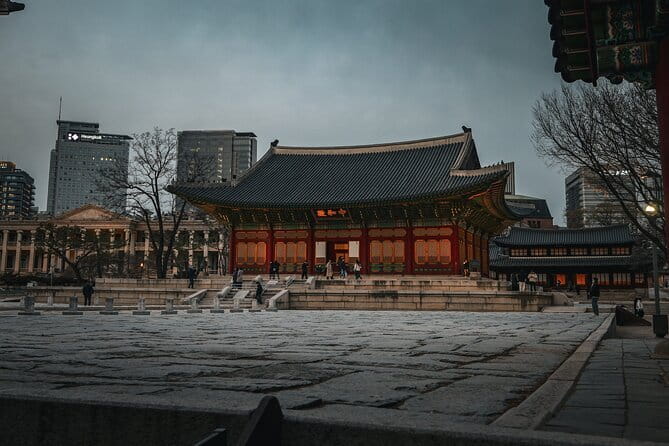
The walk continues with Ewha Museum, centered on how Korea’s first school for girls changed societal views on women’s roles.
That stop adds an important lens: history isn’t only treaties and armies. It’s also education and the slow movement of social expectations. When you connect an education story to the later democracy and independence themes, you start to see how change spreads through institutions.
Then comes the Former Russian Legation, tied to a dramatic question: why Korea’s penultimate monarch fled the palace in the middle of the night and stayed here for a year.
Even without a deep lecture, you’ll feel the tension in a legation building like this. It’s a foreign-influenced space holding a Korean personal story of fear, urgency, and survival. The tour’s framing helps you understand why diplomatic spaces mattered during times of pressure.
If you’re a photo person, this is one to take slowly. Look at the setting and think about how a person could go from palace life to sudden flight.
Admiral Yi and King Sejong statues: heroes placed in Seoul context
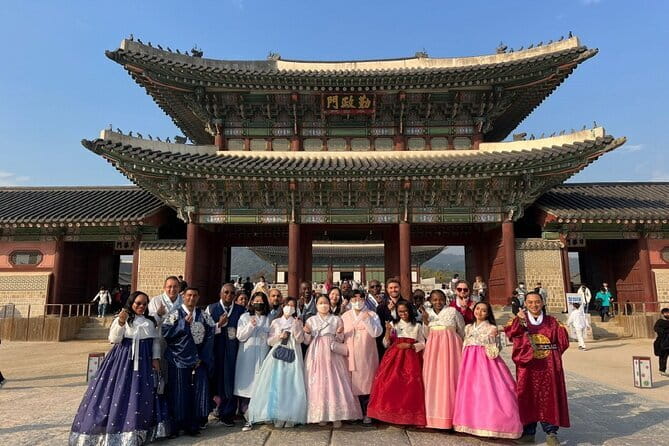
Two of the stops are statues, and that might sound simple until you consider what the guide is doing with them. Statues can become empty if you don’t know what they represent. Here, each one comes with a big question.
First, you’ll see the Statue of Admiral Yi Sun-sin, with a prompt about how this general saved Korea and changed the course of world history. That wording is a hint at the scale of his reputation—this isn’t just local pride.
Then you reach the Statue of Sejong the Great, asked as a basic but powerful question: why Sejong is considered the greatest king of the Joseon Dynasty. When you hear that in context of Seoul’s historic center, Sejong starts to feel less like a textbook name and more like a reason people still talk about Joseon culture.
Practical advice: statues are best when you read them like anchors. Spend your minute or two looking for what’s emphasized—stance, direction, framing—and then let the guide’s explanation turn it into meaning.
Gwanghwamun Square, rooftop history, and the Japan Embassy protest trail
The tour then leans hard into modern Korea’s civic struggle, especially democracy.
At Gwanghwamun Square, you’ll get a question about how many protests it takes to change a democracy. That’s a loaded idea, but it’s also one of the most memorable ways to teach democracy: not as theory, but as action that costs something and happens repeatedly.
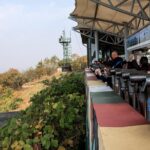
Next, you visit the National Museum of Korean Contemporary History, where the highlight is how much history you can see from the rooftop. Museums often get sold as indoor time, but a rooftop can connect the story to the city around it. When you look outward, it helps you place political change in real geography.
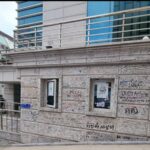
Then comes the Embassy of Japan, explained through a striking detail: it’s the site of the world’s longest running protest. That’s one of those facts you remember because it’s unusual. It also anchors the tour’s bigger theme: Korea’s modern struggle for democracy against dictatorship doesn’t stay in the past.
If you’re sensitive to political topics, pace yourself here. This section is where emotion enters the walk. The best way to handle it is to let it be part of your learning, not a burden.
Jogyesa Temple bells: ending with big questions
The final stop is Jogyesa Temple, where the question is almost spiritual: how does the ringing of bells connect us with the universe?
Even if you’re not into religious practice, the tour’s approach makes this feel human and reflective rather than preachy. Bells are sound you can’t ignore; they set rhythm. You end the tour with a sense that history isn’t only recorded in documents. It also lives in daily rituals, even when the city changes around them.
The tour ends near where it began, and your guide helps with directions. That’s a nice design because after a walking history tour, you don’t want to guess your exit route.
Who this tour suits best (and who should skip it)
This is a great fit if you want:
- A structured 3.5-hour walk through central Seoul with lots of story questions
- History that connects Joseon-era themes to modern democracy and civic action
- An experience with free entry stops and included snacks
It’s less ideal if you:
- Need lots of indoor time or full museum hours (this is built around walking points)
- Want heavy factual depth at every site rather than guided framing and prompts
- Prefer your tours without political themes, because the democracy and Japanese occupation topics are part of the route’s backbone
Should you book the Seoul History Walking Tour?
Yes, I’d book it if you like walking with a guide who can answer questions and you want Seoul’s history organized into a clear, memorable route. The value equation is strong: $26.60 for 3.5 hours, snacks, an informative memento, and multiple free entry stops makes it easy to justify.
Before you go, think about your own style. If you learn best by connecting places to stories—and seeing how one era leads to the next—this tour is set up for you. Bring your own water since bottled water isn’t included, wear shoes you can stand in, and plan for an afternoon that’s more about understanding Seoul than just collecting photos.
FAQ
How much is the Seoul History Walking Tour?
The tour costs $26.60 per person.
How long does the tour take?
The duration is about 3 hours 30 minutes.
What time does the tour start, and where is the meeting point?
The tour starts at 2:30 pm. The meeting point is the Bosingak Bell Pavilion, 54 Jong-ro, Jongno District, Seoul.
Where does the tour end?
The tour ends at Jogyesa Temple.
What group size should I expect?
The tour has a maximum of 8 travelers.
Are admission tickets included for the stops?
The tour lists admission for each stop as free.
What’s included in the price?
You get traditional Korean snacks and an informative memento of the tour.
Is bottled water provided?
No. Bottled water is not included.
Do I get a mobile ticket and when do I receive confirmation?
The tour includes a mobile ticket, and confirmation will be received at the time of booking.
What is the cancellation policy?
You can cancel for a full refund if you cancel at least 24 hours before the experience’s start time. Free cancellation is available up to that cutoff time.