REVIEW · SEOUL
Seoul E-bike Tour
Book on Viator →Operated by We Ride Korea Bicycle Tours · Bookable on Viator
Seoul on an e-bike feels like a cheat code. In about 3 hours, I rode past major landmarks and quieter backroads, with the assist of an electric bike that keeps the pace fun instead of sweaty. The small group size and route planning also help you move through the city without feeling swallowed by crowds.
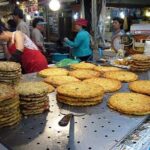
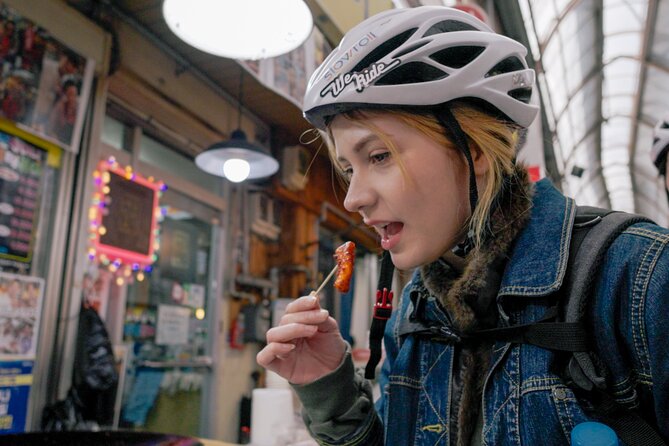
What I like most is how the tour blends big-picture sights with local life. You start with city landmarks, then you hit a traditional market for snacks like tteokbokki and rice-cake bites, and you learn how these places fit into Seoul’s everyday rhythm. Plus, guides such as TJ and Harry take lots of photos as you go, and you get those images afterward.
One consideration: you’ll be on the bike for the full route time, and you’re asked to arrive 20–30 minutes early for fitting and safety briefings. Also, this activity depends on decent weather, so plan to be flexible.
In This Review
- Key highlights worth your attention
- E-bike Seoul in 3 hours: fast, fun, and actually manageable
- Getting set up at Le Meilleur Jongno: safety, fitting, and the little prep win
- Cheonggyecheon Stream to Gyeongbokgung: Seoul’s postcard core
- Tongin Market and Seochon: snacks, street food energy, and old Seoul defenses
- The Blue House area and Bukchon Hanok Village: photo time with less effort
- Jogyesa Temple finish: a calm landing after city-speed riding
- Price and value: what $120 buys you (and what it doesn’t)
- Who should book this Seoul e-bike tour, and who should skip it
- Practical tips to make your ride better tomorrow
- Should you book it?
- FAQ
- How long is the Seoul e-bike tour?
- How much does the tour cost?
- How many people are in a group?
- What’s included with the ticket?
- Do I need to buy admission tickets at the stops?
- What should I bring?
- What happens if the weather is bad?
Key highlights worth your attention
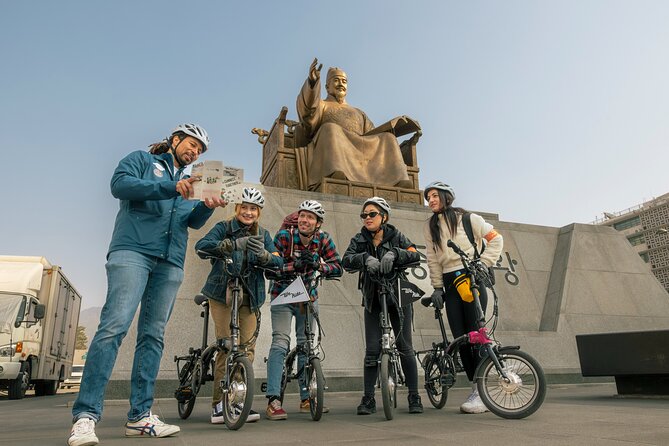
- E-bikes make the whole route doable: electric assist helps you cover more ground without draining your legs
- Market snack stop is the real palate reset: you’ll sample local Korean foods while walking through a traditional market
- Guides build in photo opportunities: TJ and Harry (and others) take frequent pictures and share them later
- You hit classic sights plus neighborhoods: Cheonggyecheon Stream, Gyeongbokgung Palace area, Seochon, Bukchon, Jogyesa
- Mostly bike lanes and smart timing: the route is set up to avoid the worst crowd spikes
- Max group size is capped at 15: small enough to feel personal, not chaotic
E-bike Seoul in 3 hours: fast, fun, and actually manageable
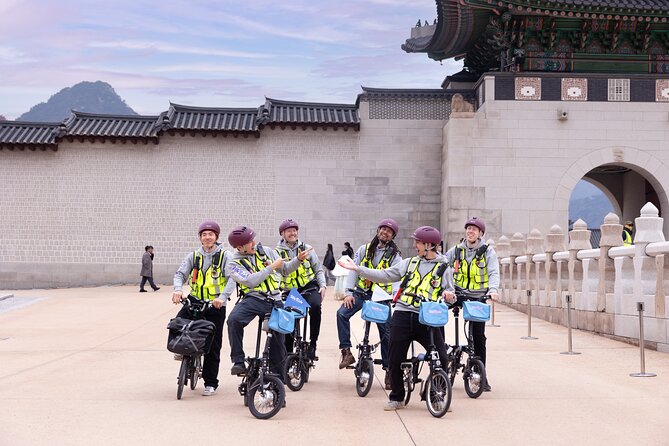
If you only have a half day, walking can turn into a cardio contest with long waits and sore calves. This tour solves that with electric assist, letting you cover Seoul’s top attractions without arriving tired and cranky. You get to see more than you would on foot, but you’re still moving at a human pace, not stuck on a bus staring through glass.
And because the route is planned to dodge the worst of the crowds (plus you start early), you spend more time looking at the city and less time inching along with everyone else. The “mostly bike lanes” part matters too. It cuts down on the stop-and-go stress, and it keeps your head up for views, gates, streams, and old streets.
Most importantly, the tour is built for people with moderate physical fitness. The e-bike does the heavy lifting; your job is to stay alert, follow the guide, and enjoy the ride.
You can also read our reviews of more cycling tours in Seoul
Getting set up at Le Meilleur Jongno: safety, fitting, and the little prep win
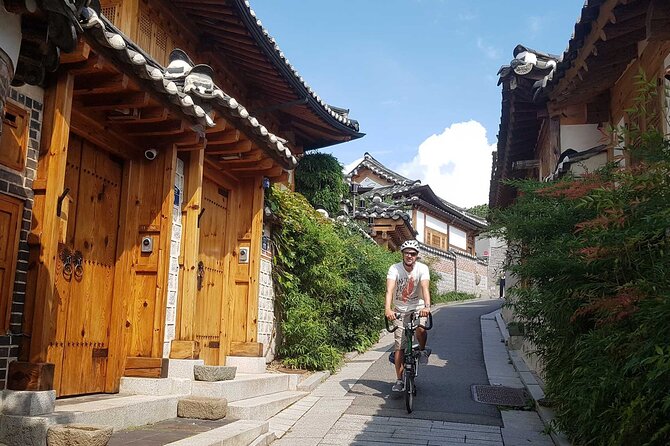
The meeting point is Le Meilleur Jongno Town near Jongno. Plan to arrive 20–30 minutes early. That time isn’t wasted. You’ll be prepared, educated on riding basics, and your bike will be fitted before you roll.
The tour includes safety equipment: a helmet and safety vest. You also get comprehensive insurance. In practice, that means the ride feels organized from minute one, not like you’re handed a bike and pointed in a direction.
This isn’t a take-a-chance situation in traffic. The guides guide. More than one guide name pops up in tour memories—Vincent, Taejin, Jun, Hagar, Limmi, TJ—but the consistent theme is careful group control and steady pacing.
If you’re traveling with a service animal, this tour allows it. It’s also listed as being near public transportation, which makes it easier to slot into a day without complex logistics.
Cheonggyecheon Stream to Gyeongbokgung: Seoul’s postcard core
The route kicks off with a classic start point: Cheonggyecheon Stream. It used to be a major waterway for the city, and even in just a short stop, you can feel why people love coming here. You’ll pause briefly to enjoy the scenery and learn a bit about the history and role of the stream in Seoul’s story.
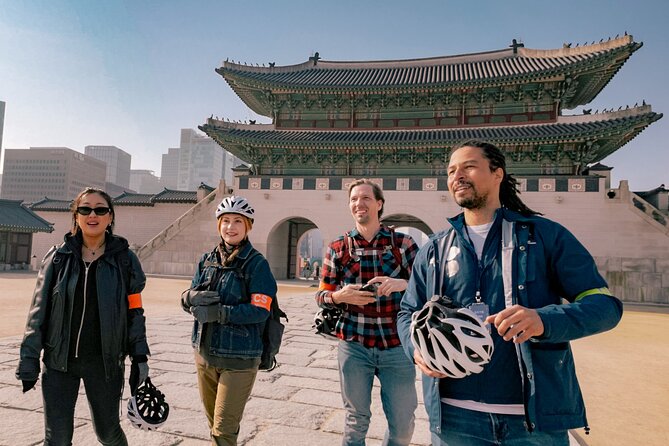
Then you roll to Gyeongbokgung Palace, one of Seoul’s most iconic royal sites. The goal here isn’t a slow museum crawl. It’s a quick, high-impact introduction: you’ll check out the grand gate area and soak up the atmosphere. If your timing lines up (and it often does on these routes), you may also catch the changing of the guard moment—one of the most memorable bits from past riders.
How to get value from these short stops:
- Stand where the guide recommends so you don’t end up blocked by the crowd.
- Treat it like a sighting mission: get the key photo, then let the guide’s context do the heavy lifting.
Because the stops are short (often around 10 minutes), you won’t see every corner. But you’ll leave with a clear sense of where you want to return later—without spending your whole trip in ticket lines.
Tongin Market and Seochon: snacks, street food energy, and old Seoul defenses
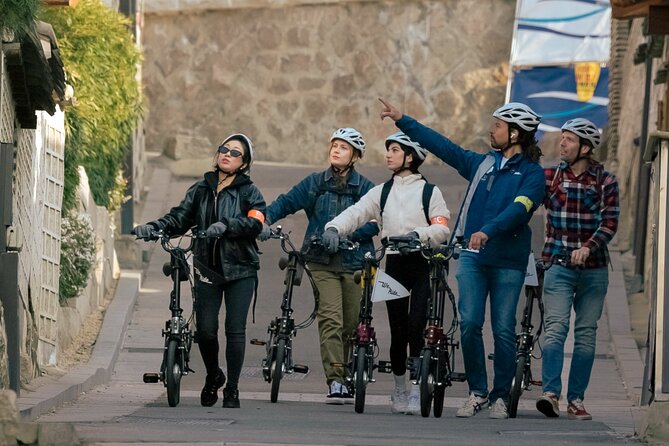
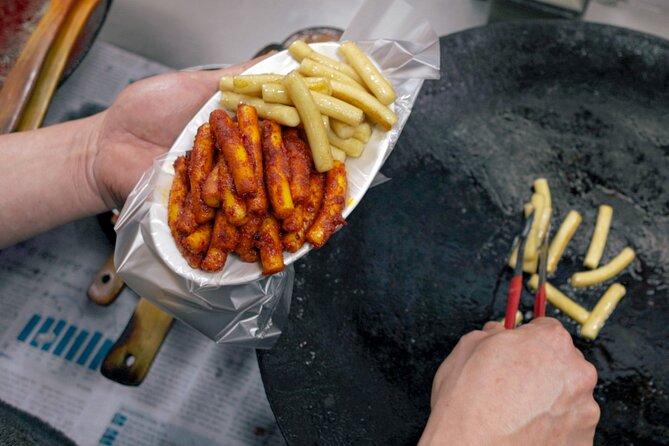
Next up is Tongin Market, where the tour shifts from monuments to eating. This stop is built for Korean street food moments, with recommendations from the local guide who knows what’s worth your time. In the snacks you may run into favorites like tteokbokki and other rice-cake and street-food bites.
You’ll get about 10 minutes at the market, which is just enough for a few tastings without turning into a food marathon. If you’re the type who loves trying new things but hates wasting time ordering, this is a good setup. You don’t have to decide everything; you follow the guide’s suggestions and sample what they pull together.
Then comes Seochon, a neighborhood with older defensive city-line vibes. You’ll get a short look and some walking time along an old route, plus you’ll pass the oldest surviving gate in the city wall. There’s also an optional hot drink mentioned during this stop, which can be a welcome reset if the weather’s cool or you’re feeling the wind.
A quick reality check: Seochon involves movement, and you’re on a bike the whole time. So wear shoes you trust. You’ll feel happier when you’re stepping around uneven surfaces for a short walk and not doing that careful tiptoe thing.
The Blue House area and Bukchon Hanok Village: photo time with less effort
The ride heads toward The Blue House (the presidential house area). The tour is designed to take you there by bike, which is a huge advantage versus trying to stitch together public transport plus walking. The stop is brief, but you get the framing and the context—enough to say you’ve seen it as part of Seoul’s modern and historical layers.
After that, you move into Bukchon Hanok Village, the famed hanok neighborhood. This is where Seoul’s traditional housing style really shows. You’ll have time for photos and quick sightseeing, and the e-bike makes it much easier to reach this zone without arriving sweaty and regretting the hillier stretches that come with it.
Bukchon tends to feel like stepping into a different version of the city, but the stop length means you’re mostly there for:
- photo-worthy viewpoints,
- quick visual context,
- and a sense of the maze-like streets you might want to explore more later.
If you’re hoping for a long, deep wandering session inside every alley, this tour won’t replace that. Think of it as an efficient introduction that helps you choose where to return with more time.
You can also read our reviews of more tours and experiences in Seoul

Jogyesa Temple finish: a calm landing after city-speed riding
The tour ends at Jogyesa Temple, a quieter, peaceful finish point. You’ll have about 15 minutes here, which works well as a decompression moment after the palace-and-market intensity.
Even if you’re not a temple expert, the atmosphere does the job. It’s a good time to slow your breathing, put your phone away for a minute, and just take in the setting. It’s also a nice contrast to the more ceremonial palace stops earlier.
When the tour ends, it returns back to the meeting point, so you aren’t left figuring out your next move. You can then continue your day on your own—grabbing more snacks, returning to a palace area you want to revisit, or heading to a different neighborhood.
Price and value: what $120 buys you (and what it doesn’t)
At $120 per person for roughly 3 hours, you’re paying for more than bike rental. You’re paying for:
- the e-bike (with electric assist),
- helmet and vest,
- comprehensive insurance,
- a local guide,
- and the market snacks tied to the traditional market stop.
You’re also getting guided timing. The route includes early planning to help you avoid the most overwhelming crowds, and it’s set up for a smooth ride mostly along bike lanes. That kind of orchestration is hard to replicate on your own if you don’t already know the city flow.
What’s not included: lunch. You’ll eat snacks, not a full meal. A reusable water bottle is required, so make sure you bring one—or plan to purchase water from the tour before you ride.
One more value add: photo coverage. In multiple experiences, guides like TJ and Harry are described as taking lots of pictures at the stops, including moments like the palace timing. Some tours also provide recommendations afterward, which helps you keep the momentum going after the ride.
You don’t need to be an experienced cyclist. But you should be ready for short stops, frequent movement, and a steady pace through a lot of Seoul landmarks.
Who should book this Seoul e-bike tour, and who should skip it
This tour is a great fit if you want:
- a high-efficiency overview of Seoul’s key historic and cultural areas,
- an easy-to-follow ride that still feels active,
- and a market-food stop that’s part of the schedule, not a random detour.
It also works well across ages. One past group described a mixed age range and still felt the ride was manageable because of the e-bikes and guidance.
You might want to skip it (or add a separate longer day) if you:
- want to spend hours inside palaces or museums, not quick look-and-photo time,
- prefer to set your own pace with lots of unstructured wandering,
- or are strongly dependent on a very flexible route with lots of extra time at each stop.
If your goal is to get oriented fast and decide what to revisit later, this is exactly the type of tour that helps you do that.
Practical tips to make your ride better tomorrow
Here are the choices that usually make the difference between a good ride and a great one:
- Bring a reusable bottle for water. You’re expected to have one, and hydration matters.
- Wear shoes you can walk in for short stretches. Some stops include brief walking on older streets.
- Listen for guide cues at busy points. Short stops mean you’ll want to be in the right spot quickly.
- Treat the market snack stop like a sampler, not a full meal. If you’re very hungry, plan another bite later.
- If you care about photos, stand where the guide suggests. Past experiences mention that guides actively help position people for better shots.
Also, keep an eye on the weather. This tour requires decent conditions, and if it’s canceled due to poor weather, you’ll be offered a different date or a full refund.
Should you book it?
I think this is one of the smarter ways to start a Seoul visit if you have limited time and want real highlights without the exhaustion of nonstop walking. The combination of e-bike convenience, short-and-sweet landmark stops, a traditional market snack moment, and guides who handle timing and photos makes the experience feel worth the $120 price tag.
Book it if you want an efficient, friendly orientation to Seoul that also feeds you and gives you directions for what to do next. Skip it if you want deep, slow exploration at each site. Otherwise, for a first pass through Seoul’s most famous neighborhoods, this is a strong choice.
FAQ
How long is the Seoul e-bike tour?
It runs for about 3 hours.
How much does the tour cost?
The price is $120 per person.
How many people are in a group?
The tour has a maximum of 15 travelers.
What’s included with the ticket?
You get use of the e-bike, safety equipment (helmet and vest), comprehensive insurance, snacks from the traditional market stop, and a local guide. You also need to arrive 20–30 minutes early for bike fitting and safety education.
Do I need to buy admission tickets at the stops?
Admission tickets are listed as free for most stops in the itinerary. The start stop is noted as admission ticket not included.
What should I bring?
You must bring a reusable bottle for water (or purchase one from the tour before the ride).
What happens if the weather is bad?
The experience requires good weather. If it’s canceled due to poor weather, you’ll be offered a different date or a full refund.
![Private Seoul Wall Trekking [Inwangsan, Bugaksan, Naksan Park, N-Seoul Tower] - Bugaksan Seoul Fortress: Northern Ridges Behind the Blue House](https://m.discoveringseoul.com/wp-content/uploads/private-seoul-wall-trekking-inwangsan-bugaksan-naksan-park-n-seoul-tower-400x267.jpg)