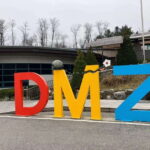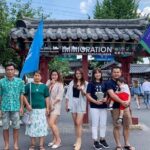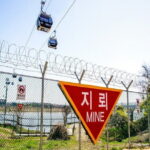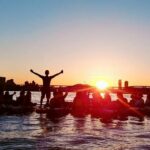
A border day with real weight. This private 9-hour trip from Seoul takes you into the DMZ story, then gives your brain a breather at Gamaksan’s suspension bridge.
I especially like how this tour is guided by Kevin Lee, who keeps things clear and practical, and I also like the people-centered stops at Imjingak where family separation is part of the visit, not just a footnote.
One thing to plan for: entrance fees are extra (listed as $7 per person), and meals aren’t included, so you’ll want to budget a bit more than the base price.
In This Review
- Key highlights at a glance
- Why this private DMZ + bridge day works
- Imjingak Peace Park: where separation becomes personal
- The Third Tunnel: scale you can actually picture
- Dora Observatory and Tongilchon-gil: seeing the divide up close
- Gamaksan Suspension Bridge: a tonal reset with real views
- War Memorial of Korea: context that makes the DMZ make sense
- Price and value: what $410 really buys you
- How to get the most out of the day
- Should you book this private DMZ + suspension bridge tour?
- FAQ
- How long is the DMZ and suspension bridge tour?
- Is hotel pickup and drop-off included?
- Are entrance fees included in the price?
- Is this tour private or shared?
- What days and times does the tour operate?
- Do I need to plan for meals?
Key highlights at a glance
- Private group up to 7 with hotel pickup and drop-off and a mobile ticket
- Kevin Lee’s approach: safe driving, calm pace, and strong English explanations
- Imjingak Peace Park built after the 1972 joint statement, including family-reunion memorial space
- Third Tunnel with real measurements (73 m deep, 1,635 m long) that make the scale feel concrete
- Dora Observatory on Dora Mountain, the northernmost South-side observatory for a close view of North Korea
- Gamaksan Suspension Bridge (45 m high, 150 m long) as a tonal reset after the harder DMZ stops
Why this private DMZ + bridge day works
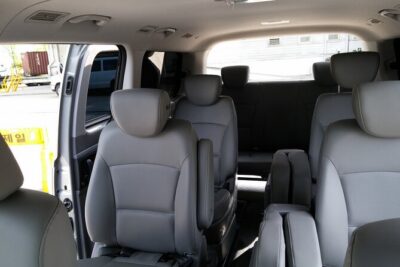
A lot of DMZ tours feel like a checklist. This one feels more like a guided story with stops that build on each other. You’re in a private group (up to 7), and the tour includes private transportation plus hotel pickup and drop-off, which matters in Seoul where time disappears fast.
The total time is listed as about 9 hours. That’s not just “time at sites.” There’s also driving and transitions—so you’ll want to plan your day around it, not treat it like a quick morning add-on. One more practical perk: you get a mobile ticket, so you’re not juggling paper on a busy day.
Price-wise, it’s $410 per group, not per person. For two or four people, that can feel steep compared to a public bus tour. But you’re also paying for guide time and private transport, and the math often starts to look better as your group size grows.
You can also read our reviews of more guided tours in Seoul


Imjingak Peace Park: where separation becomes personal
Imjingak Pyeonghoa-Nuri Peace Park is the emotional anchor of this outing. The park was developed soon after the 1972 joint statement, which gives the place a “hope + process” feel rather than only a “ruins + anger” feel. It also includes space tied to the Global Peace Festival held in 2005, which helps explain why this site isn’t only memorial—it’s also cultural.
The tour schedule gives you time here more than once, so you’re not forced to see everything in a rush. That repetition is useful. You’ll likely notice how the park frames the DMZ story: not as abstract politics, but as lives affected.
One of the most poignant parts is Mangbaedan, where dispersed family members—people born in North Korea or with hometowns there—come for Chuseok (Korean Thanksgiving) and Lunar New Year. The idea that a holiday calendar can carry grief and longing is the kind of detail you don’t forget after you leave.
What I like about this stop is that it gives you something to hold on to when the rest of the day gets “visual” (tunnels, observatories, border-adjacent views). When you’ve just stood near a place tied to family reunions across the divide, the later scenes hit harder, in a thoughtful way.
Possible drawback: this is heavy material. If you’re hoping for a light sightseeing day, you might find the emotional content draining. But if you want context, this is the part that provides it.
The Third Tunnel: scale you can actually picture
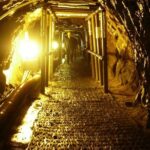
The Third Tunnel is one of the stops where the facts do a lot of work. It was discovered in 1978, about 52 km from Seoul, in the Paju administrative district. The tour points out physical details that make the story less like theory and more like engineering with consequences: the tunnel goes underground to a depth of 73 m, stretches 1,635 m, and is only 2 m wide.
Those numbers matter because they change how you imagine the “why” behind the DMZ. When you hear about tunnels in the abstract, your mind floats. When you see dimensions, the story becomes tighter and more believable—and more uncomfortable.
There’s also a practical advantage to having a private guide here. Even when crowds are an issue, you’re not stuck standing wherever the group is dumped. In real terms, having Kevin Lee manage timing can help you keep the experience moving without feeling like you’re racing other people for a few minutes of view time.
What to watch for: the tunnel site is still a real site with guided viewing points and pacing. Wear shoes you’re comfortable in, and don’t plan to sprint between every photo angle. You’ll get more from slowing down and listening to the explanation of what you’re looking at.
Dora Observatory and Tongilchon-gil: seeing the divide up close
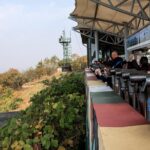
Dora Observatory sits on Dora Mountain inside the DMZ area and is described as the northernmost observatory in South Korea. From there, you get a close view of North Korea, with what’s directly ahead forming the main idea. That matters: this isn’t a “far away, good luck” viewpoint. It’s meant to make the border feel immediate.
This is also where your guide becomes more than a driver. The difference between a simple photo stop and an understanding-building stop is usually the explanation—what you’re looking at, how it fits into the broader DMZ reality, and why the location exists where it does.
The tour also includes Tongilchon-gil, also called Unification Village, which lies within the Civilian Control Line. The background here is specific: it was founded in 1973, starting with 40 households of veterans and 40 native households. Even if you never visit a place like this in your daily life, that founding detail gives you a sense of who the space was built for, and why “unification” is more than a slogan.
Why I think this pairing works: Dora Observatory gives you the “what you can see” piece, while Tongilchon-gil gives you the “who lived with the idea” piece. Together, they keep the day from turning into only spectacle.
Gamaksan Suspension Bridge: a tonal reset with real views
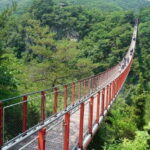
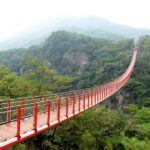
After the DMZ stops, the Gamaksan Suspension Bridge feels like a necessary palate cleanser—without turning the day into a joke. Gamaksan Mountain is listed as 675 m and part of the five rocky mountains in Gyeonggi Province. The bridge itself crosses a deep valley, spanning 150 m and rising 45 m high.
This stop is valuable for a simple reason: it lets your body and mind reset after absorbing border history. It’s a change of pace—still outdoors, still structured, but less about tension and more about open air.
It’s also a good reminder that this region isn’t only about conflict. Even on a day centered on division, you can still experience a clean, visual contrast: height, distance, and movement you control with your own steps.
If you’re with kids or teens, a bridge stop often helps keep attention from collapsing. One review mentioned a family visit with teens, and that tracks with the logic of pairing serious DMZ context with a more energetic walking break.
You can also read our reviews of more private tours in Seoul

War Memorial of Korea: context that makes the DMZ make sense
The tour includes an option connected to the War Memorial of Korea. This memorial exhibits and preserves materials related to the Korean War and is described as a national moral educational venue. In plain terms, this is where you connect today’s DMZ sights to the broader war story that created the division.
This stop is worth considering if you like your history with dates and documents. If you already know the basics and prefer the day to stay fast and visual, you might treat it as the “if we have time” add-on rather than a must.
Either way, it helps round out the day. A DMZ outing can otherwise feel like you’re staring at symptoms without understanding the cause. The War Memorial piece gives you a way to put the sites into one timeline, not separate ones.
Price and value: what $410 really buys you
At $410 per group (up to 7 people), the headline price is only half the story. What you’re actually paying for is:
- Guide time (the guiding fee is included)
- Private transportation
- Hotel pickup and drop-off
Entrance fees are extra, listed as $7 per person. Meals aren’t included, and traveler’s insurance isn’t included. That means your “final number” depends on your headcount and what you choose to eat.
Where this tour tends to be great value:
- If you have more than two people, the per-person cost drops quickly.
- If you’d rather pay for comfort and smoother timing than fight schedules and crowds.
- If you want an English explanation that links sites together, not just a drop-off at each gate.
Where you should double-check your budget:
- If you’re going as a couple and already planned a tight trip budget.
- If you’re sensitive to long days. This is listed at about 9 hours, and the gaps are mostly travel time between locations.
Also note the planning vibe: it’s said the tour is commonly booked about 30 days in advance. If your dates are firm, waiting can leave you looking at the calendar instead of the DMZ.
How to get the most out of the day
For a day this structured, your mindset matters. Go in with questions and a willingness to slow down for meaning, not just photos. When the day includes tunnel measurements, observatory geography, and family-related memorial space, the “why” is the real souvenir.
I like that Kevin Lee’s service is described as accommodating, and multiple comments highlight his comfort level and safety as a driver. That means you can focus on listening instead of worrying about timing, routes, or whether you’re going to feel rushed.
One more practical tip: because meals aren’t included, you’ll want a plan for lunch. In at least one experience, Kevin Lee was part of steering people toward a hearty Korean option like Army Stew. If you’re hungry mid-day, ask your guide for a solid nearby place that fits your pace.
And remember the tour runs roughly between 8:00 AM and 5:00 PM, Tuesday through Sunday. If you like sleeping in and late starts, this may feel early. If you’re an early-day person, you’ll likely appreciate how it uses daylight efficiently.
Should you book this private DMZ + suspension bridge tour?
If you want a private, guided DMZ experience that treats history as something human (family separation, peace efforts) and not just military hardware, I think you’ll be glad you booked. The combination of Imjingak, Third Tunnel, Dora Observatory, Tongilchon-gil, and then the Gamaksan Suspension Bridge gives you both the heavy and the break-your-brain moment.
I’d pass or at least consider alternatives if you’re chasing a relaxed sightseeing day, or if extra costs like $7 entrance fees per person and meal planning would stress your budget. This tour works best for travelers who are okay with a longer day and who want context, not just views.
FAQ
How long is the DMZ and suspension bridge tour?
The tour duration is approximately 9 hours, including travel time between stops.
Is hotel pickup and drop-off included?
Yes. Hotel pickup and drop-off are included, along with private transportation and guiding.
Are entrance fees included in the price?
Entrance fees are not included. The listed entrance fee is $7.00 per person.
Is this tour private or shared?
This is a private tour/activity. Only your group participates.
What days and times does the tour operate?
The tour runs Tuesday through Sunday from 8:00 AM to 5:00 PM.
Do I need to plan for meals?
Meals are not included, so you’ll need to arrange lunch or snacks during the day.