REVIEW · SEOUL
Namhansanseong UNESCO Historical Sites and Korean Folk Village-Private Tour
Book on Viator →Operated by Outdoors Korea · Bookable on Viator
A mountain fortress first, then a Joseon-era village. This private Namhansanseong and Korean Folk Village day is a smart combo of UNESCO site walking and hands-on Korean culture you can actually see. I love having a private, English-speaking guide to pace the day and explain what you’re looking at (from wall defenses to everyday house design), and I also love that lunch is included and chosen to your taste. The one possible drawback: you’ll do a fair amount of walking, so if you have knee issues or hate stairs, you should plan around the climb and uneven paths.
You’re based in Seoul, but this trip feels like you’re leaving the city behind. Namhansanseong sits on Namhansan Mountain about 24 km southeast of Seoul, and the Korean Folk Village is built to show how real people lived in the Joseon Dynasty. If your goal is mostly photos with minimal walking, this may feel like too much outdoor time in one day.
In This Review
- Key highlights at a glance
- How Namhansanseong and the Folk Village tell one story
- Private transport and a guide who actually adjusts
- Namhansanseong Fortress: UNESCO walls with mountain views
- The walk factor: steps, gates, and sensible shoe choice
- What to look for during the fortress visit
- Korean Folk Village: a Joseon-era village built from real houses
- Shows, martial arts, and how to spend your time inside the village
- Traditional lunch: included, pickable, and not everyone’s favorite
- Timing: what an 8 to 9 hour day actually feels like
- Price and value: is $198 per person worth it?
- Who this tour suits best (and who should reconsider)
- Should you book this private Namhansanseong and Korean Folk Village day?
- FAQ
- What time does the tour start?
- How long is the tour?
- Are tickets to Namhansanseong Fortress and the Korean Folk Village included?
- Is hotel pickup and drop-off included?
- What’s included in the price?
- Can I choose my lunch?
- Is this a private tour?
- Is there a cancellation option?
- What should I wear or bring for this day?
Key highlights at a glance
- Hotel pickup and drop-off so you don’t waste time figuring out transport
- Private guide conversation focused on what you see, not a scripted checklist
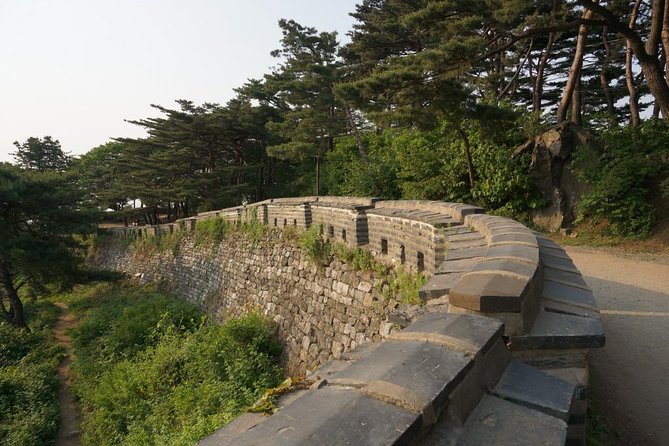
- Namhansanseong Fortress walking loop with UNESCO sites in a mountain setting
- Korean Folk Village Joseon houses moved and rebuilt with historical checking
- Traditional lunch included, with choice based on your taste
- Admission tickets covered and handled with a mobile ticket
How Namhansanseong and the Folk Village tell one story
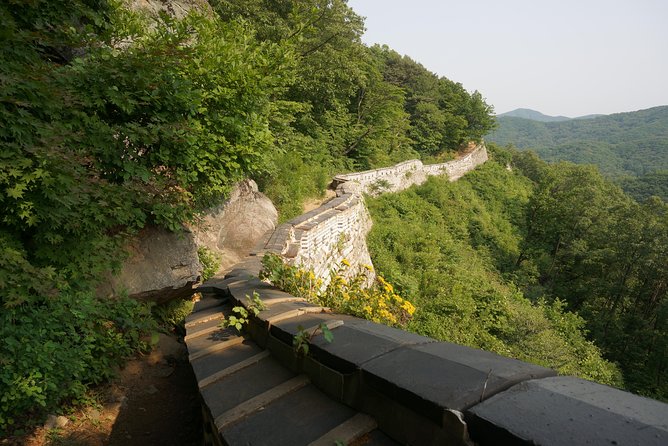
This is one of those rare day trips where two stops actually connect. Namhansanseong was built to defend Hanyang, the old name for Seoul, and it sits in the hills like a watchful line of history. Then the Korean Folk Village shifts the focus to home life in the Joseon era—commoners and aristocrats—so you leave with both “how they protected the kingdom” and “how they lived inside it.”
I like that the day doesn’t just throw buildings at you. With a private guide, you can ask real questions about why a fortress is laid out the way it is, and why house layouts, rooms, and daily routines matter. That back-and-forth turns it from sightseeing into understanding.
You can also read our reviews of more private tours in Seoul

Private transport and a guide who actually adjusts
This tour runs as a true private experience. You get pick-up and drop-off from your hotel in an air-conditioned vehicle, and you travel with a fluent English-speaking driving guide. The private format matters because the day has walking, and your pace needs to match your body, not a group’s schedule.
One big plus I’d bet on: flexibility. The guides credited on this route are praised for slowing down for older guests, families with babies, and people who need a steadier rhythm. In other words, you’re less likely to feel rushed or stuck playing catch-up.
Also, this includes a Korean traditional lunch. If you’ve had trouble in the past with “tour lunch” being bland or mismatched to your taste, you’ll appreciate that you can choose your lunch option.
Namhansanseong Fortress: UNESCO walls with mountain views
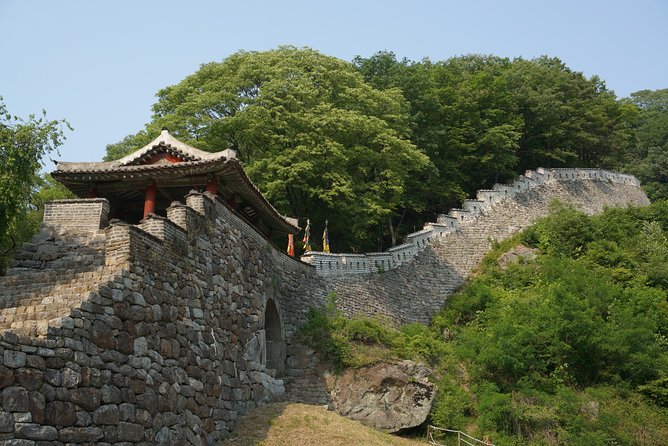
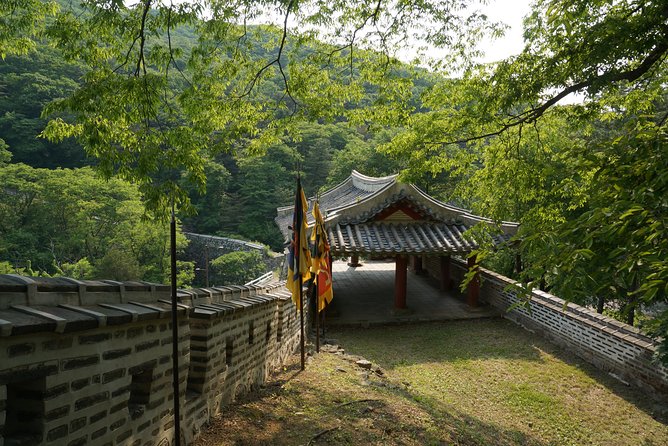
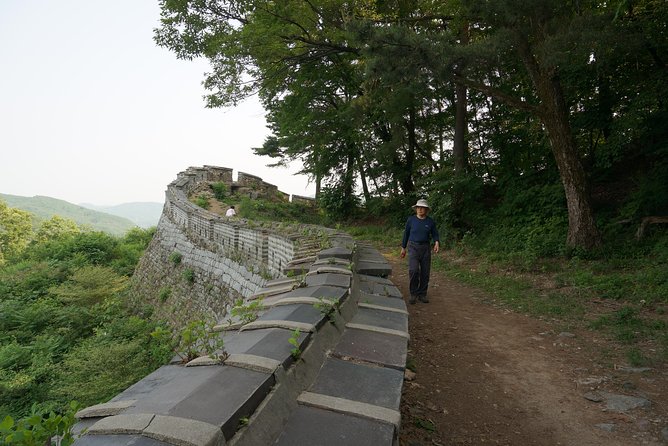
Namhansanseong Fortress is one of the major forts built to protect Hanyang (Seoul). It’s in Namhansanseong Provincial Park on Namhansan Mountain, about 24 km southeast of Seoul and close to Seongnam. The fortress area also links into a broader system of forts—Gaeseong, Suwon, Ganghwa, and Gwangju—each positioned in a different direction to guard the region.
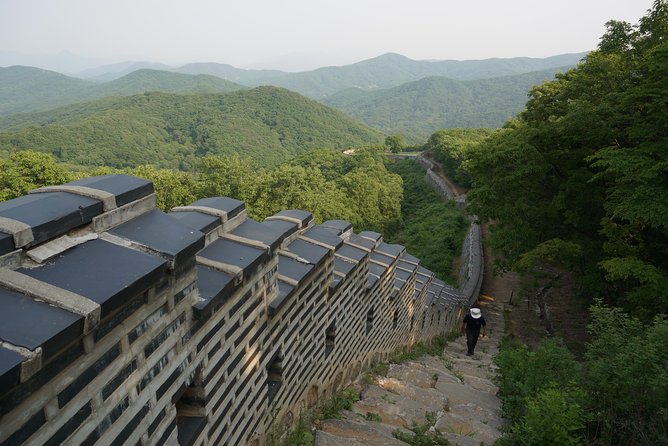
What makes it memorable is the structure of the place. The walking area totals about 12.4 km (main fortress about 8.9 km, external fortress about 3.2 km, and a smaller Sinnamsanseong section). You’re not just looking at one “pretty wall.” You’re moving through the fortress logic: gates, walls, and positions that were designed for defense.
It’s also UNESCO-listed, so the guide’s interpretation tends to be more than “this is old.” You’ll get the story behind the fortifications and why this site belongs in the UNESCO world heritage conversation. On days when the weather helps, you’ll also get mountain air and wide views that make the walking feel worth it.
The walk factor: steps, gates, and sensible shoe choice
Let’s talk reality: this is an active day. The fortress loop can be steep in sections, and the wall-walk between gates means you’ll be on your feet for quite a while.
If you’re thinking, I’ll just wear nicer shoes, don’t. Bring comfortable walking shoes with grip. One of the clearest pieces of practical advice from guests is simple: wear your most comfortable pair. Heated car seats are sometimes mentioned as a comfort detail on the drive, but once you’re outside, footwear is the real comfort.
A useful mental target: expect a lot of steps. One guest cited around 18K steps for the day, which is believable given the fortress walking plus the village area. If you want a smooth experience, plan for stamina, not just interest.
What to look for during the fortress visit
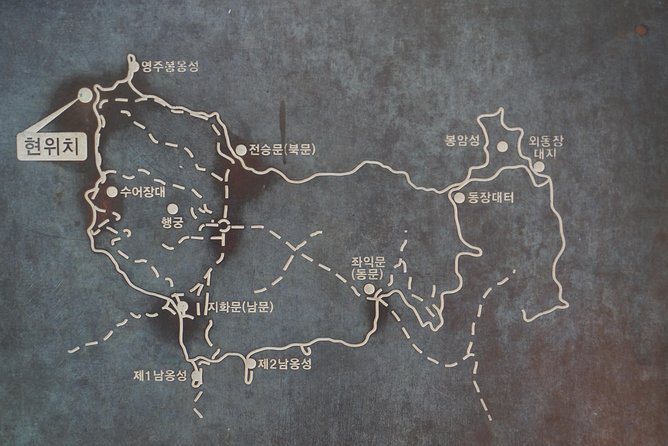
When you’re walking along an old fortification, it’s easy to miss what makes it meaningful. Ask your guide to point out the elements that show purpose. Here are the kinds of things that usually click for people on this stop:
- How gates and wall sections control movement and visibility
- Why the fortress is placed where it is, on a mountain rather than in the flat
- How Namhansanseong connects to the wider fort defense idea around Hanyang
If you’re into photos, you’ll likely find lots of angles along the wall and around the gates. Several guides on this route are also praised for helping with photography and even taking nice photos for guests. Even if you’re not chasing every shot, that kind of support helps you get decent pictures without turning the day into a camera mission.
You can also read our reviews of more historical tours in Seoul
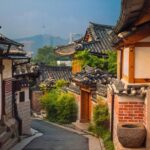
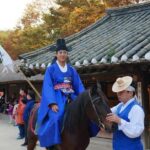
Korean Folk Village: a Joseon-era village built from real houses
After the fortress, the Korean Folk Village shifts the mood. Instead of defenses and walls, you get everyday life in Joseon period Korea—houses, social rank, and village routines.
The big selling point here is authenticity of the structures. The village is based on houses from the Joseon period, relocated from different provinces and reconstructed through surveys of remaining houses, plus authentication by specialists. So you’re not only seeing a modern theme park version of history. You’re walking through a village layout meant to reflect the period.
The setting helps too. The site spans about 990,000 square meters, described as a geomantic location facing water and backed by mountains. Even if you don’t focus on the spiritual framing, that “outdoor room” feeling gives the place room to breathe, like a real village area rather than a cramped indoor exhibit.
Shows, martial arts, and how to spend your time inside the village
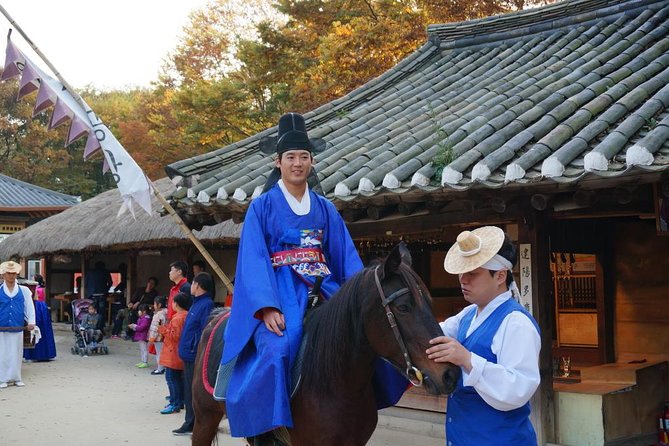
The Korean Folk Village isn’t just buildings. You can expect traditional performances that include martial arts and acrobatics, plus other traditional demonstrations like dance. It’s the kind of stop where your guide can point out what you’re seeing so it doesn’t become background noise.
For best value, don’t rush through the houses. Move slowly enough to notice differences between commoners’ homes and aristocrats’ homes. One of the most striking experiences people report is seeing how daily life differed by social rank, down to how homes were set up. That helps you understand the village as a system, not a list of attractions.
One word of honest caution: if you’re the type who wants purely “museum facts,” you may find parts of the folk village feel more like performance and scene-building. Some guests still love it, but if you’re not there for the cultural atmosphere, the value can depend on how you engage with it.
Traditional lunch: included, pickable, and not everyone’s favorite
Lunch is included, and you can choose a traditional Korean lunch option based on your taste. That choice detail is important. Tour meals often become the least flexible part of the day, and here it’s built in.
That said, food is personal. Some people love the simplicity of the lunch; one guest wasn’t a fan of the traditional meal. My practical advice: tell your guide your preferences clearly when you arrive for lunch. If you’re picky about spice level, textures, or you have restrictions, speak up early so it doesn’t become a sour note in the middle of an otherwise great day.
Timing: what an 8 to 9 hour day actually feels like
This tour runs about 8 to 9 hours with a 9:00 am start. The fortress portion is listed at about 4 hours, and the Korean Folk Village portion is also about 4 hours, which lines up with a long, full day rather than a quick “hit and run.”
Here’s the rhythm you should expect:
- Morning drive from Seoul with time to get oriented
- Fortress walking in the mountain area, including gates and wall sections
- A lunch stop that’s part of the tour price
- Village time focused on houses plus scheduled cultural performances
Because both stops are time-heavy, you’ll want to treat the day like a hike plus a culture visit, not a light stroll. Build in water plans and don’t treat the lunch as your only fueling point.
Price and value: is $198 per person worth it?
At $198 per person, you’re paying for a private day with hotel pickup/drop-off, transportation, a fluent English-speaking driving guide, lunch, admission tickets for both stops, and an air-conditioned vehicle. That can actually be good value if you compare it to paying for taxis and buying separate tickets while trying to coordinate your own timing.
The private guide is the key value lever. In plain terms: Namhansanseong and the Korean Folk Village get better when someone explains what you’re seeing and adjusts the pace. If you’re traveling as a small group or as a family, the private format can feel even more efficient because you’re not waiting for anyone else’s schedule.
One more value point: mobile tickets and included admissions remove a lot of mental load. You’re still doing a long day, but the “what ticket do I need where” stress is handled for you.
Who this tour suits best (and who should reconsider)
This tour is a great fit if you want:
- A guided day combining UNESCO fortress history and Joseon-era home life
- A private experience where your guide can adjust walking pace
- Comfortable English explanations and time to ask questions
- Traditional lunch included in the day plan
It may be less ideal if:
- You have limited mobility or strong knee/back limits and don’t want steep wall walking
- You dislike long outdoor days and prefer indoor museums only
- You’re only interested in one stop and would rather go deeper rather than cover two major sites
For many people, though, the mix is the point. Fortress + village gives you defense and daily life in one coherent day.
Should you book this private Namhansanseong and Korean Folk Village day?
If you like history you can walk through, I’d book it. The UNESCO fortress stop gives you an active, scenic sense of how Hanyang was protected, and the Korean Folk Village adds the human scale of Joseon life through relocated houses and cultural performances. With hotel pickup, included admissions, and a private English-speaking guide, it’s also a low-friction way to get a lot done without feeling rushed.
But choose your shoes and set expectations: this is not a sit-down day. Go in ready for walking, and you’ll come out with a stronger picture of Korea’s past than you’d get from hopping between sites on your own.
FAQ
What time does the tour start?
The tour starts at 9:00 am.
How long is the tour?
It runs about 8 to 9 hours.
Are tickets to Namhansanseong Fortress and the Korean Folk Village included?
Yes. Admission tickets for both stops are included.
Is hotel pickup and drop-off included?
Yes, pickup and drop-off at your hotel are included.
What’s included in the price?
Included are a fluent English-speaking driving guide, private transportation (air-conditioned vehicle), lunch, pickup/drop-off, and admission tickets for the two sites.
Can I choose my lunch?
Yes. The lunch is Korean traditional and you can choose by your taste.
Is this a private tour?
Yes. It’s a private tour for your group only.
Is there a cancellation option?
Yes, you can cancel up to 24 hours in advance for a full refund.
What should I wear or bring for this day?
Wear your most comfortable walking shoes, since the fortress involves steep and extensive walking along the perimeter and between gates.