REVIEW · SEOUL
Traditional Korean Bookbinding Experience in Seoul, Hongdae
Book on Viator →Operated by Danchoodan · Bookable on Viator
Traditional Korean bookbinding in Seoul is paper magic. This class is interesting because you’re not just watching a craft demo—you build a notebook from Hanji and finish it with a classic silk cover and a Korean Norigae knot. I love that you use real traditional materials with deep roots, and I love that you get real choice instead of a one-size notebook. The one possible drawback is that it’s a hands-on, structured 2-hour workshop—so if you’re craving pure sightseeing time, this will feel like your schedule shifts into “making mode.”
What makes it especially satisfying is the practical end result: you finish with a notebook you can use right away (or wrap as a souvenir). I also appreciate how the experience explains what you’re doing—why Hanji matters, and how the binding steps work—so it’s fun even if you’re not naturally crafty. And yes, the finished item looks seriously good on a shelf, because silk and decorative knots are doing heavy lifting.
In This Review
- Key points before you go
- What You’re Really Getting In This 2-Hour Workshop
- Starting at Danchoodan in Hongdae (and Why the Location Matters)
- The Notebook Formula: Hanji Pages + Silk Cover + Norigae Knot
- Choosing Your Silk Cover: 22 Patterns, Real Decision-Making
- Picking Norigae and Thread: Make It Personal Without Overthinking
- Learning Hanji: The Paper Behind the Joseon Era
- Binding the Notebook: Traditional Steps You Can Actually Feel
- The Finishing Moment: Tying Your Norigae Knot
- Packing It Like a Proper Souvenir
- Price and Value: Does $49 Make Sense?
- Who This Class Is Best For (and Who Might Skip It)
- Practical Tips So Your Notebook Turns Out Beautiful
- Should You Book Traditional Korean Bookbinding in Hongdae?
- FAQ
- How long is the traditional Korean bookbinding class?
- What is the price per person?
- Where is the meeting point in Seoul?
- What time does it start?
- What do I get to make and take home?
- What’s included in the ticket price?
- Is transportation provided?
- What are the age and group limits?
Key points before you go
- Hanji with serious credentials: used for diaries and Joseon-era writing, and tied to UNESCO Memory of the World through Annals of the Joseon Dynasty
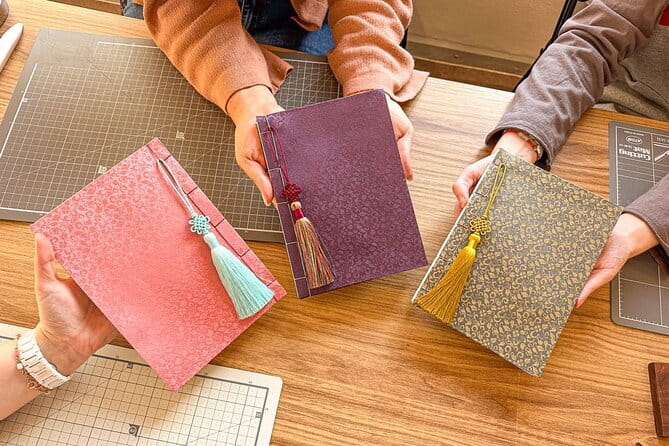
- You choose your look: pick from 22 silk cover patterns
- Your notebook gets personalized details: Norigae ornaments plus thread color choices
- You learn the why, not just the how: Hanji background and traditional binding steps
- Take-home payoff: gift-ready packaging so your souvenir feels complete
What You’re Really Getting In This 2-Hour Workshop
This experience is built around one goal: you leave with a traditional Korean bookbinding notebook that feels authentic, not like a generic craft kit. It runs about 2 hours, and the group stays intimate—maximum 12 people—so you’re not lost in a classroom shuffle.
You’ll also be working with high-quality materials that have cultural weight. Hanji isn’t just “paper.” It’s the traditional Korean paper associated with Joseon Dynasty scholars and record-keepers. The silk cover adds a second layer of meaning because silk has long been valued for durability. The workshop even gives you a line you’ll remember: silk lasts about 500 years, while Hanji can last around 1,000 years. Whether those timelines are poetic or literal in the real world, the takeaway is practical: you’re making something meant to endure.
You can also read our reviews of more tours and experiences in Seoul.



Starting at Danchoodan in Hongdae (and Why the Location Matters)
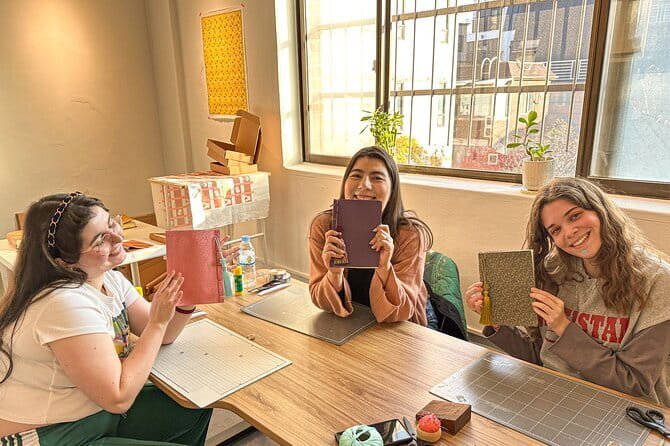
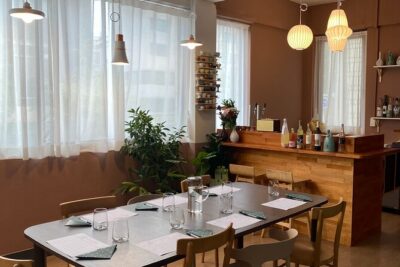
The class meets at danchoodan in Mapo-gu, Daeheung-dong, at Daeheung-ro 100, 3rd floor. It starts at 10:30 am, and the activity ends back at the same meeting point.
Because air-conditioned vehicle service isn’t included, you’ll want to plan your own trip to the studio using public transportation. The workshop is listed as near public transit, which matters in Seoul where traffic and parking can be annoying. If you’re staying around Hongdae, you’ll likely find it easier to pop over in the morning and keep your afternoon free.
One more practical note: only the number of people who booked can enter the studio. That means if you show up late or with an extra person who didn’t reserve, you could run into limitations. In other words, treat the start time seriously.
The Notebook Formula: Hanji Pages + Silk Cover + Norigae Knot
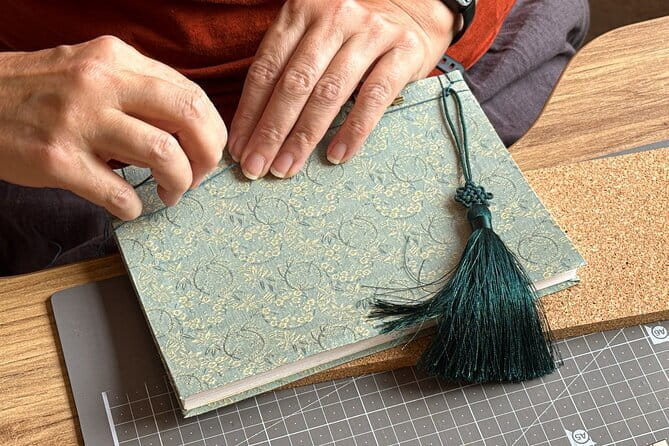
The whole class centers on a simple-but-beautiful build: Hanji paper bound into a notebook, dressed with a silk cover, and topped off with a traditional Norigae knot.
Here’s what each piece does for the final result:
- Hanji gives the notebook its traditional soul. Hanji is valued as handmade Korean paper, and the class includes time to explain why it’s special.
- Silk cover is where your style shows. You’re not stuck with one design—you pick from multiple Korean traditional patterns.
- Norigae knot is the visual signature. Norigae refers to traditional Korean ornamental knots and pieces, and the workshop has you add one as a finishing touch.
When this comes together, you end up with a souvenir that doesn’t look mass-produced. It looks like something someone made carefully at a table, not something printed and assembled.
Choosing Your Silk Cover: 22 Patterns, Real Decision-Making
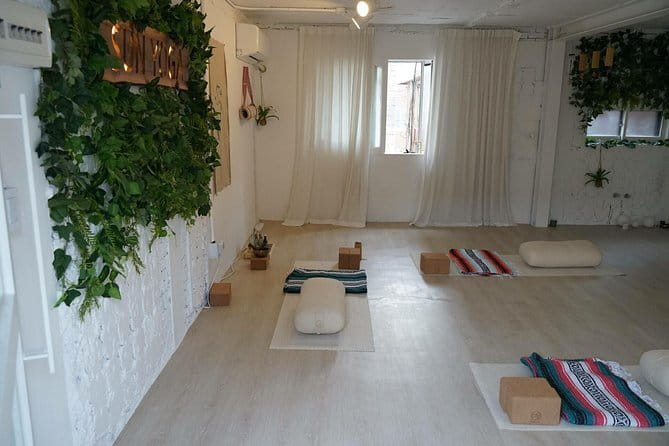
One of the best parts of the workshop is the moment you choose your cover. You’ll pick from 22 silk covers with Korean traditional patterns. That choice affects the vibe of your final notebook more than you might expect.
If you’re the type who likes a clear aesthetic, decide early:
- Want something classic and understated? Choose patterns that feel symmetrical or more traditional in their spacing.
- Want something that looks dramatic in photos? Go for a cover with stronger contrast.
- Not sure? Pick the one that makes you feel like you want to open it every day.
This isn’t just a costume change for your notebook. The cover selection becomes part of the “memory” of the class. You’ll remember the decision, and that makes the notebook more meaningful than a generic souvenir.
Picking Norigae and Thread: Make It Personal Without Overthinking
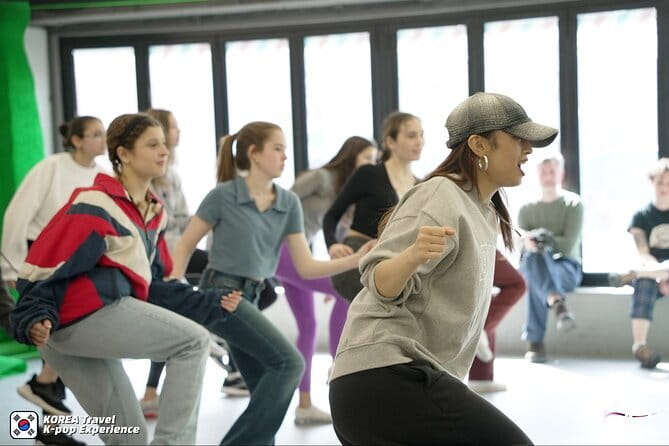
After you choose your silk, you’ll select your Norigae ornament and the thread color. The class describes dozens of colorful threads and silk options, which is great news for anyone who worries they’ll end up with something bland.
The best strategy here is simple: don’t aim for perfection—aim for happiness. Choose colors that you’d actually enjoy seeing. Think about what you’ll use the notebook for. If you want it as a travel journal, your color choices can make it feel like it belongs to your trip, not like an extra item you bought.
Also, this stage teaches you one subtle craft truth: decorative elements aren’t random. They’re coordinated. Even if you don’t know the cultural symbolism behind each selection, the act of choosing helps you appreciate the design logic.


Learning Hanji: The Paper Behind the Joseon Era
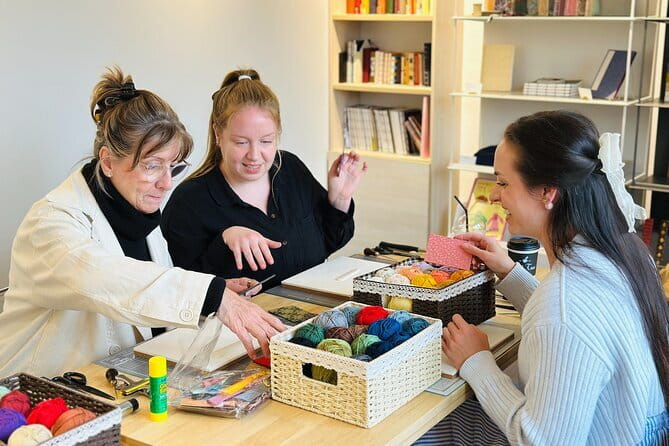
The workshop includes instruction on Hanji—why it’s special, what it historically was used for, and why it matters to Korean writing culture.
The class frames Hanji through one major reference point: the Annals of the Joseon Dynasty. Those annals are connected to UNESCO Memory of the World, and the workshop uses that link to give you context for why Hanji has real cultural importance, not just craft appeal.
You’ll also get the sense that Hanji is part of everyday learning life for scholars. It was used for diaries, notes, and records. That’s a good reminder when you’re tying your own notebook together: you’re repeating a practice that was built for human memory—keeping track of observations, ideas, and days.
Even if you don’t care about historical background, this section helps you understand what you’re holding. It stops the class from feeling like a purely technical craft.
Binding the Notebook: Traditional Steps You Can Actually Feel

Now comes the part most people remember: the binding. You’ll learn Korean-style binding and assemble your notebook by combining silk and Hanji.
The workshop is laid out so you don’t have to guess what happens next. Each step builds on the last, moving you from materials to structure to decoration. That pacing matters, because 2 hours is long enough to make something real but short enough that you don’t want to get stuck.
You’ll use binding tools and materials that are provided, and the guide is licensed. That’s a big value signal: you’re not struggling with “DIY translation.” The guide’s role is to keep the craft process moving and explain what you’re doing so you can focus on the build instead of troubleshooting.
A small consideration: this is a hand-skill workshop. If you dislike fine-motor work, you might find the early steps slightly fiddly. But the class includes guidance and you’ll finish with a notebook rather than stopping halfway.
The Finishing Moment: Tying Your Norigae Knot

The final touch is a Norigae knot tied onto your notebook. This is the step that turns your creation into something distinctly Korean.
The knot is both decorative and symbolic. Practically, it gives the notebook a focal point—something that looks intentional even from across a room. Emotionally, it gives you that final sense of completion: you’re done, it’s real, and you can take it home right away.
You can think of this like the last brushstroke on a painting. Even if the pages and binding look good, the knot is what makes the notebook feel finished and ceremonial.
Packing It Like a Proper Souvenir
When you’re done, you’ll pack your creation in gift-ready packaging. This matters more than it sounds.
In Seoul, it’s easy to buy souvenirs that you then have to carry loose in your bag. Gift-ready packaging makes the difference between a craft you transport carefully and a craft you can toss into your day without worrying.
It’s also a confidence boost. If you’re gifting the notebook or keeping it for yourself as a “trip artifact,” packaging helps the item feel complete.
Price and Value: Does $49 Make Sense?
At $49 per person for about 2 hours, this is priced like a hands-on workshop, not a quick photo stop. The key value is what’s included: binding tools and materials, plus a licensed guide.
You’re paying for three things that matter:
- Materials quality (Hanji and silk components)
- Instruction (so you can actually finish the notebook)
- A take-home outcome that’s more personal than a lot of shop-bought souvenirs
The one thing not included is an air-conditioned vehicle. Since the class is near public transit, this usually isn’t a big deal, but it does mean you should plan your own route to the studio.
If you enjoy crafts, paper goods, or cultural workshops, $49 feels fair because you get both the process and the finished product. If you want a fast cultural taste with no hands-on work, you might find the price higher than your comfort zone—because you’re buying the experience of making something.
Who This Class Is Best For (and Who Might Skip It)
This is a strong fit if you:
- like writing journals, notebooks, or anything paper-based
- enjoy hands-on activities
- want a souvenir that looks handmade and intentional
- care about Korean cultural details beyond surface-level photos
It’s also a great choice if you’re traveling solo or as a couple and want something calm and focused. The group cap of 12 helps it feel personal.
You might skip it if you:
- want mostly sightseeing in a day and don’t like structured activities
- dislike anything that requires careful handwork
- are under the minimum age (reservation is only possible if you’re 17 or older)
Also remember: the studio entry is tied to reservations. So plan to arrive on time and avoid last-minute changes.
Practical Tips So Your Notebook Turns Out Beautiful
A few things will make your class experience smoother:
- Arrive a few minutes early. It’s a small studio setting and you want time to check in calmly.
- Choose your cover with your future self in mind. Think about how you’ll use the notebook—travel notes, journaling, or a display piece.
- Pick thread and Norigae you’ll like seeing often. Your color choices become the personality of the final object.
- Lean on the guide. If anything feels confusing, ask right away. The guide is there to help you finish properly.
- Treat it like fine craft, not fast art. The goal is a neat bind and a clean finishing knot, not rushing to the end.
Should You Book Traditional Korean Bookbinding in Hongdae?
Yes, I think you should book it if you want a genuine Korean craft you can hold, use, and remember. The best part isn’t just the materials—it’s that you make choices along the way (silk pattern, Norigae ornament, thread color) and you end with a notebook in gift-ready packaging.
If you’re the kind of traveler who loves learning through doing, this is your kind of experience. If you’re looking for a quick, low-effort activity, you may find it too hands-on for your style. But for most people who like crafts, paper, culture, and keeping a tangible souvenir, this class hits the sweet spot.
FAQ
How long is the traditional Korean bookbinding class?
It runs about 2 hours.
What is the price per person?
The price is $49.00 per person.
Where is the meeting point in Seoul?
The meeting point is at danchoodan, Seoul, Mapo-gu, Daeheung-dong, Daeheung-ro, 100, 3rd floor.
What time does it start?
The start time is 10:30 am.
What do I get to make and take home?
You create a Korean notebook using Hanji and a silk cover, and you add a traditional Norigae knot. You take your finished notebook home in gift-ready packaging.
What’s included in the ticket price?
The class includes binding tools and materials, and a licensed guide.
Is transportation provided?
No air-conditioned vehicle is included. The activity is listed as near public transportation.
What are the age and group limits?
Reservation is possible only if you are 17 years old or older, and the maximum group size is 12 travelers. Only the number of people who reserved can enter the studio.