REVIEW · SEOUL
K-Pop Making Class with a Producer!
Book on Viator →Operated by KING STUDIO · Bookable on Viator
Two hours in a real K-pop studio. This hands-on class at KING STUDIO turns the usual fan-watch mindset into a practical session where you learn how songs get made, by working through singer, producer, and sound engineer tasks. I especially like the English interpretation plus the fact that you get lyrics in both Korean and romanized form. The main drawback to consider is time: you get a taste of the process, not a full-length, career-level production.
You’ll be guided through a tight workflow inside a professional recording studio, using pre-selected songs and studio tools meant for real sessions. I also like that staff focus on making you successful in the moment, with direct support during recording and music editing. Just go in with a clear expectation: it’s a 2-hour class, so you’ll need to follow instructions and be ready to move fast.
In This Review
- Key Things That Make This K-Pop Making Class Worth Your Time
- A 2-Hour K-Pop Studio Session in Seoul’s Gangnam Orbit
- How the Class Teaches Singer, Producer, and Sound Engineer Work
- Recording Your Track With Pre-Selected Songs and Provided Lyrics
- Editing and Mixing: When You Learn What Makes It Sound K-Pop
- Finding the Studio Fast: Seolleung Station to Basement KING STUDIO
- COEX Center Mention: What It Means for Your Day Plan
- Price, Value, and What You Actually Get for $109
- Who Should Book This K-Pop Class (and Who Might Skip It)
- Quick Practical Tips So You Don’t Waste Studio Time
- Should You Book KING STUDIO’s K-Pop Making Class?
- FAQ
- How long is the K-Pop Making Class with a Producer?
- Where does the class take place?
- What’s included in the class?
- Do I need to speak Korean to participate?
- Is this a private group activity?
- Can I cancel and get a refund?
- What do you do during the session?
Key Things That Make This K-Pop Making Class Worth Your Time
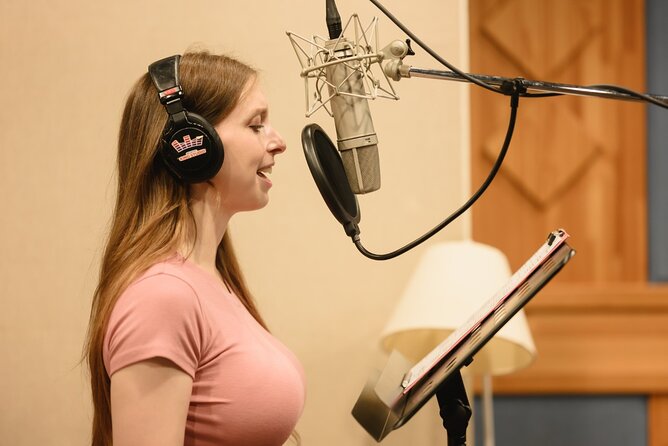
- Three production roles in one session: you’ll experience singer, producer, and sound engineer work during the same visit.
- Studio-style workflow: you record, then move into editing and mixing, not just “sing and leave.”
- Lyrics support in two formats: you get Korean (Hangul) and romanized lyrics to help you keep pace.
- English help from a pro: professional interpretation is part of the experience, so you’re not stuck guessing.
- Private group setup: it’s just your group, which usually makes it easier to learn without feeling rushed.
A 2-Hour K-Pop Studio Session in Seoul’s Gangnam Orbit
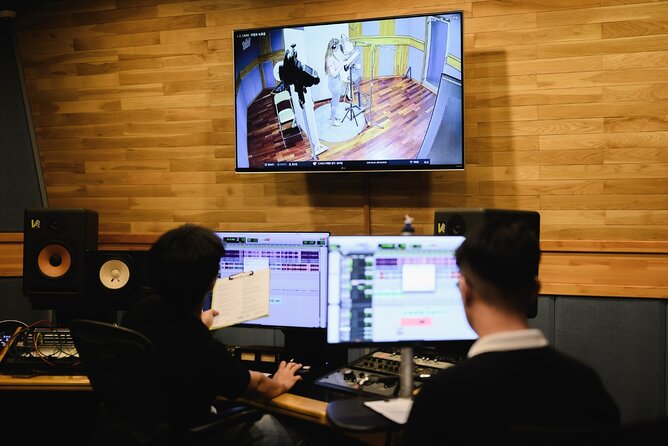
This class is built for people who want something more concrete than a generic culture show. You’re paying for access to a professional music room and the workflow that real K-pop sessions follow, compressed into a friendly two-hour format. For many visitors, that’s the sweet spot: short enough to fit a busy Seoul schedule, long enough to actually touch the production process instead of watching from the sidelines.
Location-wise, you’re in the Gangnam area, and the studio is easy to reach from public transit. The setup is also very Seoul-smart: you meet near a major transit corridor, then you follow simple directions to a basement studio space. That matters because Gangnam is busy, and you don’t want to burn your energy hunting an address while everyone’s waiting.
Price is $109 per person, which puts it in the “worth it if you’ll use it” category. The value here comes from the combination: studio time, hands-on recording and mixing, and English interpretation that helps you get through the process smoothly. If you’re hoping for an all-day deep dive into music production, you might feel the session is brief. If you want a real taste with output you can be proud of, this format is a strong match.
You can also read our reviews of more tours and experiences in Seoul


How the Class Teaches Singer, Producer, and Sound Engineer Work
K-pop production can sound like magic from the outside. In this class, it gets broken down into the three roles that shape how a track comes together: singer, producer, and sound engineer.
Here’s the practical angle: you’re not just learning definitions. You’re doing the steps that belong to each role. The class is designed so all participants get involved across the arc of the session, including recording, editing, and mixing. That’s a big deal because most “music experiences” stop at performance. This one keeps going until you understand how sound is shaped after the singing is done.
As a producer role, you’ll work with the idea of music structure and how communication with sound engineers affects the final result. As a singer role, you’ll record your song using pre-selected material, with lyrics provided so you can focus on delivery rather than translation headaches. As a sound engineer role, you’ll gain experience in recording, editing, and mixing—basically the part that turns raw tracks into something polished and ready for playback.
If you’re a music nerd, you’ll appreciate the way the class frames production as teamwork. If you’re a casual fan, you’ll still get the satisfaction of learning how that teamwork creates the sound you hear on streaming platforms.
Recording Your Track With Pre-Selected Songs and Provided Lyrics
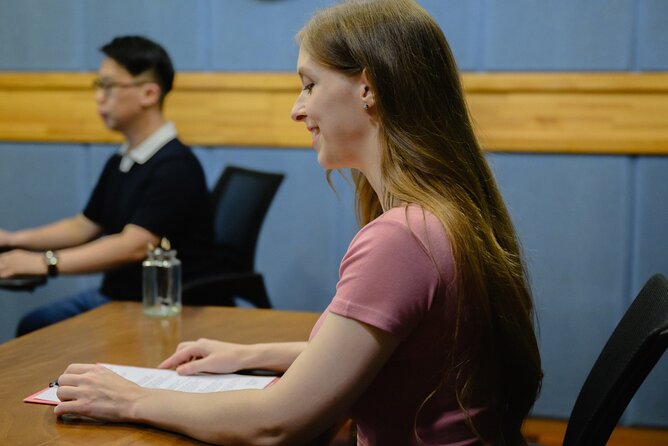
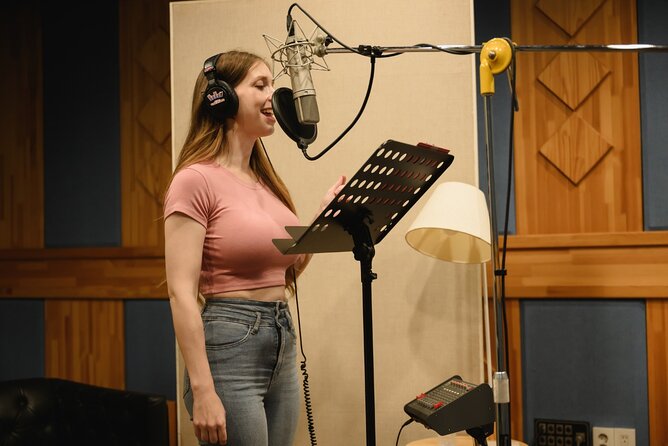
The recording phase is where most people feel the “wow, this is real” moment. You’ll record songs using accompaniment and lyrics that come with the class. And unlike experiences where you’re left to struggle through Korean on your own, you get lyrics in both Korean and romanized form.
That detail matters more than it sounds. When you’re recording, timing is everything. If you can read the words in romanization, you can focus on phrasing and rhythm instead of constantly stopping to look up pronunciation. Then when you’re ready to sing along, the Korean lyrics (Hangul) give you the correct visual cue for how words are actually written.
You’ll also get professional interpretation in English. That means instructions don’t get lost in translation, and you can understand what the staff want from your performance and delivery. Even if your Korean is limited, you should still know what to do next.
One practical note: because the songs are pre-selected in advance, you’re not choosing from a huge menu on the spot. The upside is that everything is prepared so your session stays on track. The downside is that you should book with the understanding that it’s a structured experience, not a request-driven karaoke style show.
Editing and Mixing: When You Learn What Makes It Sound K-Pop

Recording is only half the story. The class also takes you into editing and mixing, which is the part that teaches you why certain vocals feel punchy, why beats land the way they do, and how a track gets balanced.
This is where the experience feels especially different from a typical singing class. Instead of only focusing on vocals, you get to see how sound gets shaped after recording. As a sound engineer, you’ll get hands-on experience with tasks that connect the raw recording to a finished, listenable result.
The best way to think of it: you’re not trying to become a full-time mixing professional in two hours. You’re learning the cause-and-effect relationship. When you adjust a piece of audio (and when the team guides you), the track changes. That’s the real learning win.
And the staff support you through it. The reviews mention a warm, welcoming environment where the owner and translator guided recording and helped with mastering music editing. That kind of coaching is critical in a studio setting, because people can get nervous when they hear unfamiliar equipment or workflows. Here, the tone is friendly, and the guidance is direct.
Finding the Studio Fast: Seolleung Station to Basement KING STUDIO
Let’s talk getting there, because you don’t want to arrive late and feel stressed before your session starts. The guidance is clear and simple: go to Seolleung Station, then use Exit 1. From there, you follow directions to KING STUDIO, which is in a basement studio area.
The route is:
- Exit 1 at Seolleung Station
- Turn right at Dunkin’ Donuts
- Go up to the area that leads you to the basement studio space in front of 7-Eleven
Also helpful: Seolleung Station is about 2 stops from Gangnam Station on Seoul Subway Line 2. That makes it easy to plan around where you’re already staying.
Timing matters. You have to enter at the appointed time, so you should build in a little buffer for subway navigation and street-level transfers. This is one of those experiences where punctuality isn’t “nice to have.” It’s how the studio keeps the flow smooth for everyone’s recording schedule.
As for the day’s outline, the session ends back where you meet. The meeting point is listed at 52 Samseong-ro 75-gil in the Gangnam District, so keep that address handy when you plug it into your map app.






COEX Center Mention: What It Means for Your Day Plan
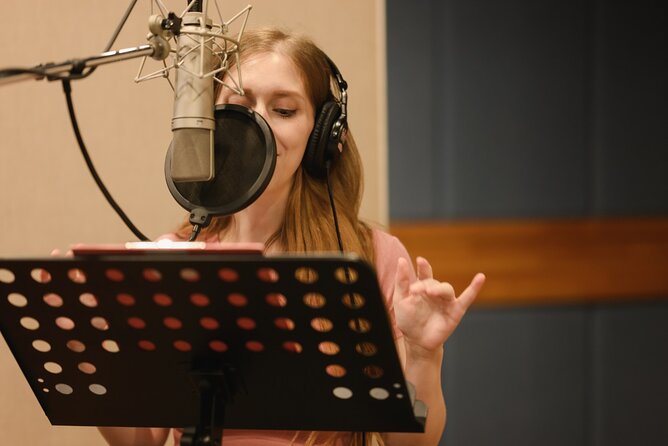
You’ll see COEX Center referenced as part of the broader area context. In plain terms, this points you to a well-known zone in the same Gangnam area where it’s easy to coordinate with shopping, meals, and transit.
Why that’s useful for you: COEX is a strong anchor point if you’re planning a day around Seoul’s modern districts. You can pair this class with nearby sightseeing and still keep the studio visit efficient. You won’t have to redesign your entire day just to get to the studio.
One caution: don’t rely on COEX itself as a destination for the exact studio entrance. The key detail is where KING STUDIO is located at the specific directions from Seolleung Station, including the Dunkin’ Donuts and 7-Eleven landmarks. Follow that, and you’ll get there without guesswork.
Price, Value, and What You Actually Get for $109
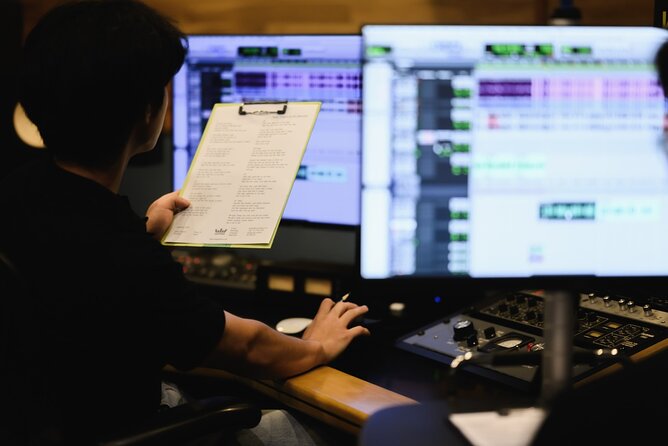
At $109 per person for about 2 hours, you should think of this as a studio-led workshop rather than a casual performance class. The value isn’t just that you can sing in Korean. It’s that the experience includes recording plus editing and mixing guidance, with accompaniment and prepared lyrics.
Here’s what you’re paying for, in practical terms:
- A real studio environment (not a classroom setup)
- A structured workflow across singer/producer/sound engineer steps
- Support that helps you perform and understand instructions (English interpretation)
- Lyrics provided in Korean and romanized text
- A private setup for your group, which can make coaching feel more personal
The only “value catch” is your expectations. If you want hours of free-form studio time, you won’t get it. If you want a guided, efficient introduction that teaches you how K-pop production is assembled, you’ll feel like you used your time well.
Given the tight schedule, I’d also suggest you treat this like an activity with purpose. Don’t show up five minutes late and then spend the first 20 minutes settling in. Get your bearings fast. You’ll enjoy the class more when you’re not stressed.
Who Should Book This K-Pop Class (and Who Might Skip It)
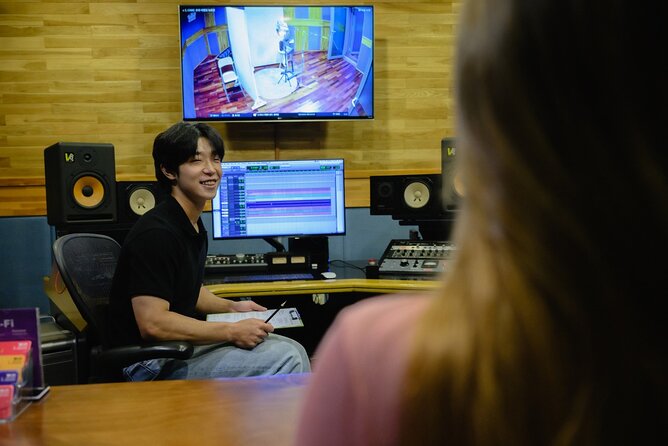
This is a strong fit if you fall into one of these categories:
- You love K-pop and want to understand how it gets made, not just watch it
- You want a hands-on studio experience in Seoul that’s different from typical sightseeing
- You like structured coaching, especially with English interpretation and lyric help
- You’re celebrating something and want an unusual group activity (one review called it the best birthday ever)
It may be less ideal if:
- You’re expecting a long studio session that creates a full professional release
- You want to choose songs on the fly without any pre-selection
The private group format also helps. If you’re traveling with friends, a class like this can turn into a memorable shared challenge: learning lyrics, recording, then hearing how the track changes through editing and mixing.
Quick Practical Tips So You Don’t Waste Studio Time
A few small things can make a big difference in a studio setting:
- Show up a bit early so you can check in calmly and start on time.
- Plan for movement. You’ll go through multiple roles and stages in a short window.
- Use the romanized lyrics for delivery. Then track the Korean Hangul when you’re comfortable.
- Treat instructions like music cues: if the staff says something, do it right away so you stay in sync with the session.
Also, because the class requires good weather in some cases (with the possibility of a different date or a full refund), check forecasts on the day before. That keeps you from being caught off guard if plans shift.
Should You Book KING STUDIO’s K-Pop Making Class?
If you want an authentic Seoul experience that’s actually hands-on, I think this is an easy yes. The biggest selling point is that you don’t just sing. You touch the process—recording, editing, and mixing—with professional support and lyrics you can use right away.
You should book if you like learning by doing, you’re traveling with friends, and you want a story you can tell later beyond museum photos. I’d even say it’s a smart “rain plan” if your schedule can shift, since the experience is designed to run as a studio session rather than an outdoor tour.
You might skip it only if you’re chasing a long, advanced production curriculum or you don’t want to follow a structured workflow. For most visitors, though, it hits a rare balance: it’s fun, it’s guided, and it gives you a real taste of how K-pop tracks get built.
FAQ
How long is the K-Pop Making Class with a Producer?
It lasts about 2 hours.
Where does the class take place?
It happens at KING STUDIO in Seoul. You’re directed to find it starting from Seolleung Station Exit 1, using nearby landmarks like Dunkin’ Donuts and 7-Eleven.
What’s included in the class?
You get accompaniment and lyrics (Korean with romanized support), plus professional interpretation in English.
Do I need to speak Korean to participate?
No. The class provides lyrics in Korean and romanized form, and there is English interpretation during the experience.
Is this a private group activity?
Yes. It’s private, meaning only your group participates.
Can I cancel and get a refund?
Yes. You can cancel up to 24 hours in advance for a full refund.
What do you do during the session?
You’re involved in the singer, producer, and sound engineer sides of production, including recording, editing, and mixing your own song.