REVIEW · SEOUL
DMZ Tour w/ North Korea Experience Hall & Opt. Suspension Bridge
Book on Viator →Operated by Seoul N Tour · Bookable on Viator
DMZ drama, minus the chaos. This guided trip turns the border zone into a walkable, human-scale story, with stops like the Third Tunnel and Dora Observatory, plus an optional suspension bridge add-on. I love that logistics are handled end to end, from central Seoul pickup to timed entry, and I also like how your guide keeps the day understandable and moving. The main drawback: it’s a long, physical day, and some parts (tunnel slopes and bridge heights) may not feel great if you’re sensitive to tight spaces or elevation.
For $55, you’re getting a lot for one price: a professional guide, round-trip transportation from central Seoul, and key admission fees. Expect about 7.5 hours total, and know that weather or security conditions can shuffle the order or replace the suspension bridge if needed.
In This Review
- Key things to know before you go
- Entering the DMZ the right way: why the guide matters
- The pickup and timing: when the day starts and why it can shift
- Stop 1 in the zone: Imjingak Pyeonghoa-Nuri Park and the war memories outside the fence
- The North Korea Experience Hall: a quick stop that adds context
- Dora Observatory: what you can actually see, and how to make the most of it
- The Third Tunnel: helmets on, legs moving, and the reality of engineered infiltration
- DMZ Exhibition Hall and Unification Village: structured learning between intense moments
- Optional Gamaksan Chulleong Suspension Bridge: the view boost you may or may not want
- What the group size and pacing feel like on a real day
- Food, coffee, and the empty stomach problem
- Who should book this DMZ tour (and who should skip the tunnel or bridge)
- Guides make the difference: what to expect from the tour leadership
- Is $55 good value for this DMZ day trip?
- Should you book the DMZ Tour with North Korea Experience Hall and Suspension Bridge?
- FAQ
- Do I need a passport for this tour?
- How long is the DMZ tour, roughly?
- What’s included in the price?
- Where do I meet the tour?
- Is the suspension bridge always part of the plan?
- Is the Third Tunnel recommended for everyone?
Key things to know before you go
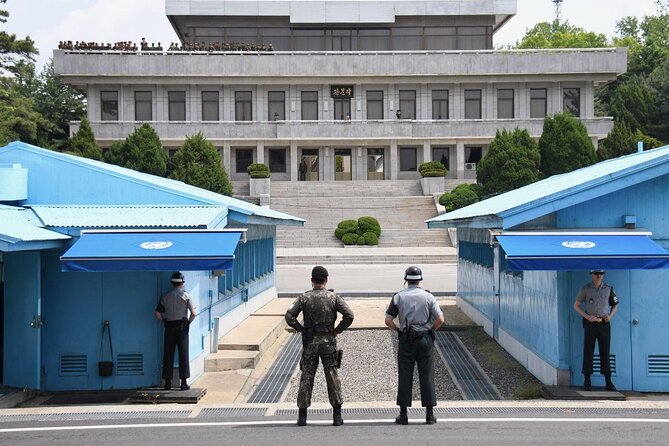
- DMZ access is only by guided group so this route saves you the headache of trying to organize something that can’t be DIY
- Third Tunnel walk is the core moment with a helmet and a long stair-and-slope climb back up
- Dora Observatory is a controlled, telescope-based view into a propaganda-filled North Korean village site
- Imjingak Park adds context outside the fence line with memorials like Freedom Bridge and the Soldiers’ Memorial
- Optional Gamaksan Chulleong Suspension Bridge adds big views, but it can be swapped out on closure days
- Small-group feel for the DMZ (maximum 40 travelers), which matters when you’re queuing through security
Entering the DMZ the right way: why the guide matters
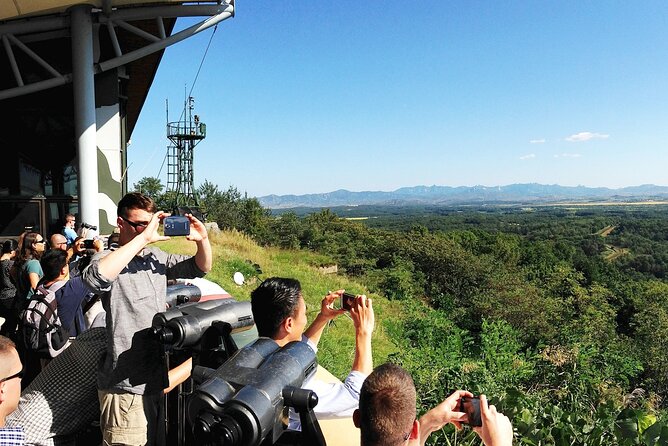
The DMZ isn’t a normal sightseeing zone. It’s controlled, scheduled, and designed to be visited under supervision. That’s exactly why a guided format is worth it: the tour handles the timing and the rules so you can focus on what you came for—seeing what you can see, safely, and understanding what you’re seeing.
One reason this day feels smoother is the way it’s built around the checkpoint rhythm. You’re not just hopping between landmarks at random. You’re moving in a sequence that keeps the group aligned for entry and viewing. It also helps because you’ll likely be sharing time and space with other tour groups. This is a popular route, and the best way to avoid feeling lost is to let the schedule lead.
If you’re the kind of person who likes to plan every minute, still do this trip for the opposite reason: it removes the stressful parts of figuring out access rules and ticket windows.
You can also read our reviews of more tours and experiences in Seoul.
The pickup and timing: when the day starts and why it can shift
This tour meets at City Hall Station in Seoul, with end back at City Hall Station too. The schedule can be around 3:30pm for the DMZ-focused course, or around 4:50pm when you add the suspension bridge option. It’s a big clue that this isn’t a late-morning stroll—it’s a day run by timed entry.
A practical tip: the DMZ day can run shorter or delayed depending on what’s happening in the zone. Your itinerary may adjust without notice if access is restricted. Build in patience and keep your plans flexible for that day.
The mobile ticket is convenient, especially when you’re dealing with security checks and a tight group flow. Just make sure your passport is ready and current—this is required on the travel day.
Stop 1 in the zone: Imjingak Pyeonghoa-Nuri Park and the war memories outside the fence
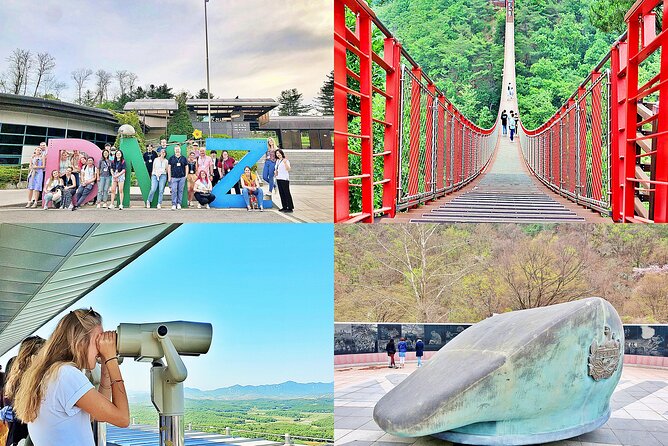
Before you go into the DMZ itself, you’ll start with Imjingak Pyeonghoa-Nuri Park. This is one of those places that helps you reset your brain. You’re not yet underground, not yet at the tunnel, and not yet at the observatory. Instead, you’re at a memorial-style site that frames why this border exists.
The highlights here include symbolic markers like the Freedom Bridge and the Monument of Soldiers. It’s not just photo ops. It’s a reminder that the war’s effects are still part of daily reality for people on both sides of the divide.
This stop is also a nice pacing tool. At about 30 minutes, it gives you time to orient yourself emotionally before you go into the more intense parts of the day.
The North Korea Experience Hall: a quick stop that adds context
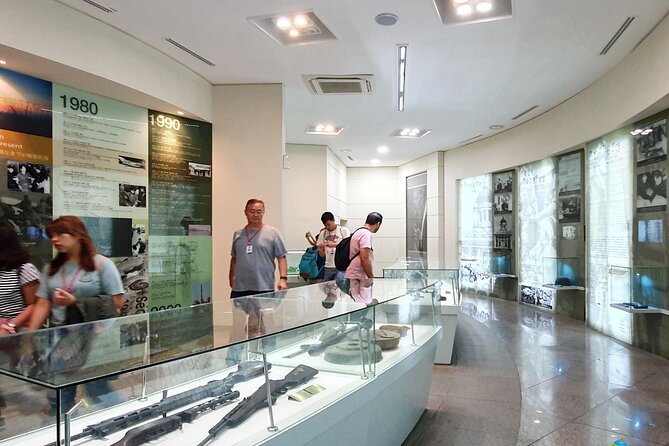
A big value of this tour is that it doesn’t treat North Korea as a vague concept. You’ll visit the North Korea Experience Hall at Imjingak-ro. It’s designed to answer the questions people naturally have when they’re staring at the division line: What does life there look like? What stories are they telling? How do they explain their side?
This stop is around 30 minutes. It’s short, but it helps you make sense of what comes next—especially Dora Observatory. When you later look out through telescopes at the site the tour focuses on, you’ll likely understand more of what you’re seeing and why the viewpoint is meaningful.
Dora Observatory: what you can actually see, and how to make the most of it
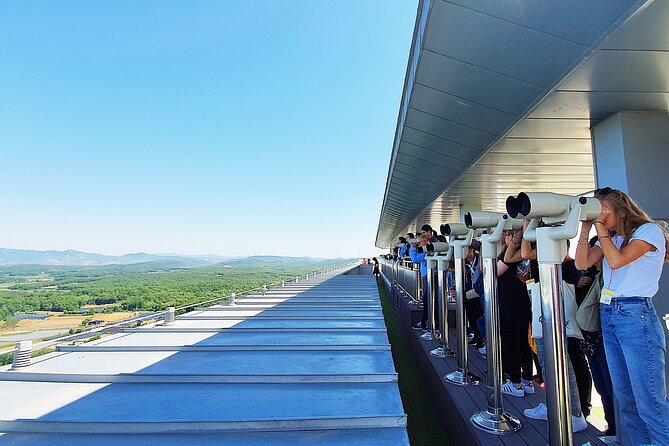
Dora Observatory is one of the main reasons people book this route. You get access to a place where you can witness the reality of the peninsula’s division from a carefully controlled position. On clear days, the view can extend far enough that a flagpole in Kijŏng-dong (described as the southernmost village in North Korea in the tour information) can be seen from Dora.
Expect the experience to be structured around viewing equipment—telescopes are part of the setup. That’s key: it’s not just a scenic overlook. It’s a guided, observation-based stop.
Plan to slow down here. This is where the day’s facts start to feel real, because you’re looking at a specific named village area and understanding that the distance is political, not just geographical.
One more thing: observation access can be affected by operational issues on some days. If Dora (or a particular observation point) is delayed or reduced, don’t panic. The tour may swap pieces to keep the day meaningful.

The Third Tunnel: helmets on, legs moving, and the reality of engineered infiltration
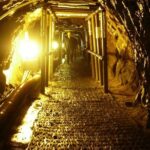
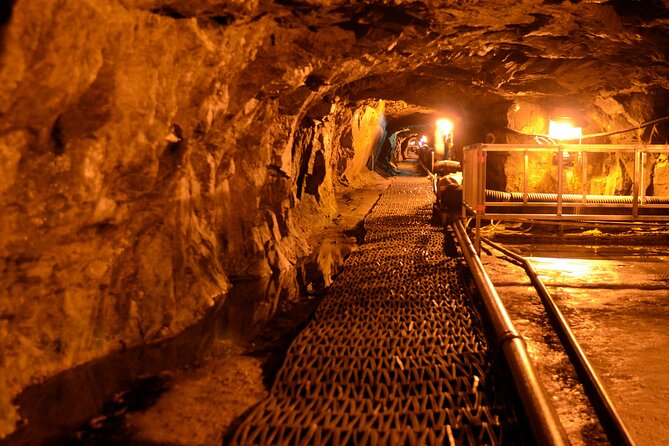
The Third Tunnel is the heart of this tour’s emotional impact. Discovered in 1978, it’s an infiltration tunnel built by North Korea in the 1970s as part of military strategy. The tour information highlights that the site is about 52 kilometers from Seoul and that you walk roughly 500 meters equipped with a safety helmet.
Here’s what you should know before you go in:
- It’s physically taxing. Even if you’re fine with walking, the climb back up can feel brutal because you’re going down and then reversing that effort with slope and stairs.
- It’s not the kind of experience you can rush. You’ll be going at a controlled pace with group movement.
- If you have claustrophobia, this is not recommended. You may be able to wait outside rather than go into the tunnel area.
- If you have limited mobility or stamina, plan for the uphill return. The tour notes that it’s not recommended for elderly travelers for this reason.
The tunnel walk is also where the tour’s guidance style matters most. A good guide doesn’t just list facts. They explain why this specific tunnel matters and how it fits into the larger story of infiltration attempts and fear along the border.
When the helmet goes on and you start moving, it’s hard not to feel the weight of the place. You don’t have to be dramatic about it—it’s simply built into the design of the experience.
DMZ Exhibition Hall and Unification Village: structured learning between intense moments
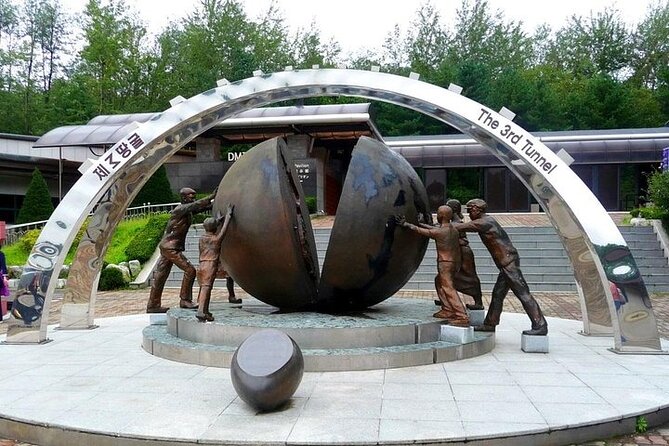
Before or after the tunnel portion, you’ll also spend time at the DMZ Exhibition Hall and visit Unification village within the DMZ stop block (the DMZ segment runs about 2 hours 10 minutes overall, with individual portions like Dora and the tunnel timed inside it).
The exhibition hall works like a “pause button.” It’s where you see relics and learn from a short film on Korea’s division and history. It helps you connect what the tunnel is showing to broader war-era and post-war context.
Unification village is more complicated to feel about, but it’s useful because it represents how people talk about the possibility of change. Even if you don’t leave feeling optimistic or pessimistic, you leave feeling informed—because you’ve been given enough structure to interpret the symbols.
Optional Gamaksan Chulleong Suspension Bridge: the view boost you may or may not want
If you choose the upgrade, you’ll add Gamaksan Chulleong Suspension Bridge, described as the longest mountain suspension bridge in South Korea and opened in 2016. It takes about an hour at the site.
This is where your personal comfort settings come in. The tour notes that if you have acrophobia (fear of heights), the bridge may not be a good fit. In that case, you may be able to wait at the viewing point instead.
Still, even for people who are nervous about heights, this stop can be worth considering because the payoff is visual. You get a “walking above the clouds” feel (the tour description uses that idea), and it changes the tone of the day from border tension to wide open scenery.
The big catch: suspension bridge access can be closed in heavy rain, snow, or security control. If that happens, the tour swaps in alternatives like Odusan Unification Observatory. Translation: don’t base your entire mood on one specific view.
What the group size and pacing feel like on a real day
With a maximum of 40 travelers, this doesn’t feel like an all-day mob scene. You’ll still see crowds, because the DMZ and popular stops draw tour buses, but the group limit helps keep the day organized.
Pacing is built around timed entry. In other words, you’re not standing around wondering what happens next. A good guide makes small moments feel smoother: reminding you when to line up, when to get ready for security steps, and how long each part likely takes so you don’t feel rushed at the wrong times.
You also get short breaks between heavier segments. For example, after memorial stops like Imjingak Park, the day transitions into more intense areas inside the zone. That keeps you from feeling “on” nonstop for 7.5 hours.
Food, coffee, and the empty stomach problem
Lunch is not included, and neither are food and drinks. That’s normal for tours of this type, but it matters because your day is long.
Here’s the practical way to handle it: bring snacks you can eat quickly, and plan for the possibility that you may not get a lot of sitting time in the way you’d want for a full meal. Some tours include coffee-style stops along the way, but you shouldn’t assume a proper meal will be waiting.
If you’re booking for a family group, think about energy management more than entertainment. The best day is the one where you’re not running on empty while you’re climbing back up from the tunnel.
Who should book this DMZ tour (and who should skip the tunnel or bridge)
This tour fits best if you want:
- A structured DMZ visit that’s allowed by rules and handled by people who’ve done it many times
- The key signature stops: Third Tunnel, DMZ Exhibition Hall, and Dora Observatory
- Option to add a different kind of viewpoint with Gamaksan Chulleong Suspension Bridge
- A guide-led day where history is explained as you go, not as a lecture you have to sit through
You should rethink parts of it if:
- You feel very uncomfortable in tight spaces. The tunnel portion is explicitly not recommended for claustrophobia.
- Heights make you panic. The suspension bridge is not recommended for acrophobia, though there may be a way to observe from a safer viewpoint.
- You don’t handle slopes and stairs well. The tunnel return is physically challenging, and it’s not recommended for elderly travelers for this reason.
For most people with moderate fitness, it works well because the time on each section is controlled and guided.
Guides make the difference: what to expect from the tour leadership
One reason this tour gets such strong ratings is the attention to guiding style. Guides like Junie, Sookhee, Veronica, Mr. Young, Brian, and Mr. Kim are named in feedback, and the pattern is clear: strong English, clear explanations, and an ability to keep the day organized without making it feel like a rigid factory line.
In plain terms, you’ll get:
- Clear instructions so you don’t waste time
- Enough background to make the sites mean something
- Humor and a human feel at moments that could otherwise feel grim
If you’re the type of traveler who cares about how facts are delivered, aim for the tour slot that matches your comfort with walking. A well-led group makes the tunnel and observatory far less intimidating.
Is $55 good value for this DMZ day trip?
At $55 per person, this is priced to be accessible compared to many “signature” attractions. The value comes from what’s included: a professional guide, central Seoul round-trip travel, entry fees for key sites, and a mobile ticket.
The true cost isn’t just money. It’s time and effort. You’re giving up most of a day (about 7.5 hours), and you’ll do a substantial walk—especially with the tunnel slope and tunnel climb back.
If you want one DMZ experience that hits the main markers without you building the entire logistics puzzle yourself, this price-to-content ratio is strong.
Should you book the DMZ Tour with North Korea Experience Hall and Suspension Bridge?
Book it if you want the classic “what can I see from the South” DMZ route with the best-known stops, and you like having a guide keep the day organized while you focus on the sights. The optional Gamaksan Chulleong Suspension Bridge is a fun add-on if you’re comfortable with heights and the weather is cooperating.
Skip the bridge option if you’re anxious about heights, and seriously reconsider the tunnel portion if claustrophobia or mobility limits are part of your comfort equation. Also keep weather and security fluctuations in mind. This is one of those tours where the day can shift, but the core experience is designed to still land.
If you want one DMZ trip that’s practical, structured, and built around real checkpoints—not wishful thinking—this is a solid choice.
FAQ
Do I need a passport for this tour?
Yes. A current valid passport is required on the day of travel.
How long is the DMZ tour, roughly?
It runs about 7 hours 30 minutes in total (approx.).
What’s included in the price?
The tour includes a professional guide, entry fees for key stops, and round-trip travel from central Seoul, plus a mobile ticket. Food and drinks and lunch are not included.
Where do I meet the tour?
The start and end meeting point is City Hall Station in Seoul.
Is the suspension bridge always part of the plan?
No. The suspension bridge can be closed due to heavy rain, snow, or security control. If that happens, the tour may replace it with another observatory such as Odusan Unification Observatory.
Is the Third Tunnel recommended for everyone?
It’s not recommended for travelers with claustrophobia. It’s also not recommended for elderly travelers due to the slope and physical demands.