REVIEW · SEOUL
[Small Group] Aegibong and DMZ Closest Views of North Korea
Book on Viator →Operated by Sunny Seoul Korea Tour · Bookable on Viator
Some places hit your brain.
This DMZ day tour mixes memorial sites, a real underground 3rd Infiltration Tunnel, and rare North Korea sightlines from Dora Observatory—then tops it off at Aegibong Peace Ecopark, where the border feels uncomfortably close. I especially liked how the day is timed for a smoother flow (your group is kept away from the biggest bus crowds) and how the stops connect the Korean War to the armistice today. One thing to consider: you’ll need a passport for the ID checks, and the overall day can involve some walking plus the tunnel visit, so it’s not the easiest day if you have mobility limits.
The guides can make or break a history tour, and this one has strong ones. I’ve seen English-speaking hosts like Jung, Sophia, Eunice, and Mimi praised for clear explanations and a warm, steady pace. You’ll feel like you’re getting the big picture, not just marching from one checkpoint to the next.
In This Review
- Key highlights at a glance
- Why this DMZ route feels different from a quick stop
- Morning start: Imjingak Pyeonghwa Nuri Park and the ID check
- The 3rd Tunnel: the Cold War under your feet
- Dora Observatory: rare DMZ views from a close observatory
- Imjingak to the border feeling: why the Unification Bridge moment matters
- Aegibong Peace Ecopark: the closest publicly viewed border scenes
- Jogang Observatory and the Starbucks stop at Aegibong
- Price and what you actually get for $120
- Group size and pacing: what the small-group advantage really means
- Timing, duration, and how the day will likely feel
- What to pack and how to be comfortable at checkpoints
- Who should book this DMZ & Aegibong tour
- Should you book it?
- FAQ
- How long is the tour?
- What’s included in the price?
- Do I need a passport?
- Is lunch included?
- Is coffee or tea included?
- Where does the tour end?
- Is pickup available?
- How many people are in the group?
- Is the tour dependent on weather?
- What are the cancellation rules if I need to change plans?
Key highlights at a glance
![[Small Group] Aegibong and DMZ Closest Views of North Korea - Key highlights at a glance](https://m.discoveringseoul.com/wp-content/uploads/small-group-aegibong-and-dmz-closest-views-of-north-korea-1.jpg)
- Imjingak Park monuments that explain division and hope in a very human way
- The 3rd Tunnel: an invasion route discovered in 1978, closest to Seoul among its kind
- Dora Observatory for close DMZ viewing toward Panmunjeom and nearby areas
- Aegibong Peace Ecopark as the closest publicly reachable point for North Korea views
- Jogang Observatory viewpoint at Aegibong (plus a stop at Starbucks Aegibong Peace Ecopark)
Why this DMZ route feels different from a quick stop
![[Small Group] Aegibong and DMZ Closest Views of North Korea - Why this DMZ route feels different from a quick stop](https://m.discoveringseoul.com/wp-content/uploads/small-group-aegibong-and-dmz-closest-views-of-north-korea-2.jpg)
A DMZ tour can be either a checklist—or it can help you understand what you’re looking at. This route does the second one by stacking experiences in the right order: memorials and context first, then hard Cold War infrastructure underground, then viewing points that matter, and finally the closest border scenery at Aegibong.
That matters because the DMZ isn’t just a geography lesson. It’s a living result of war, armistice politics, and the daily reality of separation. When you see the tunnel and then later look out toward North Korea from the observatories, the day stops feeling like history class and starts feeling like reality.
You can also read our reviews of more tours and experiences in Seoul.
Morning start: Imjingak Pyeonghwa Nuri Park and the ID check
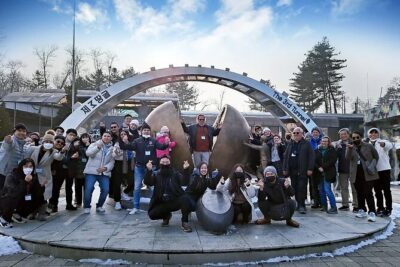
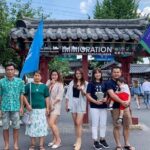
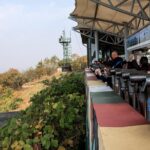
You’ll begin around Imjingak Pyeonghwa Nuri Park, in the broader Imjingak unification and security complex. This is where the tone turns serious right away. Imjingak is built around monuments, memorial spaces, and exhibition elements tied to the Korean War and the ongoing hope for reunification.
I like this opener because it gives you language for what you’re seeing later. The DMZ has its own drama, but without the Imjingak context, the day can feel more like theater than explanation.
Here’s the practical bit: you’ll face an ID check during the tour and you should bring your passport. The tour specifically notes that passport is required for this restricted-area process. No passport, no entry—simple as that.
Also note the pacing: this is a long day (about 8 to 9 hours). The tour includes air-conditioned vehicle transport and English guide, which helps a lot when the schedule is tight and you’re moving between sites with different entry rules.
The 3rd Tunnel: the Cold War under your feet
![[Small Group] Aegibong and DMZ Closest Views of North Korea - The 3rd Tunnel: the Cold War under your feet](https://m.discoveringseoul.com/wp-content/uploads/small-group-aegibong-and-dmz-closest-views-of-north-korea.jpg)
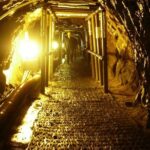
The highlight for many people is the 3rd Infiltration Tunnel, a passage built by North Korea for invading South Korea. It was discovered in 1978 and it’s described as the tunnel closest to Seoul, about 52 km away.
Even if you’ve read about DMZ tunnels before, visiting one changes how you process it. You’re not thinking in diagrams—you’re standing where the Cold War logic was turned into concrete plans. The tunnel is also a strong equalizer for the group: it doesn’t depend on perfect weather or distance viewing. You get the impact even when the sky is less dramatic.
Practical considerations: the tour notes a moderate physical fitness level is recommended. Tunnel visits often involve stairs and enclosed space movement, so wear shoes that feel secure and plan for a bit of discomfort. If you’re sensitive to enclosed areas, consider that before booking.
Dora Observatory: rare DMZ views from a close observatory
![[Small Group] Aegibong and DMZ Closest Views of North Korea - Dora Observatory: rare DMZ views from a close observatory](https://m.discoveringseoul.com/wp-content/uploads/small-group-aegibong-and-dmz-closest-views-of-north-korea-4.jpg)
After the tunnel, you’ll head to Dora Observatory, described as the closest DMZ observatory to Panmunjeom. This is where the tour shifts from “what happened” to “what can we see.”
From Dora Observatory, you can view not only Panmunjeom but also the village of Daeseong-dong within the DMZ, along with mountains and farmlands. The tour summary also frames Dora as one of the best places for rare views of North Korea.
I like observatory stops because they force you to slow down. A lot of people speed through photos. At Dora, you’ll get better value by spending a few extra minutes letting the guide explain what you’re looking at. It’s the difference between a snapshot and understanding a scene.
One more reality check: you’re viewing from a fixed spot across the DMZ, so don’t expect the kind of close “see faces” view that internet rumors sometimes imply. The value is the direction, the geography, and the guide’s framing.
Imjingak to the border feeling: why the Unification Bridge moment matters
![[Small Group] Aegibong and DMZ Closest Views of North Korea - Imjingak to the border feeling: why the Unification Bridge moment matters](https://m.discoveringseoul.com/wp-content/uploads/small-group-aegibong-and-dmz-closest-views-of-north-korea-5.jpg)
This tour includes the experience of crossing into a restricted area after an ID check, and it specifically references crossing the Unification Bridge. Even if you don’t love “checkpoint tourism,” there’s a reason this moment is built in.
Crossing that line is a reminder that the DMZ is not a normal sightseeing zone. It’s a controlled corridor where permission and documentation have meaning. It also reinforces why the memorials and exhibition storytelling at Imjingak aren’t just background—they connect directly to the access you’re being granted today.


Aegibong Peace Ecopark: the closest publicly viewed border scenes
![[Small Group] Aegibong and DMZ Closest Views of North Korea - Aegibong Peace Ecopark: the closest publicly viewed border scenes](https://m.discoveringseoul.com/wp-content/uploads/small-group-aegibong-and-dmz-closest-views-of-north-korea-6.jpg)
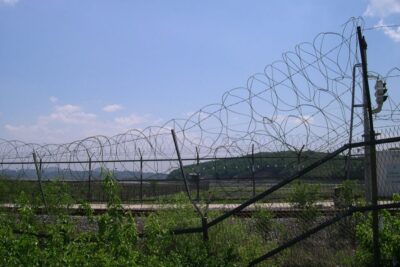
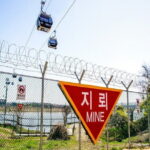
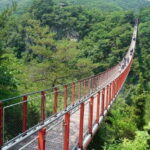
Then comes the part most people come for: Aegibong Peace Ecopark. The tour summary calls it the closest point to North Korea, and the description is specific about what you’ll see when conditions are clear: North Korean villages, farmlands, and daily-life scenes from a distance.
What I like about Aegibong is the mix of nature and meaning. It’s not only gray history. It’s a viewpoint from where the border feels real in your eyes, not just on a map. The park is also paired with exhibitions on the region’s historical significance, so the stop doesn’t turn into only-photo time.
Jogang Observatory and the Starbucks stop at Aegibong
![[Small Group] Aegibong and DMZ Closest Views of North Korea - Jogang Observatory and the Starbucks stop at Aegibong](https://m.discoveringseoul.com/wp-content/uploads/small-group-aegibong-and-dmz-closest-views-of-north-korea-7.jpg)
At Aegibong, you’ll also visit the area associated with the Jogang Observatory, described as providing a close-up view that lets you observe North Korea villages and farmlands. The itinerary includes a stop at Starbucks Aegibong Peace Ecopark as well.
That matters for planning. You’re not getting lunch included on this tour, and coffee isn’t included either. Having a café stop gives you a chance to buy something warm or a small break without scrambling to find options near the border zone.
I’d treat this as a practical waypoint: use it for a quick breather and a chance to reset before the day’s last leg. Even if you don’t buy coffee, the timing helps.
Price and what you actually get for $120
![[Small Group] Aegibong and DMZ Closest Views of North Korea - Price and what you actually get for $120](https://m.discoveringseoul.com/wp-content/uploads/small-group-aegibong-and-dmz-closest-views-of-north-korea-8.jpg)
At $120 per person, the headline price is straightforward—but the better question is value. Here’s what you get for that cost based on the tour info:
- Pickup offered and air-conditioned vehicle
- English guide
- Admission fees listed for the major stops
- Private transportation
You’re also paying for access components: restricted-area processes, observatory/tunnel admission, and the infrastructure that makes the day possible. That’s why this price can feel reasonable compared to “DIY DMZ attempts,” where you often end up paying separately for transport and entry anyway—plus the risk of not matching official access rules.
Does $120 feel like a bargain? It might, depending on how you compare. But it’s definitely not overpriced for a guided, admission-included border day with a focused itinerary.
My take: this is the kind of price that works best if you want structure and interpretation, not if you’re trying to stretch into a freeform day with lots of stops.
Group size and pacing: what the small-group advantage really means
The tour is described as a small group experience, with a maximum of 40 travelers. Reviews also point out that the timing is managed so your group hits key points near quieter moments—before large bus crowds.
This is a real quality-of-life factor on the DMZ route. Tunnel visits and observatory areas get crowded fast. Better timing means:
- You spend more time listening to the guide instead of standing shoulder-to-shoulder.
- Photos and viewpoint time feel less rushed.
- The day stays more calm, even though the subject matter is intense.
Timing, duration, and how the day will likely feel
Expect a long stretch: 8 to 9 hours. The tour ends at Aegibong Peace Ecopark around 15:00, then you’re dropped off in Myeong-dong, with an estimated arrival around 16:00.
That timing is helpful because it gives you late-afternoon energy back in Seoul for dinner plans. But it also means you’ll want to plan your day around being gone for most of the sunlight hours.
Because lunch and coffee/tea are not included, you should treat food as your responsibility. The café stop at Aegibong can help, but you shouldn’t count on it as a full meal solution.
What to pack and how to be comfortable at checkpoints
The tour data calls for moderate physical fitness, so I’d plan around that. Here are the basics that fit the kind of day this is:
- Passport (required for ID checks)
- Comfortable walking shoes (you’ll be moving between sites and the tunnel visit can be physically demanding)
- A light layer, even in warm months (observatories and enclosed spaces can feel cooler)
- An open mind: this is a politically loaded topic, and the experience is designed to make you think
Also, bring your patience. DMZ-type days have procedures. The tour is built to follow those rules, but you should still expect some waiting and slower transitions at entry points.
Who should book this DMZ & Aegibong tour
This experience is a strong match if you:
- Want one organized day that covers memorial context, underground history, and border viewing
- Prefer an English guide who can explain what you’re seeing
- Like small-group pacing that avoids the worst congestion
- Are fascinated by Korean War history and the way it shows up today in the armistice era
It may be less ideal if:
- You don’t handle confined spaces well (tunnel visit)
- You need a fully relaxed day with lots of free time (the schedule is structured, and entry procedures shape the pace)
- You want food fully handled (lunch and drinks aren’t included)
Should you book it?
If you’re trying to decide between a DMZ tour that feels like sightseeing and one that gives you context, I’d lean toward booking this. The best reason is the structure: Imjingak for meaning, the tunnel for physical Cold War reality, Dora for view direction, and Aegibong for the closest public border scenes. You come away with a much more coherent mental map of how the DMZ works.
Book it especially if you value clear English guiding and smoother timing. The guide names you’ll see praised—Jung, Sophia, Eunice, Mimi—suggest you’ll be in good hands, and that turns a strict schedule into a story you understand.
If you’re worried about comfort, just plan for the moderate fitness expectations and bring the passport you’ll need for the ID check.
FAQ
How long is the tour?
The tour runs about 8 to 9 hours.
What’s included in the price?
You get air-conditioned vehicle transport, admission fees listed on the itinerary, private transportation, and an English guide.
Do I need a passport?
Yes. The tour includes an ID check and specifically asks you to bring your passport.
Is lunch included?
No, lunch is not included.
Is coffee or tea included?
No, coffee and/or tea are not included.
Where does the tour end?
The tour drops you off at Myeong-dong in Seoul, with an estimated arrival around 16:00. It’s described as ending at Aegibong Peace Ecopark around 15:00.
Is pickup available?
Pickup is offered.
How many people are in the group?
This tour has a maximum of 40 travelers.
Is the tour dependent on weather?
Yes. It’s described as requiring good weather. If it’s canceled due to poor weather, you’ll be offered a different date or a full refund.
What are the cancellation rules if I need to change plans?
You can cancel for a full refund up to 24 hours in advance. If you cancel less than 24 hours before the start time, the amount paid is not refunded. If changes are made less than 24 hours before start time, they are not accepted.