REVIEW · SEOUL
Learn and Make Your Very Own Craft Makgeolli
Book on Viator →Operated by Baekusaeng Makgeolli · Bookable on Viator
A good Seoul night can be more than food. This makgeolli class mixes tasting and brewing skills so you leave understanding the craft, not just sipping it. You’ll learn how aroma, sweetness, acidity, and texture connect, then you’ll make your own batch to continue at home.
The two things I’d prioritize here are the focused instruction and the payoff. First, you get a structured lesson on fermentation (including nuruk activity, yeast, and conditioning techniques). Second, you take home about 1.2 liters so you can keep the process going like a real brewer, even after you’re back in your country.
One possible drawback: the class is only about 2 hours, so this is hands-on learning, not a full multi-day brewing journey. If you want a slow, step-by-step fermentation follow-along with detailed troubleshooting days later, you’ll need to be comfortable continuing on your own.
In This Review
- Key highlights you can plan around
- Makgeolli in Seoul: what this 2-hour craft class really delivers
- Where you start: the Ahyeon-dong meeting point and the vibe inside
- The tasting flight: learning the language of aroma, sweetness, acidity, and texture
- Ingredients and tools: what matters for real fermentation
- Hands-on brewing: making your batch like a real brewer
- Fermentation basics explained in plain terms (and why they matter later)
- Your take-home makgeolli: about 1.2 liters to ferment
- Who you should book this for (and who might not love it)
- Price and value: is $70.70 worth it for this kind of class?
- Booking, tickets, and getting there without stress
- Final call: should you book Baekusaeng Makgeolli?
- FAQ
- How long is the makgeolli class in Seoul?
- What does the class include?
- Can I take makgeolli home?
- How big is the group?
- Where is the meeting point?
- Is there public transportation nearby?
- What ticket type do I receive?
- Is confirmation provided after I book?
- What is the cancellation policy?
- Are service animals allowed?
Key highlights you can plan around
- A tasting flight that teaches what you’re drinking (not random samples)
- Real fermentation topics like yeast, nuruk activity, filtering, and conditioning
- Hands-on brewing in a small group up to 15 people
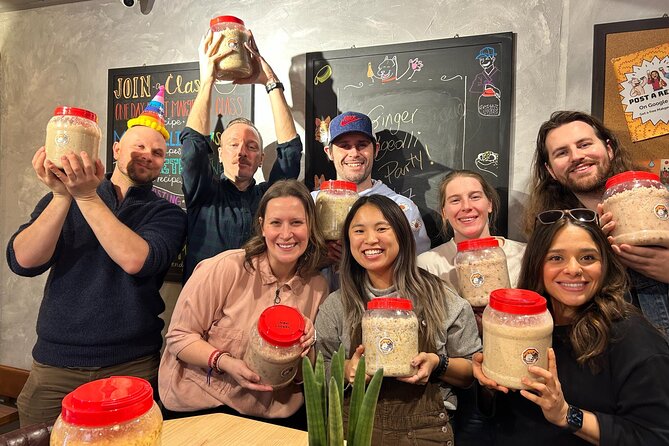
- You leave with makgeolli to ferment at home, about 1.2 liters
- An intimate shop setting tied to Korean market-style atmosphere
- A teacher who stays responsive, including clear communication support
Makgeolli in Seoul: what this 2-hour craft class really delivers
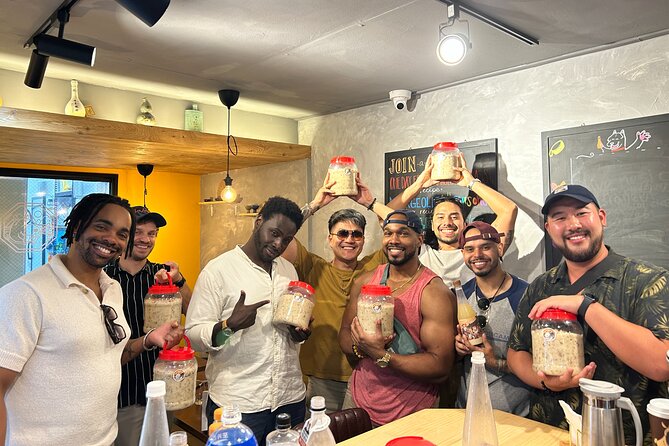
This is a Seoul experience for people who enjoy rice wine and want to understand why it tastes the way it does. The heart of the class is simple: you learn the building blocks of makgeolli, you taste different styles, and then you make a batch you can take home.
Baekusaeng Makgeolli positions the class as training, not a one-time show. They talk about traditional methods using fresh, real ingredients rather than shortcuts. That matters because makgeolli is all about fermentation behavior and balance. If your goal is to make something consistent later, you need more than a recipe—you need a mental model of what’s happening and what changes the outcome.
The pacing is what makes it practical. In about two hours, you get enough context to taste intentionally and enough hands-on time to follow what you’re doing. You’re not expected to become a master brewer by the end, but you are set up to keep going after the class.
You can also read our reviews of more tours and experiences in Seoul.



Where you start: the Ahyeon-dong meeting point and the vibe inside
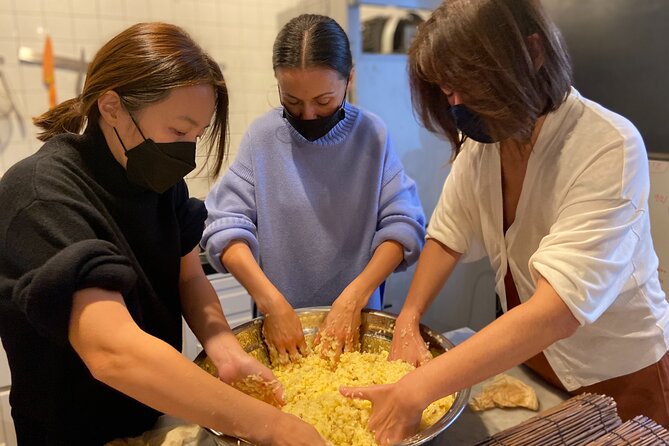
You’ll meet at 346-35 Ahyeon-dong, Mapo-gu, Seoul. The activity ends back at the meeting point, so you’re not getting scattered around the city. That’s a plus in Seoul, where travel time can eat your evening.
The setting is described as small and cozy, almost like a makgeolli bar that opens for class. One person noted the feeling of a clean, micro-brewery-like space even though the atmosphere connects to a more traditional Korean market setting. That blend is great for this kind of activity: it feels local and grounded, while still being organized and straightforward.
This is also a smaller-group format (maximum 15 travelers). In real terms, that means you’re more likely to get questions answered while you’re working, rather than waiting your turn.
The tasting flight: learning the language of aroma, sweetness, acidity, and texture
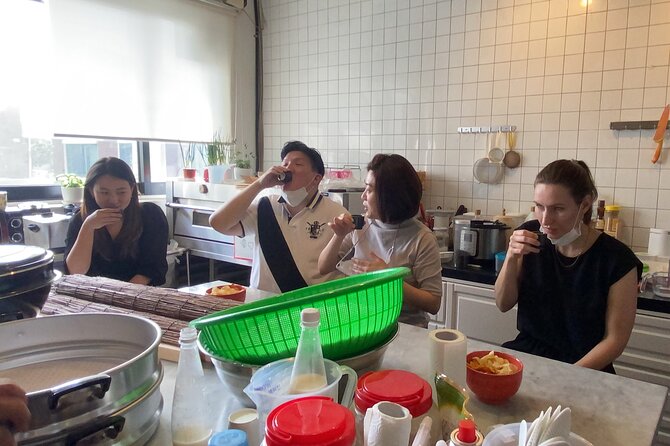
A lot of alcohol classes start with drinking. This one uses drinking as a teaching tool. You’ll taste thoughtfully selected makgeolli and learn how different elements show up in the glass: aroma, sweetness, acidity, and texture.
That tasting portion is valuable because it teaches you what to notice later while you’re fermenting. When you’re back home, you won’t have the instructor hovering over your counter. But if you know what to look for—how balance shifts as fermentation progresses—you’ll be able to make better calls about your next batch.
You also get to sample different blends in a way that feels like a flight, not just a single pour. Several comments praise the samples and the variety, and that fits the class goal: helping you recognize what changes taste and mouthfeel.
Ingredients and tools: what matters for real fermentation
After tasting, the lesson moves into the ingredients and tools used in traditional and modern makgeolli brewing. The big idea here is that makgeolli isn’t just “mix and wait.” It’s fermentation driven by living factors, and the craft is understanding what you’re using and why.
The class specifically covers fermentation components including yeast and nuruk activity, plus steps like filtering and conditioning. Even if you don’t remember every term, you’ll leave with a map of the process. That’s what makes this feel different from a typical food tour.
One review highlights that the instructor used a whiteboard to write Korean terms, which is a small detail but genuinely helpful. When you’re trying to recreate brewing steps later, being able to match words you hear in Korea to supplies you search for at home can save time (and prevent buying the wrong thing).
Hands-on brewing: making your batch like a real brewer
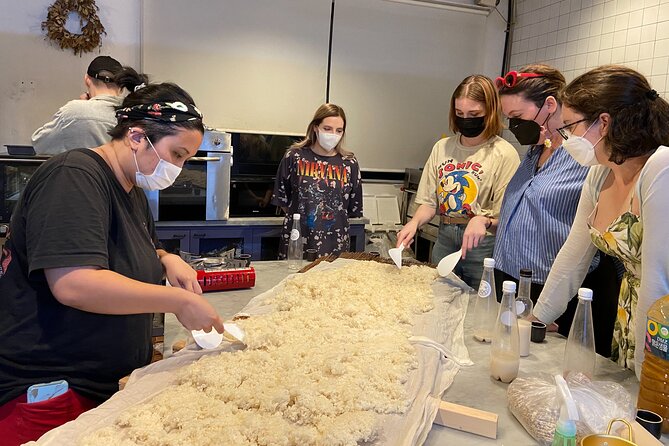
This is where the class turns from listening into doing. You’ll take part in making your own makgeolli, guided step by step. The overall flow described in comments is structured: first you learn and taste, then you work on the brewing itself, and finally you celebrate with the drink.
One person mentioned making a pumpkin mash as part of the process. I wouldn’t assume every session is pumpkin-based, but it’s a good sign that the class isn’t robotic. Sometimes makgeolli brewing includes mash variations, so you might experience a seasonal or style-focused ingredient approach depending on what’s prepared for your session.
Because the class is hands-on, you don’t need to be a culinary expert. What you do need is a willingness to get a bit involved. Several comments mention how organized the instruction felt and how the host explains differences between types and methods. That combination is ideal: you’re not just completing steps—you’re learning how choices lead to different results.



Fermentation basics explained in plain terms (and why they matter later)
The fermentation portion is the backbone of makgeolli. This class doesn’t treat fermentation as a black box. It covers yeast and nuruk activity, then discusses filtering and conditioning techniques.
Here’s why that matters for you: once you take home your batch, the learning has to transfer. You’ll need to understand what’s driving changes over time, and what steps are meant to stabilize or refine the final texture and flavor.
If you’ve ever brewed anything before, you know the hard part isn’t the first day. It’s the days after, when you’re unsure whether what you see is normal. The class is built to reduce that uncertainty by giving you the framework to interpret what’s happening.
Your take-home makgeolli: about 1.2 liters to ferment
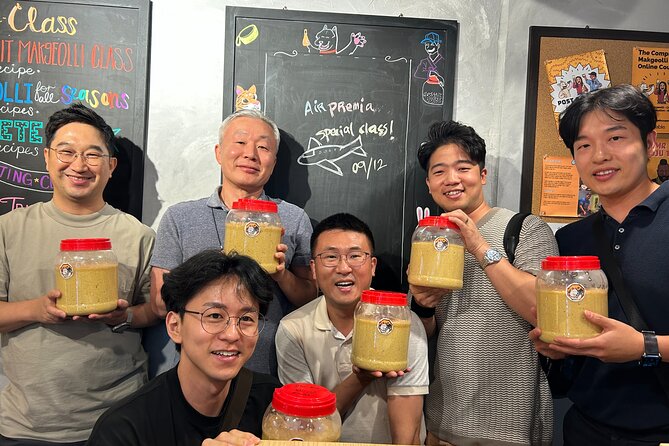
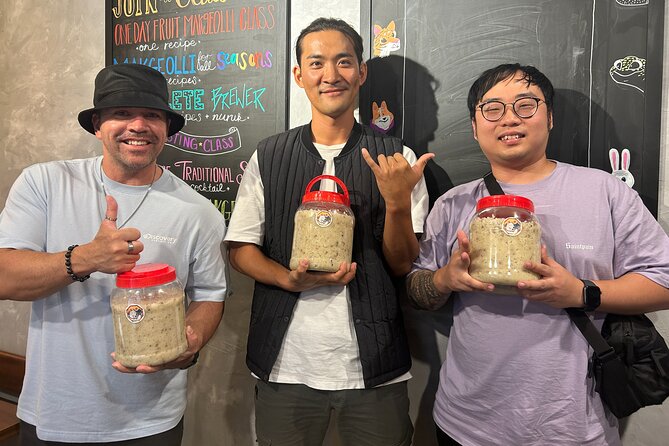
The highlight for many people is that you don’t just leave with knowledge—you leave with work-in-progress makgeolli. You take home your own batch, approximately 1.2 liters, to ferment.
That take-home amount is big enough to feel real. It’s not a token bottle. It’s also enough that you’ll notice how your own setup impacts the brew, which is exactly the kind of learning you want if you came for more than a souvenir.
The class also includes an end-of-session moment with your makgeolli batch. In one account, they packaged the starter-like base into a larger plastic bottle (the kind used for home fermentation) and then had a drink together to close out the session.
Who you should book this for (and who might not love it)
I’d recommend this class if you fit at least one of these:
- You like Korean food, and you want culture you can taste and repeat later.
- You enjoy fermentation as a concept and want a clear, craft-focused start.
- You want a small-group class with time for questions, not a mass event.
You might want to consider a different type of experience if:
- You want only sightseeing or only drinking, with no interest in the process.
- You expect a guided “fermentation follow-up” over many days. The class itself is about 2 hours, and the continuing work is on you after you take your batch home.
It also makes sense for solo travelers. One comment describes a near one-on-one feel when only a single person signed up, and that’s a strong signal that the instructor can adapt.
Price and value: is $70.70 worth it for this kind of class?
At $70.70 per person for about 2 hours, this isn’t a budget activity, but it’s not just a tasting either. You’re paying for three things that add up:
- Instruction rooted in traditional methods (not just a simplified demo)
- Tasting and learning to build your palate for makgeolli variety
- A take-home batch (about 1.2 liters) so you get ongoing practice after the class
The small group size (up to 15) also affects value. In classes with larger crowds, questions and hands-on time get diluted. Here, the format is built to keep it interactive.
One more practical note: the class is often booked about 23 days in advance on average, so it’s smart to reserve early if you’re traveling on a tight schedule.
Booking, tickets, and getting there without stress
This class uses a mobile ticket, and you’ll receive confirmation at booking. It’s near public transportation, which helps if you’re pairing it with dinner plans in Mapo or central Seoul. Also, service animals are allowed, which is good to know if that’s part of your planning.
If you’re prone to getting lost, give yourself an extra buffer. One review describes getting turned around finding the shop, and the instructor still helped patiently. That’s reassuring, but it’s best not to rely on last-minute fixes when you’re trying to start on time.
Final call: should you book Baekusaeng Makgeolli?
If you want a memorable Seoul evening that teaches something you can reuse, I think this is a strong choice. The combination of tasting + fermentation instruction + take-home makgeolli makes it feel like real learning rather than a simple stop on your map.
Book it if you’re curious about how makgeolli works—especially nuruk activity, and how filtering and conditioning shape the final drink. Skip it only if you’re purely sightseeing-focused or you want a long, guided fermentation follow-up over days.
Overall, this is the kind of class that turns a holiday drink into a skill.
FAQ
How long is the makgeolli class in Seoul?
The class runs for about 2 hours.
What does the class include?
You’ll taste different makgeolli, learn about ingredients and tools, cover fermentation topics such as yeast and nuruk activity, and practice making your own makgeolli.
Can I take makgeolli home?
Yes. You take home your own makgeolli to ferment, approximately 1.2 liters.
How big is the group?
The class has a maximum of 15 travelers.
Where is the meeting point?
You’ll meet at 346-35 Ahyeon-dong, Mapo-gu, Seoul, South Korea, and the activity ends back at the meeting point.
Is there public transportation nearby?
Yes, the meeting location is listed as near public transportation.
What ticket type do I receive?
The experience uses a mobile ticket.
Is confirmation provided after I book?
Yes, confirmation will be received at the time of booking.
What is the cancellation policy?
You can cancel for a full refund if you cancel up to 24 hours in advance of the experience start time. Changes within 24 hours of the start time aren’t accepted.
Are service animals allowed?
Yes, service animals are allowed.