REVIEW · SEOUL
Korean Palace and Temple Tour in Seoul: Gyeongbokgung Palace and Jogyesa Temple
Book on Viator →Operated by KOREA TOUR (DMZ TOUR) · Bookable on Viator
Palace power and temple calm in one morning. This 3.5-hour Seoul tour strings together Gyeongbokgung Palace and Jogyesa Temple, with a stop at the National Folk Museum so you can compare Joseon-era life with today’s city streets. I like that you’re not just looking at sights—you’re getting context as you move.
I also like the practical setup: hotel pickup by air-conditioned van, plus admission help at the palace. The one wrinkle to plan for is the included ginseng center stop, which some people experience as an aggressive sales pitch and it does take time near the end.
This is a small-group tour (max 20), and it moves on foot for part of the palace and temple areas. Wear comfortable shoes—you’ll cover enough ground that you’ll be glad you did.
In This Review
- Key highlights at a glance
- Hotel pickup, Blue House drive-by, and an efficient Seoul route
- Gyeongbokgung Palace: Joseon royal life in a walkable compound
- National Folk Museum: everyday Korea, from old routines to today’s patterns
- Jogyesa Temple: Zen Buddhism where the city keeps moving
- The ginseng center and Seoul City Hall stop: shop time and photo time
- Guide impact: why the storytelling matters on a short tour
- Pacing and time limits: what you will and won’t get
- Price and value: is $40 worth it?
- Who should book this tour (and who should skip)?
- Should you book this Korean palace and temple tour?
- FAQ
- How much does the Seoul palace and temple tour cost?
- How long is the tour?
- What time does the tour start?
- Do you get hotel pickup?
- Which admissions are included?
- Is there walking involved?
- How many people are in the group?
- Does the tour include shopping?
- Where do you end the tour?
- What is the cancellation policy?
Key highlights at a glance
- Gyeongbokgung Palace admission included so you can focus on the grounds instead of tickets
- National Folk Museum (free admission) for a quick look at everyday life past to present
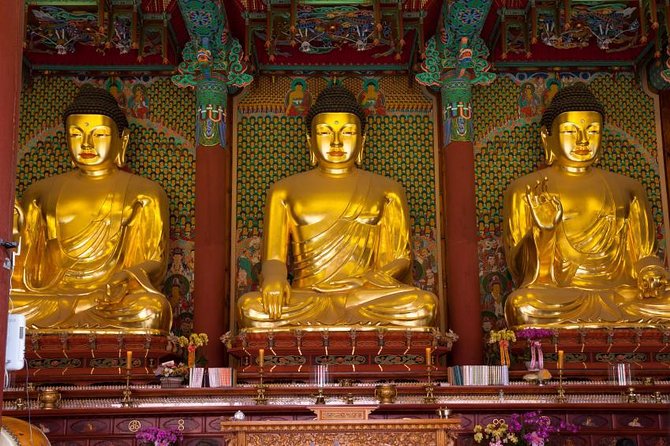
- Jogyesa Temple for Zen Buddhism in the Joseon story rather than just a photo stop
- Hotel pickup and air-conditioned transport that keeps the route easy and on schedule
- One ginseng shopping stop plus a Seoul City Hall stop at the end, so set expectations
Hotel pickup, Blue House drive-by, and an efficient Seoul route
The day starts with hotel pickup around 8:30am, and you’ll ride in a comfortable, air-conditioned vehicle. That matters in Seoul because distances look short on a map, but traffic and walking distances can add up fast. Getting collected from your hotel also saves you the stress of figuring out train timing before you even start your sightseeing.
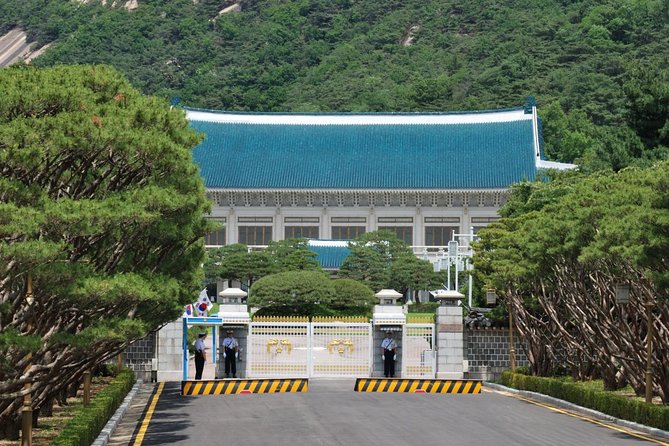
Right away, the drive gives you a sense of modern power and history at the same time: you pass the Blue House (Cheongwadae), the executive office and residence of South Korea’s head of state and president. It’s a quick moment, but it’s a helpful framing device—Seoul isn’t only palaces and temples. It’s also government, present-day life, and fast change.
The itinerary then keeps moving in a tight loop: palace, museum, temple, and a couple of city stops. For many people, this is exactly the value of a half-day format. You’re not trying to do everything—you’re choosing a small set of the most story-rich places and letting the guide stitch them together.
You can also read our reviews of more tours and experiences in Seoul.
Gyeongbokgung Palace: Joseon royal life in a walkable compound
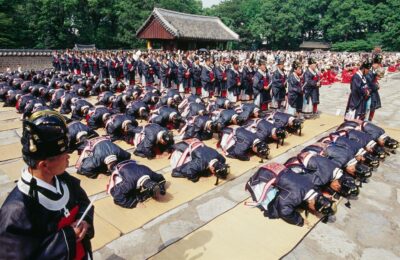
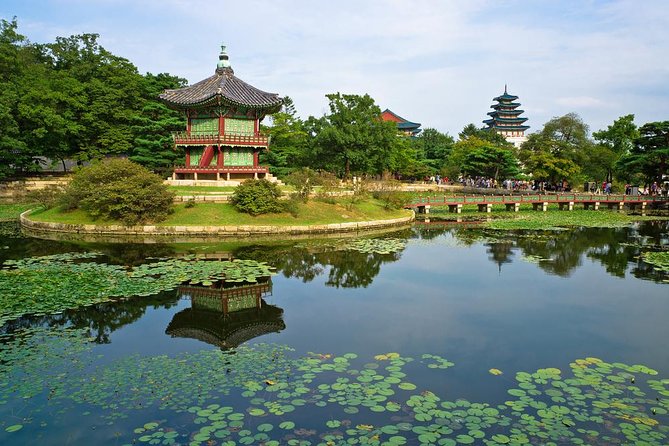
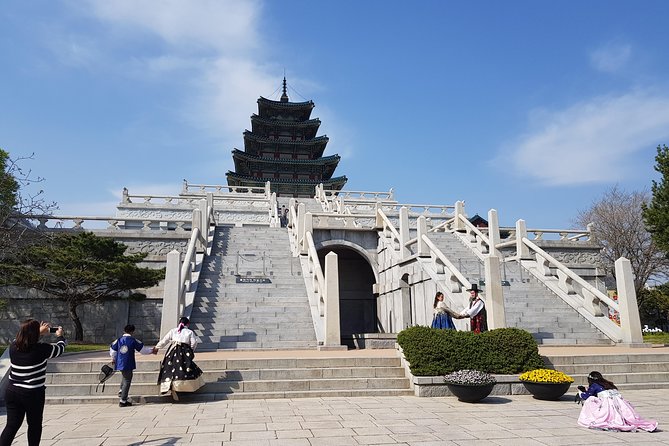
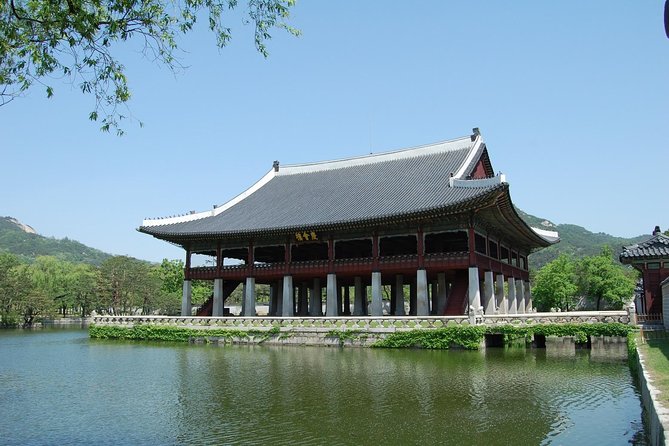
Gyeongbokgung Palace is the star here, and it’s easy to see why. It’s the primary residence of the royal family in the Joseon Dynasty, and it remains the largest and grandest of the Five Grand Palaces. Even if you’ve visited other palaces in Asia, this one tends to land differently because you get both scale and a sense of ceremony built into the layout.
Your visit is on foot around the palace compound, with about one hour allocated there and palace admission included. A good guide turns those minutes into more than sight-seeing. The best explanations I saw referenced in feedback focus on how the palace functioned, where key halls would have mattered in daily court life, and what smaller details signaled status and purpose.
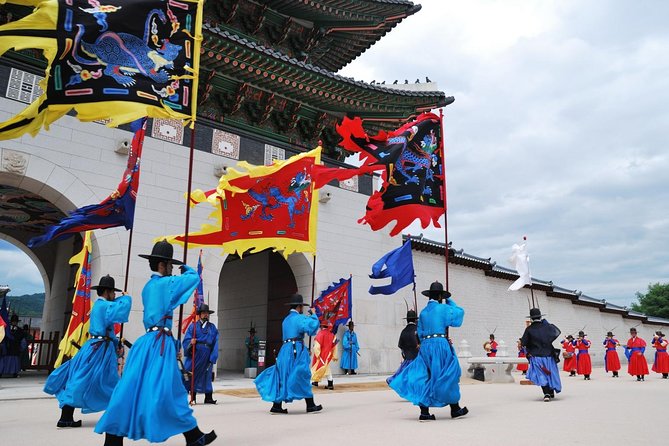
One practical tip: palace timing can matter. In feedback, I saw people mention the changing of the guard at the main gate when their timing lined up. You might catch that too, but it’s not guaranteed—so don’t build your whole day around one single moment. Instead, use the hour for the grounds, the main buildings, and the overall feel of a seat of power.
Also, plan for light-to-moderate walking. The palace is spread out. If your legs get sore easily, bring a little patience, and slow down when you want to take photos so you don’t feel rushed at the end.
National Folk Museum: everyday Korea, from old routines to today’s patterns
After the palace, you move to the National Folk Museum of Korea, with about 20 minutes inside. Admission is free for this stop, which is a nice way the tour adds value: you’re not paying extra to get context.
This part is designed to answer a simple question: what did ordinary life look like compared to royal life? The museum focuses on how Koreans lived from ancient times to today, so it’s not only costumes and artifacts. It’s the everyday stuff—customs, domestic life, and how people organized their routines as Korea modernized rapidly.
In a tour like this, short museum time can feel like a “quick hit.” But that’s also the point. If you’re visiting Seoul for the first time, this museum helps you stop treating history like a separate theme. It connects the dots between palace power and the real lives of people outside the palace gates.
If you like to learn by comparison, this is a strong mid-day pivot. The palace gives you structure and ceremony; the museum gives you normal people and daily habits.
Jogyesa Temple: Zen Buddhism where the city keeps moving
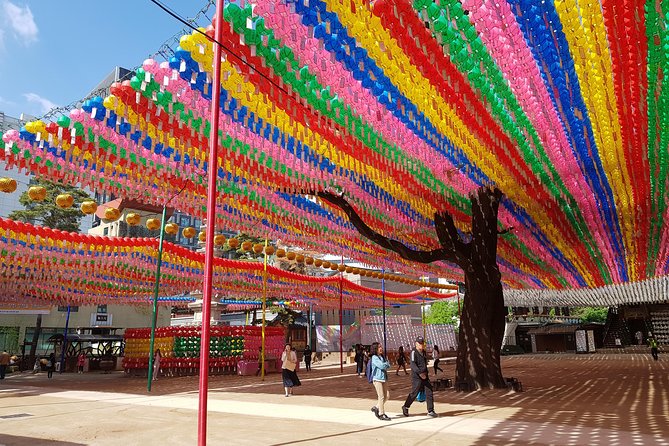
Next comes Jogyesa Temple, described as the leading temple for Zen Buddhism in Korea. You’re there for roughly 20 minutes, and the admission is free for this stop.
What makes Jogyesa worth a place on your schedule is that it’s not tucked away in the countryside. It sits in the city, so you get a living view of Buddhism in Seoul rather than a distant reenactment. The tour’s framing also connects to Korea’s Joseon-era context, focusing on the role Buddhism played in Korean culture.
You’ll likely notice a different mood here than at the palace. The atmosphere tends to feel more inward—quieter, slower, and more about observation. In feedback, I saw mentions of seeing prayer activity when someone’s timing lined up, and that kind of moment can make a temple visit feel real instead of staged.
A small detail that stuck with me: one review mentioned colorful floral offerings in the garden that made the visit more vivid. That’s exactly the kind of thing you shouldn’t ignore. When the tour is short, those little visual cues help you remember the place.
If you’re sensitive to crowd noise, come ready for that. Temples are active spaces, and you’re visiting during regular touring hours in the morning. Still, this is a good stop for a calm reset between palace walking and city sights later.
The ginseng center and Seoul City Hall stop: shop time and photo time
Not every part of this tour is equal in pure cultural value. Near the end, the route includes a ginseng center shopping stop (about 30 minutes). After that, you’re taken to Seoul City Hall for another 30 minutes before being dropped off at the City Hall area.
Here’s the honest way to think about it: the ginseng center is part of the tour package, but it may not be what you came to Seoul for. Some people reported it felt like a hard sell and felt awkward. If that’s a concern for you, go in with a simple plan: treat it like a quick look, browse calmly, and don’t feel obligated to buy. Decide in advance that you’re there for the experience, not for a sales presentation.
As for the Seoul City Hall stop, it’s mainly a chance to get a feel for another major landmark area in the city before you wrap up. Even if you don’t spend your whole time taking photos, it can help you end the morning with a clearer sense of where you are in Seoul.
One more logistics note: the tour does not include hotel drop-off. The end point is the City Hall area, so plan your next step—metro, taxi, or wherever your afternoon plans are.

Guide impact: why the storytelling matters on a short tour
With a tour that’s this time-compressed, the guide can make the difference between seeing places and understanding them. The best feedback I saw emphasized guides who keep the group together, share clear explanations, and answer questions without turning the day into a lecture.
Specific guide names come up repeatedly in feedback: AJ stood out for bringing palace life to life with detailed explanations, and Katie, Chloe, Grace, Eden, Sadie, and Jun also showed up with praise for organization, clear history, and smooth pacing. Even Rebecca, Charles, Yeoni, and David were mentioned for humor, patience, and good English communication.
You can use this as a decision tool. When you book, look for cues that the tour operates in English and that your guide is likely to keep things moving and manage timing. If you prefer a tight schedule with smart context, this tour style fits well.
Also, one practical perk mentioned in feedback: guides often help with photos and keep an eye on the group. That sounds small, but it matters when you’re moving from palace to museum to temple and you want pictures without chaos.
Pacing and time limits: what you will and won’t get
This is a 3 hours 30 minutes tour, and it hits multiple major stops. That means you’re going to get a taste, not a slow, deep study. Some people love that because it’s efficient. Others want more time in each site, and the short allocations can feel rushed if you’re the type who reads every sign.
I also saw one caution about itinerary order getting changed on a departure due to timing needs. In a packed morning, switching the order can squeeze the remaining time, especially around palace or temple moments that have fixed schedules. If you’re sensitive to timing, check the plan with your guide on the day and prioritize the parts you care about most.
What I’d do in your shoes: treat Gyeongbokgung as your main hour. Then let the museum and temple work as context and mood changes. If you try to treat all three as equally long, you’ll feel short-changed. If you treat them as a connected story, you’ll enjoy the flow more.
Price and value: is $40 worth it?
At $40 per person, the value comes from what’s bundled. You’re getting:
- Hotel pickup and air-conditioned transport across several major stops
- A local guide
- Admission fees included (the palace ticket is the clear included paid component)
- Free admission for the National Folk Museum and Jogyesa Temple according to the schedule
If you were to do this on your own, the biggest cost isn’t only tickets. It’s also time: finding the route, organizing entrances, and managing your day while you’re trying to see multiple places.
So yes, for most first-timers, this can be good value—especially if you like structure and want a clean half-day plan. The main reason to question it isn’t the palace or temple. It’s the ginseng center stop, which you may find less useful.
If you’re the type who hates shopping presentations, decide your stance before you arrive. If you can tolerate a short sales-heavy detour, you’ll likely see good value in the historical and cultural stops.
Who should book this tour (and who should skip)?
This tour fits best if you want an efficient Seoul morning with a history-and-culture backbone. Book it if you:
- Want Gyeongbokgung Palace without spending extra time figuring out logistics
- Like short museum context, not a full-day museum marathon
- Prefer a structured route with hotel pickup
- Want Zen Buddhism at Jogyesa Temple as part of a bigger story, not only a standalone landmark
Skip it or choose a different format if you:
- Hate shopping stops or get uncomfortable with sales pressure
- Want long time inside each site and plans built around your own pace
- Need hotel drop-off and find ending at City Hall inconvenient
Should you book this Korean palace and temple tour?
I think you should book if your goal is a smart first taste of Seoul history and faith in a single morning, with transport and guidance handled for you. Gyeongbokgung Palace gives you the dramatic royal context, the National Folk Museum grounds you in everyday life, and Jogyesa Temple adds a calmer, spiritual counterpoint.
My only hesitation is the ginseng center. If you’re on the fence about shopping detours, go in with a plan: be polite, be brief, and protect your time for the palace and temple. If that sounds workable, this is a solid half-day way to see a lot without feeling like you’re fighting the city.
FAQ
How much does the Seoul palace and temple tour cost?
It costs $40.00 per person.
How long is the tour?
The duration is about 3 hours 30 minutes.
What time does the tour start?
The start time is 8:30 am.
Do you get hotel pickup?
Yes. Hotel pickup is included, along with transport by air-conditioned vehicle.
Which admissions are included?
The tour includes admission fees. The palace ticket is included, while the National Folk Museum and Jogyesa Temple admission are listed as free for this itinerary.
Is there walking involved?
There is a moderate amount of walking, and comfortable walking shoes are recommended.
How many people are in the group?
The maximum group size is 20 travelers.
Does the tour include shopping?
Yes. It includes one shopping center stop, the ginseng center.
Where do you end the tour?
After the ginseng center, you’re taken to Seoul City Hall and dropped off at the City Hall area. Hotel drop-off is not included.
What is the cancellation policy?
Free cancellation is available up to 24 hours in advance for a full refund.
![[Private Tour] Nami Island & Snow Viewing and Snow sled (More Members Less Cost) - A private driving guide that keeps your day simple](https://m.discoveringseoul.com/wp-content/uploads/private-tour-nami-island-snow-viewing-and-snow-sled-more-members-less-cost-400x267.jpg)