REVIEW · SEOUL
Day Trip to UNESCO: Suwon Fortress Adventure from Seoul
Book on Viator →Operated by I Love Seoul Tour · Bookable on Viator
A fortress lesson without the long haul. This half-day UNESCO trip turns Suwon’s Hwaseong Fortress into a map you can actually follow, with a guide explaining the Joseon Dynasty behind the walls. And the Hwaseong Haenggung Palace stop gives you a clear reason the complex matters, beyond just taking photos.
I especially like the balance here: you get guided context plus real walking, without eating your whole day. I also like that the tour is set up as a smooth morning plan from Seoul with air-conditioned transport and admission included. The main consideration is simple: weather and the day’s flow can change how much time you feel you get on the fortress itself, and the half-day schedule doesn’t leave room for a slow, pick-every-detail pace.
In This Review
- Key Highlights at a Glance
- Why Suwon Fortress Works as a Half-Day Trip From Seoul
- Getting to Hwaseong Fortress: Myeong-dong Start and Coach Time
- Hwaseong Fortress Walk: Gates, Walls, and King Jeongjo’s Story
- Hwaseong Haenggung Palace: A Wartime Retreat Made Royal
- The Guide Factor: How Your Story Comes With the Stones
- Pace, Comfort, and Weather: What 4 Hours Feels Like
- Price and Value: Is $48 Fair for UNESCO + Transport + Admission?
- What to Do After You’re Back in Myeong-dong
- Who Should Book This Tour
- Should You Book This Tour?
- FAQ
- FAQ
- What is the duration of the Suwon Fortress adventure?
- Where does the tour start in Seoul?
- What time does the tour begin?
- How many stops are included?
- Is admission to Hwaseong Fortress included?
- Is admission to Hwaseong Haenggung Palace included?
- Do I need to pay extra for meals or drinks?
- Is hotel pickup available?
- How many people can be in the tour group?
- What is the cancellation policy?
Key Highlights at a Glance
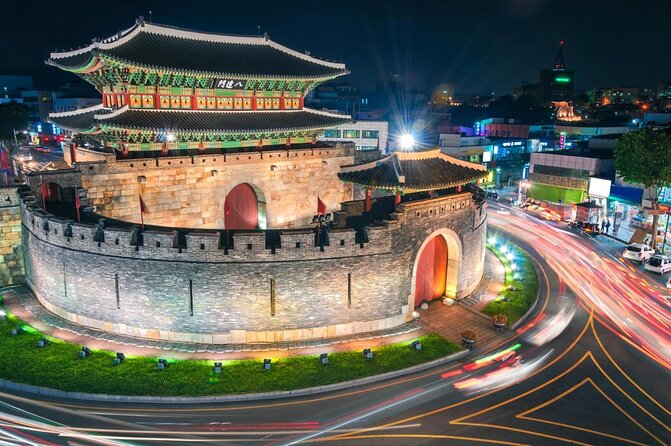
- UNESCO set piece close to Seoul: Hwaseong Fortress, a major Joseon-era defensive work
- Direction-gate explanations: you’ll learn what the gates mean, not just where they are
- Haenggung Palace context: why a royal temporary palace existed during war
- Admission built in: fortress and palace entry are included in the price
- English-speaking guiding: practical storytelling you can use while walking
- Half-day timing: enough time to feel it, short enough to keep your afternoon open
Why Suwon Fortress Works as a Half-Day Trip From Seoul
If you only have a slice of time in Seoul, Suwon is a smart move because you’re not chasing a “maybe we’ll find it” experience. This tour is built around two UNESCO-connected stops: Hwaseong Fortress and Hwaseong Haenggung Palace. That means you’re not bouncing around random sites. You’re moving through one connected story.
What makes the half-day format work is that the fortress is large, but it doesn’t force you into an all-day endurance event. You’ll still get the walking and the scale that make fortress walls feel different from museum halls, while the schedule keeps the experience focused. The day also ends back in the Myeong-dong area, which is ideal because it lets you pivot to shopping, street food, or a second sightseeing plan without a complicated transfer.
The other big win is the guided context. Hwaseong Fortress is tied to Joseon Dynasty leadership and King Jeongjo’s legacy, including the idea of filial piety toward his father. A guide helps you see why features exist where they do, instead of treating the site like a set of scenic backdrops. If you enjoy history that has a direct “why,” this is the right pace.
You can also read our reviews of more tours and experiences in Seoul

Getting to Hwaseong Fortress: Myeong-dong Start and Coach Time
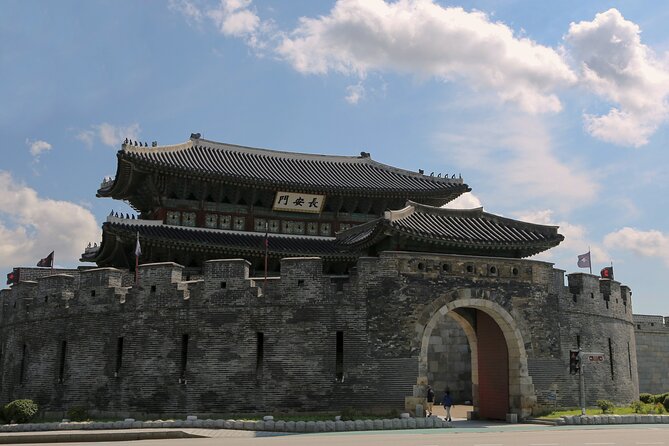
Your morning starts at 8:20 am at Myeong-dong Station Exit 1061-7 (Chungmuro 2(i)-ga, Jung District). The tour uses an air-conditioned coach or minivan, which matters because leaving Seoul early can still feel warm, crowded, or rainy depending on the season.
One practical detail: hotel pickup is only available for centrally-located Seoul hotels. If your lodging is outside that range, the English-speaking guide meets you in front of the nearest central hotel or nearest subway station. The tour ends with drop-off in Myeong-dong, so you don’t have to coordinate a second ride back across town later.
This setup is convenient, but you’ll want to plan for the fact that hotel pick-up and drop-off aren’t universally included. If you’re staying in a neighborhood far from the center, double-check what your meeting point will be so you don’t lose time figuring it out.
Also note: the tour is capped at a maximum of 100 travelers. That’s not “private,” but the schedule is short enough that you can still get personal attention when the group stays manageable.
Hwaseong Fortress Walk: Gates, Walls, and King Jeongjo’s Story
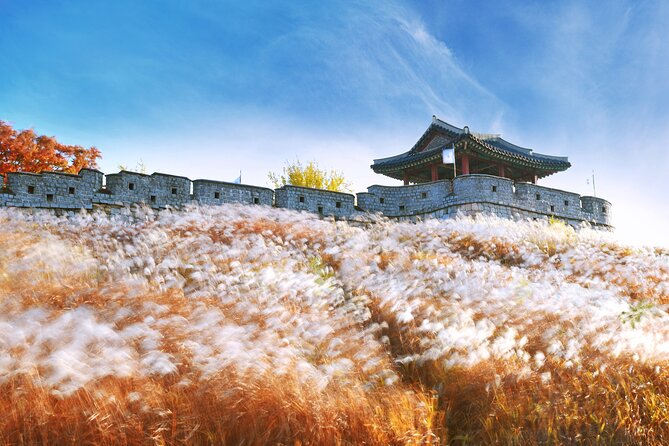
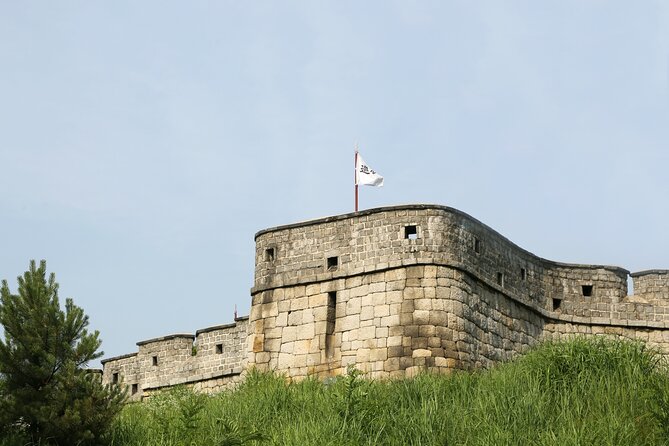
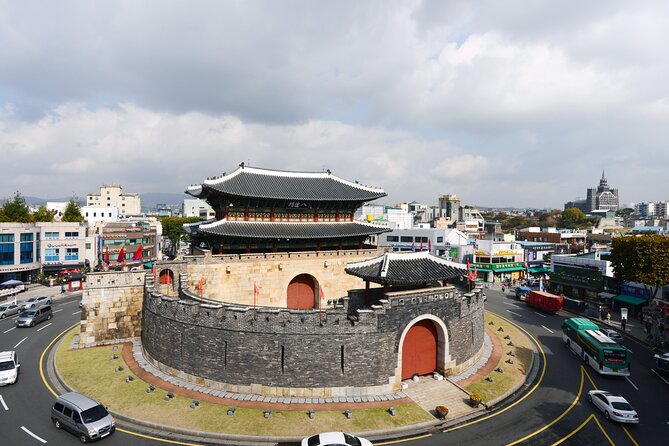
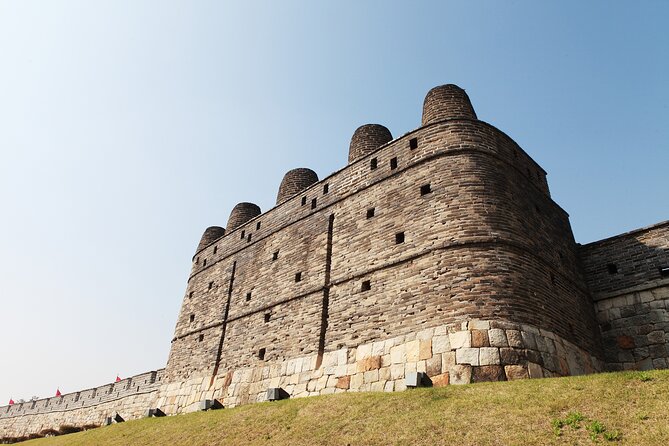
The main stop is Hwaseong Fortress, where you’ll spend about 1 hour 30 minutes with admission included. This fortress dates to the latter part of the Joseon Dynasty (1392–1910), and the tour frames it around King Jeongjo’s motivations. The fortress is presented as a way of displaying his filial piety toward his father—so you’re not just looking at stone and thinking, it’s old. You’re connecting it to a political and family story.
The highlight here is how the guide points out directional gates and explains why each one matters. On your own, it’s easy to walk up to a gate, take a picture, and move on. With a guide’s pacing, you start noticing patterns: how gates relate to routes, how entrances frame movement, and how the design supports the fortress’s purpose.
You’ll also get a sense of scale. Fortress walls aren’t just “views.” They’re built for movement and defense, and they change how your body moves through the site. Even with a half-day plan, the fortress feels substantial because it’s not one room or one building. It’s a system.
One consideration: some departures can include extra transport moments during the day. If your specific route includes waiting time, it can feel like the clock is being spent before you’re in the best photo positions. The fix is mindset more than strategy: come ready to focus on the walk and the gates during the time you have, and don’t expect this to feel like a slow, choose-your-own-adventure photo safari.
Hwaseong Haenggung Palace: A Wartime Retreat Made Royal
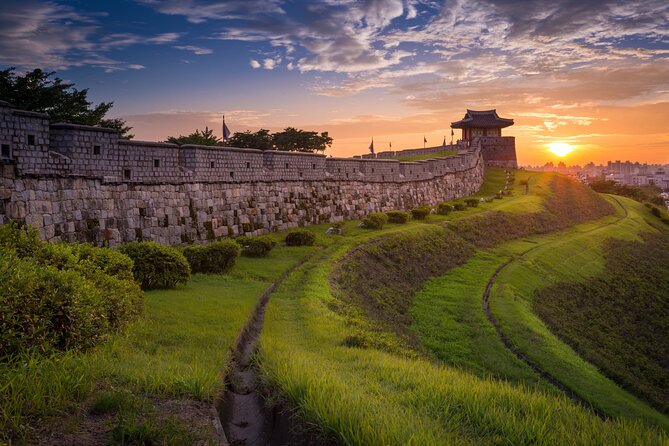
After the fortress, you move to Hwaseong Haenggung Palace, with about 30 minutes and admission included. This stop is where the tour shifts from defense to daily royal life under threat.
The term “haenggung” matters here. A Haenggung was a temporary palace where the king and royal family could retreat during war. The particular site visited here is described as the largest of these temporary palaces, and it’s tied to King Jeongjo. The tour also frames how Joseon kings used it after him, and how King Jeongjo stayed there when he traveled to worship at his father’s tomb.
That story connects back to the fortress theme. You’re seeing a single narrative: one location built to express legacy and authority, and another designed for the reality of conflict. It helps the palace stop feel like more than a pretty courtyard.
Time is the only trade-off. Thirty minutes is enough to get the main layout and absorb the core explanations, but it’s not enough for a long wander or museum-style reading. If you love palace details, think of this as a guided highlight reel that sets you up to return later for a slower second visit.
The Guide Factor: How Your Story Comes With the Stones
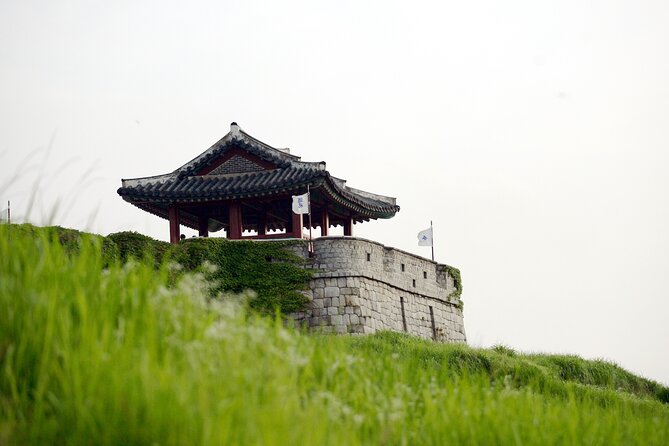
This tour lives or dies by the guide’s explanations, and the pattern is consistent: guides are praised for clear English and for turning historical context into something you can track while walking. Names that have been mentioned include Sophie, JL, Shin, Henry, Stella, Thomas, Park, Chloe, and Leo. You may not know who you’ll get in advance, but the important takeaway is what they do well: connect the site to Joseon-era meaning, and keep the pace readable for a mixed group.
You’ll also feel that guides try to keep things practical. Some guides are known for making sure people can ask questions and take photos, and for checking comfort levels when walking becomes more strenuous. That matters on fortress days because the terrain and steps can shift your experience from relaxing to tiring fast if you don’t get thoughtful pacing.
If you’re the type who likes to understand what you’re seeing before you photograph it, this tour is built for you. If you prefer pure scenery without talking, you might still enjoy it, but you’ll get more out of it when you pay attention to the gate explanations and why the palace exists.



Pace, Comfort, and Weather: What 4 Hours Feels Like
The whole tour runs about 4 hours. That’s a good length for an early start because it keeps you flexible afterward, but it does mean the schedule is tight enough that you can’t treat it like an all-morning hike with unlimited detours.
You’ll want to wear comfortable walking shoes. Fortress areas often involve uneven surfaces, stairs, and stretches where you’ll be outside for a while. Bring water even though meals and drinks aren’t included. On a hot day, the fortress walking part is the time you’ll feel it most.
Weather is the wildcard. Even when guides work hard to keep plans on track, rain can limit what you enjoy or how much time you want to spend outdoors. One practical approach: pack a light rain layer and plan to accept that the fortress might be viewed in a different way under bad weather. If you’re traveling in the wet season, you’ll have a smoother experience when your expectations are “guided highlights and good context,” not “perfect conditions for every viewpoint.”
Also, keep your afternoon open. Because the tour ends around Myeong-dong, it’s easy to pivot to indoor stops if the weather shifts, or to keep exploring streets and markets if the morning goes well.
Price and Value: Is $48 Fair for UNESCO + Transport + Admission?
At $48 per person, you’re paying for three main things: guided time, air-conditioned transport from Seoul, and admission for both stops. You also avoid the hassle of booking separate tickets and figuring out the public-transport routing with luggage and an early start.
The biggest value move is the admission being included. Hwaseong Fortress and the palace stop both have entry included in the tour price, which reduces decision fatigue. The other value piece is the guide’s translation of purpose and design—because fortress walls are more interesting when you understand why gates, routes, and structures exist.
What’s not included is also important. Meals and drinks aren’t included, and you’ll also have to handle personal expenses. Hotel pickup/drop-off isn’t included for every hotel, and you’ll still be dropped at Myeong-dong. Add those real costs and logistically, this tour still tends to work out as fair for a half-day plan, especially if you want your UNESCO time guided rather than DIY.
If you’re traveling as a family or a small group of friends, the guided format can feel more efficient because questions get handled on the spot instead of you hunting down answers while tired.
What to Do After You’re Back in Myeong-dong
Dropping you back in Myeong-dong is a smart move because it’s one of Seoul’s easiest areas to keep moving. After a morning of gates and palace walls, you can shift to food, shopping, or a second walk without changing your whole day plan.
Since meals and drinks aren’t provided, you’ll likely want lunch nearby. Myeong-dong is also a good base if you’re planning a later activity that depends on being close to central Seoul routes.
If you’re the type who likes to follow up with more context, think about a second pass somewhere nearby—like a museum stop—if the weather turns or if you want a calmer wind-down. The tour gets you oriented; you use your afternoon to decide how much more you want.
Who Should Book This Tour
This is a strong choice for you if:
- You want a UNESCO day-trip experience without spending your whole day commuting.
- You enjoy understanding the “why” behind historic design—especially gate meanings and palace purpose.
- You like history that connects to leadership decisions, not just dates.
It’s also a good fit for people who want a manageable group plan. The tour is capped at 100 travelers, and many groups run in a way that still feels question-friendly. People have also mentioned that the half-day format leaves enough time for later sightseeing.
You might think twice if you want:
- A slow, long, photo-first exploration with minimal explanation.
- Full-day flexibility to stop and roam whenever you want.
- A guarantee of outdoor performances. Some plans can include show-like elements, but timing can vary by day, and in some cases performances may not happen.
Should You Book This Tour?
I’d book this if you want your time in Seoul to include a UNESCO site that feels guided, organized, and easy to fit into a morning schedule. The combination of Hwaseong Fortress plus Hwaseong Haenggung Palace, with admission included and transport handled, makes the $48 price feel reasonable.
If you care about comfort and you pack for weather, this becomes an efficient way to learn the Joseon-era story behind one of Korea’s famous fortified sites. Treat it as a focused highlights tour: you’ll walk, you’ll learn what the gates and palace mean, and you’ll still have your afternoon free in Myeong-dong to decide what’s next.
FAQ
FAQ
What is the duration of the Suwon Fortress adventure?
The tour lasts about 4 hours.
Where does the tour start in Seoul?
It starts at Myeong-dong Station Exit 1061-7, Chungmuro 2(i)-ga, Jung District.
What time does the tour begin?
The start time is 8:20 am.
How many stops are included?
There are two main stops: Hwaseong Fortress and Hwaseong Haenggung Palace.
Is admission to Hwaseong Fortress included?
Yes. Admission for Hwaseong Fortress is included.
Is admission to Hwaseong Haenggung Palace included?
Yes. Admission for Hwaseong Haenggung Palace is included.
Do I need to pay extra for meals or drinks?
Meals and drinks are not included.
Is hotel pickup available?
Hotel pickup is only available for centrally-located Seoul hotels. If your hotel is not in that area, the English-speaking guide will meet you in front of the nearest central hotel or nearest subway station.
How many people can be in the tour group?
The tour has a maximum of 100 travelers.
What is the cancellation policy?
You can cancel for a full refund up to 24 hours before the experience start time. Free cancellation is available up to that cutoff.