REVIEW · INCHEON
Incheon Port History Tour by 19th Century Electric Car, KTourTOP10
Book on Viator →Operated by 조은투어 · Bookable on Viator
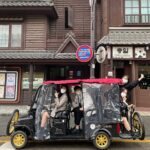
A 19th-century-style car in Incheon sounds simple, but it works. This short tour threads together the Incheon Open Port story with real-world stops like Chinatown buildings, a Jjajangmyeon origin site, and the Jemulpo Club. I love the easygoing small-group pace and the way the drive turns scattered sights into one connected route. One possible drawback: commentary can be limited, and some parts may feel more like guided pointing than deep explanations.
If you’ve got limited time—especially a layover—this is built for getting your bearings fast. You also get a mobile ticket and the tour runs about 50 minutes, so it fits neatly between other plans.
In This Review
- Key highlights you’ll feel right away
- Why Incheon Port History Still Matters
- The 19th-Century Electric Car Ride: Fun, Fast, and Easy
- Stop-by-Stop: Incheon Art Platform and the Open Port Stair Area
- Chinatown Heritage: Haean Catholic Church and Euiseon-dang
- Murals with Story Power: Chohanji and Three Kingdoms Mural Street
- Jjajangmyeon Museum: Food History You Can Actually Point To
- Donghwa Village and the Cycle of Neighborhood Change
- Jemulpo Club: A Foreign Social Hub with a Complex Timeline
- Price and Value: $45 Per Group for About 50 Minutes
- Meeting Point and Timing: Where to Start and How to Plan
- A Practical Watch-Out: Start Times and Commentary
- Who This Tour Fits Best (and Who It Doesn’t)
- The Bottom Line: Should You Book This Incheon Port History Tour?
- FAQ
- How long is the Incheon Port History Tour?
- What does it cost, and is it per person?
- Where does the tour start, and does it end nearby?
- How big are the groups?
- Is there a ticket for the Jemulpo Club stop?
- Is the tour ticket mobile?
- What’s the cancellation policy?
Key highlights you’ll feel right away
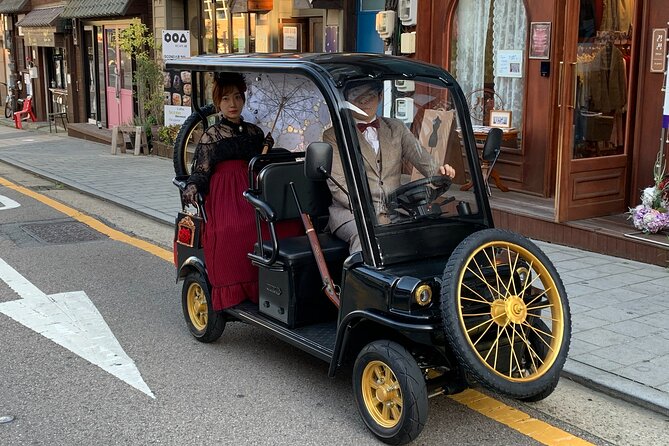
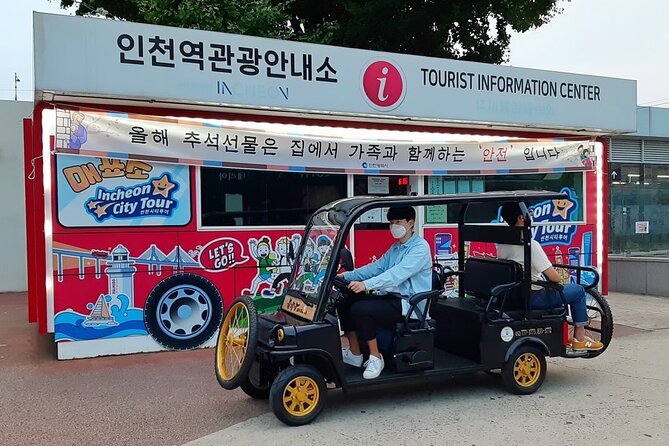
- Old-style electric vehicle: a fun, low-stress way to cover the Open Port area without long walking stretches
- Small group (max 20): you’re more likely to get real attention from your guide
- Stop variety: port history, Chinatown culture, food lore, and mural stories in one loop
- Photo-friendly landmarks: red-brick architecture, stair-area views, and mural streets
- Jemulpo Club: a historic social space tied to foreigners in Incheon and later changes
Why Incheon Port History Still Matters
Incheon’s port isn’t just a travel stop. It’s one of those places where Korea’s outside connections show up in brick, street layout, and neighborhood names. When the port was opened in 1883, foreigners settled nearby, and that period shaped how the city grew and interacted with China, Japan, and the wider world.
What I like about this tour is that it doesn’t treat history like a lecture. Instead, you connect the dots by moving through key zones—stairways tied to foreign residences and trade, Chinatown religious sites, and streets that reflect later cultural storytelling. The 50 minutes won’t make you an expert on Korean maritime trade, but it does give you a clear framework for what you’re seeing as you go.
You can also read our reviews of more tours and experiences in Incheon.

The 19th-Century Electric Car Ride: Fun, Fast, and Easy
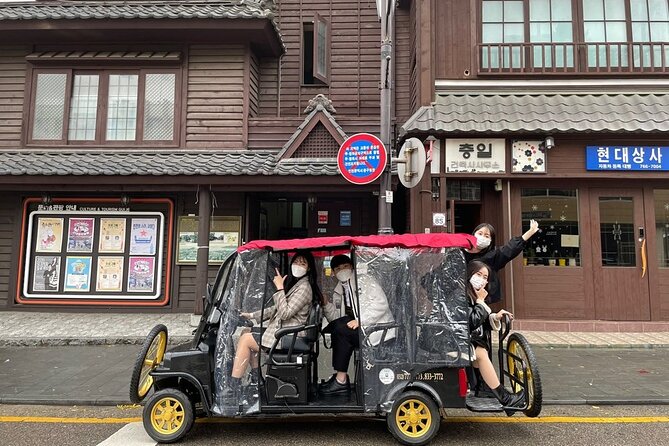
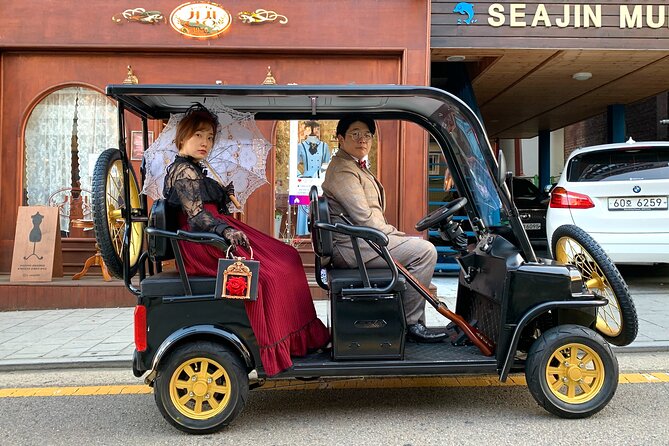
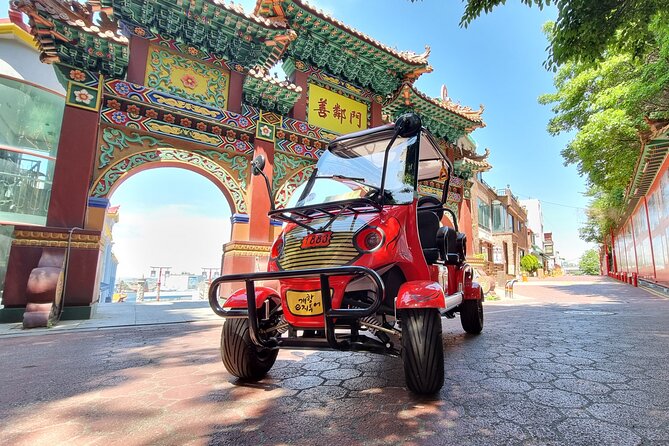
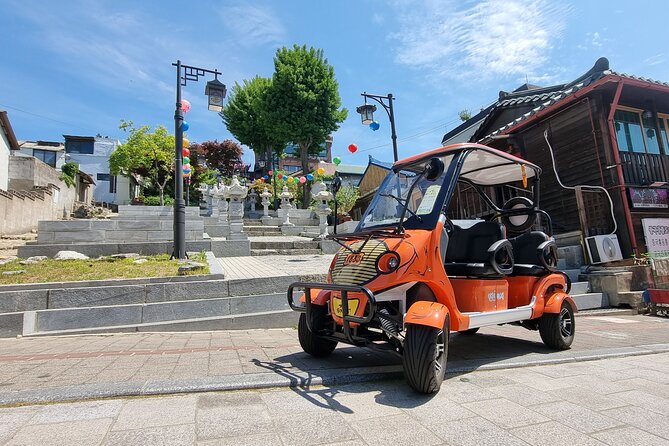
The vehicle is the hook: an old-fashioned electric car that feels like a prop from another era while you roll through Incheon’s Open Port streets. For me, the value is practical. You get to cover several stops without tiring yourself out, which matters in a coastal city where you might hit wind, heat, or crowds depending on the day.
You’ll also likely notice how the pace changes your experience. In a car, you can look at buildings from the right angle, then stop just long enough to read a bit, take a photo, and move on. It’s not the kind of tour where you disappear into one museum for hours. It’s more like a guided drive that turns into short site visits.
Stop-by-Stop: Incheon Art Platform and the Open Port Stair Area
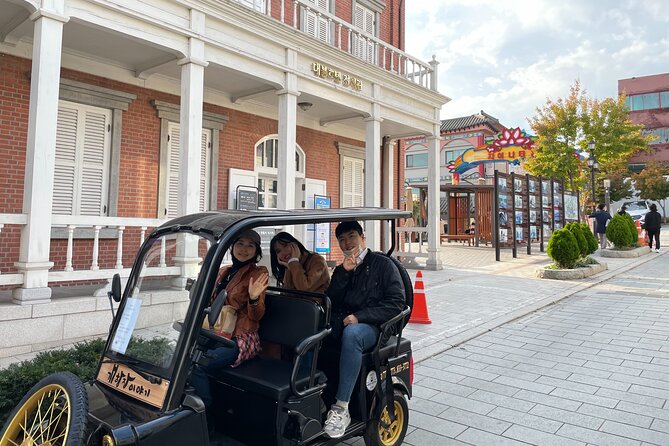
The tour starts at the Incheon Open Port zone around 266 Jemullyang-ro, and one of the first major stops is the Incheon Art Platform. It’s built from red bricks and focuses on the open port’s history, plus art exhibitions and performances. Even if you don’t plan to sit for long, you’ll get a sense of how the city uses heritage spaces as living cultural venues.
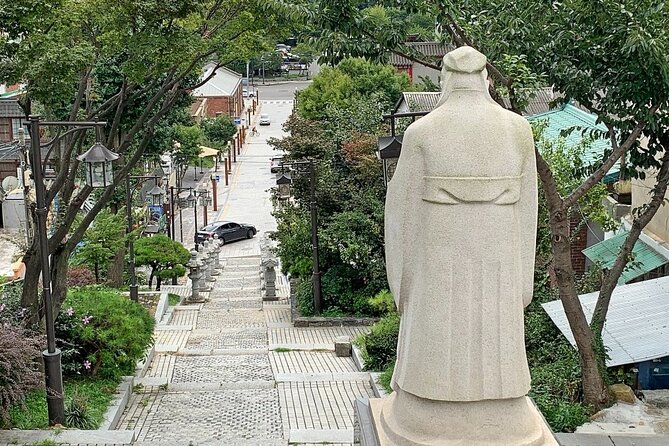
From there, you head toward the stair-area zone divided into Chinese and Japanese buildings. The term 조계 (Jogye) refers to a specific area set aside for foreign residents or trade. This is one of those moments where the street design becomes the history. You can see how the city physically separated communities, and the connection to Jayu Park gives you a chance to look out toward the Incheon Sea as part of the story.
What to watch for: don’t rush past the structure. In this area, the details in the buildings and how they cluster around the stairs are the point. A quick glance often turns into a better photo and a clearer mental map.
Chinatown Heritage: Haean Catholic Church and Euiseon-dang

Chinatown in Incheon isn’t only about food. It’s also where you can spot religious and community landmarks that reflect Chinese immigrant life. One stop is Haean Catholic Church, described as historically significant and created for devoted Catholics among overseas Chinese in the 1960s. Even if you’re not chasing church architecture, this stop helps you understand that the Chinatown community didn’t just appear during the port’s opening—it continued to evolve.
Another meaningful stop is Euiseon-dang inside Chinatown. It’s a Chinese-style shrine built by Chinese immigrants who left home and faced the loneliness and difficulty of immigration. That backstory changes how you view the site. It’s not just a pretty landmark. It’s a marker of how people carried culture and support systems with them when life was hard.
Murals with Story Power: Chohanji and Three Kingdoms Mural Street
Next up is Chohanji Mural Street & Three Kingdoms Mural Street, a street known for murals tied to Chinese historical novels: Chohanji and the Three Kingdoms. This is a clever pairing with the Open Port theme, because it shifts from real migration and trade into the stories communities told through art.
The practical advantage: murals are easy to enjoy on a short schedule. You can scan scenes, recognize character themes, and connect them back to the idea of cultural transmission. You don’t need perfect background knowledge to enjoy the visuals, though a quick interest in Chinese historical fiction will make the route more satisfying.



Jjajangmyeon Museum: Food History You Can Actually Point To
One stop I especially like for practical travelers is the Jjajangmyeon Museum. It’s located where the first original Jjajangmyeon restaurant, Gonghwachun, used to be. That means you’re not just hearing that the dish has a history. You’re visiting the place connected to it.
Food lore can sometimes be fluffy. Here, the value comes from the location anchor: you walk through a museum designed around the dish and its origin restaurant, with relics related to Jjajangmyeon and Gonghwachun. If you’re the type who likes culture you can eat later, this stop is a strong payoff.
Donghwa Village and the Cycle of Neighborhood Change
The itinerary also touches on how the port opening in 1883 drew foreigners who lived in Songwol-dong, forming wealthy villages. Over decades, young people moved out and only seniors remained, and the town was later reborn as Donghwa Village.
This is a good reminder that “historic area” doesn’t mean static. Neighborhoods change as economies shift and as families age, move, or find new work elsewhere. Even on a short tour, this kind of context gives you a more honest feel for the city you’re photographing.
Jemulpo Club: A Foreign Social Hub with a Complex Timeline
The tour includes Jemulpo Club, which is described as a social club for foreigners living in Incheon, operating in 1981 with spaces like a social room, billiard room, and reading room. There’s also mention of a tennis court outside.
The timeline then points toward 1914 during the Japanese colonial period, showing how institutions and foreign communities shifted over time. Even if you only spend a few minutes here, the club matters because it represents daily life—not just trade. It’s where you see the idea of community built around leisure and reading, not only shipping schedules.
Price and Value: $45 Per Group for About 50 Minutes
At $45 per group (up to 3 people), the math can be attractive if you’re traveling with someone and you’d otherwise pay separately for a driver or guided city walk. Because the group size can go up to 20, it’s still a guided experience, but it’s not a private charter.
You’re also paying for convenience. The car ride strings together multiple neighborhoods in one loop, and the guide fee is included. If you only have about an hour, this is often more efficient than piecing together public transportation plus walking plus “finding the right stops.”
The one thing to keep realistic: fifty minutes passes fast. If you love slow museum time, you might feel this is more of an orientation tour than a deep study session. That’s not a deal-breaker—it’s just the right expectation. Use it to learn what’s worth returning to.
Meeting Point and Timing: Where to Start and How to Plan
The meeting point is at 266 Jemullyang-ro, Jung-gu, Incheon, and the tour returns you back to that same place. That’s helpful: you don’t need to figure out a new end-location for your next plan.
The tour also offers several time options, so you can usually match it to your day. On top of that, there’s a mobile ticket involved, and it’s near public transportation, which makes it easier to slot into a busy schedule.
A Practical Watch-Out: Start Times and Commentary
Two practical issues are worth handling before you arrive.
First, make sure the tour is actually running on your chosen slot. There have been cases where participants waited and no one showed up. The safest approach is to confirm close to departure so you don’t burn valuable time, especially if you’re dealing with a layover.
Second, pay attention to language expectations. One common experience is that the driver or guide setup can involve pre-recorded commentary and may not be in fluent English. That doesn’t automatically ruin the tour—visuals and street context still help—but it does change what you’ll get out of it. If you want to ask questions, bring a translation app and keep questions simple.
Who This Tour Fits Best (and Who It Doesn’t)
This tour is a good fit if you want:
- an easy hour to learn the Incheon Open Port layout
- short stops that mix architecture, food history, and murals
- a fun ride that reduces walking stress
It may be less ideal if you:
- want long, detailed explanations at every landmark
- need constant real-time English Q and A
- expect a lot of time at indoor sites
For solo travelers, it can still work well because the route is compact and the guide attention is more noticeable in a smaller group. For families or anyone with limited mobility, the car format can be a big advantage since you’re not doing a long straight-line walk between distant stops.
The Bottom Line: Should You Book This Incheon Port History Tour?
I’d book it if you’re time-limited and you like learning through places, not slides. The electric-car route plus the mix of Open Port streets, Chinatown sites, Jjajangmyeon origin context, and Jemulpo Club gives you a solid first view of Incheon’s layered story.
I wouldn’t book it if you want a long, academic experience or if you’re relying on complex English narration for every stop. Also, take the start-time warning seriously: confirm before you head out.
If the weather cooperates and you’re aiming to make the most of about an hour in Incheon, this tour is a smart use of time.
FAQ
How long is the Incheon Port History Tour?
It’s about 50 minutes long.
What does it cost, and is it per person?
It costs $45 per group, up to 3 people.
Where does the tour start, and does it end nearby?
The meeting point is 266 Jemullyang-ro, Jung-gu, Incheon, and the tour ends back at the meeting point.
How big are the groups?
This experience has a maximum of 20 travelers.
Is there a ticket for the Jemulpo Club stop?
The Jemulpo Club stop lists admission ticket free.
Is the tour ticket mobile?
Yes, it uses a mobile ticket.
What’s the cancellation policy?
You can cancel for a full refund if you cancel up to 24 hours in advance. The experience also requires good weather, and if it’s canceled due to poor weather you’ll be offered a different date or a full refund.