REVIEW · SEOUL
Bukhansan National Park- The Summit Course
Book on GetYourGuide →Operated by environment design lab · Bookable on GetYourGuide
You can feel the climb before you ever start. This Bukhansan National Park course targets Seoul’s highest summit (Baek-un-dae) with a faster route, plus English guidance from Koa that keeps the day moving and your footing safer. I especially like how the plan focuses on smart pacing and not wasting time, and I also like the optional tofu lunch afterward that’s vegan/vegetarian friendly but not boring.
One important consideration: this hike isn’t a flat walk. You’ll tackle a 600-meter elevation gain over a short distance, including a rope-aided steep section that can feel scary if you fear heights or have knee issues.
In This Review
- Key Takeaways at a Glance
- Why Seoul’s Highest Peak Feels Like a Mountain Adventure
- Koa’s Route Plan: Getting to the Summit Faster
- The Climb Profile: 600 Meters of Stairs Energy
- Baek-un-dae’s Rope Section: Where Heights Feel Real
- Safety on a Mountain That Rescues People Every Year
- Gear and Support: What’s Included vs. What You Bring
- Lunch After the Summit: Tofu Done Like It Matters
- Morning Logistics: Meet Koa at the Right Station Exit
- How Much Fitness Do You Need Really?
- Who This Summit Course Is Best For
- Price and Value: Is $67 Worth It?
- Should You Book This Bukhansan Summit Course?
- FAQ
- Where is the meeting point for the Bukhansan summit hike?
- How long does the hike take?
- How difficult is the ascent?
- Is the rope-assisted climbing required?
- What’s included in the price?
- Is lunch included, and is it vegetarian friendly?
Key Takeaways at a Glance
- English guide, tight pacing: Koa handles the route and keeps you on schedule.
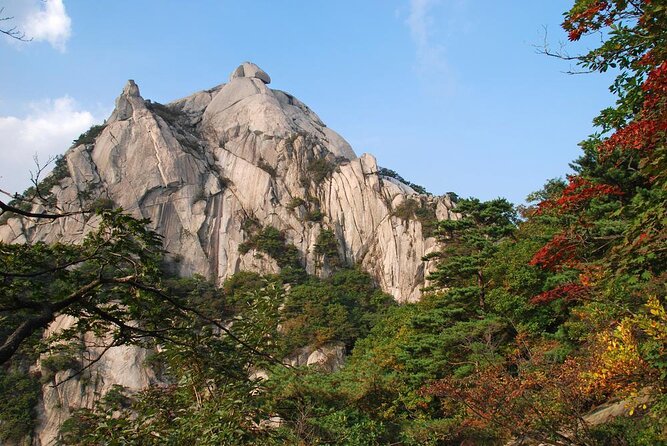
- Seoul’s highest peak: Baek-un-dae tops out at 836 m / 2,743 ft.
- Steep incline with ropes: Expect rope help on a short but intense climb.
- Optional shortcut-friendly plan: Designed to finish in about 4 hours for many hikers.
- Tofu-focused meal after the hike: Optional lunch that can surprise you if you think you know tofu.
- Safety matters on this mountain: Hundreds get rescued every year—this course is built to make it easier, not riskier.
Why Seoul’s Highest Peak Feels Like a Mountain Adventure
Bukhansan sits right on the edge of Seoul, so you get that rare mix: big-mountain effort without needing a long train-and-bus day. This summit course aims at Baek-un-dae, Seoul’s highest peak at 836 m (2,743 ft). It’s a classic Korean hike area, but the experience here is about doing it with structure—early, focused, and with a guide who knows how to keep everyone safe.
What makes this course appealing is the clarity. You’re not wandering around trying to figure out which trail is best. You’re climbing toward one summit, with an end point that returns you to the meeting spot. In a city where plans can sprawl, that kind of tight focus is a big value.
And yes, you’ll earn the reward. The hike is designed around a lunch stop option afterward, usually at a place specializing in tofu dishes made from scratch. That combination—effort first, then comfort food—works really well for a half-day outdoor reset.
You can also read our reviews of more walking tours in Seoul
Koa’s Route Plan: Getting to the Summit Faster
The course time is listed as 4.5 hours total, and the route is built to take about 4 hours for most people instead of the common 6-hour versions. That doesn’t mean it’s easy. It means the path and pacing are chosen to protect your time.
Koa’s job isn’t just translating. It’s also logistics: keeping the group together, managing the climb rhythm, and handling “what if someone needs a slower moment?” situations. The result is that you spend less energy on navigation and more on the hike itself. It also helps if you’re visiting Korea for the first time and want a plan that doesn’t depend on you getting everything exactly right.
A nice extra detail: your descent may not always be identical to your ascent. On at least some hikes, Koa leads hikers down a different trail to make the day feel more interesting instead of repeating the same steps back. You still return to the same meeting point at the end, but the route can feel less monotonous.
The Climb Profile: 600 Meters of Stairs Energy
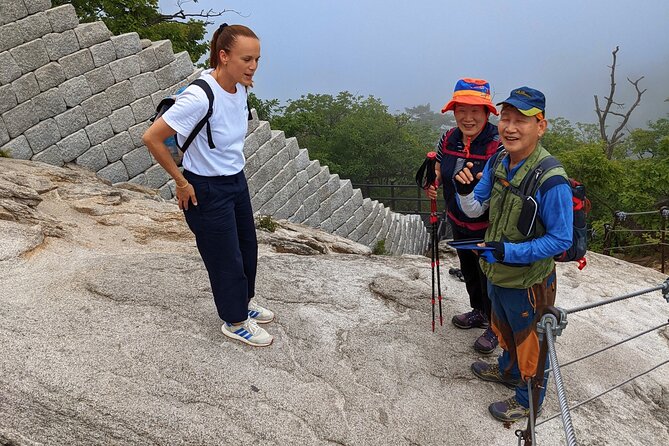
Here’s the big reality check that helps you decide if this course matches your body. The uphill portion involves a 600-meter elevation change over about 2.1 km. On paper, that sounds like a “moderate hike.” In practice, it’s steep—think 100–120 minutes just to get up the hill at a typical pace, with the course compressing that into a faster plan.
The guide will keep you moving, but you should still show up ready for a climb-heavy morning. If you’ve been working out and your legs feel solid, you’ll likely handle it. If you rely on easy trails to build confidence, this course may feel like a jump.
The good news is that it’s not a one-way mission. You’re coming back down the same general way, and you can stop if needed. The guide can pause with you and then move ahead to pick you up later on the return.
And that matters for knees. Reviews and guidance here point out that rocky footing plus steep angles can be rough if you have knee sensitivity. If your knees don’t love stairs, you’ll want to consider whether you can manage a steep descent too.
Baek-un-dae’s Rope Section: Where Heights Feel Real
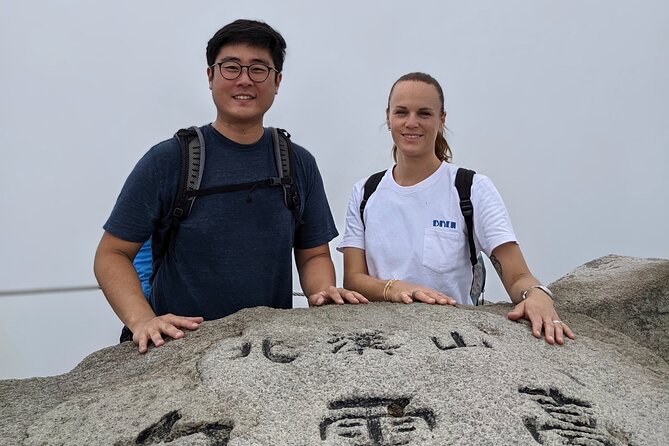
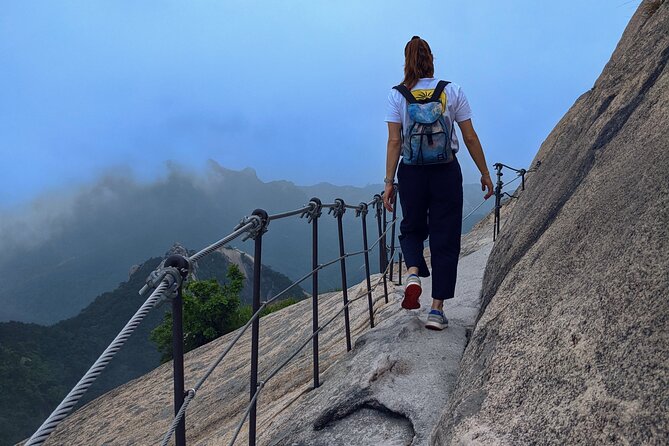
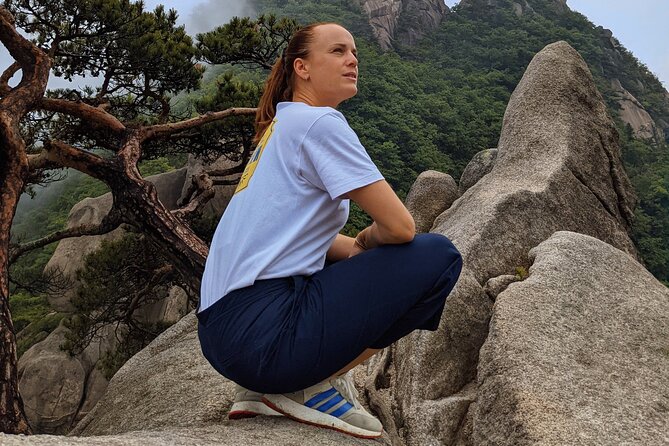
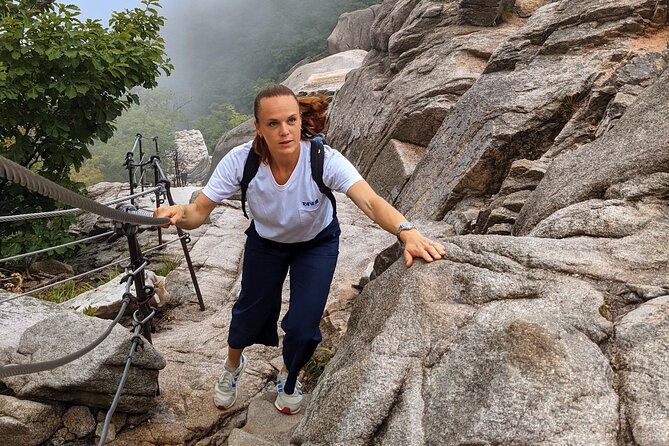
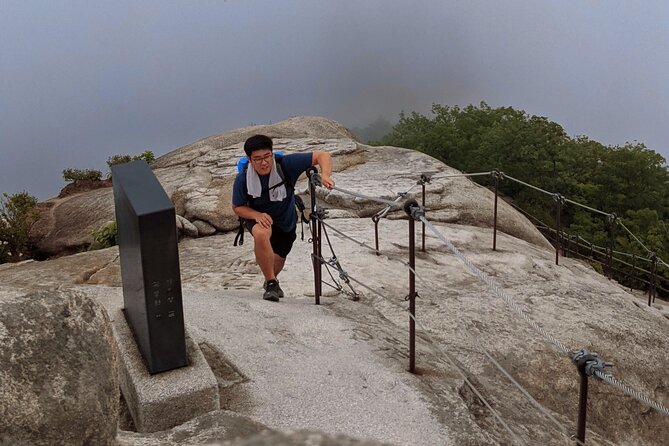
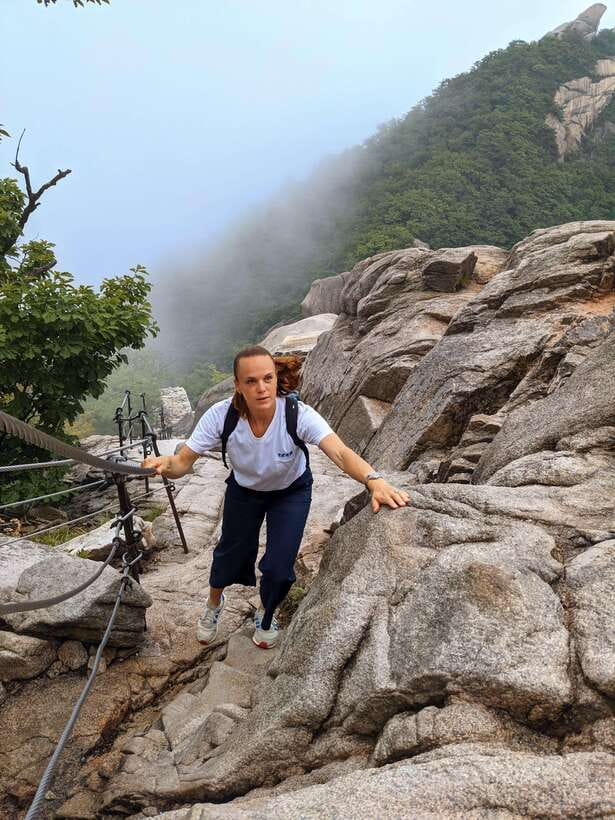
The highlight is Baek-un-dae peak, and the route includes a short section with rope assistance. Expect steep climbing aided by ropes, roughly described as 25 to 45 degrees. This is a 20 to 30 minute stretch where the terrain can feel exposed and genuinely intense.
If you have a fear of heights, you’re not trapped into doing it. The course notes that this part can be avoided by taking a break instead. That’s a key feature. You can still complete a strong summit experience without forcing your comfort into a bad place.
A practical way to think about it: treat the rope section like a skill challenge, not a speed test. Use the rope, keep three points of contact when possible, and don’t rush just because other hikers look steady. Koa’s emphasis is safety and pacing, and that’s exactly what you want here.
Even if you’re okay with heights, keep your brain switched on. The ground can be rocky and uneven, and that steep angle turns “one bad step” into a bigger problem than it would on a gentle trail.
Safety on a Mountain That Rescues People Every Year
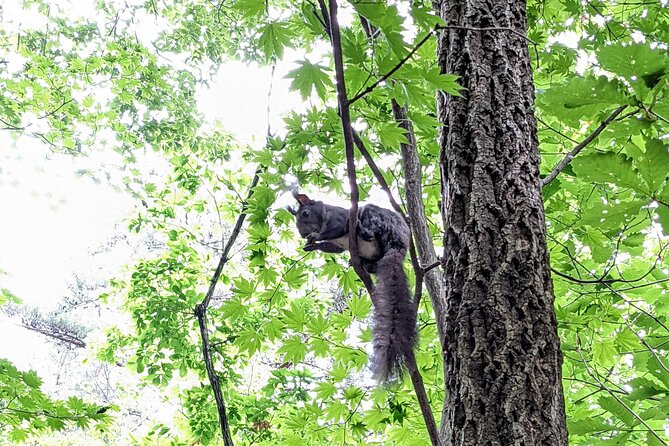
Bukhansan is iconic—and it’s also serious. The course information makes an unmistakable point: hundreds of hikers get rescued every year. That’s not meant to scare you. It’s a reminder that “famous mountain” doesn’t mean “low risk.”
This tour tries to make it easier for you to do the smart things:
- You go with an English-speaking guide who manages the route and pacing.
- The day includes basic gear support, like a first aid kit and rain protection if needed.
- There’s also a help-yourself approach for tougher footing.
This is exactly why I like booking a course like this rather than going solo. Solo hiking in a steep, rope-aided area can turn a normal mistake into a crisis. With a guide, you’re far more likely to keep it routine.


Gear and Support: What’s Included vs. What You Bring
The included support is simple, useful, and built for the real conditions of a mountain morning. You’ll get:
- Bug spray
- First aid kit
- Rain coat if needed
You’ll also have access to traction and stability tools. Crampons and hiking poles can be borrowed at the 1/3 point of the hike. That’s a thoughtful design choice. You don’t have to carry everything from the start, and you get the support right when the terrain likely benefits from it.
What you should still handle:
- Water: you can buy it at the beginning at a convenience store.
- Your footwear: the course doesn’t list specific shoe requirements, but steep rocky trails strongly reward proper hiking shoes with grip.
- Your comfort gear: if you prefer gloves for rope sections or want sun protection, bring it. The course provides some essentials, but you still control your personal comfort.
Lunch After the Summit: Tofu Done Like It Matters
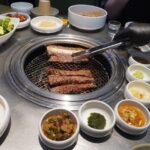
Hiking people often think tofu is a fallback food. This course’s lunch option challenges that idea. The optional lunch is paid separately (listed around 9,000 to 15,000 KRW), and it’s at a spot specializing in tofu dishes made from scratch. They also have meat, and it’s described as vegan/vegetarian friendly, so you’re not boxed into one style of eating.
What I like about this is that it feels local and specific. In Korea, tofu can be an art—texture, temperature, and seasoning matter. A lunch built around tofu after a steep hike also makes practical sense. You need something filling and easy to digest after climbing.
Some group meals include traditional drinks like makgeolli, depending on what’s available and how the table orders. If you enjoy that side of Korean food culture, this post-hike stop can add a fun social layer beyond just fueling up.
If you don’t do the lunch, the hike still ends back at the meeting point. But if you can, I’d treat the meal as part of the experience rather than an afterthought.
Morning Logistics: Meet Koa at the Right Station Exit
Timing is the difference between a smooth morning and a stressful one. Meet your guide, Koa, at the Outside Exit 2 of Bukhansan Ui station. This is where people can get tripped up: don’t confuse it with Bukhansan Bogungmun station. The day starts with the right station, the right exit, and the right first steps.
The group can wait for late comers for 15 minutes only. Then the group leaves at 8:15 am sharp. That means you should plan your route the night before using Naver map and leave early enough that you’re not sprinting into the day.
At the end, you return to the same meeting point. That makes it easy to plan the rest of your Seoul day afterward, whether that’s another neighborhood walk, a museum, or just a long sit-down meal.
How Much Fitness Do You Need Really?
The course describes the hike as moderately fit by the route’s requirements. The uphill effort is real: steep climb over a short distance, with a rocky, rope-aided highlight section. Reviews and the course description also point out that the difficulty can feel tougher than “moderate” depending on your knees and your comfort with steep terrain.
So here’s my honest filter:
- If you work out regularly and your legs handle stairs, you’ll probably enjoy the challenge.
- If you have knee problems, you should think carefully. Even with breaks and pacing, the descent is still part of the deal.
- If you fear heights, plan for the rope section avoidance option by taking breaks as needed.
The guide’s flexibility helps, and that’s a big reason people rate this course so highly. When a mountain hike goes well, it’s usually because someone made safety and pacing feel manageable.
Who This Summit Course Is Best For
This is a strong choice if you want:
- A guided way to hit Seoul’s highest peak without worrying about navigation
- Early-day hiking to avoid later crowds
- An English-speaking guide who keeps things upbeat and organized
- A social element, because the group format makes it easier to meet other hikers while you climb
It’s also a great fit if you like a clear goal—summit, then food—rather than an all-day wandering hike.
I’d think twice if you:
- Have significant fear of heights and don’t feel comfortable using the option to skip/avoid the rope portion
- Struggle with steep rocky descents, especially if you’ve had knee issues before
- Want an easy nature walk (this one is climb-focused, and that’s the point)
Price and Value: Is $67 Worth It?
At about $67 per person, you’re paying for more than access to a trail. You’re paying for:
- An English live guide
- Safety-focused gear support (first aid kit, rain coat, bug spray)
- Traction help availability (borrowed crampons and poles at the 1/3 point)
- A time-efficient summit route built to reduce the normal 6-hour slog while still aiming for the summit
If you were to DIY this, you’d spend time figuring out logistics, trail specifics, and pacing. Here, Koa does the heavy lifting so you can focus on the climb and your footing. That’s especially valuable on a mountain where rescues happen every year.
Lunch is optional and paid separately, so your total day cost depends on whether you add the tofu meal. Even then, the lunch can be a genuine part of the value because it’s tofu-focused, made from scratch, and works for vegetarian needs.
Should You Book This Bukhansan Summit Course?
Book it if you want a guided, time-efficient route to Seoul’s highest peak, and you’re ready for steep uphill effort plus a short rope-assisted challenge. I’d also book if you appreciate structure: meeting at the correct station exit, starting on time, and having someone manage safety and pacing.
Skip it if you’re looking for an easy hike, have major knee limitations, or know that a rope-aided steep section will stress you out too much. In that case, you’d likely be happier on a gentler trail where you can move at your own comfort level.
If you’re on the fence, use the course’s own facts: 600 meters of climb in 2.1 km plus potential rope climbing means you’re buying a real hiking experience, not a light stroll.
FAQ
Where is the meeting point for the Bukhansan summit hike?
Meet your guide, Koa, at the Outside Exit 2 of Bukhansan Ui station. Double-check you are not at Bukhansan Bogungmun station. The group leaves at 8:15 am sharp and can wait for late comers for 15 minutes.
How long does the hike take?
The duration is listed as 4.5 hours. The route is designed to take around 4 hours for many hikers while still targeting the summit.
How difficult is the ascent?
The climb includes about 600 meters of elevation gain over 2.1 km, which is described as normally taking around 100–120 minutes. You should have a moderate fitness level to finish comfortably.
Is the rope-assisted climbing required?
The Baek-un-dae peak section uses ropes and is described as steep. If you fear heights, the course notes this portion can be avoided by taking a break.
What’s included in the price?
Included gear support covers bug spray, a first aid kit, and a rain coat if needed. Crampons and hiking poles can be borrowed at the 1/3 point.
Is lunch included, and is it vegetarian friendly?
Lunch is optional and paid separately (about 9,000–15,000 KRW). It’s described as tofu-specialized, made from scratch, vegan/vegetarian friendly, and also offering meat.