REVIEW · SEOUL
Small-Group Seoul Tour with Gyeongbokgung Palace (hotel pick-up)
Book on Viator →Operated by Seoul N Tour · Bookable on Viator
Seoul in one morning has a nice rhythm. This small-group tour strings together Jogyesa Temple, the changing of the royal guards at Gwanghwamun Gate, and a guided walk through palace life, plus it includes hotel pickup to start the day without stress. The one thing to weigh is that the final stop is a government-approved ginseng center, and that time can feel more sales-focused than cultural.
I also like that you get a clear structure—temple, photos near Cheong Wa Dae (Blue House), then Gyeongbokgung—so you’re not figuring it out on the fly. One consideration: Gyeongbokgung Palace is closed on Tuesdays, so you’ll switch to Changdeokgung and the Secret Garden (Huwon) instead, and that affects what you see.
In This Review
- Key highlights to plan around
- Price and value: what you’re really paying for
- Pickup, pacing, and group size: easy logistics, some walking
- Jogyesa Temple: a calm start before the crowds
- Blue House photo stop: seeing it without expecting entry
- Gwanghwamun Gate changing of the guards: the photo moment
- Gyeongbokgung Palace: palace life explained, not just palace walls
- Tuesday swap: Gyeongbokgung is closed, but you still get the palace day
- National Folk Museum of Korea: daily life from dynasty to dynasty
- Cheongha Korea Ginseng Museum: cultural product plus a sales component
- Drop-off in Insadong (and sometimes City Hall)
- What makes this tour feel worth it
- Who should book this (and who should skip it)
- Practical tips so the morning runs smoothly
- Should you book this Seoul palace and temple tour?
- FAQ
- How long is the Seoul royal palaces and highlights tour?
- What’s included in the tour price?
- Where do I get dropped off at the end?
- Is Gyeongbokgung Palace always visited?
- Do I need to buy tickets for the main stops?
- What time does the tour start?
Key highlights to plan around
- Hotel pickup in central Seoul: less walking from your hotel before the tour even begins
- Gwanghwamun Gate guard ceremony: timed for prime viewing and easy photo positioning
- Gyeongbokgung Palace with guided palace-life context: court and daily life explained while you walk
- National Folk Museum stop: a focused, guided snapshot of Korean life across major dynasties
- Ginseng center timing: included and free, but expect a commercial component
Price and value: what you’re really paying for
At about $39.73 per person for a roughly 3.5-hour morning, the math mostly works because the tour covers the hard bits: a professional guide, entrance fees, hotel pickup, and transportation between sites. In Seoul, that combination can add up fast if you try to DIY. You also get a mobile ticket and bottled water, small touches that make the morning smoother.
This is not a slow, leisurely day. It’s designed to hit several top sights efficiently. That can be a win if you want a strong first taste of royal Seoul and Korean cultural context without spending half your vacation on transit and ticket lines.
You can also read our reviews of more tours and experiences in Seoul.
Pickup, pacing, and group size: easy logistics, some walking
The tour operates from 9:00 am with pickup from centrally located hotels in Seoul in a climate-controlled vehicle. Group size is kept small—up to 15 travelers—so you’re not swallowed by a huge bus crowd all morning. Your guide keeps the pace moving enough to see the big set pieces, but the route still includes walking, stairs, and uneven surfaces (especially around palaces and temples).
The tour notes moderate physical fitness is required, and it’s not recommended for people with back problems, heart complaints, or serious medical conditions. Even if you’re fine walking normally, palaces can feel rough underfoot—cobblestones, gravel paths, and steps are part of the deal. If you’re sensitive to that, plan on taking your time where you can and bringing shoes you trust.
Jogyesa Temple: a calm start before the crowds
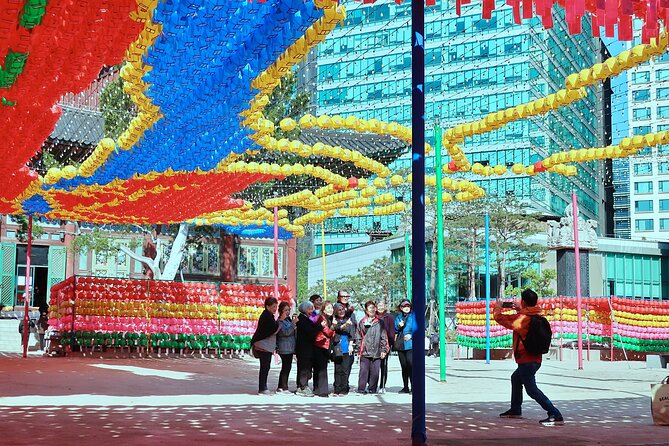
The morning begins at Jogyesa Temple, the center of Zen Buddhism in Korea. The stop is about 30 minutes, and admission is free. This is one of those places where the mood shifts immediately from busy city streets into temple quiet.
What makes it worthwhile in a guided format is that the tour sets context for what you’re seeing—where Zen fits in Korean Buddhism and what to look for as you stroll through the colorful temple grounds. Also, this kind of temple stop can vary depending on prayer times. If areas are restricted during worship, your experience may feel slightly different than it does on a normal visiting window. That’s not a flaw in the tour so much as temple reality.
If you’re the kind of person who likes turning visible details into meaning, this is a good early anchor. It helps your later palace visits land in a wider cultural frame, not just as postcard stops.
Blue House photo stop: seeing it without expecting entry
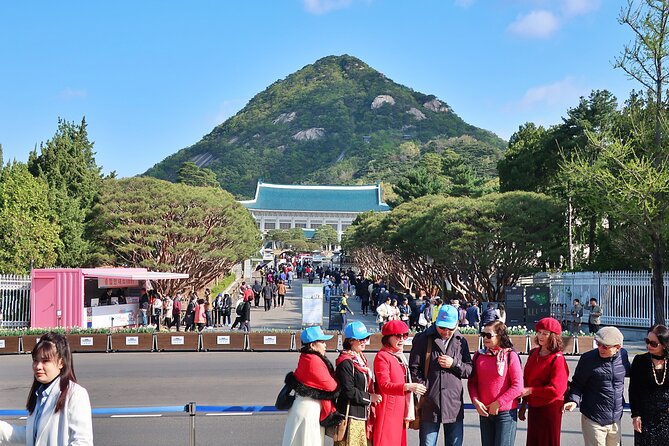
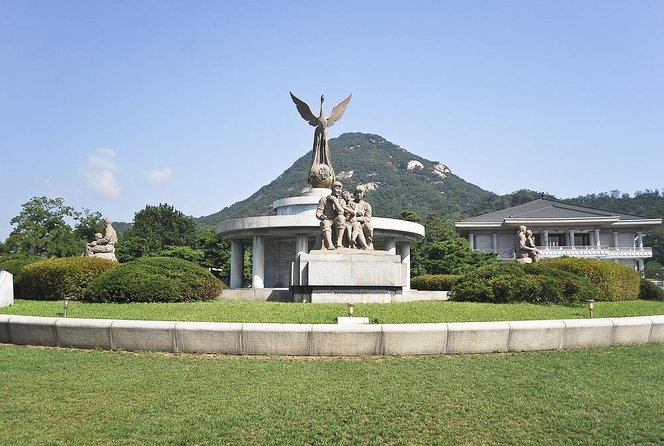
Next comes a photo-op stop at Blue House Square for views of Cheong Wa Dae (the Blue House) and Mt Bukak in the background. This is an outside pass-through—you can’t go inside—so treat it as a quick snapshot moment rather than a full attraction.
Still, it’s a useful add-on because it places modern Korean government history into the same Jongno corridor where you’ll also see traditional culture sites. If you enjoy photos with landmarks, you’ll appreciate the chance to line up before you move toward Gwanghwamun.
Gwanghwamun Gate changing of the guards: the photo moment
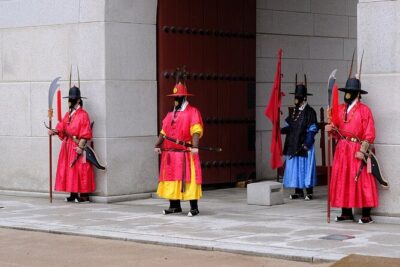
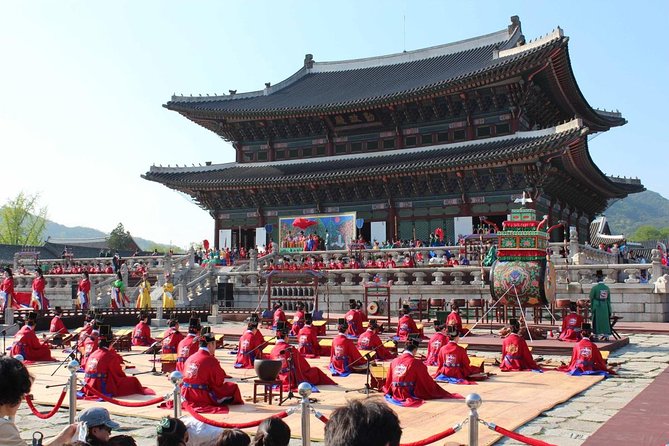
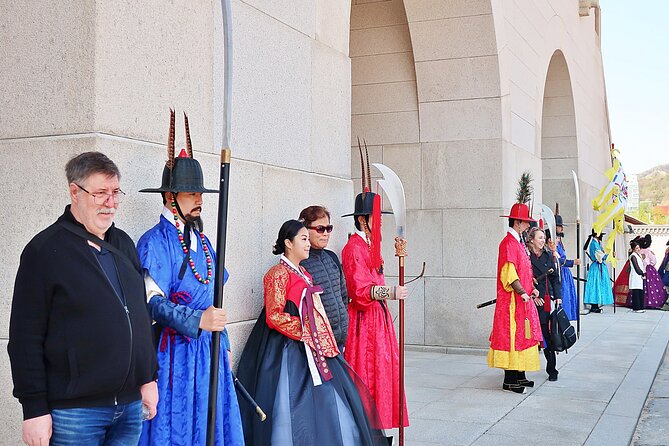
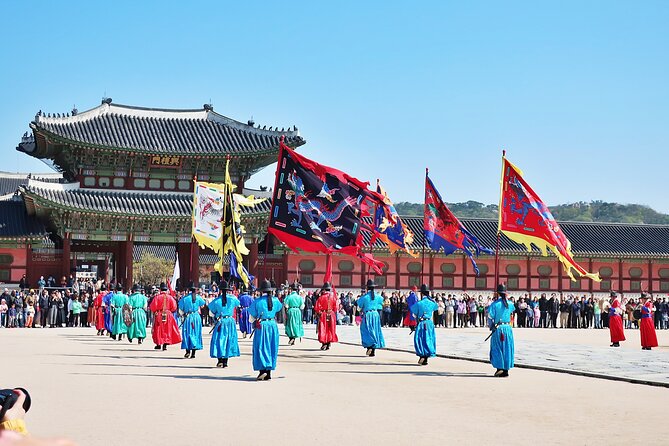
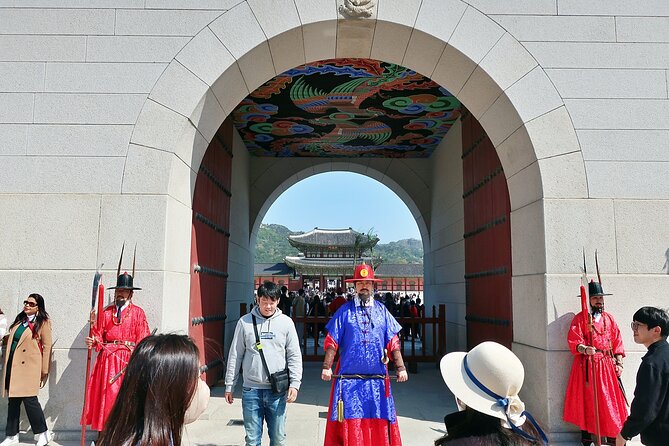
At Gwanghwamun Gate, you’ll watch the royal guard changing ceremony. The stop is about 20 minutes, and admission is free. This is built for visibility: you’ll want your camera ready and your stance set early, because the timing is short and the crowd can tighten quickly.
This is one of the tour’s most praised elements. The guides tend to position the group well, so you’re not stuck behind people while the main action happens. The ceremony itself is a real spectacle—more like a performance than a quiet historical reenactment.
Quick planning note: if weather turns bad, the ceremony can be affected. If you’re traveling in rain or extreme cold, bring a poncho or warm outer layer so you stay comfortable through the waiting.

Gyeongbokgung Palace: palace life explained, not just palace walls
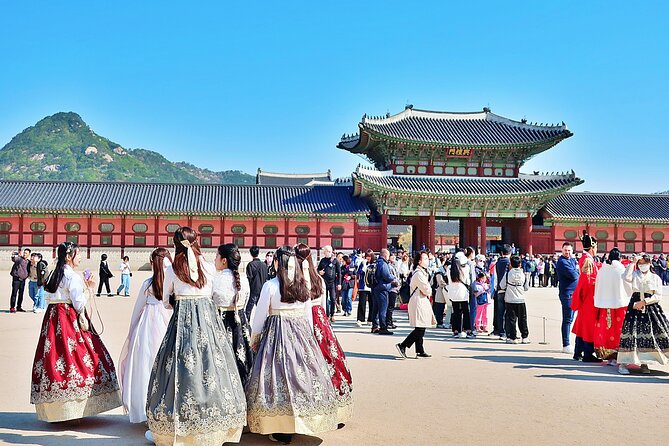
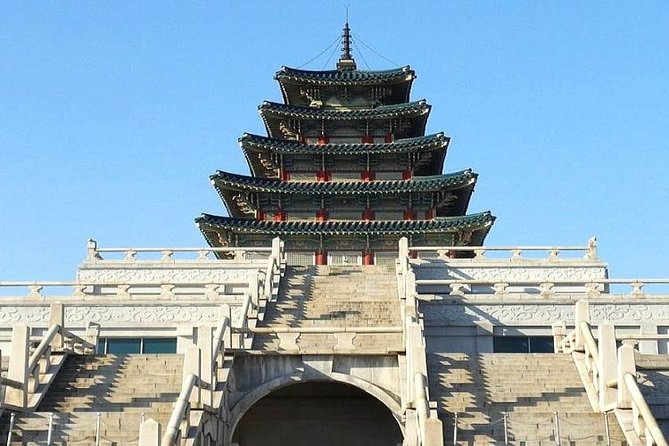
The biggest guided stop is Gyeongbokgung Palace, with about 1 hour on-site and entrance fees included. Admission is part of the tour value, and that matters here: if you’re paying your own way, you’ll spend time and money just getting access.
What makes the guided angle useful is that you’re not just walking through gates and halls—you’re getting an explanation of how royal families and court attendants lived, which helps the palace feel functional rather than ornamental. You’ll also get help navigating what you’re seeing so it’s less likely you’ll miss the most meaningful areas.
One reality check: palaces are huge. Even with a route plan, you’ll still cover enough ground that you’ll feel it by the end of the morning. In hot weather, that can mean slower pacing and more short stops for shade. In cold weather, cobblestones and steps can feel slippery, so dress and footwear matter.
Tuesday swap: Gyeongbokgung is closed, but you still get the palace day
If your visit lands on a Tuesday, Gyeongbokgung Palace is closed. The tour switches to Changdeokgung Palace and the Secret Garden (Huwon) instead. That means:
- you won’t see Gyeongbokgung’s grounds that day
- you won’t get the same changing-guard experience tied to Gyeongbokgung’s schedule
But you still come away with a royal palace experience—just a different one. If palace architecture and gardens are your priority, the Secret Garden stop can actually be a strong replacement, and it’s one reason the Tuesday itinerary continues to satisfy many people.
National Folk Museum of Korea: daily life from dynasty to dynasty
After the main palace focus, you’ll visit the National Folk Museum of Korea for about 20 minutes, with entrance included. This stop is shorter than the palace and designed as a guided orientation to how regular life worked across eras.
The tour frames the displays through two big stretches: the Goryeo dynasty (918–1392) and the Joseon dynasty (1392–1910). You’ll learn what daily life looked like for people in those periods, not only what officials and royalty were doing. That contrast is useful after a royal palace morning—you get the same culture, but from the lived-experience angle.
In a short guided slot like this, your guide’s job is to point you toward what matters most. It’s a good “pressure-free” stop if you don’t want to spend hours reading every label yourself.
Cheongha Korea Ginseng Museum: cultural product plus a sales component
Before your drop-off, you’ll stop at Cheongha Korea Ginseng Museum, about 30 minutes, with admission listed as free. The tour describes it as a government-approved Korean ginseng center, where you can taste ginseng tea and see ginseng products.
Here’s the tradeoff. This stop is part of a culture-and-product experience, but it can also feel like a sales push, especially if you’d rather spend that time exploring Seoul’s streets. Some people enjoy it as a quick cultural detour; others find it interrupts the flow of temples and palaces.
My practical advice: treat it like a short break, not a museum you need to master. Sample the tea if you want, look around quickly, and decide in the moment whether the shopping side is for you. If you feel pressure, you can keep your focus on the tasting and visuals rather than the pitch.
Drop-off in Insadong (and sometimes City Hall)
Your tour ends after about 3.5 hours, with drop-off at either City Hall or Insadong depending on how the route is arranged for your group. The meeting and tour details also indicate an endpoint near Insadong.
This matters because it sets up what you do next. Insadong is a natural place to wander after a morning tour—snack breaks, craft shops, and walking streets. If you’re trying to hit a second activity the same day, plan around being dropped in the Jongno area rather than back at your exact hotel.
What makes this tour feel worth it
The best value here is not one single site—it’s the way the morning connects different layers of Korea:
- Zen Buddhism context at Jogyesa helps you understand why temple spaces feel different from Western churches.
- Gwanghwamun delivers instant show-and-story through the guard changing.
- Gyeongbokgung (or the Tuesday swap) gives you a guided sense of royal life.
- The Folk Museum grounds it by showing everyday culture, not just ceremonial power.
- The ginseng center adds a modern product lens, for better or worse.
It’s a lot for 3.5 hours, but that’s the point. This tour is designed for travelers who want a high hit-rate morning with a guide handling timing, entry points, and explanations.
Who should book this (and who should skip it)
You should strongly consider this tour if:
- you want a small-group morning with hotel pickup
- you like guided context, not just wandering through sights
- you want a structured introduction to Jongno’s top cultural stops
- you’re visiting on a day when you can access Gyeongbokgung (not Tuesday), or you’re okay with the Tuesday Secret Garden switch
You might skip or choose another option if:
- you dislike shopping-focused stops and want every minute to be strictly cultural
- you need minimal walking on uneven surfaces
- you’re very sensitive to crowding and ceremony waiting times
Practical tips so the morning runs smoothly
- Wear shoes you can trust on steps and uneven paths. Palaces are not flat.
- Bring layers. Even on “short” tours, mornings can swing between comfortable and chilly.
- Have your camera ready for Gwanghwamun. The ceremony window is short.
- If you travel Tuesday, mentally switch expectations to Changdeokgung and the Secret Garden plan.
- Decide your ginseng approach early: taste, look around, skip buying if you want.
Should you book this Seoul palace and temple tour?
I’d book it if you want a high-value introduction to Seoul’s royal and cultural sights without spending your morning figuring out logistics. The hotel pickup, guided palace context, and the guard ceremony make it feel efficient in the best way.
I would pause only if you know you’ll resent the ginseng center time or if you’re trying to minimize walking and surfaces. If those are your concerns, you’ll likely feel the “sales” part more than the historical part.
If your schedule is flexible, the tour offers free cancellation up to 24 hours in advance, which lowers the risk if your plans change.
FAQ
How long is the Seoul royal palaces and highlights tour?
It runs for about 3 hours 30 minutes.
What’s included in the tour price?
You get a professional guide, hotel pickup in central Seoul, entrance fees, transportation, and bottled water. Food and hotel drop-off are not included.
Where do I get dropped off at the end?
You’ll be dropped off in the Insadong area, and the tour also notes drop-off could be either City Hall or Insadong depending on the arrangement.
Is Gyeongbokgung Palace always visited?
No. Gyeongbokgung Palace is closed on Tuesdays, so the tour goes to Changdeokgung Palace and the Secret Garden (Huwon) instead.
Do I need to buy tickets for the main stops?
Entrance fees are included for the stops listed with included admissions, and you’ll receive a mobile ticket.
What time does the tour start?
The tour starts at 9:00 am.