REVIEW · SEOUL
Korean Folk Village Afternoon Half day Tour
Book on Viator →Operated by Cosmojin Agency · Bookable on Viator
A short ride, then a time machine. This Korean Folk Village afternoon tour is built for an easy, guided look at how people once lived, with admission fees included and a comfortable round-trip from your hotel. Even if you only have a few hours, you get context for Korea’s past while you’re standing in the middle of it.
I especially like the convenience of hotel pickup (no transit stress) and the steady explanations from a professional English guide. One possible drawback: village time can feel tight, and the schedule can be affected by traffic or bad weather, including cancellation of the traditional performance if it’s rainy or snowy.
In This Review
- Key things to know before you go
- From Seoul Pickup To a 40-Minute Country Change of Scene
- Price and What You Actually Get for $80
- The Folk Village: More Than a Photo Stop
- Why the 99-room house matters
- Houses of ordinary people
- The traditional market and farm music
- Cultural Music and the Reality Check on Timing
- Rain, Snow, and When a Performance Gets Cut
- Group Size, Tour Flow, and Protecting Your Village Time
- The Guide Factor: Why a Pro Changes Everything
- What the Half-Day Feels Like in Real Life
- Who This Tour Is Best For
- Should You Book This Korean Folk Village Afternoon Tour?
- FAQ
- How long is the tour?
- Is admission to the Korean Folk Village included?
- Do I need lunch or will I be fed?
- What time does the tour start?
- Do you provide pickup and drop-off in Seoul?
- Will the traditional performance always happen?
Key things to know before you go
- Hotel pickup in Seoul makes this feel like a true half-day, not a logistics project.
- Admission is included, so you don’t burn time stopping to buy tickets.
- A 99-room traditional house plus homes of ordinary people gives you a real sense of daily life.
- Traditional market and farm music add texture beyond the buildings.
- Traditional performance may cancel in rain or snow, so build flexibility into your plans.
From Seoul Pickup To a 40-Minute Country Change of Scene
The best part of this tour is how quickly it gets you out of Seoul’s modern pace. You start in the afternoon (1:00 pm), and the ride to the Folk Village takes about 40 minutes. That’s long enough to switch gears, but not so long that you feel you’ve already missed half the day.
The tour includes transportation plus pick-up and drop-off service in Seoul, which is a big deal if you don’t want to figure out buses, transfers, or parking. I like tours like this because they save your brain for the actual sightseeing.
You’ll also get a mobile ticket, which helps on the day since you’re not hunting through paper receipts. And with a cap of up to 44 travelers, the group is sizable but not absurdly huge. You should expect a guided experience rather than a private stroll.
You can also read our reviews of more tours and experiences in Seoul.

Price and What You Actually Get for $80
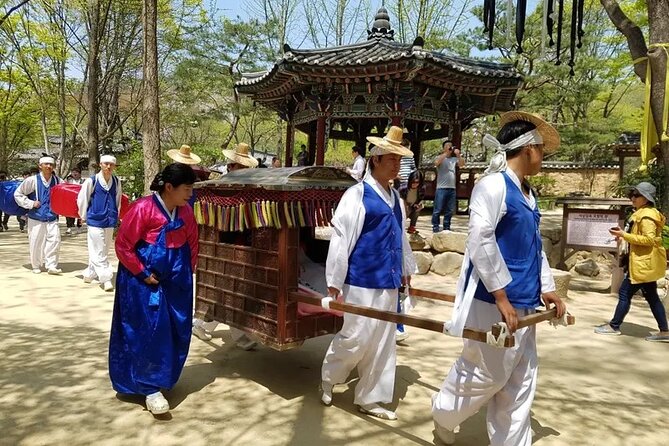
At $80 per person for about four hours, you’re paying for three things: guided interpretation, the ride from Seoul, and admission. Admission being included matters more than it sounds. It keeps the day from turning into a spendy add-on where the “half day” suddenly becomes a half day plus waiting.
What you don’t get is lunch. That’s not a dealbreaker, but it means you should plan to either eat before you go or allow time after the tour to grab something nearby. If you’re the type who likes a sit-down meal during a cultural outing, you’ll need to adjust.
Also, the tour is designed as a “see and learn” format. That means you’re not going to linger for hours in one single building like you might at a museum. The value is in the structure: you visit multiple parts of the village and you get explanations so the experience feels less like random sightseeing.
The Folk Village: More Than a Photo Stop
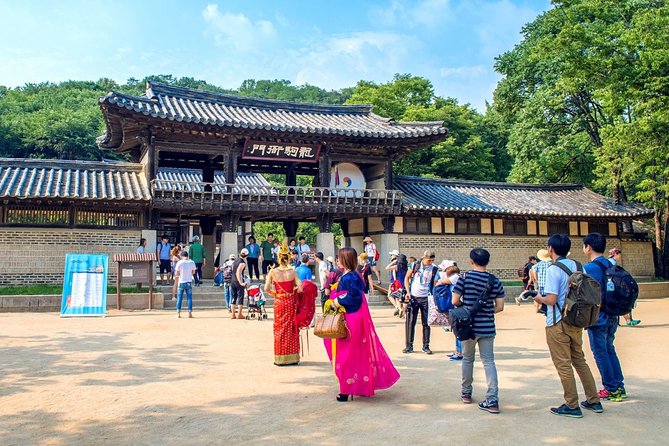
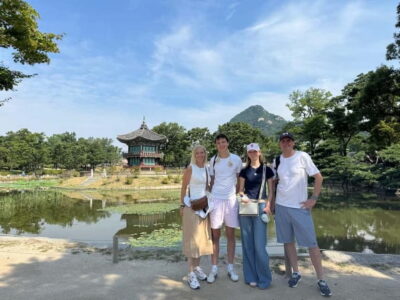
The Korean Folk Village is a large cultural site on the outskirts of Seoul. One reason it’s popular is that it’s well-known as a Korean drama shooting spot. So if conditions line up, you might catch a filming moment. Even when you don’t, it’s a place that feels used for stories and settings, not just a staged theme park.
Inside, you’ll see several different kinds of buildings and spaces, which is key. Korean culture is not one room, one costume, or one museum label. It’s daily life—homes, markets, music, and routines. The village is set up so you can walk through that bigger picture.
Why the 99-room house matters
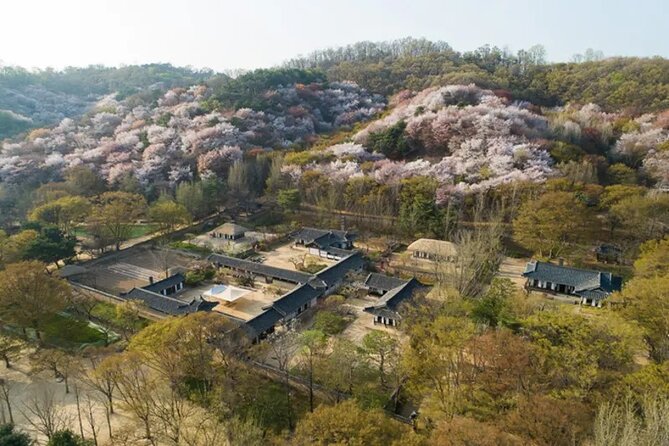
One of the standout sights is the old traditional Korean house with 99 rooms. Even if you don’t memorize every architectural detail, the scale makes a point: this wasn’t life built for convenience. It was life built for hierarchy, family structure, and the rhythms of Joseon-era society.
When you’re standing there, it helps to think about movement and space. How did people use rooms? Who lived where? What did guests experience? A good guide can turn “big building” into “how society worked.”
Houses of ordinary people
Not everything is grand. You’ll also see homes of ordinary people, which is crucial for balance. If you only saw elite residences, you’d end up with an incomplete story of the past. The village’s layout helps correct that, giving you a sense of how everyday households were organized and what daily life could look like.


The traditional market and farm music
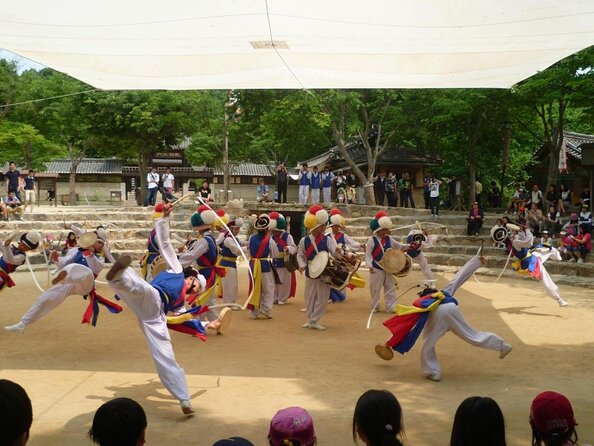
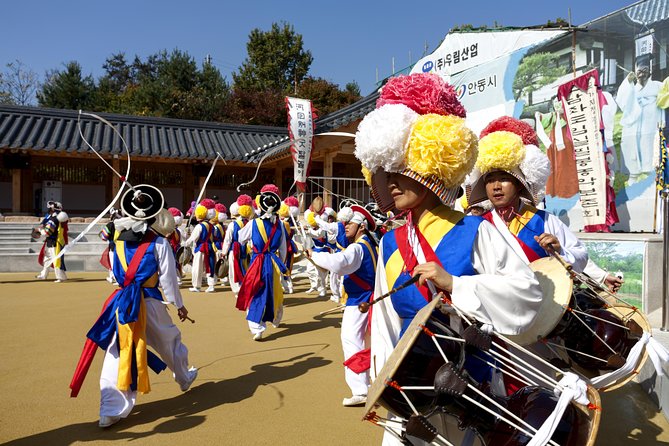
Then comes the stuff that makes the history feel alive. The traditional market gives you a social and economic backdrop—where people gathered, traded, and kept the community going. And the farm music performances connect culture to land and labor. It’s not just decorative; it’s a reminder that music often grew out of working life.
If you like cultural experiences that aren’t only visual, these parts are a strong reason to pick this tour. You get to see and also hear.
Cultural Music and the Reality Check on Timing
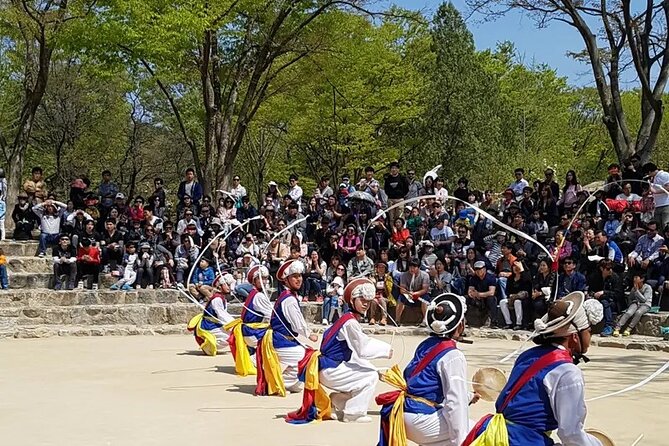
This tour includes cultural music performances during your time in the village. In practice, performances can be scheduled in ways that work best for the flow of a group. That’s fine—just remember you’re not in full control of when you’ll see things.
One more timing reality: the total experience is about 4 hours, and your main time at the Folk Village is roughly 2 hours. That may sound generous until you’re faced with paths, photo spots, and multiple buildings. It’s enough to get a sense of the place, but it’s not enough to slow down for every tiny detail the way a self-guided visit might.
This is where you should manage expectations. If you want to shop heavily inside the village, snack constantly, and watch every demonstration, you may feel rushed. If you mainly want guided highlights and explanations, you’ll likely feel satisfied.
Rain, Snow, and When a Performance Gets Cut
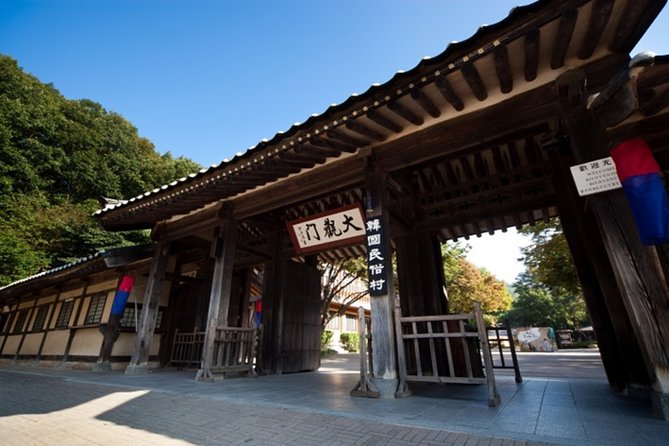
Weather is the wildcard on this one. The Korean Traditional Performance can be canceled in rain or snow. That doesn’t automatically ruin your day—the Folk Village still has buildings, market areas, and music elements—but it changes what you may hoped to see.
If you’re traveling in a season where rain or snow is common, consider coming in with a backup mindset: your main value here is the site and the guide’s context, not one single show.
Group Size, Tour Flow, and Protecting Your Village Time
This tour runs with a maximum of 44 travelers. That size usually means you’ll move as a group and you’ll get clear instructions from the guide. The tradeoff is that you might not linger where you personally want to linger.
Here’s the practical tip I’d follow: go in with a short list. Pick the big must-sees (like the 99-room house and the ordinary houses). Then fill the rest with whatever catches your eye as you walk. That way, you don’t end up playing catch-up if the schedule runs tight.
One more word of caution based on real-world tour setups: some tour formats can include extra stops beyond the main site. If shopping stops like a jewelry store are part of the day’s routing, it can eat into the time you’d rather spend inside the village. The best defense is simple: confirm the day’s stops ahead of time and plan how you’ll use the village hours you have.
The Guide Factor: Why a Pro Changes Everything
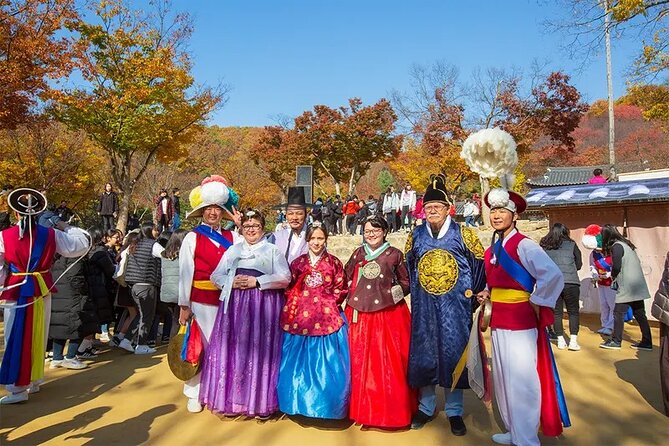
You’re not just buying entry to a collection of buildings. This is a professional English guide experience, and the guide’s job is to connect details to meaning. That’s what turns a traditional village into a lesson, instead of a backdrop.
In good guides, you’ll hear practical cultural explanations: why houses look the way they do, what certain spaces were for, and what everyday life might have meant. The difference is noticeable the moment you stop treating the village like an Instagram location and start treating it like a living snapshot of history.
If you’re the type who likes learning a few words along the way, that’s another bonus you may enjoy on the drive. Even small language touches help you feel more connected while you’re moving between sites.
What the Half-Day Feels Like in Real Life
This is an afternoon half-day with a full loop from your Seoul hotel. The day is built around getting you to the Folk Village, exploring key areas with help, and then returning without you needing to think about transit.
Because it’s around four hours total, you’ll likely still have your evening free for dinner or more Seoul exploring afterward. That’s a big plus if you want culture without turning your trip schedule into a grind.
The feel is best described as guided walking + scheduled cultural elements. You won’t be stuck in a classroom, but you’ll also get less freedom than a totally independent visit.
Who This Tour Is Best For
I think this tour fits best if you want:
- a quick, structured intro to Joseon-era life
- someone to explain what you’re seeing, not just point at buildings
- a drama-friendly cultural stop on an easy route from Seoul
- a low-stress outing with pickup and drop-off
It’s also a good fit for couples and small groups who want to pack cultural context into a short window. If you hate being rushed, you might prefer a longer stay or a different format with more time on your own inside the village.
Should You Book This Korean Folk Village Afternoon Tour?
I’d book it if you value convenience, want admission included, and like learning as you walk. The Folk Village itself has enough to keep you busy—especially with stops like the 99-room house, ordinary homes, the traditional market, and farm music—and the guide helps it click.
Skip or think twice if you need lots of free time for shopping, food, or slow wandering, or if weather could spoil your interest in performances. Also check the day’s routing so you’re comfortable with where the tour spends time besides the village.
If you’re on the fence, here’s my simple decision rule: if you want a guided highlight circuit that saves you transit effort, this is a solid use of an afternoon.
FAQ
How long is the tour?
The tour runs for about 4 hours, with around 2 hours spent at the Folk Village.
Is admission to the Korean Folk Village included?
Yes. Admission fees are included on the tour.
Do I need lunch or will I be fed?
Lunch is not included.
What time does the tour start?
The start time is 1:00 pm.
Do you provide pickup and drop-off in Seoul?
Yes. Pick-up and drop-off service in Seoul is included, along with transportation.
Will the traditional performance always happen?
No. The Korean Traditional Performance can be canceled in case of rain or snow.