REVIEW · SEOUL
Danyang Tour:Guinsa Temple & Bobaljae & Cheongpung Cable Car
Book on GetYourGuide →Operated by Lecirt · Bookable on GetYourGuide
Woods, wide views, and a cable-car ride. This Danyang day trip puts Guinsa Temple in the spotlight, walking you into a calm forest setting that feels a world away from Seoul. It’s a big, classic Korean temple visit without the headache of figuring out transport solo.
I also love the way Cheongpung Hoban Cable Car gives you open views over Cheongpungho Lake, with that rare feeling of floating above the scenery instead of just looking at it from the ground. One possible drawback: expect plenty of walking and stairs, and you may not catch every detail if you’re sitting where sound carries poorly on the bus.
In This Review
- Key highlights to know before you go
- Danyang from Seoul: why this route works
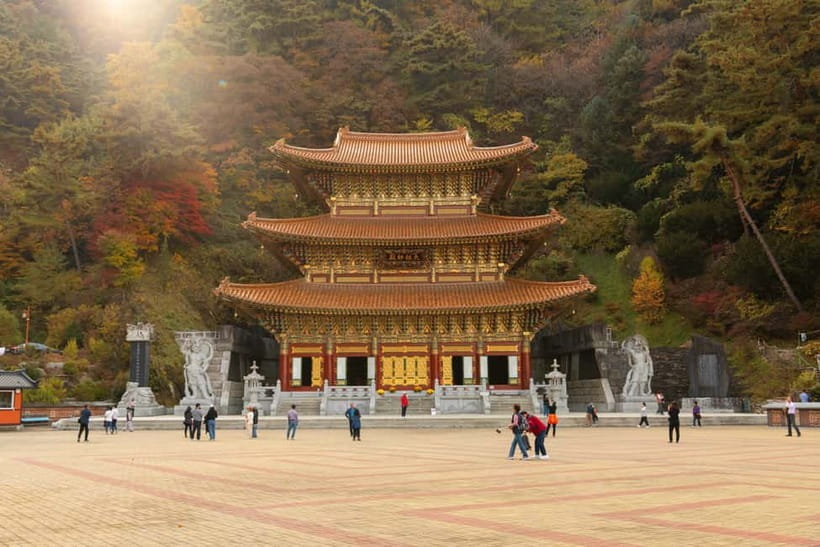
- Guinsa Temple: Korea’s largest temple, reached through the forest
- Free vegetarian temple food: simple, practical, and easy to miss
- Bobaljae Observatory and Bobaljae Road: where autumn turns into a photo plan
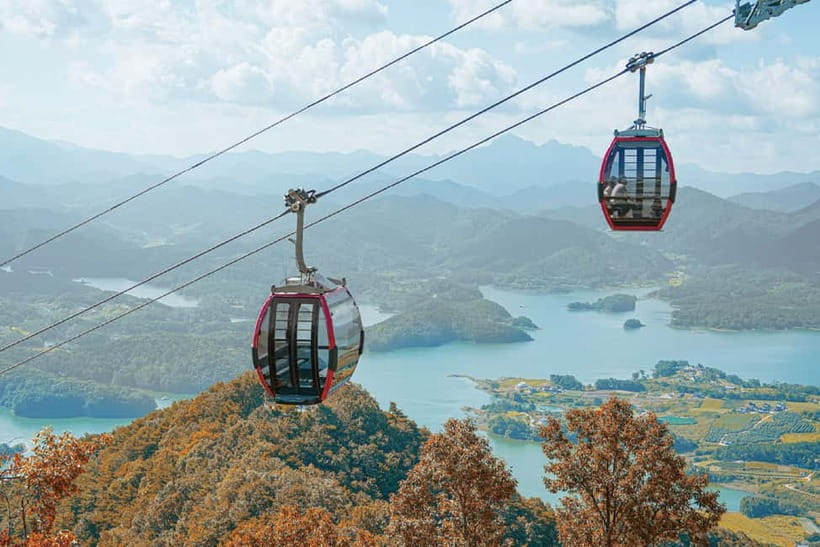
- Cheongpung Hoban Cable Car: the lake views feel like a real change of perspective
- Guides and group size: how the day feels in real time
- Price and value: what $105 covers (and why it still makes sense)
- Who should book this Danyang day trip
- Practical tips: shoes, photos, and comfort
- Should you book this tour?
- FAQ
- What does the $105 price include?
- Is there a free meal on the tour?
- Do I need to worry about walking and stairs?
- What languages are the guides?
- What happens if the tour doesn’t meet the minimum number of participants?
- How late can I cancel for a full refund?
Key highlights to know before you go
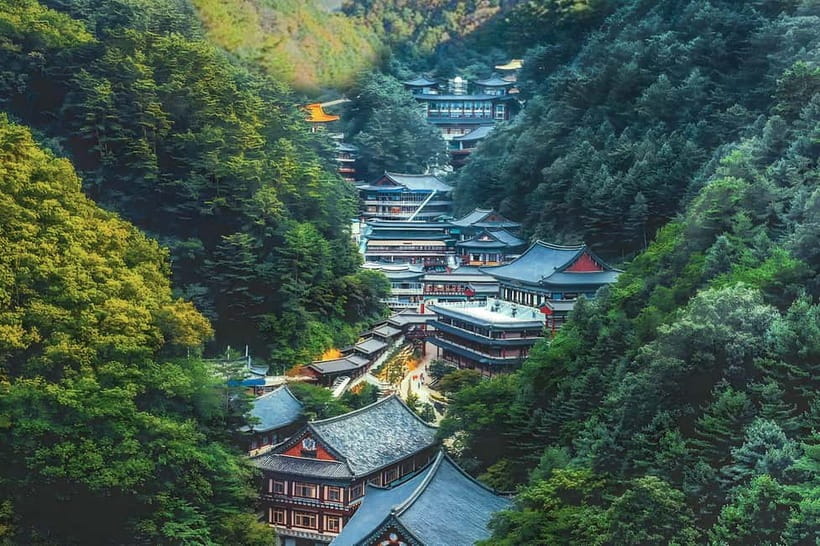
Guinsa Temple as a size-and-stillness experience: Korea’s largest temple, tucked into a forest setting that changes the whole mood of your day.
Free vegetarian temple food: You can try a monk-style vegetarian meal at the temple area without paying extra on your own.
Bobaljae Observatory photo stop: This is where you slow down and frame those big Danyang views with the camera.
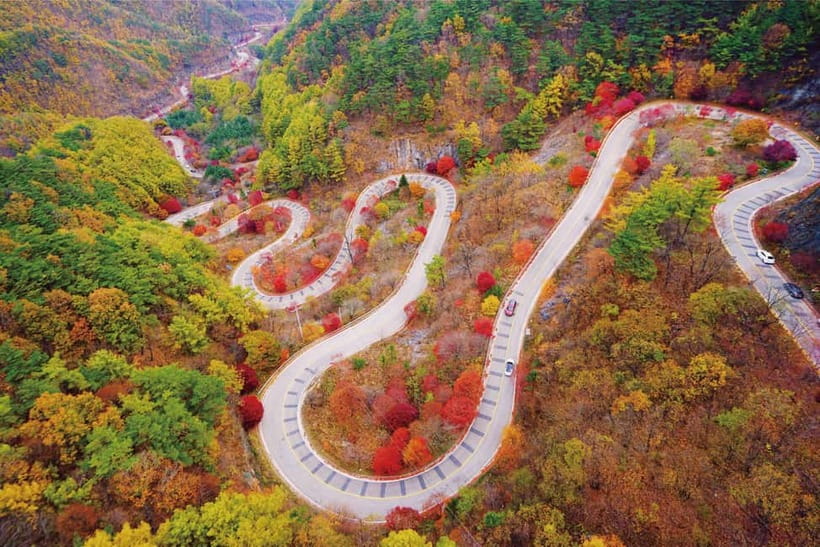
Bobaljae Road autumn drive: A road trip moment with scenery arranged by the season, especially in fall.
Cheongpung Hoban Cable Car for lake views: The ride turns the lake into something you see from above, not across.
Bilingual guide support: English and Chinese speaking guides help keep the story clear across the day.
Danyang from Seoul: why this route works
Danyang is one of those places that’s genuinely easier when someone handles the driving. From Seoul, you’re dealing with distance and public transport gaps, so a guided day trip is often the simplest way to reach the temple-and-scenery combo without losing half your day to schedules.
What I like about this tour is that it’s not just one “thing.” You get three distinct vibes: a temple visit that’s about quiet and culture, an outlook stop where you can actually see what the area looks like, and a cable car ride that delivers views in a way buses and walking can’t match.
If you’re the type who likes switching modes (history → viewpoint → ride), this day is built for you. And it’s also priced in a way that feels fair once you factor in round-trip transfers plus admission for the attractions.
You can also read our reviews of more tours and experiences in Seoul.
Guinsa Temple: Korea’s largest temple, reached through the forest
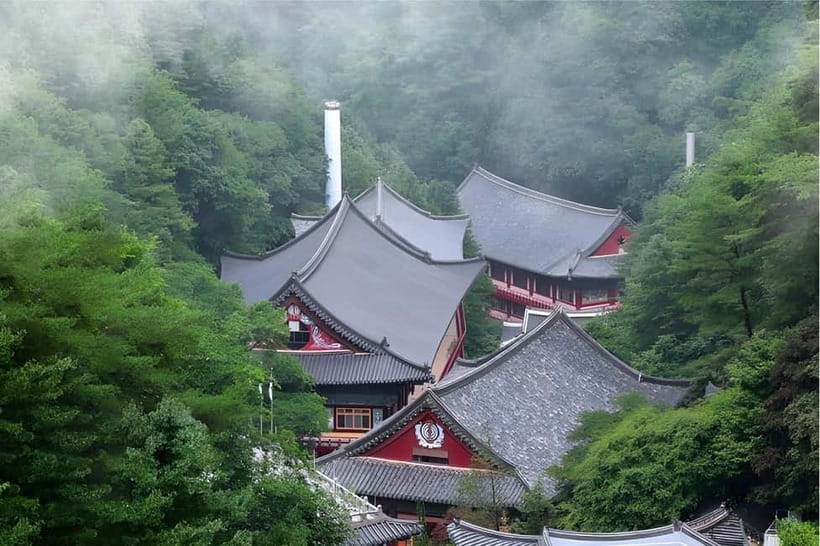
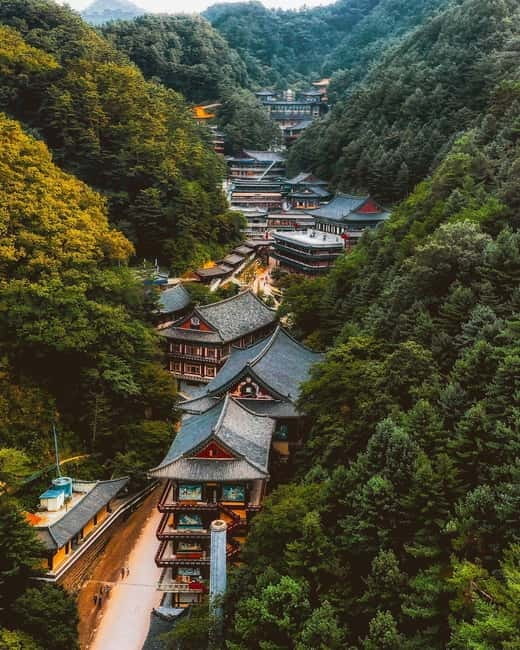
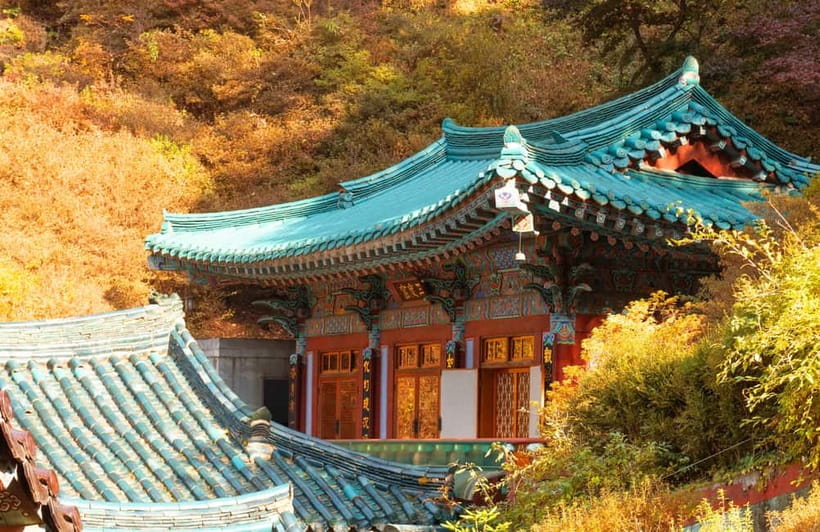
Guinsa Temple is the headliner, and you feel it when you arrive. This isn’t a “small stop” temple. It’s described as the largest temple in Korea, and the approach matters because it’s set deep in the woods, so the noise level drops and the experience slows down fast.
You’ll move through the temple grounds at a visitor pace, with enough time to take photos and look at the buildings and pathways. The setting also gives you a natural rhythm: pause for a view, keep walking, then pause again. If you’re used to city sightseeing, this kind of temple visit can feel surprisingly grounding.
One detail I’d plan around: there can be stairs and uneven walking paths. It’s not an extreme hike in description, but it is still a temple experience—so I recommend comfy, grippy shoes and a little patience with the terrain. If you’ve got knee issues, take it slow and don’t feel pressured to rush between photo points.
Free vegetarian temple food: simple, practical, and easy to miss
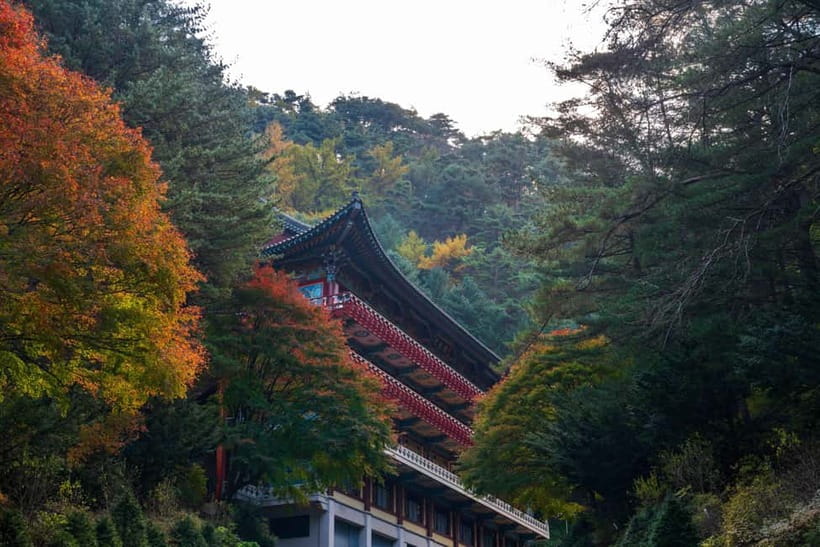
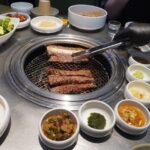
Alongside the temple itself, you can try vegetarian temple food for free. This is one of the best “value add” moments on the tour, because it’s not just a snack you have to hunt down in advance—it’s part of the temple visit.
Even if you’re not a vegetarian, it’s worth doing as a cultural food stop. Temple cuisine is usually built around simple ingredients and a calm pace, so it feels different from a typical roadside meal. Plus, having it included keeps you from spending your limited time on meal planning during a day trip.
A practical note: the tour text doesn’t describe full meals beyond this temple food, so you should still assume you’ll want to handle other eating on your own if you get hungry later. Pack water if you like to travel prepared, since meals and beverages aren’t included in the price.
Bobaljae Observatory and Bobaljae Road: where autumn turns into a photo plan
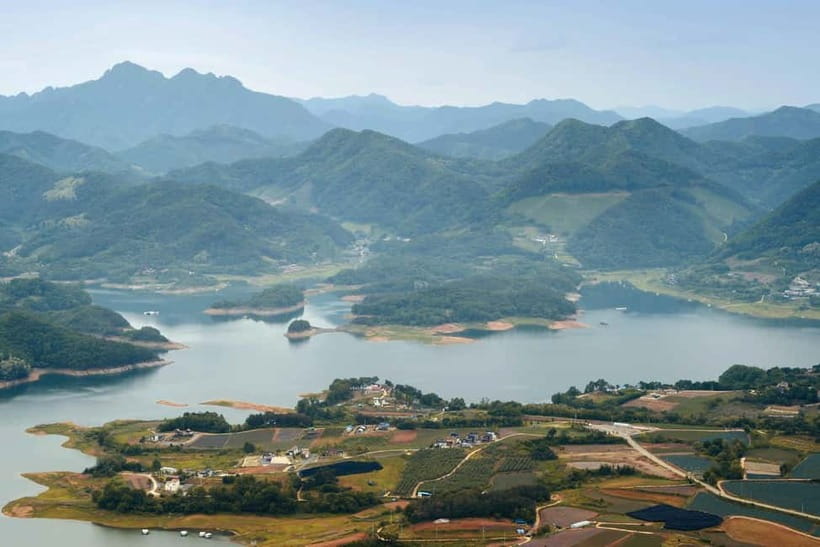
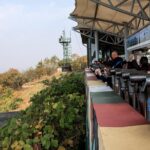
Between Guinsa and the cable car, you’ll get a viewpoint-style moment at Bobaljae Observatory. This is the part of the day where you trade “walk and look around” for “stand still, frame the view, and let the scenery do the work.”
Then there’s the drive along Bobaljae Road. In fall, this road is described as being adorned with autumn leaves, which matters because you get rolling scenery from the bus window instead of just a single viewpoint. It’s a low-effort way to enjoy a seasonal look without having to coordinate separate stops.
How to make this work for you: keep your camera ready for quick breaks in the scenery. The prettiest moments can show up and disappear with the road curve. If you care about photos, being on the right side of the vehicle can help sometimes, so if your guide has any pointers for seating, take them.
Cheongpung Hoban Cable Car: the lake views feel like a real change of perspective
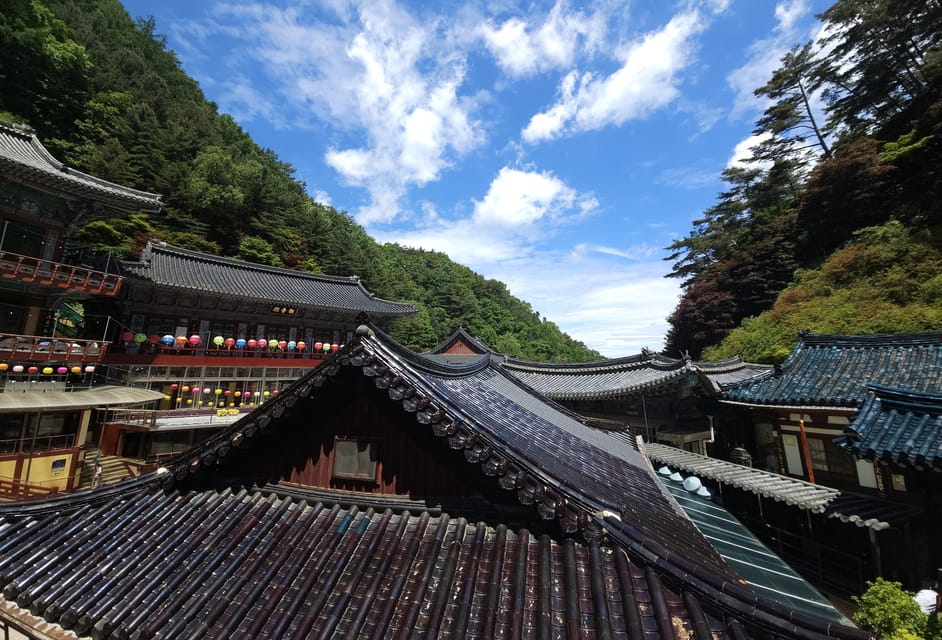
This is the “movement” part of the day, and it’s a good balance after temples and walking. Cheongpung Hoban Cable Car is described as a dynamic experience, and the big payoff is the view of Cheongpungho Lake.
What makes a cable car special is the angle. From the ground, you usually look across water. From above, the shoreline, texture, and scale become obvious. It turns the lake into something you can understand in one glance instead of guessing from distance.
I also like that the description highlights autumn as peak timing for the colors. If your travel dates line up with fall foliage, this stop becomes extra memorable because the cable car ride lets you see the color spread rather than just a few trees near a viewpoint.
If you’re sensitive to motion, plan to ride at a steady pace and keep your hands free for photos. Also, bring something light for cool air up high, since cable cars can feel cooler than you’d expect.


Guides and group size: how the day feels in real time
The tour runs with English and Chinese speaking guides, which helps a lot when you want the meaning behind what you’re seeing. Several guides are noted in the experience, including Yohan, Jun, Michael, Mario, Edward, and Johann (and K as well). That variety matters because different guides can emphasize different parts of the day—architecture details at the temple, or clearer photo guidance at viewpoints.
A small-group feel shows up in the feedback too, and that’s a big plus. In small groups, it’s easier to keep up when there are stairs, easier to hear each other, and you can get help with taking photos without feeling rushed.
One thing to watch: the bus isn’t always perfect for audio. If you want to hear the guide clearly, sit closer to the front if you can. If not, don’t worry too much—your main “learning” moments can still happen at the stops where you’re not competing with engine noise.
Also, plan for an early start. The timing is part of why the day feels smooth—especially for the temple and the lighting for viewpoints.
Price and value: what $105 covers (and why it still makes sense)
At $105 per person, this tour isn’t just paying for sightseeing—it’s paying for the parts that are hardest to DIY from Seoul: the round-trip transfers and organized access to the attractions.
Here’s what you’re getting in the price:
- Admission to the attractions
- An English and Chinese speaking tour guide
- Round-trip transfers from Seoul
And here’s what you’ll likely pay separately:
- Meals and beverages (except for the free vegetarian temple food you can try during the visit)
- Personal expenses
So is it worth it? If you’re trying to see Guinsa Temple, Bobaljae, and then Cheongpung Hoban Cable Car in one day, the cost starts to look reasonable because you’re buying time and transportation convenience. If you’re the type who hates figuring out routes and transfers, this price reflects that effort.
The biggest value leap is that the day strings together multiple “must-do” stops that are described as difficult to access by public transportation from Seoul. You’re paying to remove friction. For a one-day window, friction is the real enemy.
Who should book this Danyang day trip
I think this tour is best for you if you:
- Want a temple + viewpoint + cable car day without stressing over transit
- Like photography and scenic stops, especially in autumn
- Are okay with walking and stairs at a major temple site
- Prefer a guide to translate context and help you enjoy the day more than just check boxes
This tour may not be ideal if:
- You have limited mobility or you’re not comfortable with repeated stairs
- You need guaranteed perfect audio on a bus (sound can be hard to catch from certain seats)
- You want a slow, stay-forever pace at just one place—this day keeps moving
Practical tips: shoes, photos, and comfort
A few small choices can make a big difference here:
- Wear comfortable shoes with grip. Temple grounds and stairs add up.
- Bring a light layer. Cable cars and viewpoints can feel cooler than expected.
- If you want photos, be ready to move quickly when the bus stops. The best views can appear for a short window.
- For audio, try to sit closer to the front on the bus so guide explanations come through more clearly.
And if you’re traveling in fall, plan your camera settings for changing light. You’ll get forest shade at the temple, brighter scenes at the observatory, and then open views from the cable car.
Should you book this tour?
If you want one organized day that hits Guinsa Temple, Bobaljae scenery, and Cheongpungho Lake views without the hassle of figuring out transport, I’d say yes. The free vegetarian temple food and the cable car perspective change make it more than a simple drive-by tour.
Book it if you can handle some walking and stairs, and if you’re the kind of traveler who likes switching between culture, views, and a physical experience. I’d skip it if mobility is a concern or if you hate bus-time listening that may not be crystal clear from every seat.
In short: this is a strong value for a Seoul-to-Danyang day, especially when you want autumn scenery and a temple visit in the same stretch of time.
FAQ
What does the $105 price include?
The price includes admission to the attractions, an English and Chinese speaking tour guide, and round-trip transfers from Seoul. Meals and beverages are not included.
Is there a free meal on the tour?
Yes. You can try vegetarian temple food for free during the Guinsa Temple visit. Other meals and beverages are not included.
Do I need to worry about walking and stairs?
Yes. Some attractions involve a considerable amount of walking and stairs, so comfortable shoes are recommended and you should be fit enough to participate.
What languages are the guides?
The tour provides an English and Chinese speaking guide.
What happens if the tour doesn’t meet the minimum number of participants?
A minimum of 4 participants is required for the tour to depart. If that minimum isn’t met 48 hours before departure, the tour will be cancelled and you’ll be notified by email or message.
How late can I cancel for a full refund?
You can cancel up to 24 hours in advance for a full refund.