REVIEW · SEOUL
Seoul Day Tour: Gyeongbok Palace, Bukchon, Gwangjang Market
Book on GetYourGuide →Operated by Lecirt · Bookable on GetYourGuide
Seoul changes after dark. This evening tour strings together palaces, hanok lanes, and Seoul viewpoints with a local guide, plus K-Pop Demon Hunters filming spots you’ll recognize as the lights come on. I like how the group stays small and personal, and I really appreciate the storytelling style some guides use, like Stella’s history explanations and Mac’s hands-on help at the market. One thing to consider: you’ll be walking and standing for photos, so plan comfy shoes and be ready for a longer day than a quick sightseeing loop.
What makes it special is the way you get different Seoul moods in one flow: royal courtyards at dusk, traditional Bukchon alleyways, and then the skyline from higher ground. I also like that the tour mixes guided walking with van transfers, so you spend energy on the sights, not just transit. A possible drawback is that the exact timing can stretch from 4 to 10 hours depending on the route, so build in some buffer for dinner afterward.
In This Review
- Key Highlights You’ll Feel Immediately
- Seoul at Night: Why This Itinerary Works
- Gyeongbokgung Palace After Nightfall: Royal Sights + Filming Spots
- Bukchon Hanok Village: Narrow Lanes, Big Photo Payoff
- Gwangjang Market at Night: Street Food Time That’s Actually Helpful
- Naksan Park at Dusk: Glowing Walls and Story-Friendly Views
- Eungbongsan Mountain Skyline: A Stargazer Finish With Real Scale
- Timing, Pace, and Why the Van Helps
- Price and Value: Is $41 a Good Deal for This Night Plan?
- Who This Tour Suits Best (and Who Might Skip It)
- Should You Book This Night Seoul Tour?
- FAQ
- FAQ
- How long is the Seoul evening tour?
- What’s the group size?
- What happens if there aren’t enough people?
- Where does the tour start?
- Which languages are the guides available in?
- What’s included in the price?
- Are meals included?
- What are the drop-off options at the end?
- Is free cancellation available?
- Can I reserve without paying now?
Key Highlights You’ll Feel Immediately
- Small group size (up to 8) keeps questions, pacing, and photo help from turning chaotic
- Gyeongbokgung at dusk feels different than daytime, with illuminated palace areas
- Bukchon hanok village lanes are a real-life set for K-Pop Demon Hunters moments
- Naksan Park + Eungbongsan views give you soft-lit city scenes under the night sky
- Gwangjang Market street food time is built in, not something you have to figure out alone
Seoul at Night: Why This Itinerary Works
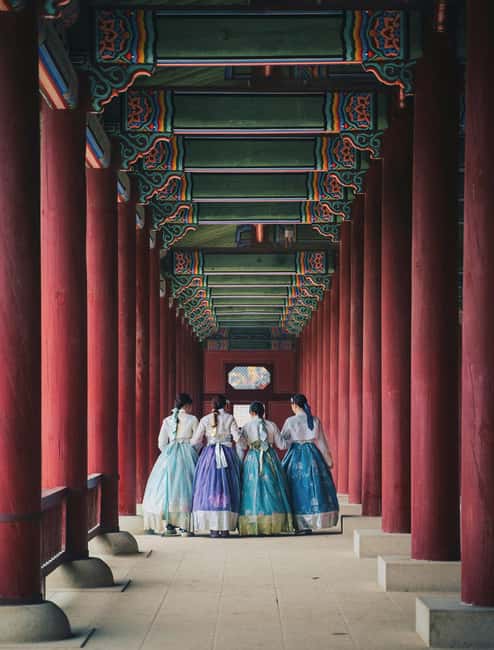
I love a plan that doesn’t just stack sights. This one moves you through Seoul in a way that matches how the city actually changes after dark. You start with the most famous palace atmosphere, then switch to narrow traditional neighborhood streets, and finish with elevated viewpoints and a food market—so the night feels like a story with chapters.
The other big win is the balance of effort and comfort. You’ll do guided walking where it matters, then use van transfers to connect areas without wasting the evening. In past groups, guides like Yoon have been described as kind and available, and that matters because night photos, small directions, and quick questions are easier when someone’s watching for you.
Finally, it’s built for two kinds of curiosity: culture and pop culture. If you’re a K-Pop Demon Hunters fan, the filming-location references are sprinkled through key stops (Gyeongbokgung, Bukchon, Naksan Park, and Eungbongsan). If you’re not, you still get plenty of real-world Seoul—heritage streets, palace history context, and food-market fun.
You can also read our reviews of more shopping tours in Seoul


Gyeongbokgung Palace After Nightfall: Royal Sights + Filming Spots
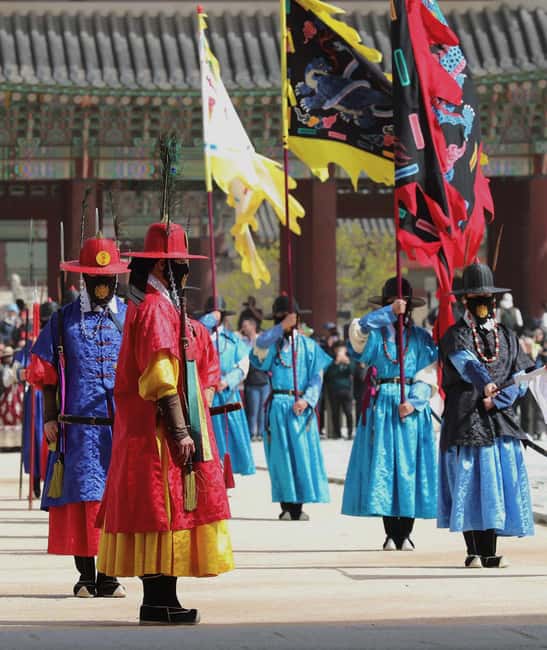
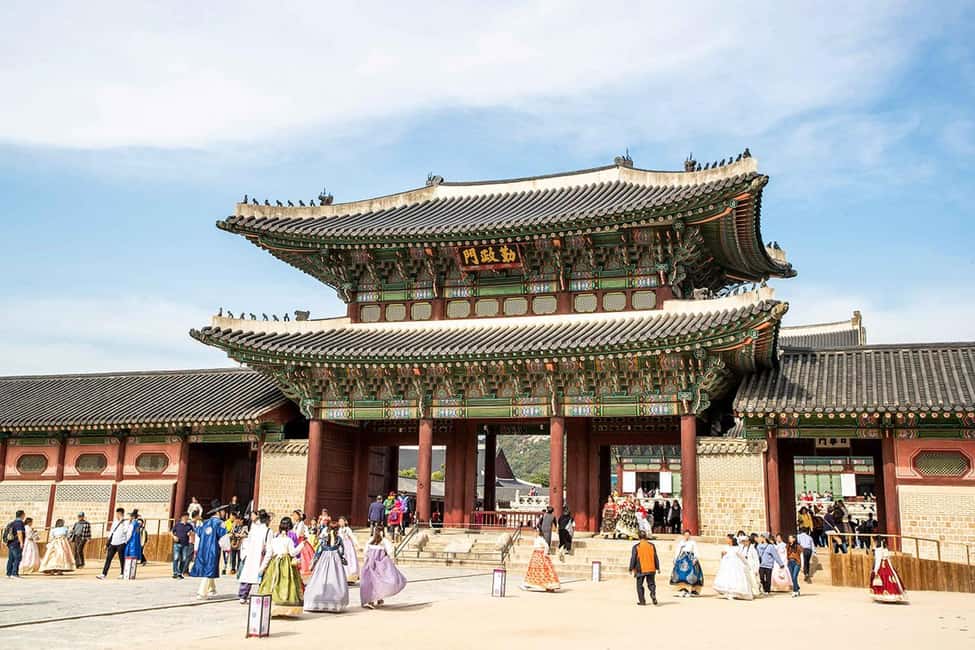
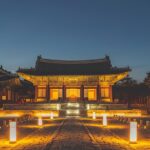
Your evening starts at Gyeongbokgung Palace, where timing is everything. By day it’s a classic must-see. At dusk, the experience shifts. Illuminated courtyards and gates create a calm, almost cinematic feel, and you can see why it’s an ideal filming backdrop.
The guided portion runs about 2.5 hours, which is long enough to do more than point and photograph. A guide can explain what you’re looking at—why certain buildings matter, how palace design relates to royal life, and how the site connects to Korea’s history. In a group led by Stella, for example, guests praised how the stories made ancient Seoul click. That’s the kind of payoff you want from a guided palace visit.
Also, there’s a direct K-Pop Demon Hunters connection here. The tour highlights moments connected to Jinu’s backstory at Gyeongbokgung, so if you recognize locations from the show, you’ll get an extra layer of meaning. If you don’t, you’ll still benefit from the structure: palace landmarks are easier when someone helps you understand what matters.
Practical tip: palace areas can be wide, and it’s night—so wear shoes with good grip. If you want photos, keep your camera handy early, because once you start moving through the grounds, you’ll want to catch the best light before it slips.
Bukchon Hanok Village: Narrow Lanes, Big Photo Payoff
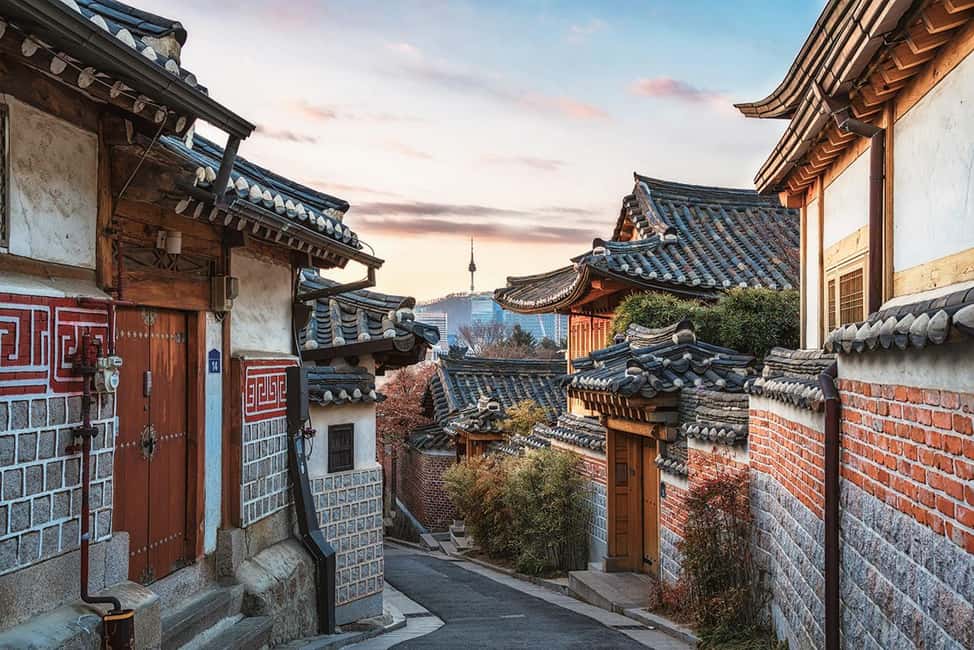
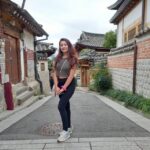
Next you head to Bukchon Hanok Village, a traditional neighborhood known for preserved hanok houses and tight streets. This stop is about 80 minutes, which is just right for walking, looking, and catching photos without turning into a marathon.
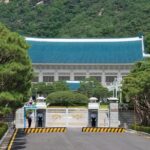
What I like here is the contrast. Bukchon doesn’t feel like a museum set. It feels lived-in, with real architecture shaping your movement. You’ll wind through lanes where the geometry naturally guides your eye. The tour keeps it guided, which helps because Bukchon can be easy to wander randomly. Having someone point out what you’re seeing saves time and makes the whole place more legible.
And yes, there’s K-Pop Demon Hunters energy. The tour treats Bukchon as another key filming location, tied to a secret meeting scene between Rumi and Jinu. That matters if you’re a fan—you’ll likely spot specific street angles that look familiar from the show. Even if you’re not, you’ll get a sense of why Korean drama productions love this kind of neighborhood.
Possible drawback: because the streets are narrow, it can get crowded around photo stops. The small-group size helps, but you still might need to wait a moment if the guide pauses for a photo moment. The best move is to be flexible—step aside when others shoot, then rejoin the group right after.
Gwangjang Market at Night: Street Food Time That’s Actually Helpful
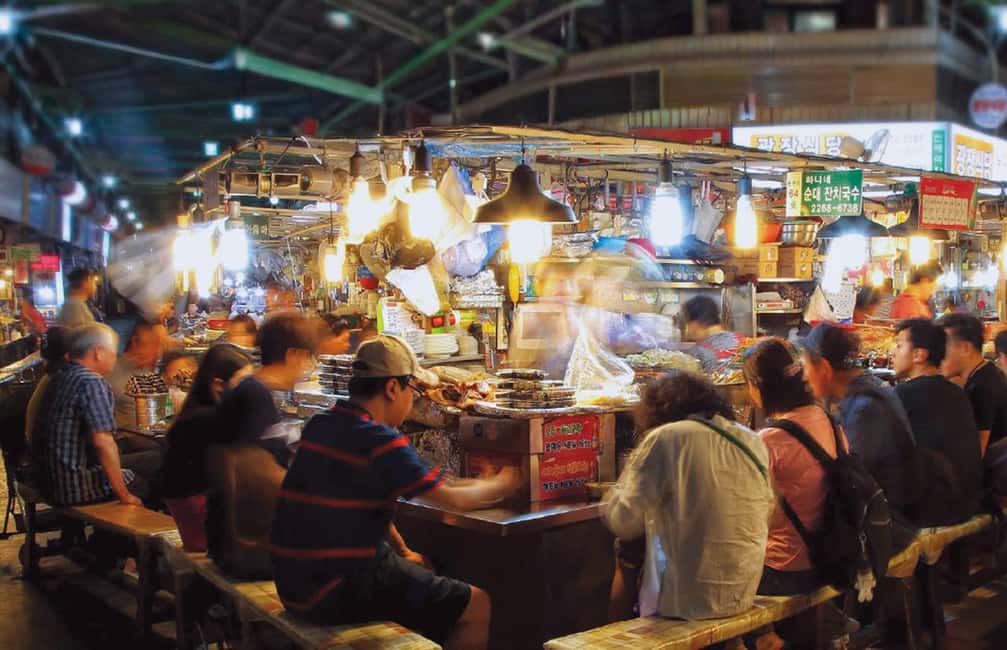
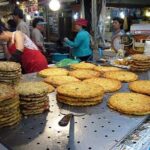
After the heritage stops, the tour shifts into food mode at Gwangjang Market, one of Seoul’s oldest and busiest food markets. You’ll get about 2 hours for dinner and sightseeing here.
This is where guided help really pays off. Markets are fun, but they can also be overwhelming when you’re hungry and your Korean isn’t doing the heavy lifting. In past groups, guides like Mac went beyond general guidance. He’s been praised for answering lots of questions and explaining what different fruits, vegetables, and meats are for—plus he helped guests find tasty items and even added extra market touring.
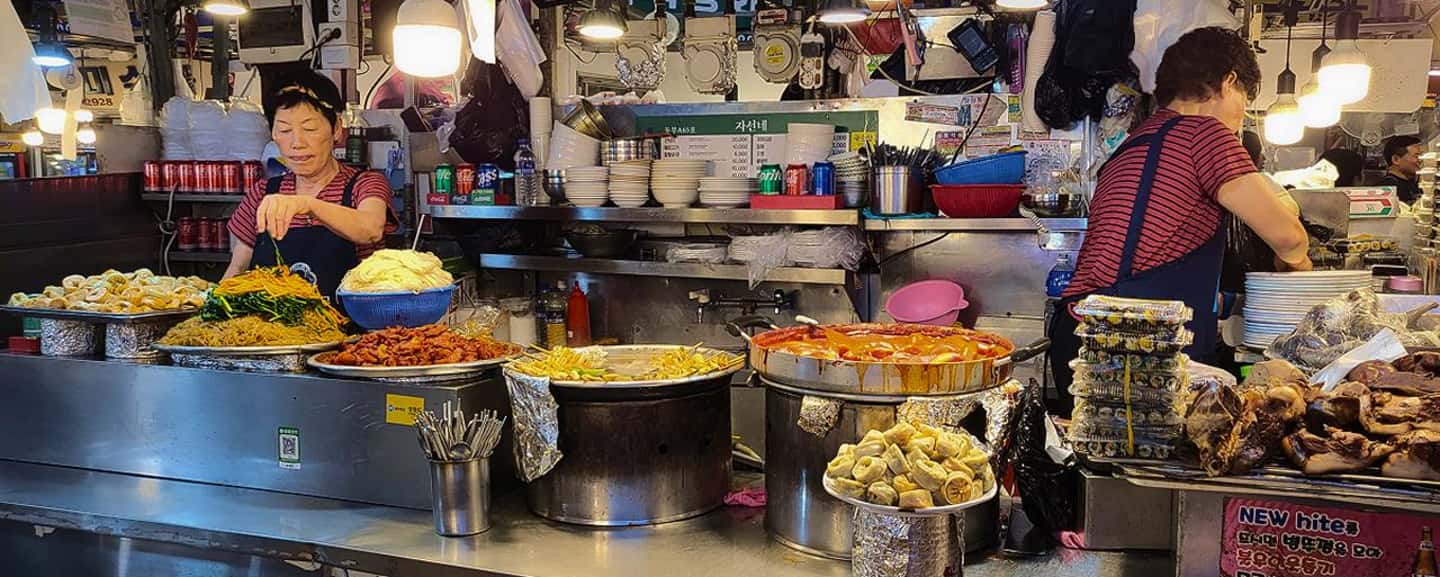
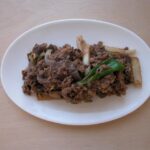
That kind of guidance is the difference between eating because you’re hungry and eating because you understand what you’re tasting. You’ll likely focus on popular street foods such as bindaetteok (mung bean pancakes) and tteokbokki (spicy rice cakes). Even if you’ve tried similar dishes elsewhere, you’ll experience the market version—busy, smoky, and full of local rhythm.
A quick reality check: the tour doesn’t include meals, so you’ll spend on food and personal choices. The tradeoff is that you can eat at your own pace and pick what looks best in that moment, rather than being locked into a fixed meal.
Practical tip: be ready to stand and eat quickly. You’ll get more value if you pick 1 to 2 main items and leave space for the next bite while still in the market atmosphere.
Naksan Park at Dusk: Glowing Walls and Story-Friendly Views
Then comes Naksan Park, where the mood shifts again. You’ll get a photo stop plus free time for about an hour. Naksan is known for calmer views and the feeling of stepping toward a quieter Seoul moment, even though the city is close by.
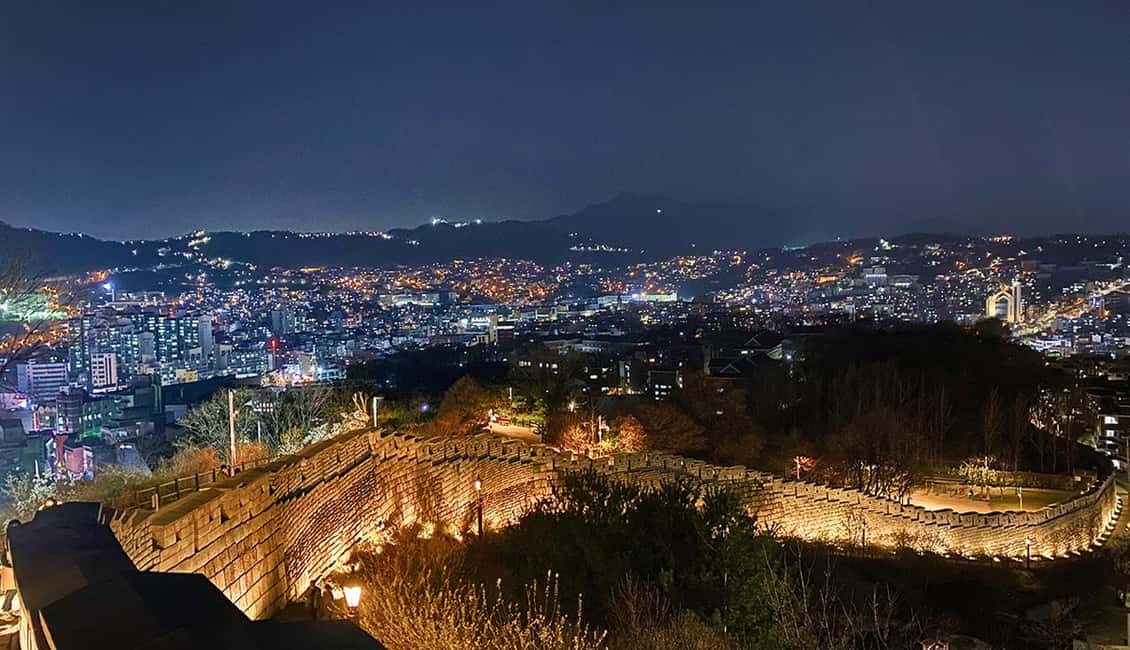
The tour emphasizes the softly lit fortress walls under night lighting. That’s a real visual treat because night photos can look flat when there’s no contrast. Here, the lighting creates depth—the walls show texture, and the skyline appears more structured.
This stop is also a K-Pop Demon Hunters reference. The tour points to Naksan Park as a place where Rumi and Jinu’s storyline comes alive, making it one of the most memorable filming spots. In other words: if you’re watching the show and you’re hunting for familiar angles, Naksan is where the connection often feels most emotional.
Keep expectations practical: you’ll be on uneven ground at some points, and you may climb steps depending on where the group pauses for photos. Good shoes help, and if you’re sensitive to crowds, visit your best photo spot early in the hour so you’re not forced to wait.
You can also read our reviews of more tours and experiences in Seoul

Eungbongsan Mountain Skyline: A Stargazer Finish With Real Scale
After Naksan, the tour climbs to Eungbongsan Mountain for panoramic views of Seoul’s glittering skyline. You’ll have another photo stop and about an hour of free time.
This is the part I’d describe as the night’s payoff. The earlier stops are historic and cultural. Eungbongsan gives you perspective—how massive the city is, how the lights layer into the distance, and why Seoul feels so different after dark.
The tour also links Eungbongsan to Demon Hunters scenes, described as another filming moment in the storyline. That doesn’t replace the view, but it adds a satisfying reason to look up and take photos from the right angles.
Practical tip: mountain viewpoints mean colder air and less shelter. Even in mild weather, you may want a light jacket. If it’s windy, you’ll feel it more here than at street level.
Also, since there’s free time, manage it smartly: spend the first part scouting a photo spot, then use the rest to enjoy the view without rushing. It’s easy to lose track of time when lights and skyline distractions do their job.
Timing, Pace, and Why the Van Helps
The tour duration is flexible—typically 4 to 10 hours, and it can run from about 4 to 9 hours depending on the route. That range sounds big, but it actually matches how these stops work in the real world: time at palaces, walking pace in Bukchon lanes, and how long you want for market choices and viewpoint photos.
What you get for the longer days is more breathing room between stops. What you should plan for is tired feet. You’re doing palace walking, Bukchon lanes, and then viewpoints that often involve stairs or uneven ground. The van transfers help, but they don’t remove the fact that this is still an evening walking tour.
Small group size is part of the pacing solution. With up to 8 participants, the guide can keep everyone together, pause for photos without delaying dozens of people, and answer questions fast. That’s also why guides like Yoon and Mac stand out in feedback: the vibe is supportive rather than rushed.
Where to start on time: your meeting point can vary by booking option. One listed option is Gogung Tteurak, but the point you use will depend on your selection. Show up a little early so you can settle and get briefed without stress.
Price and Value: Is $41 a Good Deal for This Night Plan?
The price is $41 per person, and the value is in what’s handled for you. The tour includes entrance fees, a local guide, guided walking tours, and van transfers. You’re mainly paying for structured access and interpretation, not for a bus to move you from stop to stop.
Meals are not included, and personal expenses aren’t included. That can feel like a downside until you realize why it’s set up this way: markets work best when you can choose what you actually want to eat. If you’re the type who likes to try a few bites, you’ll likely spend more anyway at the market, but you’ll get to pick.
So who’s this best for? If you want maximum “time worth it” on an evening plan—without figuring out transportation between palaces, neighborhoods, viewpoints, and a market—this feels like a practical deal. If you prefer to roam independently at your own pace, you might find it costly for the amount of unguided time. But if you value storytelling and logistics, $41 looks like fair pricing.
Who This Tour Suits Best (and Who Might Skip It)
This tour is a strong match if:
- You want a guided tour through Seoul’s best-known heritage spots at night
- You’re a fan of K-Pop Demon Hunters and want location connections without chasing them on your own
- You like street food and want market guidance so you don’t just eat the first thing you see
- You enjoy viewpoints and want a skyline experience that feels planned
It may be less ideal if:
- You want minimal walking and want mostly indoor sightseeing
- You’re not interested in palaces, heritage neighborhoods, or market food
- You’re very strict about your evening schedule. The duration range means you’ll want buffer time.
Should You Book This Night Seoul Tour?
If you like guided context, photos, and food that’s chosen for you (at least as options), I’d say book it. The mix of Gyeongbokgung, Bukchon, Naksan Park, Eungbongsan, and Gwangjang Market is a clever way to see Seoul’s different “faces” in one night: royal, traditional, scenic, and delicious.
One smart decision point: bring comfy shoes and expect some climbing. If you’re good with that, the tour’s small group size and guide support are exactly what make it feel worth the time. And if Demon Hunters is your thing, the filming-location references turn a standard night itinerary into something more personal.
FAQ
FAQ
How long is the Seoul evening tour?
The duration can vary from 4 to 10 hours depending on the route and starting time. It’s listed as about 4 to 9 hours depending on the itinerary option.
What’s the group size?
It’s a small group limited to 8 participants.
What happens if there aren’t enough people?
A minimum of 4 participants is required for the tour to depart. If that minimum isn’t met at least 24 hours before the departure date, the tour will be cancelled and you’ll be notified.
Where does the tour start?
The meeting point may vary depending on the option booked. One listed starting point option is Gogung Tteurak.
Which languages are the guides available in?
The live tour guide is available in English and Chinese.
What’s included in the price?
Included are guided walking tours, van transfers, a local guide, and entrance fees.
Are meals included?
Meals are not included. You’ll have time at Gwangjang Market for dinner and sightseeing, but you’ll pay for your own food.
What are the drop-off options at the end?
You’ll be dropped off at your choice of Dongdaemun History & Culture Park Station, Myeongdong Station, or Euljiro 3-ga Station.
Is free cancellation available?
Yes. You can cancel up to 24 hours in advance for a full refund.
Can I reserve without paying now?
Yes. The tour offers reserve now & pay later, so you can book your spot and pay nothing today.