REVIEW · SEOUL
Max Out Seoul: Must Visit City Highlights Panoramic Day Tour
Book on Viator →Operated by TOURSTORY · Bookable on Viator
One day, many Seoul moods. This panoramic route strings together must-see sights across neighborhoods, so you get a fast read on how Seoul feels from traditional streets to futuristic design.
I love the efficient pacing for an 8 to 9 hour day, and I love that key stops like Cheonggye Plaza, Gwanghwamun Square, Gyeongbokgung Palace, and Insadong are admission free. One thing to consider: it’s a full-day sampler, so you’ll walk, look, and move on—less time to linger than if you planned neighborhoods on your own.
In This Review
- Key things I’d watch for before you go
- How this panoramic Seoul day tour really works
- Starting point: 152 Sejong-daero and why being on time matters
- Cheonggye Plaza: the overpass-to-park transformation
- Gwanghwamun Square and the Gyeongbokgung guard changing ceremony
- Insadong: craft alleys, tea houses, and weekend pedestrian energy
- Gwangjang Market: street food culture plus the included twisted doughnut
- Dongdaemun Design Plaza (DDP): modern Seoul in neo-futuristic form
- Seongsu-dong: arts, studios, and coffee shop hunting
- Jamsil: Lotte World area and Han River views
- Starfield Library in COEX: a fast, photo-friendly break
- Sebitseom on the Han River: floating islands and an art-meets-outdoors vibe
- Cheong Wa Dae (Blue House) park: seeing the former presidential grounds
- Price and value: is $76.19 a smart way to cover Seoul?
- Logistics you’ll feel during the day
- Who this tour fits best (and who should plan differently)
- Should you book Max Out Seoul?
- FAQ
- How long is the tour?
- What does it cost?
- When does the tour start, and where is the meeting point?
- Is it a mobile ticket?
- What’s included in the price?
- Are meals included?
- Are any admissions free?
- Is Dongdaemun Design Plaza included, and is there admission info?
- What group size should I expect?
- What’s the cancellation policy?
Key things I’d watch for before you go
- Admission-free core stops: Cheonggye Plaza, Gwanghwamun Square, Gyeongbokgung Palace, and Insadong are listed as free
- One-day orientation: you cover multiple districts in a single sweep, which helps you place everything on the map
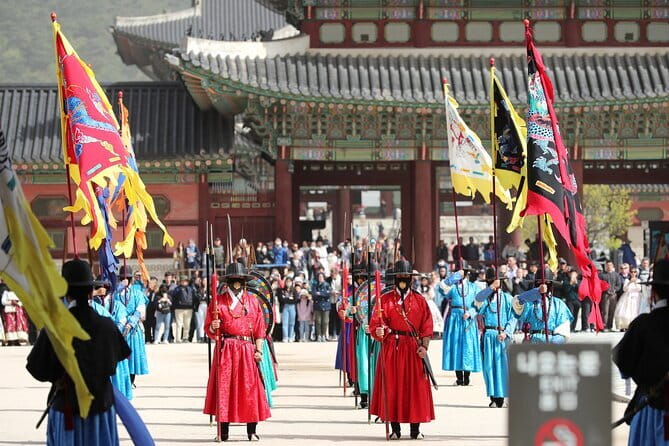
- Gwanghwamun Gate ceremony: the royal guard changing reenacts Joseon dynasty procedures with reproduced costumes and weapons
- Market snack perk: you get one twisted doughnut per person at Gwangjang Market
- Modern Seoul stops after the classics: DDP, Seongsu-dong, Starfield Library, and Han River islands keep the day from feeling repetitive
- Small-to-medium group size: capped at 43 travelers, which is big enough for variety but small enough to stay organized
How this panoramic Seoul day tour really works
This is built for travelers who don’t want to spend their whole trip “figuring out logistics.” You start in central Seoul at 152 Sejong-daero, Jongno District at 9:10 am, then you ride between stops with round-trip transportation and an English-speaking staff. Most major sights fall into a single-day circuit, so you can come home with a clearer mental map of the city.
The day runs about 8 to 9 hours, and the route can shift with traffic and weather. That matters because this tour depends on momentum. If you need long breaks, you’ll still get them in small chunks at each stop—but you won’t have a slow, flexible “choose your own pace” day.
One more practical point: your ticket is mobile, so you’ll just keep it on your phone when you meet up.
You can also read our reviews of more city tours in Seoul
Starting point: 152 Sejong-daero and why being on time matters
Your meet-up point is 152 Sejong-daero, Jongno District, and the tour starts at 9:10 am. This is a smart place to gather because Sejong-daero sits right in the heart of Seoul’s downtown action, and it’s easier for transit connections than hopping around multiple stations.
On a tour like this, being on time is more than politeness. If you’re even a little behind at the start, you can lose time that the schedule counts on later.
Cheonggye Plaza: the overpass-to-park transformation
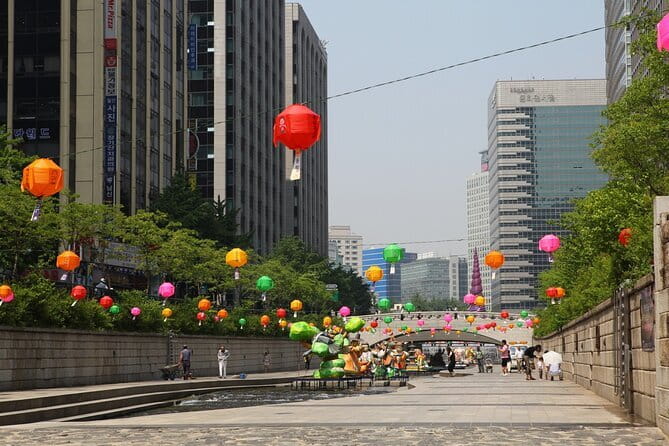
Your first stop is Cheonggye Plaza, tied to the Cheongcheon restoration project completed in 2005. The headline here is the story: an overpass area was reshaped into a public urban park, and it became a place for recreation plus events and festivals.
In real terms, this stop works because it resets you after travel. It’s open-air, it’s not overly complicated, and it sets the tone that Seoul changes its spaces constantly—sometimes dramatically.
This stop is listed at 10 minutes with free admission, so don’t expect deep exploration. Instead, use it as a quick “okay, I’m in the right place” moment before the day heats up.
Gwanghwamun Square and the Gyeongbokgung guard changing ceremony
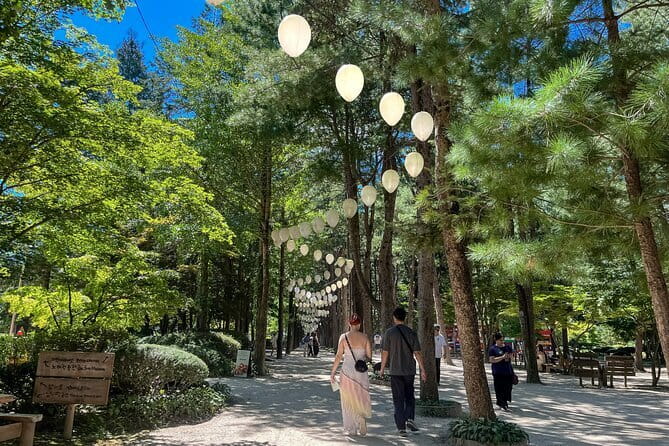
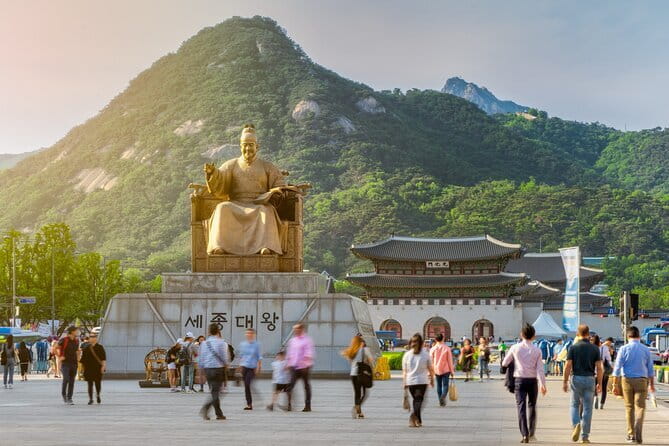
Next up is Gwanghwamun Square, right in front of Gwanghwamun Gate, the main entrance to Gyeongbokgung Palace. The square opened to the public in 2009, and it’s used for cultural events and civic gatherings, which is why it feels like more than just a pretty backdrop.
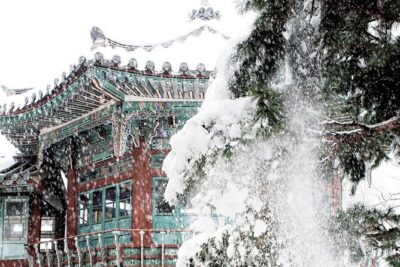
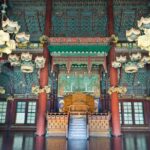
Then you move into Gyeongbokgung Palace, and this is one of the best schedule-based moments of the day. The Royal Guard Changing Ceremony reenacts the Joseon dynasty guard-changing procedure at Gwanghwamun Gate, using reproduced costumes and weapons based on historical records. It’s the kind of performance that makes the palace feel like an active historical setting, not just stone and gates.
This palace stop is listed at 30 minutes and free admission. That’s short, so if you want photos, plan to arrive ready and stay alert during the transition. If you miss the exact moment, it can be hard to “catch up” within the tight time box.
Insadong: craft alleys, tea houses, and weekend pedestrian energy
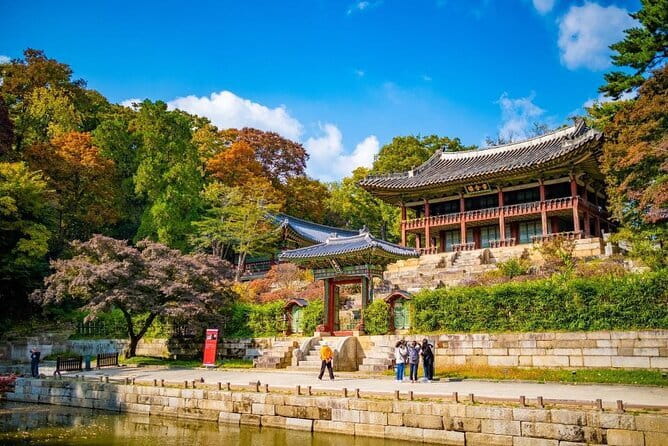
After the palace, you head to Insadong, famous for narrow alleys lined with antique shops, art galleries, traditional tea houses, and craft stores. This is where you’ll see a Seoul version of souvenir hunting that feels more handmade than mass-produced.
Insadong is especially known for traditional ceramics, calligraphy materials, and folk crafts. If you’re the type who likes to bring home something you can actually use—or at least something you’d want to display—this is the stop that makes sense.
One practical detail: Insadong’s main street is closed to vehicle traffic on weekends, turning it into a pedestrian zone with street performers, traditional music, and food vendors. Even if your day isn’t on a weekend, the overall area still feels like a walkable browsing zone. This stop is about 1 hour and listed as free admission.


Gwangjang Market: street food culture plus the included twisted doughnut
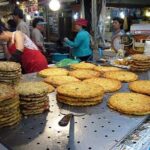
Gwangjang Market is next, and it’s a classic for a reason. Established in 1905, it’s known for a lively, local-feeling market atmosphere and a wide range of goods. Fabric and clothing are part of it, but the big draw for most people is eating.
It’s also explicitly described as a place to experience everyday Seoul commerce and community life—vendors calling out, crowds moving, lots of senses firing at once.
Here’s what you get from this tour: a snack perk. You receive one twisted doughnut per person at Gwangjang Market. That’s a nice way to start tasting without needing to choose immediately, especially if your stomach is still adjusting to a day of walking.
The market’s admission is listed as not included, but you won’t usually think of a market as “paying admission.” Instead, budget for what you want to eat. The stop is about 1 hour.
Dongdaemun Design Plaza (DDP): modern Seoul in neo-futuristic form
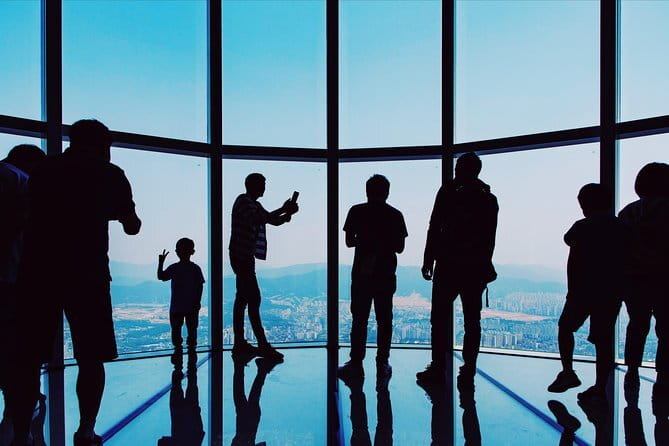
Your next design-heavy stop is Dongdaemun Design Plaza (DDP). It’s known for its distinctive neo-futuristic look, with curving forms and smooth reflective surfaces. It’s also a venue for exhibitions and events, so even when there isn’t a major “must-see” exhibit, the building itself is worth the time.
DDP is strategically placed later in the day so you’re not stuck in one “theme” all morning. If you’ve already seen palaces and craft lanes, this feels like a reset—new materials, new angles, new photo possibilities.
No admission or time length is listed for this stop in your info, so treat it like a flexible quick hit. When time is limited, I focus on one thing: finding a good viewpoint and getting your photos fast before the group moves on.
Seongsu-dong: arts, studios, and coffee shop hunting
Then you shift to Seongsu-dong, one of Seoul’s creative neighborhoods. The area hosts art spaces and studios showing both established and emerging artists. It’s also a strong coffee zone, with popular shops known for their own design and atmosphere.
This stop matters because it shows a Seoul that isn’t centered on palaces or shopping malls. It’s a neighborhood where you can feel how the city mixes older structures with newer creative energy.
The tour lists this stop as about 1 hour with free admission. That hour is usually enough to do one slow loop, pop into a coffee place if you want, and browse for anything small and visual (postcards, prints, craft objects). If you’re serious about independent shopping, you’ll want to return on your own later.
Jamsil: Lotte World area and Han River views
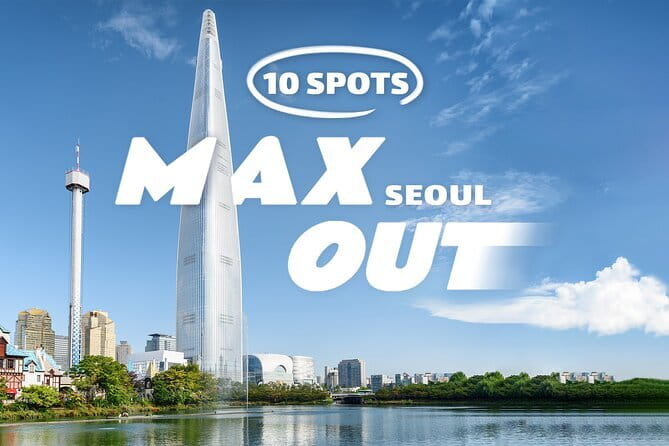
Next is Jamsil, known for entertainment, sports, and residential areas, plus major landmarks like Lotte World Tower and the Lotte World recreation complex. There’s an indoor theme park, an outdoor amusement park, connected shopping, and more—and it sits next to the Han River, which gives you outdoor breathing room.
This is one of those stops where you get a change of rhythm. You go from indoor-style attractions like palaces and malls into open air and wider views.
The tour lists Jamsil as about 20 minutes, with free admission. That’s short, so think of it as a “see it and orient yourself” stop. If you want to actually do rides or spend time inside, you’d plan a separate half-day around Lotte World.
Starfield Library in COEX: a fast, photo-friendly break
After Jamsil, you’ll end up at Starfield Library inside Starfield COEX Mall. This is one of those attractions that looks better the longer you stare at it. The open-plan space spans two stories and features a towering wall of books reaching nearly 14 meters high, which makes for an eye-catching backdrop.
It’s also practical. Because it sits inside a mall, it can feel like a comfortable pause—especially if it’s raining or too hot outside.
This stop is listed at 30 minutes and free admission. Use the time wisely: get your best angles quickly, then use a few minutes for the calm “reset” moment. This is also a good stop to grab water or a snack on your own if you still need calories for the last stretches.
Sebitseom on the Han River: floating islands and an art-meets-outdoors vibe
Your Han River stop is Sebitseom, sometimes called Sebitseom Floating Islands. The info you have says it’s made up of three man-made islands: Gavit Island, Chavit Island, and Solit Island.
This is one of the tour’s smartest picks because it gives you something different from Seoul’s classic “street + building” sights. The setting is outdoors and scenic, and the description frames the islands as a blend of nature, technology, and art. You’re not just walking between buildings—you’re walking with water nearby.
The tour lists this stop as about 1 hour with free admission. If weather is good, this is where I’d slow down a bit within the schedule—just enough to enjoy the river atmosphere instead of treating it like another photo stand.
Cheong Wa Dae (Blue House) park: seeing the former presidential grounds
One more major stop included is Cheong Wa Dae, also known as the Blue House, now a public park. It served as South Korea’s presidential residence and diplomatic reception halls from 1948 to 2022.
Your visit here is best understood as a “place with weight” stop: it’s connected to modern Korean governance history, but it’s now open as a public green space. Even if your time is limited, the setting helps you understand Seoul’s mix of tradition, politics, and daily life.
Because the info you provided doesn’t list a time window for this specific stop, treat it as a guided transfer moment where you get a structured look and then move on.
Price and value: is $76.19 a smart way to cover Seoul?
At $76.19 per person, this tour sits in the “pay for convenience” category. What makes it potentially good value is what’s included: round-trip transportation plus an English-speaking staff who keeps the day moving between neighborhoods.
Another value point is how many major stops are listed with free admission in your itinerary details: Cheonggye Plaza, Gwanghwamun Square, Gyeongbokgung Palace, Insadong, Seongsu-dong, Jamsil, Starfield Library, and Sebitseom. That matters because it reduces the temptation to “double pay” for entrance fees when you’re already paying for the guided circuit.
The included snack also helps: the twisted doughnut at Gwangjang Market gives you a built-in food moment. Meals are not included, though, so you should plan on buying your lunch and drinks (and any extra market food) yourself.
If you’re traveling on a tight schedule—say you have limited days in Seoul—this is a strong buy. If you’re the kind of traveler who likes to linger for hours in one neighborhood, you might feel time pressure, since the structure is designed to hit a lot.
Logistics you’ll feel during the day
A few details will shape your comfort level.
- The tour is 8 to 9 hours and covers many districts, so wear shoes you can walk in for a long day.
- Your info says you should have moderate physical fitness level. That’s basically a heads-up that this isn’t a sit-and-sightseeing-only plan.
- It’s capped at 43 travelers, which helps organization, but the group may still be large enough that you should listen carefully during transitions.
- If you’re bringing a baby stroller, you need to inform the provider ahead of time.
- Your schedule is subject to traffic & weather, so expect minor shifts and build in flexibility.
Who this tour fits best (and who should plan differently)
This tour is a good match if you want to get your bearings fast and cover a mix of Seoul “eras”: palace grounds, traditional craft alleys, historic markets, design architecture, creative neighborhoods, and Han River recreation.
It’s also a solid choice for first-timers who want one day with a guided structure, especially if you don’t want to hop between far-flung neighborhoods on your own.
If you’re more interested in deep museum time, long palace wandering, or slow café hopping with zero pressure, you’ll likely prefer a neighborhood-based plan. Here, the goal is sampling and orientation, not lingering for hours.
Should you book Max Out Seoul?
I’d book it if you’re short on time and you want a guided route that covers the main “Seoul highlights” without you needing to plot every move. The best reasons are simple: lots of admission-free stops, real variety across districts, and the included market snack that turns one segment into an easy win.
I wouldn’t book it if your top priority is unhurried pacing or if you hate group schedules. This is a full-day sampler, and you’ll feel the momentum.
If your goal is to leave Seoul with a clear sense of where everything is—and what you want to revisit—this tour gives you a strong start.
FAQ
How long is the tour?
The tour duration is listed as about 8 to 9 hours.
What does it cost?
The price is $76.19 per person.
When does the tour start, and where is the meeting point?
The start time is 9:10 am, and the meeting point is 152 Sejong-daero, Jongno District, Seoul, South Korea.
Is it a mobile ticket?
Yes, the tour uses a mobile ticket.
What’s included in the price?
Included features are round-trip transportation, English speaking staff, and snacks. You also get one twisted doughnut per person at Gwangjang Market.
Are meals included?
No. Meals are not included.
Are any admissions free?
Yes. Cheonggye Plaza, Gwanghwamun Square, Gyeongbokgung Palace, Insadong, Seongsu-dong, Jamsil, Starfield Library, and Sebitseom are listed with free admission. The Gwangjang Market admission is listed as not included.
Is Dongdaemun Design Plaza included, and is there admission info?
Dongdaemun Design Plaza (DDP) is included as a stop. The details you provided do not list an admission cost for DDP.
What group size should I expect?
The tour has a maximum of 43 travelers.
What’s the cancellation policy?
You can cancel for free up to 24 hours in advance for a full refund.