REVIEW · SEOUL
Korean Traditional Music Performance Ticket
Book on GetYourGuide →Operated by The Creators · Bookable on GetYourGuide
A show like this is small enough to feel personal, and formal enough to feel special. In Insadong’s hanok setting, you get a three-part program that moves from blessing ceremony to court music, then to folk songs mixed with pop-style pieces. I especially like the up-close sound of instruments like the gayageum and haegeum, and the chance to meet the musicians afterward.
There is one catch to plan around: stairs-only access means it’s not a smooth fit for anyone with mobility limits, and it can slow you down if you’re rushing.
In This Review
- Key things you should know before you go
- Where Insadong’s Quiet Begins: The Hanok Setting and Timing
- How the Three Stages Work (Gilje → Jinyeon → Together in Harmony)
- Seating, Costume Mood, and the Photo Moment After
- Getting There Without Stress: Insadong Navigation and the 2F Entry
- Price and Value: Is $47 Worth One Hour of Music?
- Who This Experience Fits Best (And Who Might Want a Different Plan)
- What You Should Do Before You Go
- Should You Book This Traditional Music Performance?
- FAQ
- FAQ
- How long is the Korean Traditional Music Performance?
- Where is the meeting point for the show?
- How do I get there from nearby subway stations?
- What time slots are available?
- What languages are used during the experience?
- Are seats provided?
- Is there an elevator at the venue?
- Is food or drinks included with the ticket?
- Is hotel pickup or drop-off included?
- Can I reserve now and pay later, and what about refunds?
Key things you should know before you go
- A hanok, not a big theater: the room size keeps the performance intimate and focused
- Three named stages: Gilje (blessing), Jinyeon (banquet/court), then Together in Harmony (fusion)
- Traditional instruments + modern music flavors: K-pop and drama OST touches show up in a respectful way
- Chairs are provided: you’ll sit comfortably in a prepared seating area
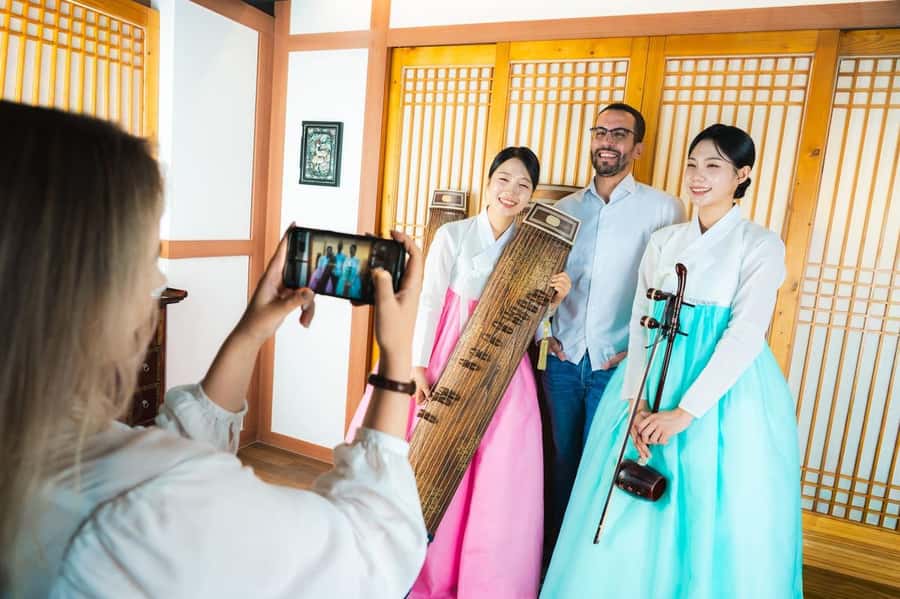
- Photos with the musicians: you get time for pictures after the performance
Where Insadong’s Quiet Begins: The Hanok Setting and Timing
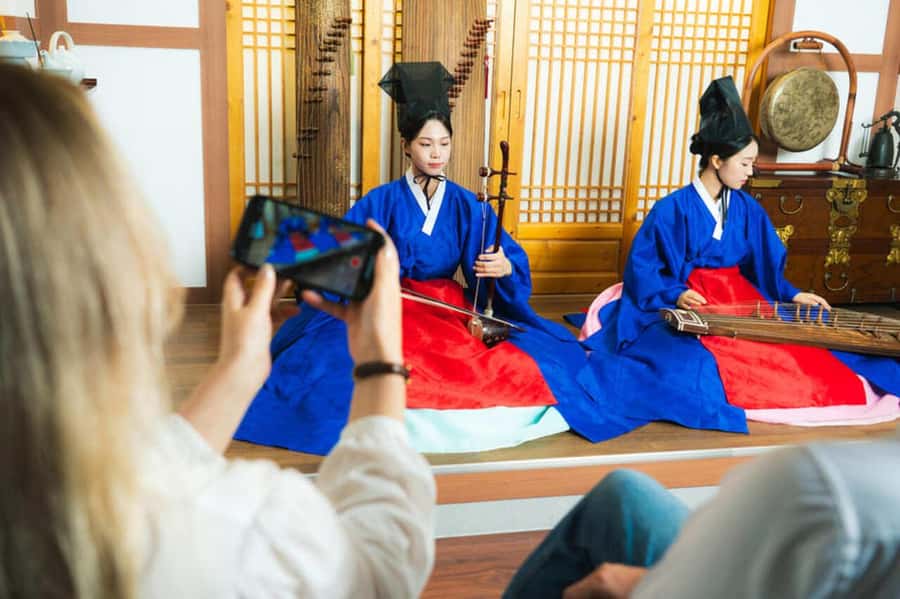
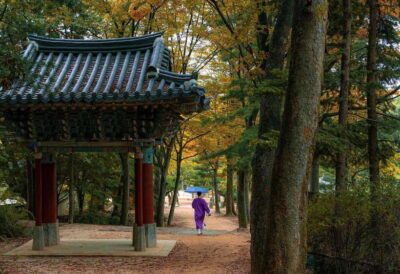
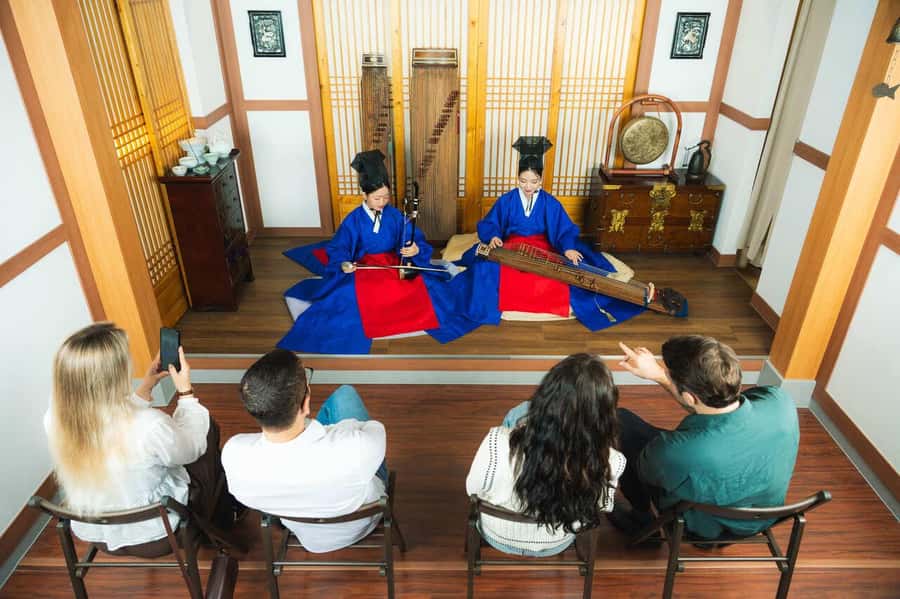
This concert happens in a traditional Korean house (a hanok), and that matters more than it sounds. A hanok changes the sound and the mood. You’re not just watching music from far away. You’re in the same air as the instruments, with the room acting like a natural amplifier for the gentle details.
The performance runs about 60 minutes, and it’s offered on weekdays only at 11:00, 13:00, and 15:00. If you’re planning a day in central Seoul, treat this like a fixed appointment. The schedule is tight, and the show has a solemn tone—arriving late can make the start feel awkward.
Your meeting point is on 2F at 2F 10, Insadong 5-gil, Jongno-gu, Seoul (Jinyeon Hall). The location is walkable: about 6 minutes from Jonggak Station Exit 3-1 (Line 1) and 8 minutes from Jongno 3-ga Station Exit 5 (Line 5). One practical tip: if your navigation app drops you a few blocks off, switch to a route that’s more reliable for your exact entrance. I’d rather you spend five minutes finding the right stairwell than five minutes missing the first stage.
And yes, you’ll want to set your phone to silent mode before it starts. This show isn’t about constant notifications.
You can also read our reviews of more tours and experiences in Seoul



How the Three Stages Work (Gilje → Jinyeon → Together in Harmony)
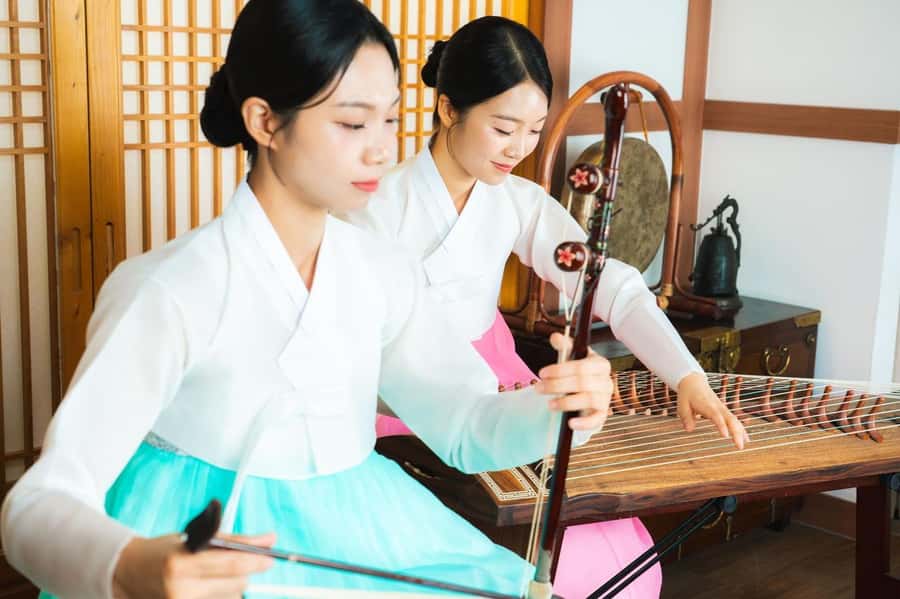
The program is built in three clear movements, so even if you don’t know traditional music terminology, you still feel the story.
Stage 1: Gilje (Opening Blessing Ceremony)
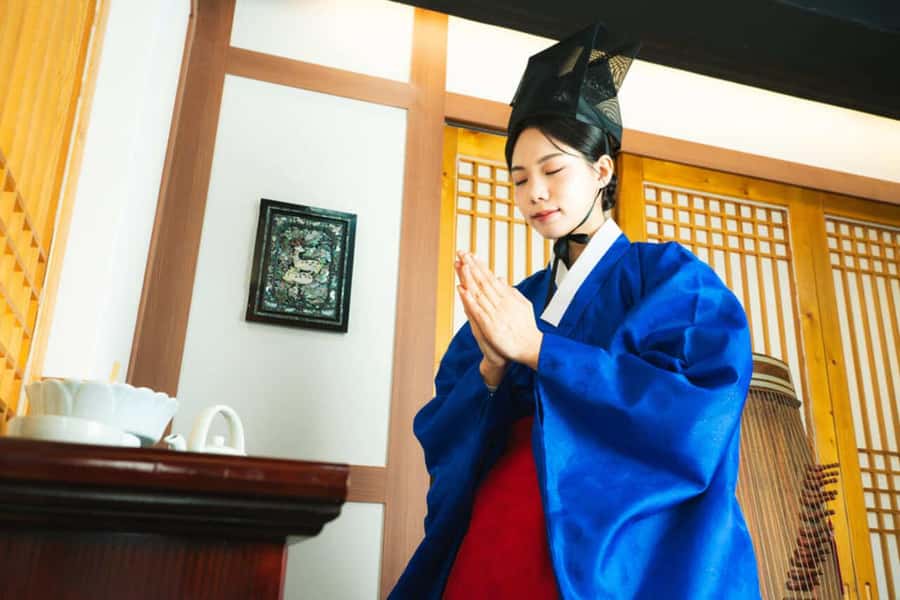
You’ll begin with a formal welcome as the musicians enter. The opening is a blessing meant for peace and good wishes, and that sets expectations: this is a listening-focused performance, not a casual “sit and chat” event. Think of it as the moment the room collectively settles.
Stage 2: Jinyeon (The Banquet Performance)
Next comes court-music style material plus powerful solo instrumentals. If you like musical technique you can recognize even without being an expert, this part is your payoff. The solo sections let instruments speak clearly, and the “court” feel helps you understand how music was shaped for ceremony, storytelling, and prestige.
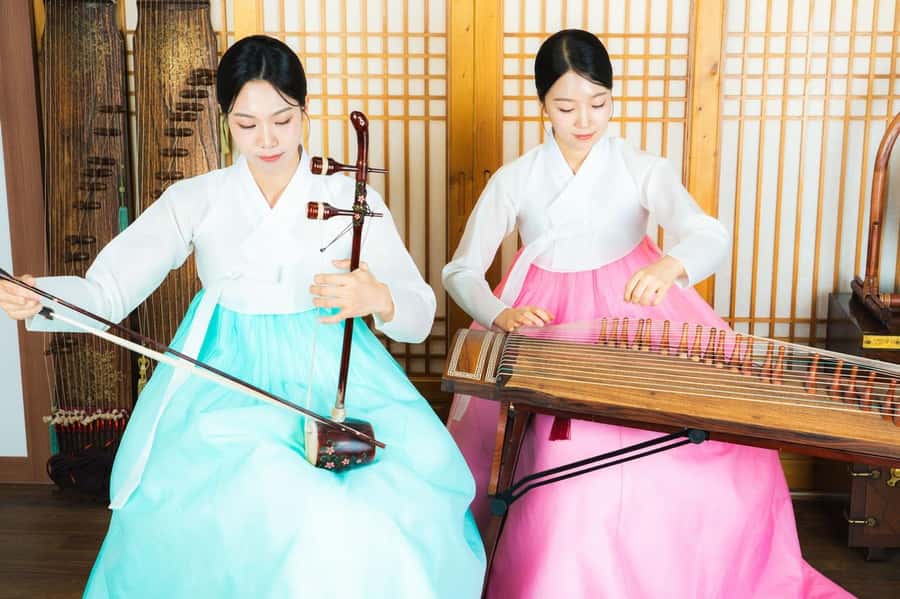
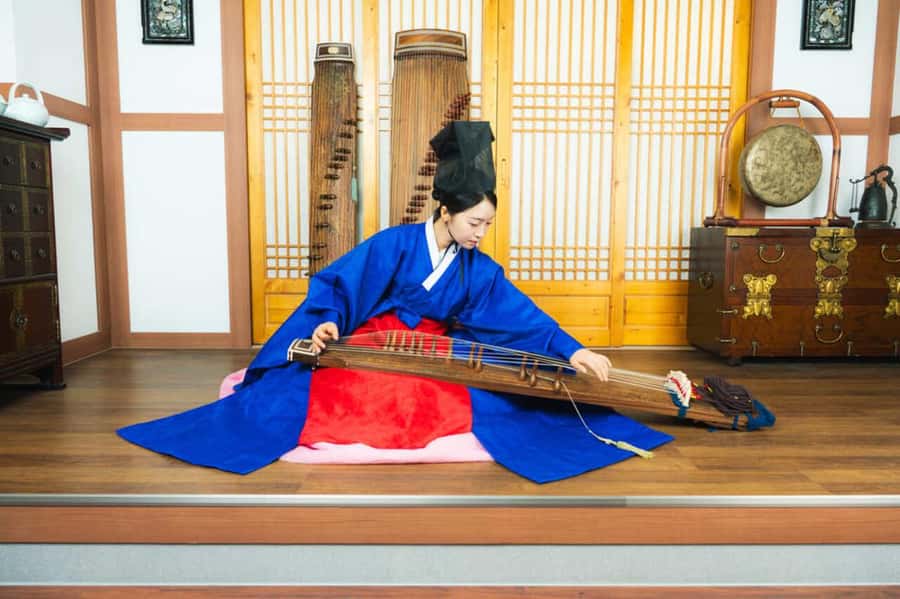
A nice bonus here is variety across performers. In the sound you’ll notice different textures—thin, ringing tones against fuller, more grounded ones. That’s where the gayageum and haegeum sounds tend to make people sit up and pay attention, because they don’t behave like a guitar or a violin. They have their own voice and timing.
Stage 3: Together in Harmony (Folk Songs + Creative Fusions)
This is where the show reaches beyond “only old music.” You’ll hear the soul of Korean folk songs, and then you get creative fusions that reference K-pop and drama OSTs using traditional instruments.
This is also a great section if you’re new to Korean traditional music. You still get the discipline and style of the performance, but the melodies act like signposts you already recognize. It can feel like a bridge between eras instead of a museum display.
Seating, Costume Mood, and the Photo Moment After
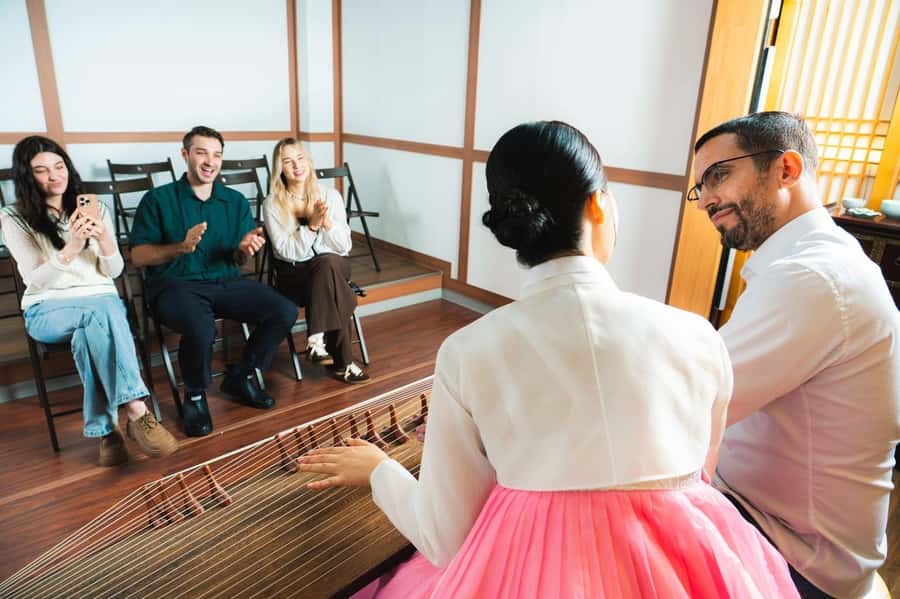
You’ll sit comfortably in a prepared seating area with chairs provided. That’s a big deal in a hanok because comfort affects how much you can actually enjoy the sound. This isn’t one of those “good luck with your knees” situations.
The performance also carries strong visual atmosphere. Expect traditional costumes and a sense of formality that makes the experience feel like more than audio. One of the big reasons people remember this show is the overall vibe—music plus traditional dress creates a stronger emotional context than either one alone.
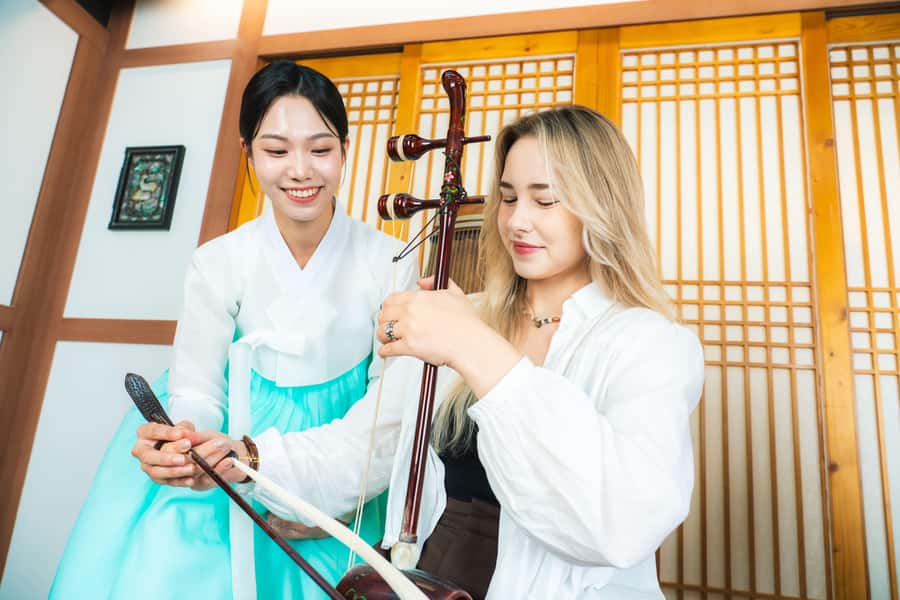
After the final stage, don’t rush out. There’s a chance to take photos with the musicians. Also, depending on how the evening flows, you may get real conversation time—enough to learn what makes each instrument feel special. Some visitors even describe getting shown how their instruments work, including hands-on moments that help you understand what you just heard.
Getting There Without Stress: Insadong Navigation and the 2F Entry
The venue is at 2F, and access is via stairs only with no elevator. This is the main planning issue to take seriously. If stairs are a problem for you (or for someone in your group), choose carefully. The performance is great, but you shouldn’t have to wrestle with the entrance just to experience it.
For routing, plan for a short walk. The location is near major subway exits (Jonggak and Jongno 3-ga), but Insadong’s streets can be confusing if your maps app tries to guess your closest entrance. One helpful move is to use a map that lets you confirm you’re at the exact building entrance and floor level. People have experienced wrong turnouts with some navigation views, then corrected it by switching to a more precise map direction.
Practical timing: arrive 10 minutes early. That’s not just about check-in. It’s about settling into the room before the blessing stage begins.
Price and Value: Is $47 Worth One Hour of Music?
At $47 per person for a ~60-minute concert, this isn’t the cheapest thing to do in Seoul. But it’s also not just a “random cultural show.”
Here’s why the value can make sense:
- You’re paying for live musicians with over 10 years of experience.
- The group size is 1–20 people, so it stays intimate instead of disappearing into a crowd.
- The format is structured (three stages with distinct styles), so you get real variety rather than one long single segment.
- It includes more than passive watching. The program includes photo time and often some interaction around the instruments.
Where the price might feel tough is if you mainly want broad sightseeing, or if you’re price sensitive and would rather spend that money on food, shopping, or multiple attractions. One reviewer even felt the price could be lower. If you’re comparing to other low-cost experiences in Seoul, that’s a fair mental checkpoint.
My practical advice: if you’re the kind of traveler who enjoys small, focused performances, and you want a calm hour that feels distinctly Korean, $47 can be a reasonable splurge.




Who This Experience Fits Best (And Who Might Want a Different Plan)
This concert fits well if you:
- Want an authentic cultural activity in central Seoul, without hunting for a complicated schedule
- Like music that mixes technique with storytelling
- Enjoy being in a smaller room where you can actually follow instrument changes
- Travel with friends or family who appreciate calm, respectful performances
It might not fit if you:
- Need step-free access (stairs-only, no elevator)
- Want something that feels casual and flexible (this show has a solemn tone and a set start time)
- Are expecting food included (food and drinks are not part of the ticket)
Also, since it’s weekdays only, check your dates. Seoul has plenty to do daily, but this specific performance is limited to certain days and times.
What You Should Do Before You Go
Do a tiny bit of prep and the experience lands better.
- Plan your day so you’re not sprinting from your last stop.
- Eat beforehand or bring your own plan for snacks later. Food and drinks are not included.
- Decide whether you want to treat this as a “sit down and listen” moment. If you’re mentally ready for quiet focus, you’ll enjoy it more.
If you’re bringing friends who only know K-pop, this is still a smart bridge. The fusion section is designed to connect modern listening tastes to traditional instruments.
Should You Book This Traditional Music Performance?
If you want a one-hour cultural experience that feels intimate, intentional, and distinctly Korean, I’d book it—especially if you’ll be in Insadong on a weekday. The three-part structure, the chance to hear traditional instruments up close, and the photo opportunity after the show are the kinds of extras that make this more memorable than a generic performance.
Skip it only if stairs are a dealbreaker for you, or if you’re looking for something more casual and flexible than a formal, listening-centered concert.
FAQ
FAQ
How long is the Korean Traditional Music Performance?
The performance lasts about 60 minutes.
Where is the meeting point for the show?
The meeting point is Jinyeon Hall, 2F 10 Insadong 5-gil, Jongno-gu, Seoul, South Korea.
How do I get there from nearby subway stations?
It’s about 6 minutes on foot from Jonggak Station Exit 3-1 (Line 1) and about 8 minutes on foot from Jongno 3-ga Station Exit 5 (Line 5).
What time slots are available?
Performances are scheduled on weekdays only at 11:00, 13:00, and 15:00.
What languages are used during the experience?
The performance is available in English and Korean.
Are seats provided?
Yes. You’ll sit in a prepared seating area with chairs provided.
Is there an elevator at the venue?
No. Access to the venue is via stairs only, and there is no elevator.
Is food or drinks included with the ticket?
No. Food and drinks are not included.
Is hotel pickup or drop-off included?
No. Hotel pickup and drop-off are not included.
Can I reserve now and pay later, and what about refunds?
You can reserve and pay later. For cancellations, you can cancel up to 24 hours in advance for a full refund.