REVIEW · SEOUL
Seoul Palace Morning Tour
Book on Viator →Operated by SEOUL CITY TOUR CO. LTD. · Bookable on Viator
You can pack a lot of Seoul culture into one morning. This Seoul palace morning tour pairs Jogyesa Temple with the big royal sights at Gyeongbok Palace, then finishes with the ceremony at Gwanghwamun. I especially like that entrance fees are included, so you’re not doing math at ticket counters, and that the guide keeps things friendly and practical.
You also get a smooth, guided route without having to figure out transfers. The tour includes hotel pickup in an air-conditioned vehicle, and it’s family friendly, which matters when you’re trying to keep kids (and adults) from melting before lunch.
One heads-up: you’ll pass by the Blue House from the roadside (you can’t stop there), and there’s a scheduled ginseng center stop at the end that can feel like shopping time more than sightseeing for non-shoppers.
In This Review
- Key Things I’d Plan For
- Why This Seoul Palace Morning Tour Works as a 3-Hour Value Hit
- Morning Pickup, Mobile Tickets, and Group Reality
- Jogyesa Temple: Zen Buddhism, 500-Year Trees, and a Truly Photogenic Main Hall
- Blue House Pass-By: What You See Without the Stop
- Gyeongbok Palace: From Throne Hall Views to Queen’s Quarters
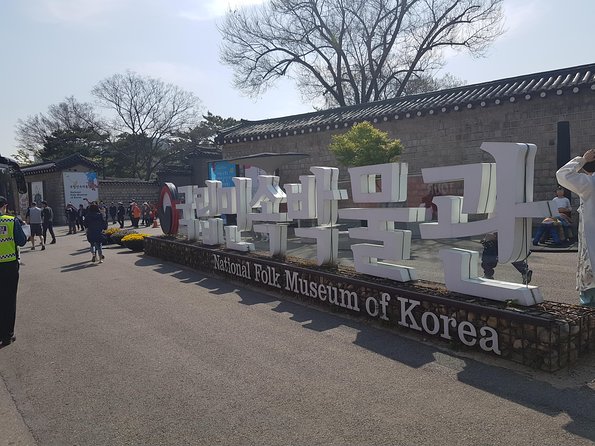
- Korean National Folk Museum: A Quick Context Boost for What You’re Seeing
- Gwanghwamun Gate and the Changing of the Guard
- The Included Ginseng Center: Helpful Stop or Time Sink?
- Guides, Pace, and How to Get More Out of the Time
- Price and Inclusions: Is $40 Good Value?
- Who Should Book This Tour (and Who Might Skip)
- Should You Book This Seoul Palace Morning Tour?
- FAQ
- What time does the Seoul Palace Morning Tour start?
- How long is the tour?
- Does the tour include hotel pickup?
- Where do you get dropped off at the end of the tour?
- Are entrance fees included?
- Is lunch included?
Key Things I’d Plan For
- Hotel pickup, City Hall drop-off: You start at your hotel, but you end at City Hall—not back at your doorstep.
- Fast, efficient pacing: It’s built to cover several major stops in about 3 hours.
- Jogyesa Temple’s standout details: 500-year-old trees, a main hall built in 1938, and a multi-story stone pagoda.
- Blue House is a pass-by: You’ll see it along the route, not up close inside a secure area.
- Gyeongbok Palace plus palace-adjacent museum: You don’t just look at gates—you also get context about court life and everyday culture.
- A ginseng stop is part of the deal: One shopping center is included, and that may affect how much time you want at the sights.
Why This Seoul Palace Morning Tour Works as a 3-Hour Value Hit
If you only have one “palaces morning” on your schedule, this tour is set up to make that time count. In roughly 3 hours, you’ll hit a major Zen temple, the heart of Joseon Dynasty royal Korea at Gyeongbok Palace, and the well-known change-of-guard ceremony at Gwanghwamun.
The biggest practical win is simplicity. You don’t have to plan routes or arrange multiple tickets; the itinerary is designed as a single guided circuit with entrance fees included and hotel pickup by air-conditioned vehicle.
The other thing I like is the variety. The tour moves from religion (Jogyesa), to state power (Gyeongbok Palace), to cultural context (National Folk Museum), and then ends with a very visual, ceremonial finale.
You can also read our reviews of more tours and experiences in Seoul
Morning Pickup, Mobile Tickets, and Group Reality
This tour starts at 9:00 am, so it’s truly a morning plan, not a late-day stroll. Most people can join, and the group size caps at 30 travelers, which usually keeps the flow organized without being too cramped.
You’ll use a mobile ticket, and pickup is offered from your hotel. The trade-off is where you end: drop-off is at City Hall. That’s actually convenient if you’re staying central or already plan to roam on foot after the tour, but it’s a deal point if you prefer returning to your hotel.
Also plan around food. Lunch isn’t included, so if you get hungry after palace walking, grab water and a small snack before you go.
Jogyesa Temple: Zen Buddhism, 500-Year Trees, and a Truly Photogenic Main Hall
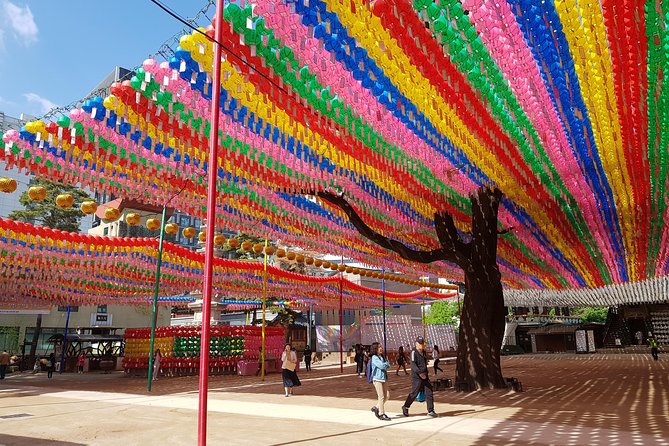
Your morning begins at Jogyesa Temple, which is a key center for Zen Buddhism in Korea. The temple’s first impression is in the yard: you’ll see locust trees and baeksong trees in front of the main building. The trees are about 500 years old, and the baeksong tree is designated as a Natural Monument—this is one of those rare places where the age of the landscape becomes part of the story.
The main building you’ll focus on is the Daeungjeon, built in 1938. It’s visually striking with colorful painted details, and inside you’ll see the statue of Seokgamoni. If you like religious art, this is the kind of stop where the guide can point out what you’re looking at before you just rush through.
There’s also a stone pagoda on site: a seven-storey structure containing Jinsinsari. Even if you’re not an architecture buff, a pagoda like this gives you a different rhythm than palace stone and gates—more compact, more meditative.
Practical tip: if you care about photos, keep your camera ready near the main hall area. That’s where the temple’s most recognizable details tend to be.
Blue House Pass-By: What You See Without the Stop
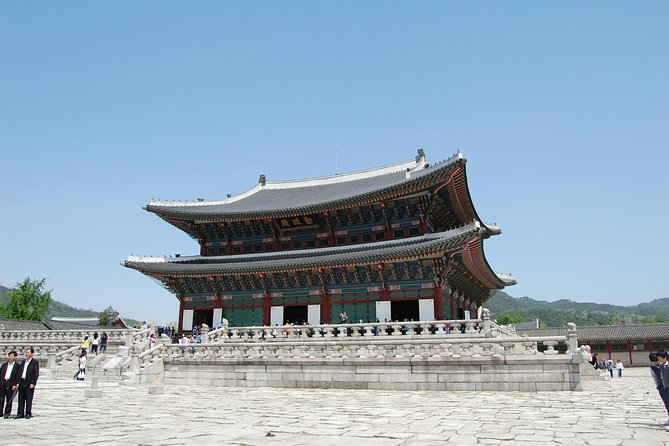
After Jogyesa, the route includes the Blue House—the official residence of Korea’s top leadership. You should know this part clearly: it’s a security area, so you cannot stop in front of it. You’ll see it on the way to Gyeongbok Palace, from the vehicle.
Even as a pass-by, it helps connect the dots between daily life and government power. You’re going from Zen temple calm to the political center of Joseon-era Seoul, and the tour uses the drive to set up that shift.
The main consideration here is expectation. If you want a close-up view or photos at the gates, plan for the fact that you’ll likely get only roadside views.
Gyeongbok Palace: From Throne Hall Views to Queen’s Quarters
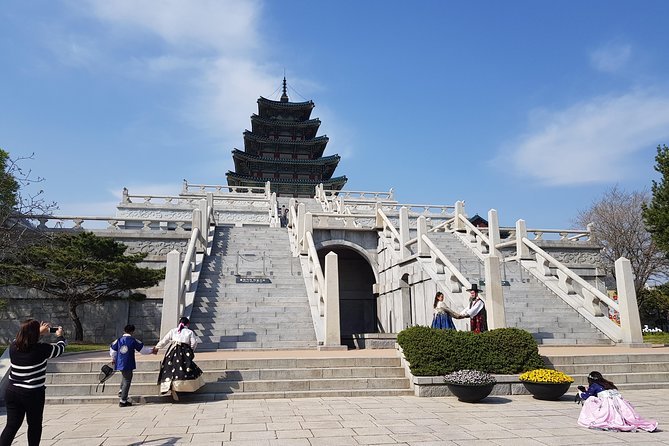
Gyeongbok Palace is the star of the morning, and it’s easy to see why. It served as the main palace during the Joseon Dynasty and is one of the most famous royal sites in Seoul.
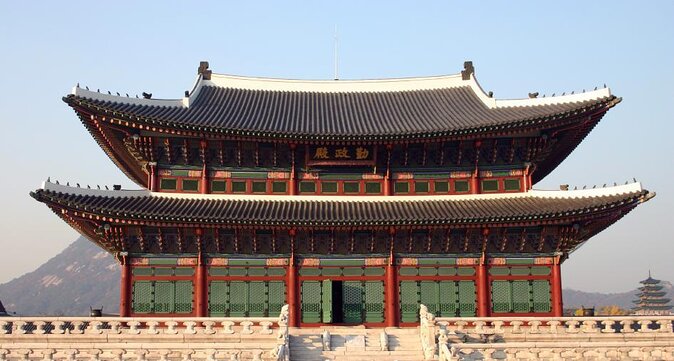
The tour focuses on major buildings across the palace complex, including the throne hall Geunjeongjeon and the king’s office Sajeongjeon. You’ll also get time around the king’s living quarters at Gangnyeongjeon and the queen’s living quarters at Gyotaejeon.
One of the most interesting stops is Gyeonghoeru, a pavilion where the king held formal banquets for foreign envoys. This is where the palace stops feeling like a set of old buildings and starts feeling like a stage for diplomacy and ceremony.
Because there are many structures, pacing matters. This tour is designed to be efficient, so you’ll want to decide what matters most to you—throne hall views, ceremonial spaces, or the smaller “how daily court life worked” sections the guide points out.


Korean National Folk Museum: A Quick Context Boost for What You’re Seeing
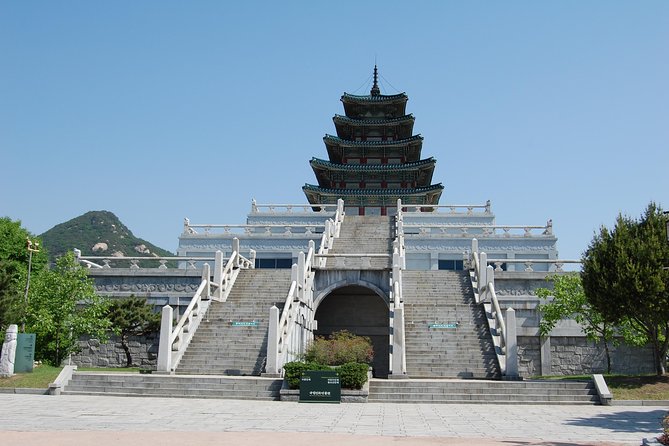
Inside the Gyeongbok Palace area, the tour includes the Korean National Folk Museum. This is a smart add-on if you want your palace visit to come with meaning, not just photos.
The museum represents daily life and culture, and it’s meant to help you better understand traditional Korean life. In a short tour like this, that context can be the difference between seeing buildings and actually connecting them to how people lived.
If you’re the type who likes museums but hates taking a long detour, this works well. It’s short enough to stay within the morning plan, while still giving you a “what am I looking at and why does it matter” layer.
Gwanghwamun Gate and the Changing of the Guard
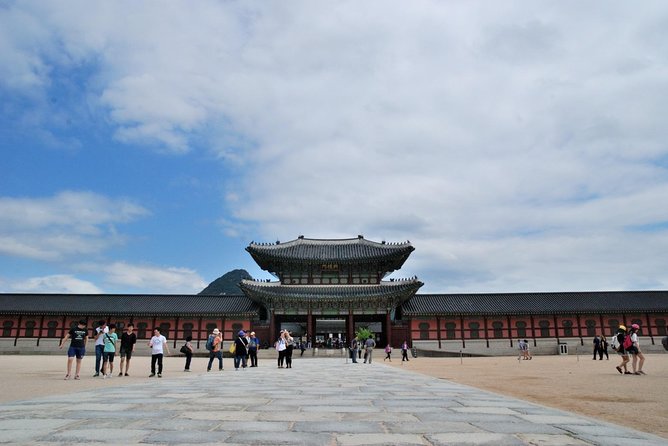
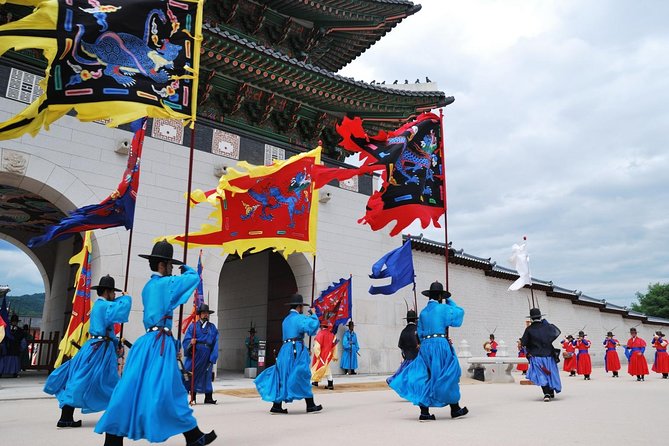
The tour ends at Gwanghwamun Gate, known as the south gate of Gyeongbok Palace. Here, you’ll see the changing of the guard ceremony—one of those events that’s easy to understand because it’s visual, structured, and ceremonial.
This is a great way to finish because it turns the palace into something active and present, even if you’re standing with a crowd. It’s also a good timing choice for your day: you’ll be in a central, walkable zone where it’s easy to continue exploring on your own.
If you care about seeing the ceremony clearly, arrive your spot early. With this kind of event, the best view usually goes to whoever settles first.
The Included Ginseng Center: Helpful Stop or Time Sink?
One of the tour notes you’ll want to read with your eyes open: the tour includes one shopping center stop, the Ginseng Center. Some people like it because it can add a small cultural and product angle to the morning, and it may help keep the tour budget competitive.
But if you’re not into shopping, this is the part that can feel like it takes longer than you’d prefer. The key is to treat it as a flexible moment: decide in advance whether you want to browse briefly, learn a bit, or just move through quickly and refocus.
Also keep in mind the practical effect. Time spent at a shopping stop is time not spent re-watching guards at Gyeonghwamun or wandering an extra courtyard at Gyeongbok Palace.
Guides, Pace, and How to Get More Out of the Time
The tour is led by an informative, friendly, professional guide, and that usually makes a big difference with palaces. In at least one case, a guide named Chloe was praised for sharing stories and helping with useful information. That’s exactly what you want in a short itinerary—someone who can make big spaces feel understandable.
Still, pace varies with guides and group movement. Some people have described a very fast cadence at parts of the tour, which can reduce how much you absorb. If you’re the kind of visitor who likes to stand and study details—painted characters, statue features, stonework—plan to be a bit assertive about photos and slower moments.
A simple strategy: pick one or two “must-see” locations at Gyeongbok Palace and let the rest be scenic. You’ll leave happier than trying to memorize everything in three hours.
Price and Inclusions: Is $40 Good Value?
At $40 per person for about 3 hours, the value depends on what you’d otherwise pay and how much you value guided logistics. This tour includes hotel pickup, an air-conditioned vehicle, and a professional guide.
Most importantly for cost: all entrance fees are included, and you get free admission to top local attractions. That matters because palaces and related sites can add up fast if you buy tickets yourself.
What’s not included is lunch, so factor in a meal after the tour. The drop-off at City Hall also changes the cost of your next transport choice—if City Hall is near your plans, you’re set. If it’s far, plan a short ride afterward.
Overall, this looks like a good “time-saver” option. It’s not a slow, deep palace study session. It’s a smart morning overview with paid admissions handled for you.
Who Should Book This Tour (and Who Might Skip)
Book it if you want a compact, guided first look at major Seoul sights. This works especially well for first-timers, families, and visitors who like history but don’t want to manage multiple tickets and directions.
You might want a different option if you hate shopping stops, or if you want long, unhurried time inside the palace grounds. Also, if you’re hoping for close, up-front access to the Blue House, this tour won’t deliver that. It’s a pass-by only.
If you’re flexible and come ready for a brisk morning, you’ll likely enjoy the way the day’s themes connect: Zen temple calm, royal political power, cultural context, and ceremony at the end.
Should You Book This Seoul Palace Morning Tour?
I’d book this tour if you want a high-value morning plan that checks multiple must-see boxes without hassle. The combination of hotel pickup, entrance fees handled, and a guide who explains what you’re looking at is a strong match for a tight schedule.
I’d hesitate if you specifically dislike shopping stops or you need lots of time to linger. And if your dream is an up-close Blue House photo, choose a different palace-focused experience instead.
If you do book, go in with two decisions: which palace buildings you care about most, and whether you’ll treat the ginseng stop as a quick cultural break or a skip-and-move moment.
FAQ
What time does the Seoul Palace Morning Tour start?
The tour starts at 9:00 am.
How long is the tour?
It runs for about 3 hours.
Does the tour include hotel pickup?
Yes. Hotel pickup is included, and you’ll travel by air-conditioned vehicle.
Where do you get dropped off at the end of the tour?
The tour ends with drop-off at City Hall, not at your hotel.
Are entrance fees included?
Yes. All entrance fees are included and free admission is included to top local attractions.
Is lunch included?
No. Lunch is not included.