REVIEW · SEOUL
Seoul: Gyeongbokgung Palace Half day Tour
Book on Viator →Operated by koreaguidetour · Bookable on Viator
Seoul’s palace grounds can feel like a maze. This half-day Gyeongbokgung Palace tour turns that walking time into clear stories, with English explanations that make the Joseon court make sense fast. I especially like the way the guide connects the buildings to real daily roles, and I like the small details you’d miss on your own, like the animal statues placed throughout the palace. One drawback: it’s only about 2 hours, so you’ll see the highlights, not every corner.
What makes this tour work well in real life is the pace. You get an organized route through the palace’s key spaces, plus admission included, so you’re not juggling tickets while trying to read signs and architecture at the same time. You also get a chance to ask questions to the professional guide during the walk, which is a big deal if history or layout feels confusing.
Just plan around the schedule. Gyeongbok Palace is closed on Tuesdays, and the tour doesn’t allow late joiners once the group starts, plus filming/recording isn’t allowed. If you come on the wrong day or you show up late, you lose the benefit of a tight, guided visit.
In This Review
- Key things to know before you go
- Why Gyeongbokgung’s layout is perfect for a short visit
- Meeting at the National Palace Museum and getting your bearings fast
- Gwanghwamun Gate: the southern gateway of royal authority
- Geunjungjeon throne hall: where the court’s face shows
- Sajeongjeon and Gangnyeongjeon: work and private life side by side
- Gyotaejeon and Gyeonghoiru pavilion: the queen’s space and an event hall
- Animal statues and architecture details: small things that make the palace feel real
- Why the English guide experience is the real value
- Price and what you actually get for $35
- Timing tips: Tuesdays off, weather matters, and no late starts
- Who this tour suits best
- Should you book this Gyeongbokgung Palace half-day tour?
- FAQ
- FAQ
- How long is the Gyeongbokgung Palace half-day tour?
- Is admission included in the price?
- What is the price per person?
- What language is the tour conducted in?
- What kind of ticket do I get?
- Where do I meet the guide?
- Where does the tour end?
- Is Gyeongbok Palace open every day?
- Are recording or filming allowed during the tour?
- What happens if the tour is canceled due to weather or too few people?
Key things to know before you go
- English explanations you can ask about as you walk between major buildings
- Admission included, so you’re not paying extra just to enter
- A tight 2-hour route through the palace’s most important spaces
- Animal statues and architecture details you can actually spot during the walk
- Small group size (max 20), which helps questions and keeps the pace manageable
- Tuesday closure at Gyeongbok Palace, with an alternate Deoksugung night tour option
Why Gyeongbokgung’s layout is perfect for a short visit
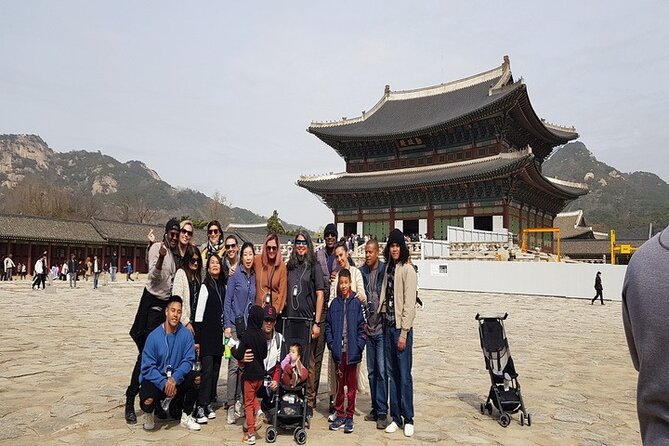
Gyeongbokgung is the palace most people picture when they think of Korea. It was built in 1394, and it became the center of the Joseon dynasty’s royal life. Even with damage during the Japanese Colonial Period, the palace value is preserved through ongoing restoration, which means you’ll see a blend of history and careful rebuilding.
The big challenge at palaces like this is time. You can burn a whole day wandering and still leave with a vague feeling of I saw buildings, but I’m not sure what any of it meant. This tour fixes that by focusing on the palace’s most meaningful spaces, the ones that explain how power and daily life were organized inside the same complex.
I like that the route follows the logic of royal functions. You’re not just moving from photo spot to photo spot. You’re moving from spaces tied to authority, to work routines, to private living quarters, to an event-focused pavilion. That structure helps your brain stay engaged, even if you’re only there for a little while.
You can also read our reviews of more tours and experiences in Seoul.

Meeting at the National Palace Museum and getting your bearings fast
You meet at the National Palace Museum of Korea, at 12 Hyoja-ro, Jongno District. That’s a practical starting point because it’s near public transportation, so you’re less likely to lose time getting across the city than if you’re hunting for a remote entrance.
Check that you’re ready with the mobile ticket on your phone. A mobile ticket is handy at places where lines and counters can be slow, and it also cuts down on fumbling while the group is moving. The tour also uses clear meet-up instructions by email or WhatsApp, so you’re not left guessing where the guide stands.
One small reality check: the tour has a clear start time, and joining after it begins isn’t allowed for other participants. So if you’re someone who likes a buffer, build one. Show up early enough to calm your nerves and confirm where you’re supposed to stand.
Gwanghwamun Gate: the southern gateway of royal authority
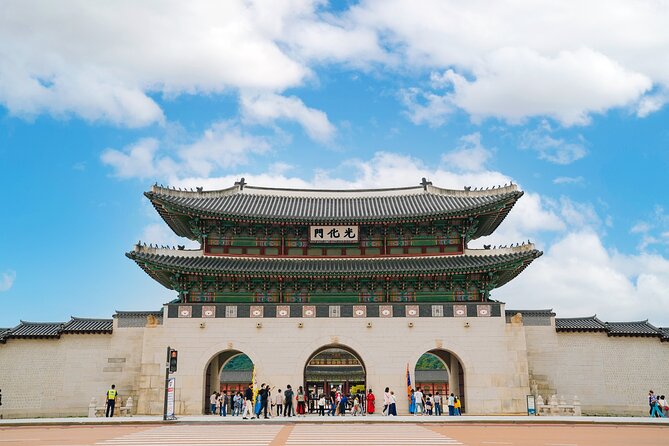
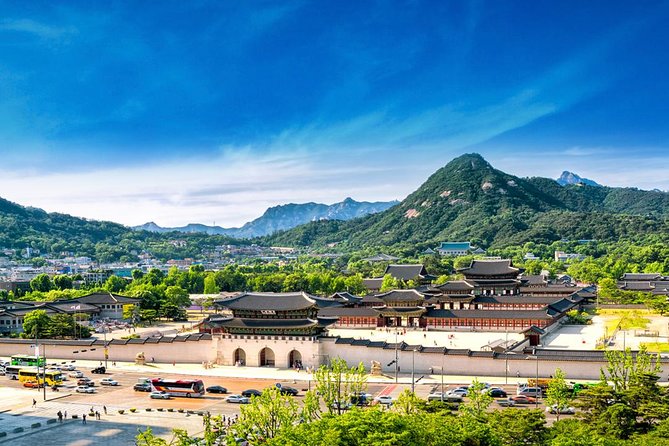
Your walk begins at Gwanghwamun Gate, the south gate of Gyeongbokgung. Gates here aren’t just entrances. They act like a statement: you’re crossing from ordinary space into the palace’s ordered world.
What I like about starting at Gwanghwamun is how it frames everything that follows. The gate helps you understand the palace as a designed system rather than a random set of buildings. Once you see how the route flows inward, the later spaces feel less scattered and more intentional.
A possible downside is that gates can be crowded and a bit noisy, depending on the time of day. If you’re aiming for quiet photos, arrive ready to accept some human traffic. The value of this tour is the explanation, not the idea of a private viewing.
Geunjungjeon throne hall: where the court’s face shows
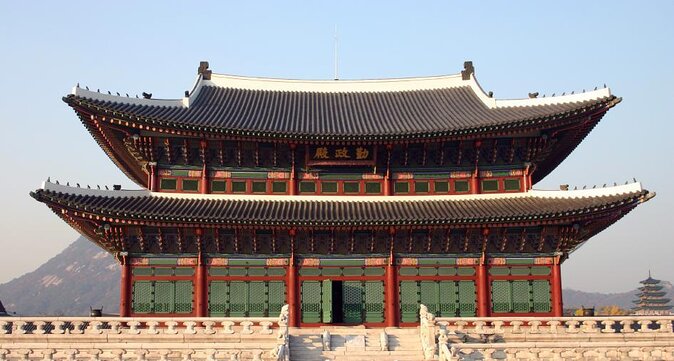
Next is Geunjungjeon, the main throne hall. This is one of the centerpieces of Gyeongbokgung, and it’s the space that helps you understand how the Joseon monarchy presented itself—ceremony, authority, and tradition all in one place.
This is where the guide’s English explanations matter most. Without context, the hall can feel like another grand building. With context, it starts to feel like a stage for governance. You learn how the palace wasn’t just for living; it was a working symbol of the dynasty’s legitimacy.
I also like that this stop sets you up for the rest of the walk. Once you’ve seen the main throne hall, the later rooms make more sense as parts of the same daily system—public function first, then the more private or administrative spaces.
Sajeongjeon and Gangnyeongjeon: work and private life side by side
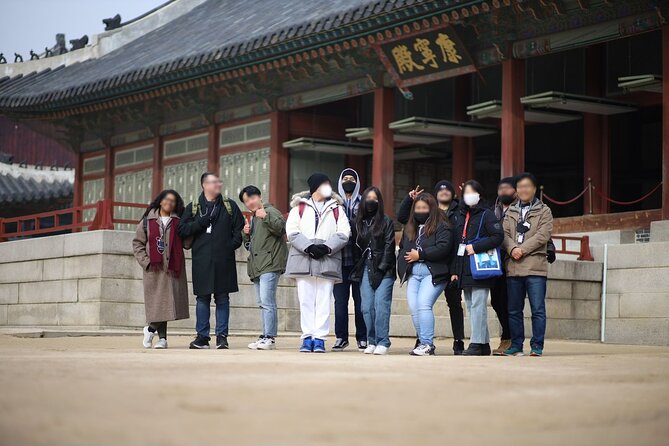
After Geunjungjeon, you move to Sajeongjeon, the king’s office space. This is one of the key moments where your understanding shifts from palace as scenery to palace as routine. The office space is about decisions, administration, and the day-to-day mechanics of rule.
Then comes Gangnyeongjeon, the king’s bed-chamber. I love this contrast because it breaks the myth that palaces are only about ceremonies and big speeches. You’re shown how the palace architecture included spaces for rest and personal life, still inside the same carefully arranged complex.
The best part of these two stops in a guided format is how quickly you can connect function to design. In about the time it would take to read a couple signs yourself, you can have a clearer mental map. That’s what you’re buying here: not just entry to Gyeongbokgung, but the threads that connect its rooms.
One practical note: bed-chambers and interior-function spaces can feel more detailed than flashy. If you’re expecting a nonstop parade of dramatic exteriors, you’ll still get value, but you may enjoy it more if you like explanations.

Gyotaejeon and Gyeonghoiru pavilion: the queen’s space and an event hall
Next is Gyotaejeon, the queen’s bed-chamber. This stop matters because it adds balance. It’s easy to see the palace only through the lens of the king. The queen’s spaces help you understand the palace as a full royal household, not a single-person power machine.
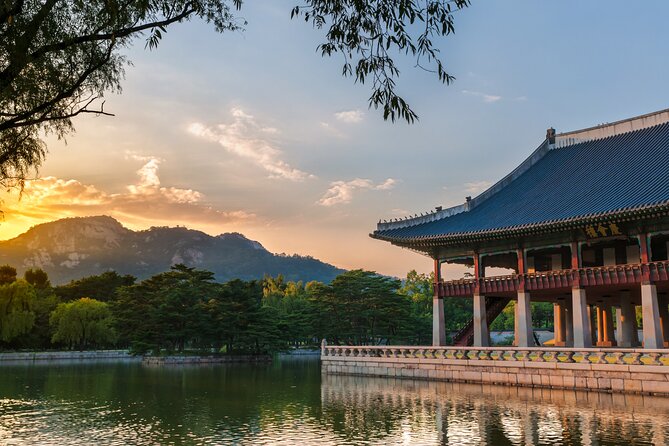
Finally, you reach Gyeonghoiru pavilion, an event hall. Pavillions like this help show how the palace wasn’t only about rule and privacy. It also hosted gatherings and occasions, reinforcing the palace’s role as a living center for the court’s calendar.
What I like here is that you get variety in the story told by the spaces. By the time you’re at the pavilion, you’ve already walked through authority and daily function. The event hall ties it together as a whole system: governance, household life, and ceremonial moments inside one designed world.
Animal statues and architecture details: small things that make the palace feel real
One of the standout promises of this tour is that you’ll hear stories about animals placed throughout Gyeongbokgung. Even if you’re not a history nerd, those details tend to “stick.” When you can point at a statue and understand why it’s there, the palace stops being a backdrop.
The same goes for architecture. Gyeongbokgung has a style that can look similar at first glance—roofs, courtyards, layered buildings. A good guide helps you differentiate what you’re seeing and why it matters. Instead of collecting vague impressions, you come away with recognizable parts.
If you’re the type who enjoys noticing design patterns, you’ll likely get extra value. But even if you’re more casual, these details can be the difference between I went to a palace and I understood how the palace worked.
Why the English guide experience is the real value
This tour is built around explanations in English and the ability to ask questions. In palaces, that’s often what turns confusion into clarity. You don’t have to guess what terms mean, and you don’t have to interpret every sign as if you’re a part-time scholar.
In the feedback for this operator, one guide named Gabriela is specifically called out for being kind and giving insight that you’d miss on your own. The same feedback also highlights her willingness to help when someone arrives at the wrong meeting spot—she went out of her way to find them. That’s the kind of practical confidence you want from a guide, because it reduces stress while you’re learning.
A small caution: filming and recording aren’t allowed. So if you’re the type who documents everything on your phone, plan to focus on listening and absorbing instead. You can still take normal photos where permitted, but the tour is designed for a conversation, not a content shoot.
Price and what you actually get for $35
At $35 per person for about 2 hours, this isn’t a bargain in the ultra-budget sense. But it’s also not priced like a luxury experience. Here’s how I judge value for this kind of tour:
- Admission is included, which matters because the entry cost can add up when you’re making multiple stops across Seoul.
- You get a structured route through key palace areas, so you’re not paying with your time.
- You get English explanations plus a chance for questions, which is often the biggest unlock for palaces.
If you were to go on your own, you could absolutely explore Gyeongbokgung for free or low cost—but you’d likely lose the thread. This tour helps you connect names like Geunjungjeon and Sajeongjeon to what those spaces actually represented. For many visitors, that understanding is worth more than extra wandering time.
Also, the group maximum is 20 travelers, which keeps the experience from turning into a chaotic herd. In a palace, that difference matters. You’ll still walk, but you’re more likely to hear the guide clearly and ask real questions.
Timing tips: Tuesdays off, weather matters, and no late starts
Gyeongbok Palace is closed on Tuesdays. If you’re traveling on a Tuesday, your best move is to avoid expecting this tour to run as planned. The operator notes that you can book a Deoksugung night tour instead, which is a useful fallback if your schedule doesn’t cooperate.
Weather matters here too. This experience requires good weather, and if it gets canceled for poor conditions, you’ll be offered a different date or a full refund. Palace tours are still walking tours, so rain and wind can make the whole visit less pleasant.
And again: joining after the tour begins isn’t allowed for other participants. If you’re using public transport or you’re also doing other things near central Seoul, give yourself enough time to arrive calm.
One more rule to remember: recording or filming isn’t allowed. If you show up with the mindset of documenting everything, that can be frustrating. If you show up ready to listen, it’s easy to adjust.
Who this tour suits best
This is a great fit if you fall into any of these buckets:
You want an efficient way to see the palace’s most important spaces without spending the whole time translating and guessing. You enjoy learning how architecture connects to the roles of people in the Joseon dynasty. You also like having a real person you can ask questions to, instead of relying only on signage.
It may be less ideal if you want long unstructured wandering time, or if you’re a heavy filmer who relies on recording throughout the experience. The tour is designed to be focused and guided, with a set route and a set length.
And if you’re traveling with a group larger than a few people, keep in mind this one caps at 20. That’s still small, but it’s not a private tour.
Should you book this Gyeongbokgung Palace half-day tour?
If you want the high-value version of Gyeongbokgung in a short time, I think this is a smart booking. You’re paying for admission plus English explanations plus a route that teaches you what you’re actually looking at. For many visitors, that’s the difference between a palace that feels like a photo stop and a palace that feels meaningful.
Book it if:
- You have only a couple hours and want a clear palace walkthrough.
- You care about understanding the Joseon court and how different spaces worked.
- You’re okay with a fixed route and no filming during the guide-led portion.
Skip or adjust if:
- You’re visiting on a Tuesday (Gyeongbokgung is closed).
- You need full flexibility for wandering at your own speed.
- Weather is questionable and you’re expecting an all-conditions visit.
FAQ
FAQ
How long is the Gyeongbokgung Palace half-day tour?
It runs for about 2 hours.
Is admission included in the price?
Yes. Admission ticket is included.
What is the price per person?
The price is $35.00 per person.
What language is the tour conducted in?
The palace tour includes explanatory details in English.
What kind of ticket do I get?
You’ll use a mobile ticket.
Where do I meet the guide?
The meeting point is the National Palace Museum of Korea, 12 Hyoja-ro, Jongno District, Seoul.
Where does the tour end?
The tour ends at 7-25 Tongui-dong, Jongno District, Seoul.
Is Gyeongbok Palace open every day?
No. On Tuesdays, Gyeongbok Palace is closed.
Are recording or filming allowed during the tour?
No. Recording or filming the tour is not allowed.
What happens if the tour is canceled due to weather or too few people?
The tour requires good weather and has a minimum number of travelers. If canceled due to these reasons, you’ll be offered a different date or a full refund.