REVIEW · SEOUL
Seoul: Deoksugung Palace Night Tour
Book on GetYourGuide →Operated by Korea Guide Tour · Bookable on GetYourGuide
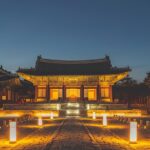
Seoul’s palace walls tell a hard truth. This Deoksugung Palace night walk pairs real on-site history with atmosphere, focusing on the Daehan Empire years and how King Gojong and Emperor Gojong tried to hold onto sovereignty under Japanese colonial pressure. I also like the way the tour connects major historical turning points to specific places you can actually stand in, rather than just reading captions.
You’ll also appreciate the practical pacing of a 2-hour guided route that hits famous halls and quieter rooms, plus time to linger for photos after the tour. One thing to consider: reservations are not confirmed on weekends and holidays, and the operator says the tour can be canceled if there are fewer than 4 participants.
In This Review
- Key things you’ll remember from this Deoksugung night tour
- Deoksugung after dark: why this palace story lands harder at night
- Hitting Daehanmun and Junghwajeon: a tour that follows power, room by room
- Seokeodang and Hamnyeongjeon: where King Gojong’s world feels personal
- Jungkwanheon Hall and the coffee detail: small contrasts that make the court real
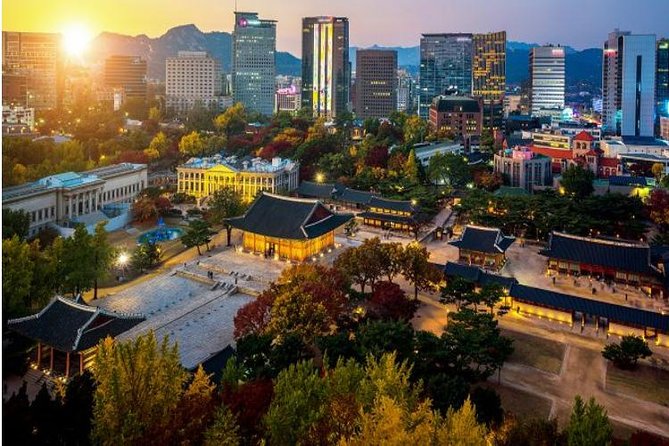
- Oriental meets Western: the architectural lesson you can see without a textbook
- The route flow and the 2-hour feel: efficient, not rushed, if you stay present
- English guide quality: why the storytelling style matters here
- Price and value: is $38 worth a palace night walk?
- Who should book this Deoksugung Palace Night Tour
- Before you go: shoes, timing, and what to expect on-site
- Should you book this palace night walk?
- FAQ
- How long is the Deoksugung Palace Night Tour?
- How much does the tour cost?
- Where is the meeting point?
- What’s included in the price?
- Is traveler’s insurance included?
- What language is the tour guide?
- Is the tour wheelchair accessible?
- What should I bring?
- What if I want to cancel?
Key things you’ll remember from this Deoksugung night tour
- Start at City Hall Station (Outside Exit 1), so you’re not hunting across the city
- Daehanmun Gate to Junghwajeon connects a big historical narrative to the exact throne hall route
- Seokeodang and Hamnyeongjeon spotlight King Gojong’s most beloved spaces and the king’s private bed-chamber setting
- Jungkwanheon Hall is used as a real-life counterpoint, including the note about coffee time for the emperor
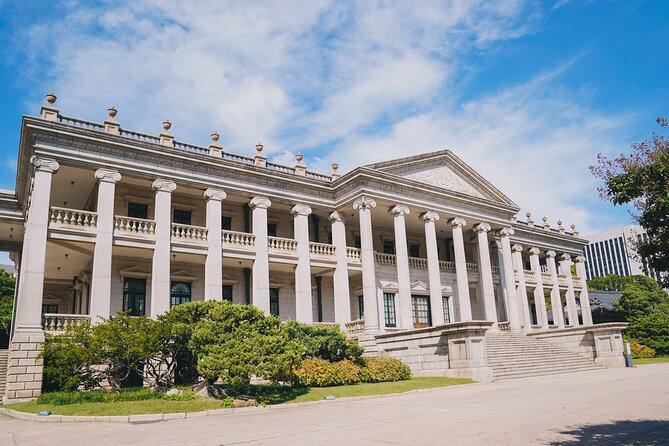
- Oriental-and-Western architectural mix gives you a visual “what changed” lesson, not just dates and dates
- English live guide with strong Q&A energy, including guide names like Sally Sung, Joy, and Alan showing up in recent feedback
Deoksugung after dark: why this palace story lands harder at night
Night tours change how you read old buildings. Deoksugung doesn’t feel like a distant museum the way some indoor exhibits do. Instead, you’re walking the grounds at a slower emotional pace, and that matters when the story includes loss, resistance, and the struggle for control over royal space.
The core hook here is that Deoksugung wasn’t just scenery. It served as the royal quarters for 13 years, and that makes every hall feel tied to daily power—who lived where, who met whom, and what the court tried to protect. Under Japanese Occupation, the first and last Emperor Gojong struggled to regain sovereignty over the palace, and the tour frames those stakes while you’re physically moving through the palace grounds.
I also like how the night format supports the “stand where it happened” feeling. Even when you already know Seoul’s broad history, you may not have mapped that history onto these specific buildings. That’s what this tour helps you do, quickly and clearly.
You can also read our reviews of more evening experiences in Seoul

Hitting Daehanmun and Junghwajeon: a tour that follows power, room by room
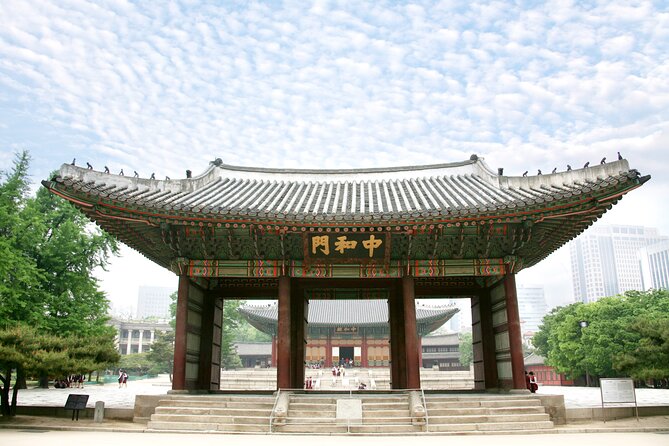
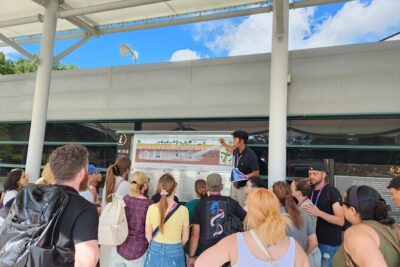
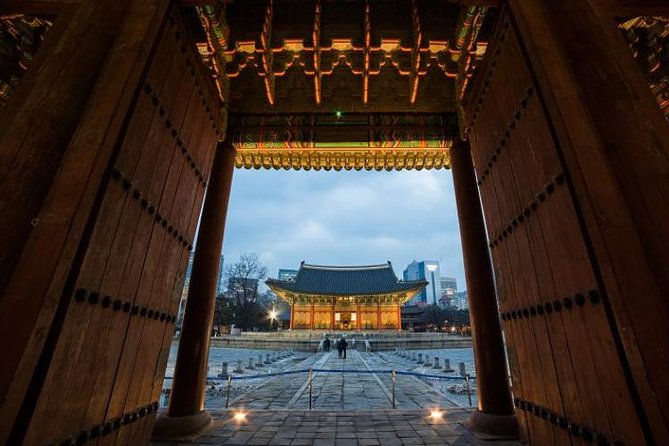
You begin by meeting at City Hall Station (Outside Exit 1), then head into the palace through Daehanmun Gate. That entrance matters because it sets the route like a proper approach to royal grounds: you’re not just walking anywhere—you’re entering the palace on a guided path.
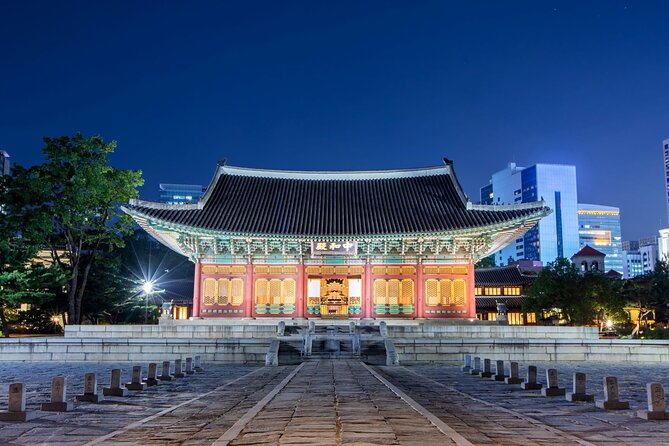
From there, the tour focuses on the main throne hall, Junghwajeon. This is one of those places where scale and layout help you understand authority. Even without a technical architecture lesson, you’ll feel the intention of the space: this is where public power was performed. Your guide’s job is to connect the architecture and the role of the hall to the larger Daehan Empire timeline, including the emotional weight of sovereignty and control during colonial pressure.
A practical tip: pay attention to how your guide describes relationships between buildings and courtyards. The tour’s biggest value isn’t only the names of places—it’s the way you learn to “read” the palace layout as a system. You’ll finish the guided portion with a mental map, so wandering on your own afterward doesn’t feel random.
Seokeodang and Hamnyeongjeon: where King Gojong’s world feels personal
After the big public center, the itinerary turns more intimate with Seokeodang. The tour highlights it as the most beloved building of King Gojong, which is a useful framing. It’s easy to think of palaces as only ceremonial, but this stop nudges you toward the fact that rulers lived inside these walls, not outside them.
Then you continue to Hamnyeongjeon, described as the king’s bed chamber. That detail changes your perspective immediately. The king’s private space is where you start understanding the palace as home and working environment, not just theatre for visitors. Even if you’ve toured other palaces in Korea, a bed-chamber stop gives you a more grounded sense of daily life.
The “sad but impactful story” theme is important here. You’re not just learning an imperial timeline. You’re learning how personal spaces exist inside historical struggles. When a guide ties those themes to specific buildings, it makes the story feel less like trivia and more like context.
Jungkwanheon Hall and the coffee detail: small contrasts that make the court real
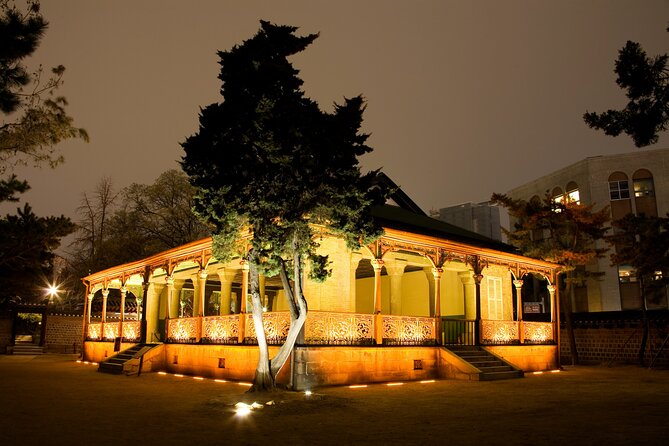
Next up is Jungkwanheon Hall, described as a cafeteria where the emperor enjoyed his coffees. That sounds almost casual, and that’s exactly why it works.
When you’re dealing with colonial-era pressure, it’s common for history to flatten into one mood: hard, heavy, serious. The coffee-room detail offers a counterbalance. It reminds you that even under tension, court life included routines, comforts, and habits—human-scale things inside a politically loaded setting.
I like when a tour includes one or two “everyday life” moments like this. They help you remember the tour, because your brain stores personal details better than lists of dates. You’ll probably catch yourself later thinking about how rulers practiced normalcy while the world around them shifted.
If you’re a photo person, keep your phone ready during this part of the route. The hall and its setting can give you a different visual feel than the throne-hall stop, and that variety is part of the appeal of doing this as a guided loop rather than a solo walk.
Oriental meets Western: the architectural lesson you can see without a textbook
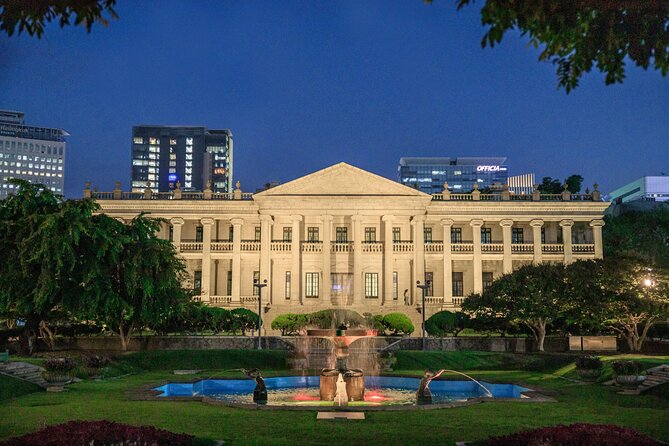
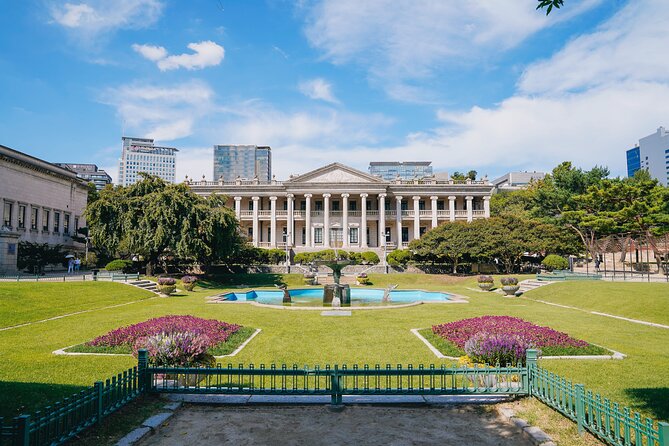
One of the highlights is the mix of Korean-style architecture with Western influence. The tour keeps this practical by directing your attention to what you can spot in the buildings and overall design choices. You’re not asked to be an architecture expert; you’re guided to notice how styles meet, and what that suggests about a changing era.
I think this is a smart theme to learn on-site. Architecture is one of those topics that’s tough when you only hear it in theory. But when you’re standing in front of structures and your guide points out the blended elements, you start connecting political and cultural change to real physical forms.
This “symbolic mix” also fits the tour’s bigger historical frame. The Daehan Empire years included strong modernizing pressures while external forces threatened sovereignty. When architectural styles mix, it’s often a sign of that tension between tradition, modernization, and outside influence. You walk away with a visual clue to that story, not just a narrated one.


The route flow and the 2-hour feel: efficient, not rushed, if you stay present
The tour lasts 2 hours, which is perfect for a night activity in Seoul. It’s long enough to hit several major stops, but short enough that you’re not tired before you can enjoy the atmosphere.
You’ll start with the gate approach, then follow the guide through the main throne hall, the beloved building, the king’s private chamber, and finally the coffee hall. That sequence isn’t random. It moves from power-display to personal space and then back to everyday court life. It gives you a layered understanding of palace life.
A small but important mindset: don’t treat it like a checklist of names. Treat it like a guided narrative that explains why each place matters. When you focus on the “why,” you remember more, and the buildings stop feeling like separate photos.
After the guided portion, you can stay behind to explore at your own pace and take pictures. That freedom is valuable because it lets you return to the places that grabbed you most.
English guide quality: why the storytelling style matters here
This tour is live and in English, and the feedback on guide performance is consistently positive. Names that show up in recent experiences include Sally Sung, Joy, and Alan—and the common thread is clear explanations and strong Q&A.
That matters because palace history can get dense fast. A good guide helps you connect a person (King Gojong or Emperor Gojong) to a room (like Junghwajeon or Hamnyeongjeon) and to the historical pressure of the moment. If your guide is patient and precise, you’ll leave with a coherent story instead of half-understood facts.
Also, if you like asking questions, you’ll probably enjoy the tone. The best tours don’t just narrate—they respond. This one has a reputation for answering questions carefully, which makes the evening feel more like learning with a local than following a script.
Price and value: is $38 worth a palace night walk?
At $38 per person for 2 hours, it’s not a “throwaway” activity, but it’s also not overpriced for what you get. The price includes a local tour guide and the entrance fee, so you’re paying for interpretation, not just access.
For me, the value comes from three parts:
- You get guided context through the Daehan Empire story tied to specific buildings.
- You see both major ceremonial spaces and more intimate rooms like a bed chamber.
- You learn about the architectural blend of Oriental and Western influences in the place where it’s actually visible.
If you’re the type who visits palaces but usually rush through, this tour can upgrade your experience quickly. If you prefer solo wandering with a guidebook, you might not need this. But if you want your time to feel focused and meaningful, the cost is easier to justify.
Who should book this Deoksugung Palace Night Tour
I’d steer you toward this tour if you want:
- a historical walk that connects royal buildings to modern Korean history
- an English explanation that helps you understand what you’re looking at
- a short, efficient palace experience at night (or during the evening slot, depending on your tour time)
You might skip it if you already feel fully confident about Daehan Empire and colonial-era palace politics, and you prefer to explore without any guided interpretation. Still, even experienced travelers often enjoy architecture-focused tours because the route gives you a framework you might not build yourself.
Before you go: shoes, timing, and what to expect on-site
Bring comfortable shoes. You’ll be walking a palace route that includes multiple stops, and night tours mean you’re better off with footwear you can move in confidently.
You should also be prepared for the flow of a guided session:
- You’ll meet at City Hall Station and then go inside with the group.
- You’ll follow a set route covering key halls and chambers.
- You’ll be able to linger after the tour for photos and extra exploring.
One more practical point: your reservation for weekends and holidays can be tricky—reservations cannot be confirmed then. If you’re travelling at a peak time, it’s smart to plan for the possibility of a change and check your confirmation details when the operator messages you.
Should you book this palace night walk?
If you’re in Seoul and want a guided palace visit that takes Daehan Empire history seriously while also staying grounded in what you can see, I think this is a strong choice. The combination of major palace spaces, intimate rooms, and the architectural Oriental-Western angle gives you a well-rounded evening.
Book it if you like your history with place names, story structure, and time to ask questions. Skip it if you only want a casual photo walk and don’t care about the political story behind the walls. For many people, though, this is the kind of tour that turns a palace from scenery into meaning.
FAQ
How long is the Deoksugung Palace Night Tour?
The tour duration is 2 hours.
How much does the tour cost?
The price is $38 per person.
Where is the meeting point?
Meet outside Exit 1 of City Hall Station.
What’s included in the price?
The tour includes a local tour guide and an entrance fee.
Is traveler’s insurance included?
No. Traveler’s insurance is not included.
What language is the tour guide?
The live tour guide speaks English.
Is the tour wheelchair accessible?
Yes. The tour is listed as wheelchair accessible.
What should I bring?
Bring comfortable shoes.
What if I want to cancel?
You can cancel up to 24 hours in advance for a full refund. No refund is issued for a no-show or cancellation on the day of the tour.